
Home › Blog › Art and culture classes
Art Class for Kids Hanoi: What to Expect and How to Choose
By the Cáo Experiences team · 2026-11-06
Art classes for kids in Hanoi through Cáo Experiences are structured around small groups (2–8 children) or private sessions in a family studio space, running 90 minutes to half a day depending on what your child draws, paints, or builds. We teach techniques like ink painting, watercolour, collage, printmaking, and sculpture—no experience needed—with an English-speaking host adapting the pace and subject matter to the room's age and interest. Sessions happen in the old quarter or nearby studio spaces; materials, aprons, and guidance are all included. We work around allergies, left-handedness, and confidence levels, pausing for breaks and water. For younger kids (5–8), we focus on colour, shape, and play; older kids (9–17) explore composition, cultural themes, and individual style. Ask us for dates and a quote on WhatsApp to check availability and discuss what your child loves—portraiture, animals, abstract work, or Vietnamese-inspired art. Ask about dates on WhatsApp
What age groups actually enjoy art class in Hanoi?
We run sessions for ages 5 to 17, but the experience feels completely different depending on where your child sits on that spectrum. Five- to seven-year-olds are sensory-focused: they love the feel of paint, the mess, and bold colours. They need frequent water breaks and shorter attention spans (we keep activities to 15–20 minutes per technique). Eight- to eleven-year-olds start asking "why does that look real?" and "how do I draw hands?"—they're hungry for rules and want to take their work home and feel proud. Teenagers (12–17) care less about perfection and more about voice: they'll spend time on one piece, experiment with style, ask philosophical questions about art, and often surprise themselves by trying something they said they'd "never do." We've found that mixed-age groups sometimes work better than same-age because older kids model patience and younger ones remind everyone that play matters. If you're bringing siblings three years apart, tell us: we'll design one session where both stay engaged.

How do we handle kids who say they "can't draw"?
This is the worry we hear most, and it's almost always rooted in a comparison someone made when the child was seven. We start every session by saying: drawing is a skill, not a talent, and skill builds in public—mistakes are part of it. In the first 15 minutes, we do a "no-judgment warm-up"—gestural drawing, scribbles, shapes—where the goal is movement, not likeness. Then we introduce one concrete technique (e.g., how to see proportions, how to layer watercolour, how to use a viewfinder to crop a scene). Kids who "can't draw" often discover they were never taught how, and the moment someone shows them a simple method, something clicks. We keep mirrors and tracing paper on hand for kids who need scaffolding. We also rotate between representational work (drawing from life, photos, reference) and abstract work (colour studies, pattern, collage) so every mind finds its entry point. By the end of a 90-minute session, almost every child has made something they're willing to show you.
Should we choose group classes or private sessions for our child?
The honest answer depends on your child's temperament and what you want them to gain. Group classes (2–8 kids) cost less per person, offer built-in socializing, and let kids see how others approach the same prompt—which can be confidence-building or, occasionally, distracting. We run groups when there are enough bookings for a given age or theme; the pace assumes moderate independence and some ability to wait turns. Private sessions give you one-on-one attention: we adapt every exercise to your child's speed, interests, and learning style, pause without holding anyone else back, and can dive deep into a single subject (e.g., "I want to paint horses all day"). Private sessions suit kids who are shy, working through perfectionism, or pursuing a specific passion. They also work if you want to bring a sibling and we can manage both. We've found private sessions suit 5–7-year-olds and kids 14+ best; 8–13-year-olds often thrive in small groups because they're at that age where peer presence pushes them to try harder.
| Class type | Best for | How it feels | What to ask us |
|---|---|---|---|
| Small group (2–8 kids) | Ages 8–14, social learners, budget-conscious | Collaborative, some waiting, friendships form | Do we have a booking this month? What age mix? |
| Private session | Ages 5–7, perfectionists, specific passions, mixed siblings | Intimate, tailored pace, no comparison | Can we focus on [horse portraits / abstract / his interests]? |
| Family experiences as a group | Siblings + parent, bonding activity | Parent learns alongside, relaxed atmosphere | Can you run a three-person session? |
What materials does your child need to bring?
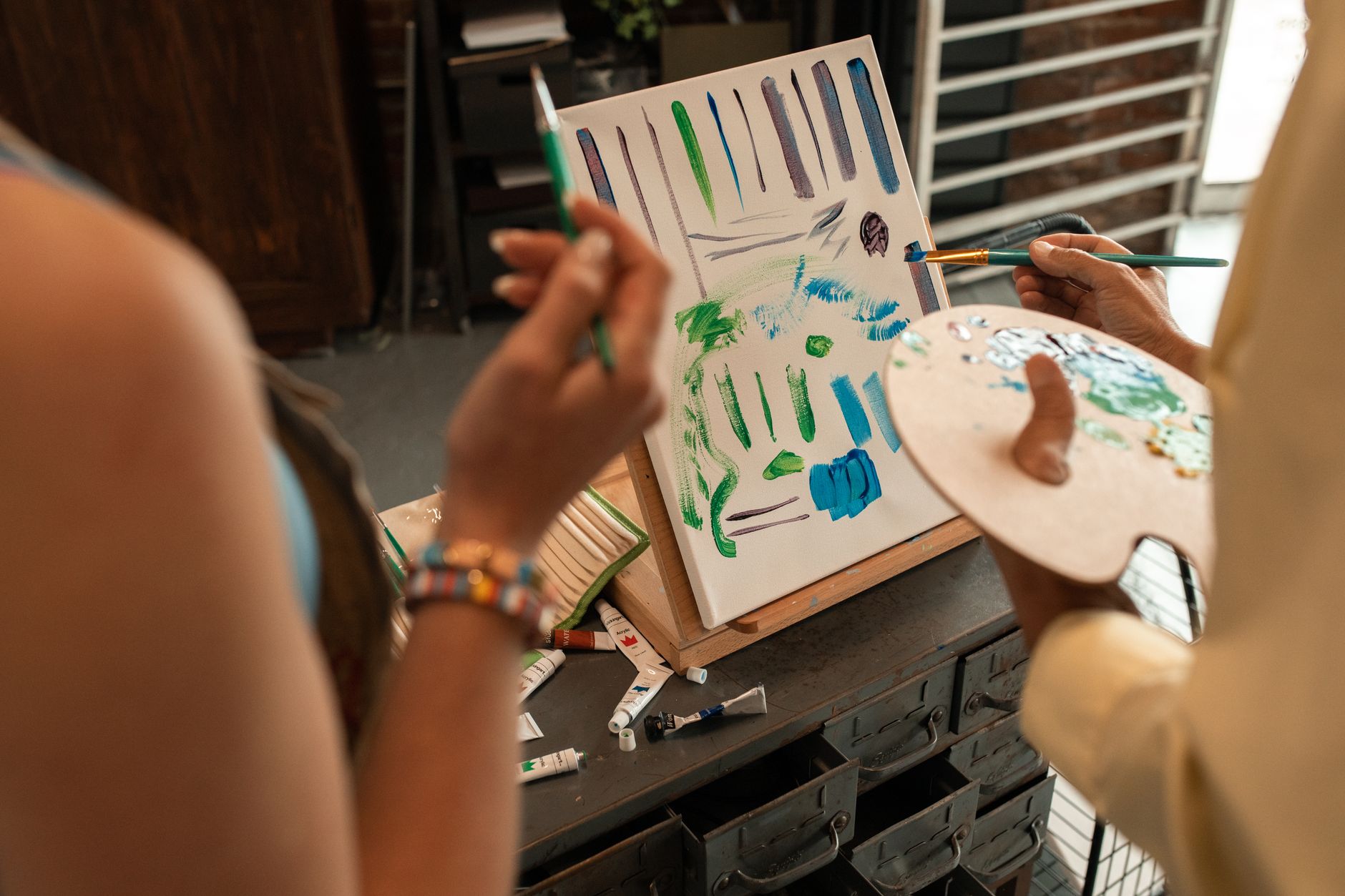
We provide everything: paints (acrylic, watercolour, or gouache depending on the session), brushes (child-safe sizes), paper or canvas boards, pencils, erasers, water containers, aprons or old shirts, and hand wipes. The only thing we ask you to bring is your child—and, if they have a specific allergy or sensitivity (e.g., latex-free, scent-free products), let us know in advance. We'll have alternatives ready. If your child loves a certain medium and wants to use it (coloured pencils, oil pastels, collage materials from home), we can fold that in. At the end of the session, we help kids wrap or dry their work carefully so it travels home safely in a bag or art folder.
How do we adapt art class if the weather turns wet or stormy?
Hanoi's rainy season (May–September) can be intense, so we have two plans. If rain is light, we stay in our studio space—it's open to the activity regardless of weather, and some kids actually find rhythm and focus easier with the sound of rain in the background. If there's a storm warning or flooding risk, we pivot the activity indoors to something unaffected: instead of drawing from life in a garden or laneway, we set up still-life arrangements, work from photo references, or shift to an entirely indoor project like printmaking, collage, or painting on canvas board. We also reschedule without penalty if conditions make travel unsafe. Our studio is a short walk from Hoan Kiem Lake in the old quarter, so access is usually fine even on wet days. For summer classes, we sometimes move to early morning (7–8:30 a.m.) to avoid the worst heat.
How does art class connect to other creative experiences in Hanoi?
If your child loves making things with their hands, art and culture classes are one of several paths. Many children in Hanoi who take craft workshops—like woodblock printing, weaving, or ceramics—find they have a framework for art that feels more rooted in Vietnamese tradition. Others start with family experiences that bundle art with a farm visit or market walk, so they're drawing and painting and seeing how artists and artisans work in real contexts. Some older kids (13+) are curious about the connection between art and food: we can arrange a pairing where they take a Vietnamese cooking class in the morning, then spend the afternoon painting or sketching the market or the dishes they made. Street food and market tours also spark visual ideas—the colours of Quang Ba flower market or the energy of a wet market are powerful subjects for kids who like to draw from observation.
What should parents check before booking?
Before you hit "send" on WhatsApp, answer these questions:
- Age and experience. Is your child 5–17? Have they done art before, or is this their first time?
- Pace preference. Does your child need one-on-one attention, or are they comfortable in a small group?
- Medium preference. Is there a material your child is drawn to—paint, pencil, collage, sculpture, printmaking?
- Duration. Can your child sit for 90 minutes, or would you prefer a shorter session?
- Allergies or sensitivities. Latex, strong smells, certain food dyes, or skin sensitivities? Tell us upfront.
- Dates and flexibility. What weeks work? Can you reschedule if weather is bad?
- What success looks like. Do you want your child to come home with a finished piece, or is the experience itself the goal?
Once you know these, ask us for dates and a quote on WhatsApp—we'll build a session that fits.

FAQ
Can my child attend if they've never painted before?
Yes. We teach every technique from scratch. Beginners often surprise themselves because they learn a concrete skill (how to hold a brush, how to mix colour, how to see proportions) instead of being asked to "just draw."
What happens if my child gets frustrated or wants to quit halfway?
We pause, chat, take a break, and shift the activity. Sometimes frustration means the prompt isn't resonating—we'll switch subjects, try a different medium, or dial the challenge up or down. We've rarely had a child want to leave entirely once the pressure is off.
Do you teach "real" art techniques like perspective or anatomy?
We teach techniques tailored to age. Younger kids (5–8) learn colour, shape, and composition. Older kids (9–17) learn perspective, proportion, and figure drawing if they're interested. We also teach media-specific skills: how watercolour behaves differently from acrylic, how to layer, how to use negative space.
Can we bring a friend who's not yet enrolled or design a custom theme?
Yes to both. If you want to bring a friend, let us know and we'll add them. Custom themes (e.g., "painting Vietnamese architecture," "animal sculptures," "collaborative mural") are fine—just ask. We'll adjust the cost and timing.
What if the weather is really bad on our class day?
We have an indoor backup plan that doesn't compromise the experience. If it's a storm warning or flooding, we reschedule you without penalty. We'll chat on WhatsApp about the safest day.
How do you keep the studio clean with paint and multiple kids?
Aprons, hand wipes, washable paints, and a practical attitude. We cover tables, keep water spill-proof, and clean as we go. Kids learn that mess is part of creativity—and then they help tidy, which teaches responsibility.
Ask about dates
Tell us the city, your dates and what you would like to try. We reply on WhatsApp in English with options and availability.
FAQ
Can my child attend if they've never painted before?
Yes. We teach every technique from scratch. Beginners often surprise themselves because they learn a concrete skill (how to hold a brush, how to mix colour, how to see proportions) instead of being asked to "just draw."
What happens if my child gets frustrated or wants to quit halfway?
We pause, chat, take a break, and shift the activity. Sometimes frustration means the prompt isn't resonating—we'll switch subjects, try a different medium, or dial the challenge up or down. We've rarely had a child want to leave entirely once the pressure is off.
Do you teach "real" art techniques like perspective or anatomy?
We teach techniques tailored to age. Younger kids (5–8) learn colour, shape, and composition. Older kids (9–17) learn perspective, proportion, and figure drawing if they're interested. We also teach media-specific skills: how watercolour behaves differently from acrylic, how to layer, how to use negative space.
Can we bring a friend who's not yet enrolled or design a custom theme?
Yes to both. If you want to bring a friend, let us know and we'll add them. Custom themes (e.g., "painting Vietnamese architecture," "animal sculptures," "collaborative mural") are fine—just ask. We'll adjust the cost and timing.
What if the weather is really bad on our class day?
We have an indoor backup plan that doesn't compromise the experience. If it's a storm warning or flooding, we reschedule you without penalty. We'll chat on WhatsApp about the safest day.
How do you keep the studio clean with paint and multiple kids?
Aprons, hand wipes, washable paints, and a practical attitude. We cover tables, keep water spill-proof, and clean as we go. Kids learn that mess is part of creativity—and then they help tidy, which teaches responsibility.
More like this
Art and culture classes
Calligraphy class Hue: what to expect and how to start
Calligraphy classes in Hue teach you to hold the brush like a local, understand character structure, and leave with real work. We run them in an artist's studio space where you'll work alongside other learners—no previous art experience needed.
Art and culture classes
Best painting class in Hoi An: find your style
Hoi An's painting classes range from traditional lacquer to watercolour, silk and ink. We show you how to choose the right fit for your skill and schedule.
Art and culture classes
Best Painting Class in Da Nang: What to Know Before You Book
Painting classes in Da Nang range from casual drop-in sessions to structured multi-week courses. We walk you through what each type offers, who they suit best, and what to check before you commit.