
Home › Blog › Craft workshops
Bamboo Weaving Class in Vietnam: How to Book with Cáo
By the Cáo Experiences team · 2026-11-06
A bamboo weaving class in Vietnam with Cáo Experiences is a half-day hands-on workshop (usually 3–4 hours) hosted in a family artisan's workspace in Hanoi or Hoi An. You'll learn to prepare and split bamboo, then weave a small basket, tray, or decorative panel under one-on-one guidance. The session includes all materials, tools, tea, and a brief conversation about how local weavers sustain this trade. No experience is needed; we adapt the complexity to your skill level. Beginners often worry their hands will slip or the bamboo will splinter—both normal, and we show you the grip and pace that prevent this. We accommodate groups of 1–8 people; rain just moves us indoors or slightly earlier in the day. Ask us for dates and a quote on WhatsApp—pricing depends on group size and whether you book private or join a scheduled session. Ask about dates on WhatsApp
Why learn bamboo weaving in a family workshop rather than a tourist class?
A family workshop lets you see real work alongside the lesson. The artisan weaving next to you isn't a performance; they're earning their income while you learn. You'll notice how their hands move faster, how they choose which bamboo splits for which job, how they repair mistakes invisibly. Tourist-focused venues often simplify the technique for speed; here, you learn the actual method, and if you get it wrong, the host corrects it the way they'd teach their own child. The workshop smells like fresh bamboo and earth. You see stock in progress, orders waiting, the pace of real demand. This context sticks with you; you understand the craft, not just the motions.
What exactly do you make in a bamboo weaving session?
Your finished piece depends on the session length and your choice. Most guests weave a small square tray (about 20cm × 20cm), a shallow basket for storing jewelry or dried goods, or a decorative wall panel. We show you three or four weave patterns—the plain over-under, a diagonal weave, and a tighter pattern used for water containers—and you pick one. A half-day session gives time to complete one piece fully; if you choose something smaller, you might finish a second. The host will help you reinforce the rim and add a simple finish so it's sturdy and ready to use immediately. Many guests take photos before wrapping it for their luggage. Some come back a year later with photos of it on their shelf at home.
How do you prepare bamboo, and why does the method matter?
Preparation takes about 30 minutes and is often the revelation of the class. You'll learn to select a bamboo pole by checking for straightness and thickness, then split it lengthwise using hand tools (a knife, a lever, careful pressure—no machinery). The artisan shows you where the grain runs and how to split with it, not against it. If you split against the grain, the bamboo splinters and becomes unusable; splitting correctly produces long, flexible strips. You'll do three or four splits yourself under guidance, feeling the resistance change as you go deeper. Then you'll shave each strip to an even thickness so they weave smoothly. This part is meditative; many guests say it's their favorite because you're working with your hands in a very direct way, and the bamboo teaches you immediately when you're doing it right. The finished strips smell strong and slightly sweet.
What to wear and bring for a bamboo weaving class
Wear loose trousers or a skirt (not tight jeans—you'll be bending and kneeling), a shirt with sleeves you can roll up, and closed-toe shoes with a good grip (the workshop floor may be slightly damp or dusty). Bring a small towel if you prefer to wipe your hands between sections, sunscreen if you're sensitive (some sessions have natural light), and your phone for photos of your finished piece. We provide water, tea, and all tools and materials. If you have a bamboo or latex allergy (rare but possible), mention it when you book; we can adapt or reschedule. Jewelry should be minimal—rings catch bamboo fibers, and bracelets snag. After the session, your hands may have minor abrasions from the bamboo edge if you grip too hard; this heals in 2–3 days and is not harmful, just something to expect. Wash your hands immediately after to prevent splinters from entering the skin.
Booking a bamboo weaving class: single session or multi-day immersion?
Most guests book one half-day session as a standalone experience. A single session teaches the fundamentals and leaves you with a complete, wearable or displayable piece—enough to understand the craft without overwhelming your itinerary. If you're genuinely interested in progressing to larger pieces (lidded baskets, fine trays) or in understanding the commercial side (how a weaver prices their time, sources bamboo year-round), you can book two consecutive sessions or arrange a follow-up session days or weeks later. We've had guests return to the same family workshop on their next trip to Vietnam; the host remembers them and you pick up where you left off. For families, we run family-focused craft workshops that include weaving alongside other hands-on crafts; kids as young as 8 can participate with adult support. For corporate groups, team experiences often combine weaving with a countryside lunch or a visit to a local market.
How does weather affect a bamboo weaving class, and what's the backup plan?
Bamboo weaving is weather-resilient because it's done indoors or under a covered workspace. Heavy rain doesn't change the session date or time. Humidity can make bamboo slightly more pliable, which some weavers prefer. In winter, the workshop may be cooler, so bring a light layer if you're sensitive to cold. Typhoon season in northern Vietnam (May–September) occasionally causes cancellations, but the host will reschedule you within 3–7 days. The bamboo itself is unaffected by humidity or temperature; what matters is your comfort.

Comparison: Bamboo weaving vs. other craft workshops in Vietnam
| Craft | Duration | Skill Difficulty | What You Make | Best For |
|---|---|---|---|---|
| Bamboo weaving | 3–4 hours | Beginner-friendly | Functional tray or basket | Hands-on, meditative learners |
| Flower arranging | 2–3 hours | Beginner-friendly | Seasonal arrangement | Visual, aesthetically minded guests |
| Vietnamese silk painting | 3–4 hours | Beginner-friendly | Small framed painting | Those wanting to take home art |
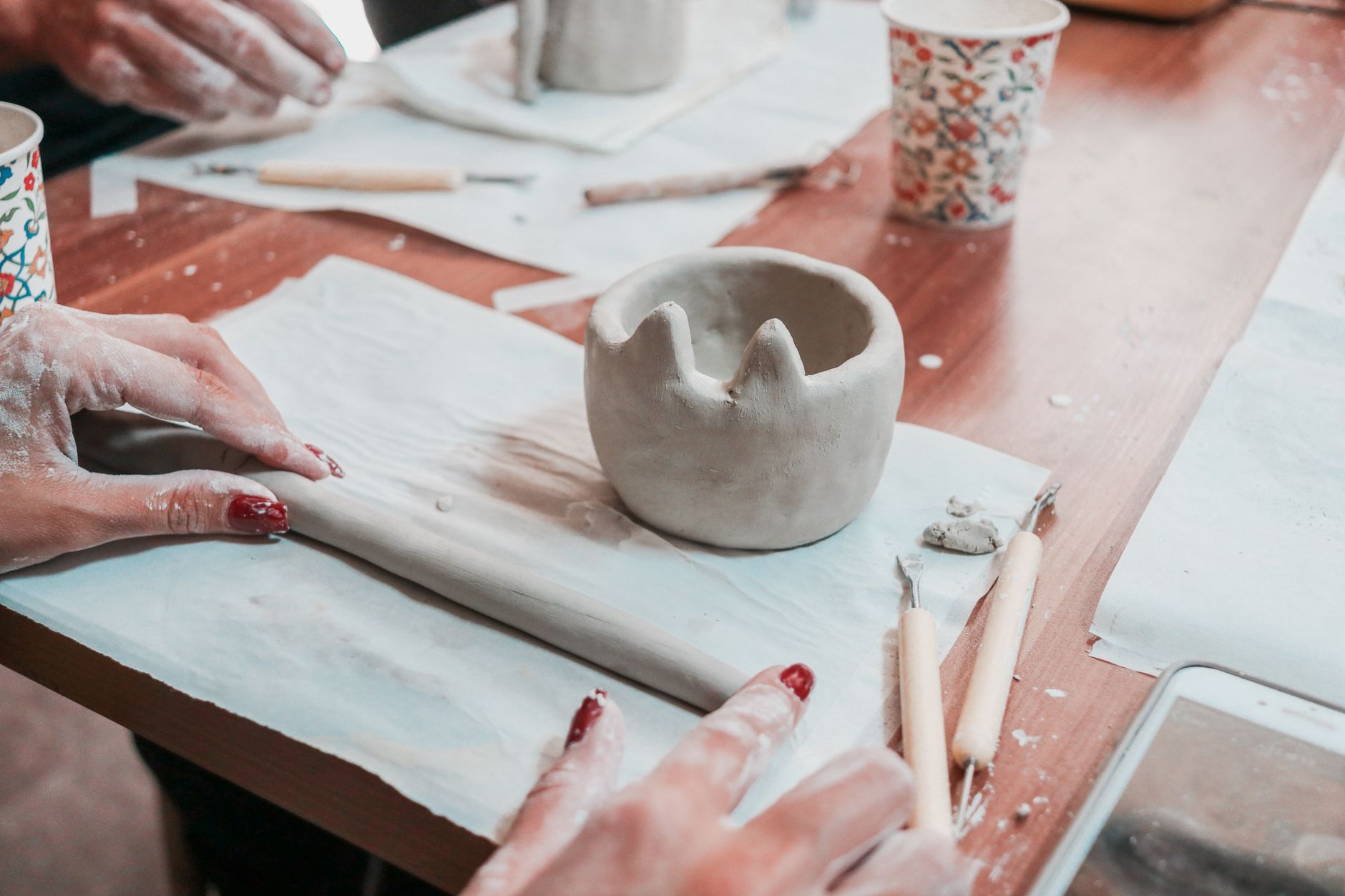
| Ceramic hand-building | 2–3 hours (or multi-session) | Beginner-friendly | Bowl, cup, or tile | Tactile learners, potters |
| Lacquerware inlay | 4+ hours | Intermediate | Small decorated object | Patience, fine detail work |
All workshops at Cáo Experiences include materials, basic tools, tea, and guidance. Bamboo weaving stands out because you're learning a living trade in the artisan's own workspace; the item you make is immediately functional.
Adapting bamboo weaving for different ages and abilities
Children (8–12 years): We simplify the prep phase and guide hand placement closely. A child might weave a smaller panel or a thin basket. The session is 2.5–3 hours instead of 4. A parent or older sibling usually sits nearby and can weave alongside the child. We avoid rushing; if a child wants to repeat a section, we let them.
Teenagers and adults: Full technique, full choice of piece complexity. Some adults want to learn how to repair a family heirloom basket; the host can teach that instead. We adjust to your pace.
Seniors (60+): We ensure good seating with back support, adequate light, and a slower pace. Hand strength matters less than you'd think; technique compensates. We've had guests in their 80s complete a full tray. A session might take 4–5 hours with breaks, which is fine.
Group of mixed ages: We stagger the start of the session so advanced weavers begin prep while younger guests watch and join when ready. The host moves between individuals, ensuring everyone finishes without anyone waiting idle.
Allergies, sensitivities, and physical limitations
Bamboo dust is minimal in a family workshop, but if you have asthma or severe hay fever, mention it when booking. The host can dampen the bamboo slightly before stripping to reduce airborne particles. Latex sensitivity is rare but important—some hand tools have rubber grips; we use alternative grips if needed. Wrist or hand arthritis: the technique relies on grip strength and fine control, but the host will adapt the tool size and may suggest a simpler pattern. Back issues: we provide a chair with proper height and can position the work table at waist level. No experience needed because the workshop is not about speed or perfection; it's about learning the method and ending with something you made.
What to check before booking a bamboo weaving class
- Location: We host in Hanoi and Hoi An. If you're in another city, ask us about alternatives—sometimes a local connection exists, or we can arrange a market visit to see weavers at work.
- Group size: Confirm whether you want a private session (just you and the host) or a small-group session (shared with other guests, often cheaper per person). Private sessions let you set the pace and ask deeper questions. Shared sessions add social element and let you meet other travelers.
- Piece preference: Describe what you want to make—a tray for desk use, a gift basket, a wall decoration. The host might suggest a pattern or size that suits your skill or time. If undecided, the host will guide you to something achievable and beautiful.
- Physical comfort: Mention any joint pain, back issues, or hand sensitivity. We'll adapt setup and technique. There's no shame in requesting a higher chair or more frequent breaks.
- Rain backup: Ask what happens if weather forces a reschedule. Most hosts will offer you a choice of dates within 7 days, or you can switch to an indoor craft or a coffee workshop.
- Transportation: Confirm pickup location. If you're staying in central Hanoi or Hoi An, the workshop is usually within a 10–20 minute ride. We can advise on taxi or grab app guidance.
Other hands-on experiences to pair with bamboo weaving
Bamboo weaving pairs naturally with other crafts and village-based experiences. Farm and countryside experiences in the outskirts let you see where bamboo grows and meet farmers. A street food and market tour in a local market gives context to the goods that baskets eventually hold. Many guests combine weaving with Vietnamese cooking class—both are practical skills rooted in family tradition. If you're in Hoi An, flower arranging complements weaving; both use natural materials and are meditative. In Hanoi, tea experiences or art and culture classes offer a similar immersion into Vietnamese craft heritage.
Cáo Experiences specializes in craft workshops across Vietnam. Whether you're in Hanoi, Hoi An, or another destination, we'll find a local artisan who matches your interest and availability.

FAQ
Do I need any experience to take a bamboo weaving class?
No. We teach absolute beginners from the first step—selecting bamboo, splitting it, preparing strips, and weaving. The host adjusts pace and pattern to your skill. Most people finish their piece within the session, regardless of prior experience.
Can I book a private session or just a small group?
Both are available. Private sessions are just you and the host; you set the pace and content. Small-group sessions (usually 2–4 people) are shared; you meet other guests but may cost less per person. Ask us for dates and a quote on WhatsApp to compare options.
What if I have allergies or physical limitations?
Mention them when you book. Bamboo dust is minimal indoors. If you have wrist or hand issues, we adapt tools and techniques. Seating, light, and break frequency are adjustable. No one is turned away due to physical limitation—only those with severe latex allergy might need a materials check first.
Can children join a bamboo weaving class?
Yes, ages 8 and up. We simplify the prep phase and guide hand placement. Sessions are shorter (2.5–3 hours instead of 4). A parent or guardian usually attends and can weave alongside. Younger children may watch from the workshop or participate in supervised mini-tasks.
What happens if it rains on my scheduled session date?
The workshop is indoors or sheltered; rain doesn't cancel it. If severe weather makes travel unsafe, the host will reschedule you within 3–7 days or offer an alternative craft experience. Confirm the weather plan 48 hours before your session.
Will my finished piece be strong enough to actually use?
Yes. The host ensures the rim is reinforced and the weave is tight enough to hold items (small objects, dried goods, jewelry). Baskets last years with normal use. Trays can hold lightweight items indefinitely. We don't make decorative-only pieces unless you specifically request it.
How much space do I need at home to keep a finished basket or tray?
Pieces are usually 15–25 cm across and 5–10 cm deep—about the size of a bread plate or small storage bin. They fit on a shelf, desk, or counter. Very few guests regret the size; if you want something larger, mention it during booking.
Can I buy a bamboo weaving piece if I don't want to make one?
The experience is about making your own. However, the host has stock for sale in the workshop—finished pieces made by them or other local weavers. You can browse and purchase, but the class itself is a hands-on activity, not a shopping tour.
Ask about dates
Tell us the city, your dates and what you would like to try. We reply on WhatsApp in English with options and availability.
FAQ
Do I need any experience to take a bamboo weaving class?
No. We teach absolute beginners from the first step—selecting bamboo, splitting it, preparing strips, and weaving. The host adjusts pace and pattern to your skill. Most people finish their piece within the session, regardless of prior experience.
Can I book a private session or just a small group?
Both are available. Private sessions are just you and the host; you set the pace and content. Small-group sessions (usually 2–4 people) are shared; you meet other guests but may cost less per person. Ask us for dates and a quote on WhatsApp to compare options.
What if I have allergies or physical limitations?
Mention them when you book. Bamboo dust is minimal indoors. If you have wrist or hand issues, we adapt tools and techniques. Seating, light, and break frequency are adjustable. No one is turned away due to physical limitation—only those with severe latex allergy might need a materials check first.
Can children join a bamboo weaving class?
Yes, ages 8 and up. We simplify the prep phase and guide hand placement. Sessions are shorter (2.5–3 hours instead of 4). A parent or guardian usually attends and can weave alongside. Younger children may watch from the workshop or participate in supervised mini-tasks.
What happens if it rains on my scheduled session date?
The workshop is indoors or sheltered; rain doesn't cancel it. If severe weather makes travel unsafe, the host will reschedule you within 3–7 days or offer an alternative craft experience. Confirm the weather plan 48 hours before your session.
Will my finished piece be strong enough to actually use?
Yes. The host ensures the rim is reinforced and the weave is tight enough to hold items (small objects, dried goods, jewelry). Baskets last years with normal use. Trays can hold lightweight items indefinitely. We don't make decorative-only pieces unless you specifically request it.
How much space do I need at home to keep a finished basket or tray?
Pieces are usually 15–25 cm across and 5–10 cm deep—about the size of a bread plate or small storage bin. They fit on a shelf, desk, or counter. Very few guests regret the size; if you want something larger, mention it during booking.
Can I buy a bamboo weaving piece if I don't want to make one?
The experience is about making your own. However, the host has stock for sale in the workshop—finished pieces made by them or other local weavers. You can browse and purchase, but the class itself is a hands-on activity, not a shopping tour.
More like this
Craft workshops
Craft Workshop in Saigon: Small Group Classes for Beginners
Cáo Experiences runs small-group craft workshops across Saigon where you learn traditional and contemporary making in intimate studio and community spaces. Sessions suit absolute beginners, families, and skill-builders.
Craft workshops
Craft workshop in Saigon for couples: what to choose
Couples in Saigon have three main craft paths: ceramics in a family studio, natural-dye silk painting, or bamboo weaving. Each teaches differently and suits different moods.
Craft workshops
Craft Workshop in Hoi An: What to Expect Step by Step
A craft workshop in Hoi An with Cáo Experiences is a half or full-day session where you learn a traditional Vietnamese skill—lantern-making, silk painting, woodblock printing, or lacquerware—in a working studio or family workshop. You leave with a finished piece you made yourself.