
Home › Blog › Farm and countryside days
Bee Farm Visit Vietnam: What to Expect & How to Plan
By the Cáo Experiences team · 2026-11-06
A bee farm visit in Vietnam is a morning or half-day experience at a family-operated apiary in the countryside near Hanoi or the Mekong Delta, where guests suit up, observe hives, learn honey extraction, and often taste freshly harvested honey. Sessions run 3–4 hours and include safety briefing, hands-on hive observation, extraction or filtering demos, and time with the beekeeper's family—often ending with honey tasting or a simple meal. No prior knowledge needed; we provide all protective gear and suit beginners to adults and children (age 8+). Cáo Experiences coordinates transport, translation, and seasonal timing via WhatsApp—bee activity peaks March–May and August–October. Cost varies by group size and location; ask us for dates and a quote on WhatsApp. Avoid peak midday heat, wear closed shoes, and move slowly around hives. Not suitable for those with severe bee-sting allergies.
A bee farm visit in Vietnam opens a window into one of Southeast Asia's quietest, most essential farming traditions. You don't just hear about pollination, honey grades, or the relationship between wild flowers and colony health—you walk among the hives, feel the rhythm of the bees, and understand why rural families have kept bees for generations.
Why do beekeepers in Vietnam keep bees differently than in the West?
Vietnamese beekeeping is built on small-scale family farms, not industrial monoculture. Most operations we work with keep 5–50 hives rather than hundreds. Beekeepers rotate between wild-forest forage (spring and summer in northern hills, year-round in the Mekong) and cultivated flower zones. They use traditional wooden or bamboo-framed hives alongside modern Langstroth boxes, depending on the season and target honey type. This mixed approach means you'll see both old-style and contemporary methods in one morning—a rare learning opportunity. The honey tastes different too: lighter, more floral, less processed than industrial variants. Our hosts deliberately choose farms that reflect genuine family practice, not tourist-show operations.
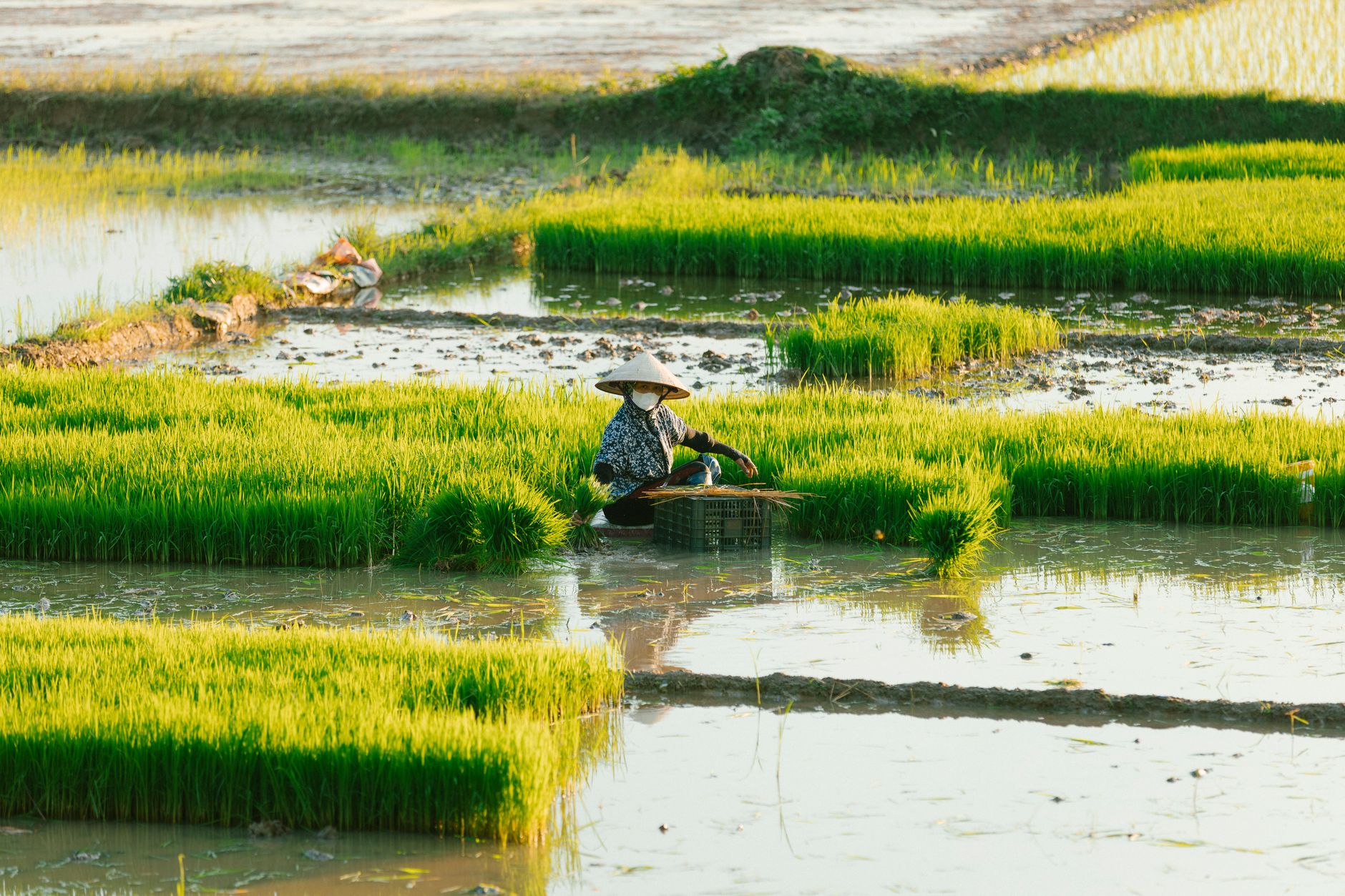
What exactly happens during a bee farm visit?
You arrive early (6–7am, when bees are calmer). The beekeeper walks you through hive anatomy—how to spot the queen, read brood patterns, recognize disease or health. You'll put on a full suit (provided), veil, gloves, and boots; many guests feel nervous before but find the ritual calming once dressed. The beekeeper opens 2–3 hives and lifts frames for you to see eggs, larvae, and sealed pupae. If it's harvest season, you'll watch or help with honey extraction—turning a motorized spinner or hand-crank centrifuge to sling honey from combs without heating. You filter it into jars. Mid-visit, you step back for tea and honey straight from the hive (raw, unfiltered, warm). The beekeeper's family often joins; many speak enough English, and we translate anything missed. By 10–11am, you're back in town, carrying a jar of honey you've seen made. Total time: 3–4 hours.
How is a bee farm visit different from other farm experiences?
Unlike a vegetable farm or rice paddy visit, beekeeping demands stillness and attention. You can't rush around; bees respond to vibration and sudden movement. This forces a slower, more meditative pace. Farm and countryside experiences often center on labor (harvesting, planting), but beekeeping is observation-led—you learn by watching, asking, and listening. The biological complexity is deeper too: a single hive is a superorganism with 30,000–80,000 individuals, each with a role. Guests often say it changes how they think about food chains, interdependence, and even their own role in an ecosystem. The honey you take home is tangible proof of work; it's not a souvenir, it's a literal product of what you witnessed.
What should I wear, bring, and avoid?
Wear long sleeves and long pants (dark colors preferred; bees dislike reflective/light shades). Closed-toe shoes are essential—never sandals. The beekeeper provides a full protective suit, veil, gloves, and boot covers; all are washed between visitors. Bring sunscreen for exposed skin (neck, hands while suited), a small notebook if you like taking notes, and a willingness to move slowly. Avoid perfume, scented deodorant, or floral clothing—it confuses bees. Don't bring children under 8; older kids can do this, but must follow instructions strictly and fit into the provided suit sizes. If you have a severe bee-sting allergy, this experience is not safe; even with precautions, a sting is statistically rare but possible. Rain rarely stops a visit; light rain can actually calm bees, though the beekeeper will call it if storms are heavy.

How does a bee farm visit fit into a broader Vietnam itinerary?
Most visitors combine a bee farm with other farm and countryside experiences—a cooking class using honey and herbs from the same region, a coffee workshop in highland areas where bees pollinate coffee flowers, or a cycling trip through rural villages. Some guests book a street food and market tour the next day to see how local chefs use raw honey in sauces and desserts. The experience works well for solo travelers seeking solitude, couples looking for a shared learning moment, and multi-generational groups (with kids aged 8+). If you're in Hanoi, morning bee visits in the suburbs fit before afternoon city activities. If you're in the Mekong Delta, they pair with boat tours or orchid-farm visits.
What does the honey I take home tell you about the season and place?
Raw honey from a single farm in a single season tastes like that place and moment. Spring honey (March–May) from northern Vietnam is pale, mild, and floral—sourced from wild flowers in reopening hill forests. Summer honey is darker, richer, sometimes with a faint medicinal note (forest herbs). Autumn honey (August–October) tends toward amber, sometimes crystallizes faster (a sign of lower water content and higher purity). What you bring home is never aged in a warehouse; it's usually 2–6 weeks old. The beekeeper often writes the harvest date on your jar. Over time, raw honey crystallizes naturally—that's normal and a marker of quality. You can re-liquify it gently (never in a microwave; use a warm-water bath). Storing it cool and dark preserves flavor for years.
Comparison: What Bee Farm Visits Offer vs. Urban Honey Shops
| Aspect | Bee Farm Visit | Urban Honey Shop |
|---|---|---|
| How you learn | Hands-on, from the beekeeper | Label-reading, sometimes staff chat |
| Honey source | Known origin, single season | Often blended, age unclear |
| Cost per jar | Higher initial investment, but informed | Lower upfront; quality variable |
| Experience length | 3–4 hours immersive | 10–20 minutes browsing |
| Best for | Curious travelers, families, learners | Quick shopping, gift-buying |
| What you remember | Hive smells, bee behavior, human story | Taste, price |
What to check before you book a bee farm visit
Transport & logistics: Confirm whether pickup from your hotel is included or if you meet at a central point. Ask whether the farm is 30 minutes or 90 minutes from town—this affects your whole-day planning.
Group size & privacy: Are you joining a group of 6–8, or can you book a private session? Private costs more but lets you move at your own pace and ask deeper questions.
Suit fit: If you're very tall, very small, or prefer loose-fitting suits, mention it when you book. Most farms have sizes XS–XXL, but it's good to confirm.
Allergy & health: Any sting allergy, asthma triggered by insects, or mobility issues? Disclose these upfront. The farm can't accommodate severe allergies, but minor concerns can be managed with placement, breaks, or antihistamines on hand.
Honey take-home: Ask whether the jar is yours to keep, how much honey you're taking (a small tasting vs. a full jar), and whether honey is included in the price or sold separately.
Rain contingency: Ask the cancellation and rain-date policy. Most farms run in light rain but cancel only if storms are severe.
Pages from our team you may need
FAQ
Is it safe for kids to visit a bee farm?
Yes, for children aged 8 and older who follow instructions and stay calm. We provide sized suits and stay close. Younger children lack the impulse control needed; excitement or sudden movement can disturb bees. Parents supervise throughout.
What if I'm allergic to bee stings?
If your allergy is mild (local swelling, itching), we can proceed with extra precautions. If you've had anaphylaxis or severe reactions, this experience is not safe—we won't risk it. Tell us during booking.
Can I eat the honey raw, straight from the farm?
Yes. Raw, unfiltered honey from small farms is safe to eat directly. It may contain pollen and crystallize naturally—both are signs of quality, not spoilage. Store it cool and dark.
How long is a typical bee farm visit?
3–4 hours, including travel from central town. You're suited up and at the hives for roughly 90 minutes, with tea and talk built in. Early start (6–7am) means you're back by mid-morning.
What months are best for a bee farm visit?
March–May (spring, peak nectar flow) and August–October (autumn) are ideal. Bees are most active, honey is being made, and you're more likely to see extraction. Winter is quieter; you learn about hive management but less hands-on harvest.
Will I get stung?
Stings are rare. Bees don't attack unless threatened; moving slowly and following the beekeeper's lead minimizes risk to near-zero. Most visitors finish without a single sting.
Do I need to speak Vietnamese?
No. Cáo Experiences provides English-speaking translation or a bilingual host. The beekeeper shows you visually; words just add context.
Can I book a private session just for my family or couple?
Yes. Private sessions cost more but let you control timing and depth. Ask us for dates and a quote on WhatsApp—we'll work around your schedule. Ask about dates on WhatsApp
Ask about dates
Tell us the city, your dates and what you would like to try. We reply on WhatsApp in English with options and availability.
FAQ
Is it safe for kids to visit a bee farm?
Yes, for children aged 8 and older who follow instructions and stay calm. We provide sized suits and stay close. Younger children lack the impulse control needed; excitement or sudden movement can disturb bees. Parents supervise throughout.
What if I'm allergic to bee stings?
If your allergy is mild (local swelling, itching), we can proceed with extra precautions. If you've had anaphylaxis or severe reactions, this experience is not safe—we won't risk it. Tell us during booking.
Can I eat the honey raw, straight from the farm?
Yes. Raw, unfiltered honey from small farms is safe to eat directly. It may contain pollen and crystallize naturally—both are signs of quality, not spoilage. Store it cool and dark.
How long is a typical bee farm visit?
3–4 hours, including travel from central town. You're suited up and at the hives for roughly 90 minutes, with tea and talk built in. Early start (6–7am) means you're back by mid-morning.
What months are best for a bee farm visit?
March–May (spring, peak nectar flow) and August–October (autumn) are ideal. Bees are most active, honey is being made, and you're more likely to see extraction. Winter is quieter; you learn about hive management but less hands-on harvest.
Will I get stung?
Stings are rare. Bees don't attack unless threatened; moving slowly and following the beekeeper's lead minimizes risk to near-zero. Most visitors finish without a single sting.
Do I need to speak Vietnamese?
No. Cáo Experiences provides English-speaking translation or a bilingual host. The beekeeper shows you visually; words just add context.
Can I book a private session just for my family or couple?
Yes. Private sessions cost more but let you control timing and depth. Ask us for dates and a quote on WhatsApp—we'll work around your schedule. [💬 Ask about dates on WhatsApp](https://wa.me/84338762340)
More like this
Farm and countryside days
Fishing Experience Vietnam for Japanese Travelers: Where to Go & What to Expect
Vietnam's waterways offer Japanese travelers a chance to learn traditional fishing methods directly from locals. Cáo Experiences runs half- and full-day sessions on rivers, lakes and the Mekong Delta where you cast nets, set traps, and cook your catch.
Farm and countryside days
Fishing Experience Vietnam for Foreigners: Hands-On Guide
Fishing in Vietnam isn't a spectator sport—you'll wade into rivers, cast nets, trap fish in baskets, and cook your catch for lunch. We run small-group and private fishing days in the countryside outside Hanoi, Ha Noi region, and the Mekong Delta.
Farm and countryside days
Fishing Experience in Vietnam: 8 Questions to Ask Before You Go
Fishing in Vietnam means wading through rice paddies, learning trap techniques, or casting in rivers with local guides. Here's what to ask before you book.