
Home › Blog › Craft workshops
Beginner Craft Workshop in Hoi An: What to Expect & How to Choose
By the Cáo Experiences team · 2026-11-06
A beginner craft workshop in Hoi An is a 3–4 hour hands-on class where you learn to make one traditional item—lanterns, silk painting, ceramics, or woodblock prints—in a working studio within or near the old quarter. Cáo Experiences hosts small groups (4–8 people) or private sessions with an English-speaking guide who breaks down each step so you can follow along without prior experience. All materials, tools, and a finished piece are included. Sessions run on set dates and can accommodate kids, seniors, and mixed-skill groups. Rain doesn't stop us; we work indoors. Ask us for dates and a quote on WhatsApp—cost varies by craft and group size. Expect to arrive, listen to a 10-minute intro, then spend 2–3 hours with your hands on the work while the guide circulates to help.
A craft session in Hoi An is not a museum tour where you watch behind velvet ropes. You sit at a workbench, pick up real tools, and make something from raw material to finished piece in one morning or afternoon. We've run these long enough to know what first-timers worry about—"I'll mess it up," "My hands aren't steady," "I don't have the right mindset for this." None of those things matter. Our job is to build confidence, not judge technique.
What types of craft can you learn as a beginner in Hoi An?
Hoi An has been a craft hub for centuries. The choices we offer depend on what artisans in the old quarter are actively teaching that month, but they typically fall into four categories: lantern-making (paper and silk over bamboo frames), silk painting (watercolor-style work on stretched silk), ceramics (hand-throwing or hand-building at the wheel), and woodblock printing (carving and inking for one-color or multi-color prints). Each takes a different kind of focus. Lantern-making is rhythmic and forgiving—you're wrapping, gluing, assembling. Silk painting rewards patience and light brushwork. Ceramics demands balance and fine motor control. Woodblock printing is puzzle-like: you carve, proof, adjust, print. We ask you at booking what appeals—that's your first decision point.

How does a typical 3-hour session actually flow?
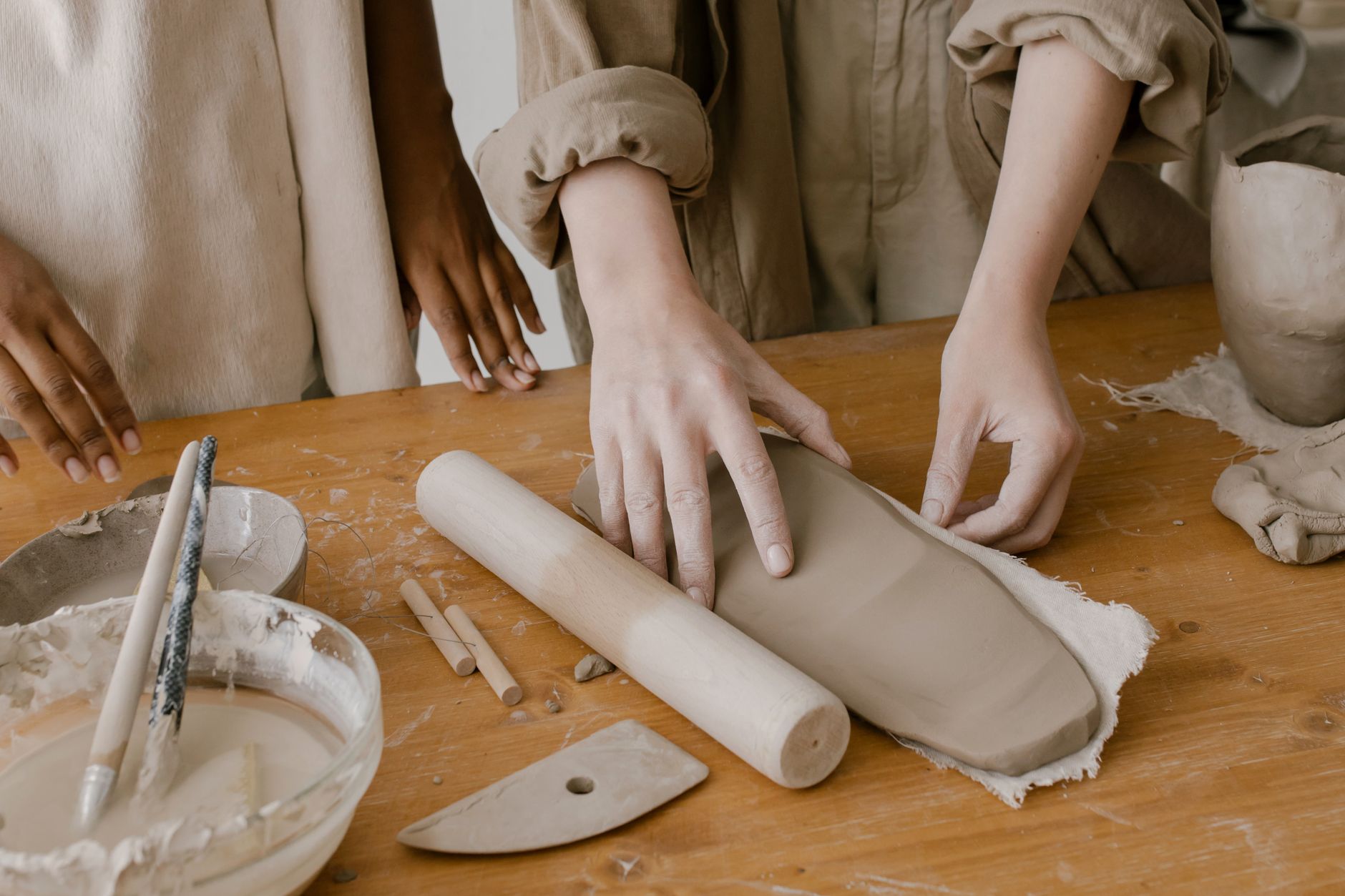
You arrive 10 minutes early. We meet in a family workshop in a laneway off the main tourist drag—not a purpose-built classroom, but a real studio where the craft happens year-round. Your guide gives a 10-minute history: why this craft matters to Hoi An, how it was done 200 years ago versus now, and what you'll make today. Then you gather around a large shared table or individual workbenches. The guide demonstrates each step at normal speed, then walks it again slowly while you follow along. For lantern-making: measure bamboo, soak it if needed, bend it into a frame shape, glue joints, cut and paste colored paper panels, attach a wire handle. For silk painting: stretch silk over a frame, sketch lightly, then apply watercolor or ink washes, layering from light to dark. For ceramics: center clay, open a cylinder, shape walls, smooth the rim, trim the base. For woodblock: draw your design, carve away negative space, ink the block, lay paper on top, burnish with a wooden spoon to print. Between demonstrations, you work at your own pace. The guide moves around the table, adjusting your grip, showing you how to hold the brush at an angle, or helping you unstick a piece of paper. Most people finish their piece within the time limit. If you're slow, you keep working; if you're fast, you start a second one or refine details.
What should you wear and bring to a craft workshop?
Wear clothes you don't mind getting dusty or stained. Ceramics clay dusts your sleeves. Watercolor can splatter. Woodblock ink doesn't wash out of cotton easily—we provide protective aprons, but dark clothes or an old shirt are safer. Bring water and a snack if you want; most workshops have tea or coffee available. Wear flat shoes—you're standing and moving between tables. Don't bring a large bag; a crossbody or small backpack is easier. If you have long hair, tie it back so it doesn't drag through glue or ink. Wear glasses if you normally do—seeing detail matters. We provide all materials and tools, so you don't need to bring supplies. Your phone is fine for photos of the finished piece, but we ask you to keep it away during work time so you stay focused.
Who is a beginner craft workshop right for, and who should choose something else?
| Profile | Best craft for them | Why it works | Consider instead if... |
|---|---|---|---|
| Kids (8–14) | Lantern-making, woodblock | Low pressure, quick wins, take-home piece | They need constant motion; try horse riding or family farm days |
| Couples | Silk painting, ceramics | Romantic, shared focus, one-on-one help | They want a meal component; book a cooking class |
| Seniors (65+) | Silk painting, woodblock | Seated, fine detail, cultural depth | Arthritis limits grip; tea experiences or wellness workshops suit gentle pacing |
| Groups of 6–8 friends | Lantern-making | Fast, fun, photo-friendly, same skill level | They want food/social drinking; add a street food tour before or after |
| Solo travelers | Any | You'll chat with other learners, take home proof you made it | You want nightlife or shopping; Hoi An's charm is quiet, so craft fits the mood |
| Parents with kids | Lantern-making | Both learn, results are forgiving | Separate sessions work better if the child is under 8 or easily distracted |
The honest truth: if you hate sitting still for 3 hours, or if you're only interested in taking a photo for Instagram, a craft workshop will feel slow. If you want to understand a place through what people actually do there, it's perfect.
How do we adapt for rain, allergies, dietary needs, and mixed ability levels?
Rain doesn't cancel. Hoi An workshops are indoors—often in a converted shop-house with open sides, so there's airflow but you're protected. Rain actually brings quieter streets and better light. We've run sessions in drizzle and downpour; only extreme typhoon alerts close us down.
Allergies: Tell us at booking. If you're allergic to latex, we use non-latex gloves. Dust allergies? Woodblock printing is dusty; silk painting or ceramics are cleaner. Ink sensitivities—we use traditional plant-based inks, but we have modern acrylic alternatives. Food dyes in some paints—mention it.
Mixed ages and skill: A 12-year-old and a 70-year-old in the same lantern workshop works fine because there's no "wrong" way to wrap paper around bamboo. The pace is self-directed. If one person is much faster, they decorate their finished piece while others catch up. If someone struggles, the guide spends extra time at their station without slowing the group.
Left-handed users: Our guides know how to position tools for left-handers. Ceramics wheels can spin either way. Brush angles work the same. We adjust without fuss.
What's the difference between a group class and a private workshop, and which should you book?
Group classes run on fixed dates (e.g., Tuesday and Friday mornings). You pay per person. You meet 4–8 strangers—often other travelers—and learn together. The energy is social. The guide can share stories about how local families do this work. Cost per person is lower. You're less likely to finish early and have nothing to do. Best for: solo travelers, couples, groups of friends.
Private workshops are scheduled to your dates and times. Only your group attends. The guide is fully yours for 3–4 hours. You can ask deeper questions. If you're bringing a toddler who might cry, or an elderly relative who tires easily, privacy reduces pressure. Cost is higher overall, but divided among your group it can be similar to a group class if you have 6 people. Best for: families with young kids, corporate groups, couples who want intimacy, people on tight schedules.
Ask us for dates and pricing when you message—we'll tell you which dates have group classes running and what a private booking looks like.
How does a beginner craft workshop in Hoi An compare to other hands-on experiences?
If you're choosing between craft workshops, a Vietnamese cooking class, or a flower arranging workshop, here's the honest difference:
Craft workshops teach a historic skill in a working studio. You leave with an object you made. It's meditative, visual, takes 3–4 hours, suits any age, and costs less than cooking. The piece is a memory, not a meal.
Cooking classes teach you to make 3–4 dishes using local ingredients and techniques. You taste as you cook, and you eat what you make at the end. It's longer (usually 4–5 hours), more interactive with the guide, and costs more due to food. You leave with recipes and a full stomach.
Flower arranging teaches ikebana or Western styles using seasonal blooms. It's shorter (2–3 hours), very focused on aesthetics, produces a perishable piece (flowers last 5–7 days), and is quiet and meditative like craft. Cost is mid-range.
If you want a permanent souvenir, do craft. If you want to learn cooking to replicate at home, choose a class. If you want a photo-ready arrangement for your hotel room, pick flowers. If you want all three, we can arrange multiple experiences across your stay.
What should you check before you book a craft workshop?
Dates that fit your trip: Group sessions run on set days. Confirm a date works before paying. Private sessions are flexible, but book 3–5 days ahead so we can secure the artisan and studio.
Your specific craft: "Ceramics" could mean hand-building or wheel-throwing. If you have a strong preference, state it at booking so we place you correctly. If you don't care, we'll choose what's available.
Group size and vibe: Do you want strangers or just your friends? Will there be kids? Loud group or quiet? Tell us—we adjust the session tone.
Physical comfort: Can you sit at a workbench for 3 hours? Do you need a chair with back support? Will standing to move between stations be okay? Let us know, and we'll arrange what you need.
Allergies and sensitivities: Dust, latex, ink, dyes, strong smells—mention all of it. We adapt or pivot to a different craft.
Language: All guides speak English fluently and explain in detail. If English isn't comfortable, we can arrange a Vietnamese-speaking guide for private bookings.
Camera and photos: Bring your phone. We encourage photos of the finished piece and the process. Social media posts are welcome (tag us if you want). No commercial use without permission.
Take-home logistics: Your finished piece is fragile (wet paint, leather-soft clay, fresh print ink). We wrap it for travel, but a lantern or ceramic bowl takes up space in a backpack. Plan accordingly.
When should you do a craft workshop during your Hoi An stay?
Most people visit Hoi An for 2–3 days. A craft workshop is best done on day 1 or 2, when you're fresh. Morning sessions (8 or 9 a.m. start) leave your afternoon free to explore the ancient town, eat lunch at a local spot, or rest. Afternoon sessions (1 or 2 p.m.) work if you prefer a slower morning. Skip a craft workshop only if you're in town for less than 4 hours or your hands are injured. Every other traveler—kids, seniors, couples, solo—thrives in one.

FAQ
Do I need any art or craft experience to join a beginner workshop?
No. These are designed for zero experience. The guide assumes you've never done this before and builds each step from the ground up. People from all backgrounds join—accountants, teachers, tourists, locals. Skill develops during the 3 hours you're there.
What happens if I don't finish my piece in time?
Most people finish. If you're slow, the guide will help you complete it, or you'll take it home partly done and can finish it yourself (we give you care instructions). Some guides let fast finishers start a second piece. Rushing isn't part of the philosophy; we work at your pace.
Can I do a craft workshop if I have arthritis or limited hand mobility?
Many crafts adapt. Silk painting requires minimal grip strength—just a brush and steady hand. Lantern-making uses glue guns and soft materials, no heavy tools. Ceramics and woodblock demand more fine motor control. Tell us your limitation at booking; we'll match you to a craft that works.
How fragile is the finished piece, and can I take it on a plane?
Fragility depends on the craft. A painted silk or woodblock print is robust—rolls easily in a bag. A hand-built ceramic bowl or lantern is more delicate. We wrap everything carefully. Check your airline's carry-on rules for liquids (paint) and sharp objects (carving tools)—finished pieces usually travel fine as checked luggage or carry-on. We provide wrapping advice when you collect your piece.
Is a craft workshop good for kids, and what's the minimum age?
Yes, kids 8+ thrive in craft workshops. Below 8, focus and hand control are harder, but it depends on the child. Lantern-making is most forgiving for kids. Bring a younger sibling only if they're comfortable sitting for 2 hours and you're okay helping them. We've run sessions with kids as young as 6; it's just slower and needs extra patience from the guide and parent.
What's the difference between a craft workshop and a class at a craft school or museum in Hoi An?
Schools and museums often offer longer courses (weeks or months) or demo-only tours where you watch behind glass. Our workshops are hands-on, 3–4 hours, one afternoon, real artisans, small groups, and you leave with a finished piece. We prioritize you making the thing, not just learning about it. It's the difference between watching someone throw pottery and throwing it yourself.
Can I book a private craft workshop for a bachelorette party or corporate team?
Yes. Private workshops work well for groups. A team of 8–10 people bonding over making lanterns together is memorable. For bachelorette groups, we can pair a workshop with a flower arranging session or add a cooking class on another day. Corporate groups often combine craft with a farm experience or group activities for a full day. Message us to plan.
Do you offer craft workshops in Hanoi or other cities, or only Hoi An?
Hoi An is our core craft location—it's where the artisans and studios are. Hanoi has different experiences (ink painting, calligraphy); we have those booked via art and culture classes. Saigon and other cities have limited craft offerings. If you're visiting multiple cities, ask about what's available in each destination when you plan your itinerary.
Ask about dates
Tell us the city, your dates and what you would like to try. We reply on WhatsApp in English with options and availability.
FAQ
Do I need any art or craft experience to join a beginner workshop?
No. These are designed for zero experience. The guide assumes you've never done this before and builds each step from the ground up. People from all backgrounds join—accountants, teachers, tourists, locals. Skill develops during the 3 hours you're there.
What happens if I don't finish my piece in time?
Most people finish. If you're slow, the guide will help you complete it, or you'll take it home partly done and can finish it yourself (we give you care instructions). Some guides let fast finishers start a second piece. Rushing isn't part of the philosophy; we work at your pace.
Can I do a craft workshop if I have arthritis or limited hand mobility?
Many crafts adapt. Silk painting requires minimal grip strength—just a brush and steady hand. Lantern-making uses glue guns and soft materials, no heavy tools. Ceramics and woodblock demand more fine motor control. Tell us your limitation at booking; we'll match you to a craft that works.
How fragile is the finished piece, and can I take it on a plane?
Fragility depends on the craft. A painted silk or woodblock print is robust—rolls easily in a bag. A hand-built ceramic bowl or lantern is more delicate. We wrap everything carefully. Check your airline's carry-on rules for liquids (paint) and sharp objects (carving tools)—finished pieces usually travel fine as checked luggage or carry-on. We provide wrapping advice when you collect your piece.
Is a craft workshop good for kids, and what's the minimum age?
Yes, kids 8+ thrive in craft workshops. Below 8, focus and hand control are harder, but it depends on the child. Lantern-making is most forgiving for kids. Bring a younger sibling only if they're comfortable sitting for 2 hours and you're okay helping them. We've run sessions with kids as young as 6; it's just slower and needs extra patience from the guide and parent.
What's the difference between a craft workshop and a class at a craft school or museum in Hoi An?
Schools and museums often offer longer courses (weeks or months) or demo-only tours where you watch behind glass. Our workshops are hands-on, 3–4 hours, one afternoon, real artisans, small groups, and you leave with a finished piece. We prioritize you making the thing, not just learning about it. It's the difference between watching someone throw pottery and throwing it yourself.
Can I book a private craft workshop for a bachelorette party or corporate team?
Yes. Private workshops work well for groups. A team of 8–10 people bonding over making lanterns together is memorable. For bachelorette groups, we can pair a workshop with a [flower arranging session](/flower-arranging) or add a [cooking class](/cooking-class) on another day. Corporate groups often combine craft with a [farm experience](/farm-experience) or [group activities](/group-and-corporate) for a full day. Message us to plan.
Do you offer craft workshops in Hanoi or other cities, or only Hoi An?
Hoi An is our core craft location—it's where the artisans and studios are. Hanoi has different experiences (ink painting, calligraphy); we have those booked via [art and culture classes](/art-classes). Saigon and other cities have limited craft offerings. If you're visiting multiple cities, ask about what's available in each [destination](/destinations/hanoi) when you plan your itinerary.
More like this
Craft workshops
Craft Workshop in Saigon: Small Group Classes for Beginners
Cáo Experiences runs small-group craft workshops across Saigon where you learn traditional and contemporary making in intimate studio and community spaces. Sessions suit absolute beginners, families, and skill-builders.
Craft workshops
Craft workshop in Saigon for couples: what to choose
Couples in Saigon have three main craft paths: ceramics in a family studio, natural-dye silk painting, or bamboo weaving. Each teaches differently and suits different moods.
Craft workshops
Craft Workshop in Hoi An: What to Expect Step by Step
A craft workshop in Hoi An with Cáo Experiences is a half or full-day session where you learn a traditional Vietnamese skill—lantern-making, silk painting, woodblock printing, or lacquerware—in a working studio or family workshop. You leave with a finished piece you made yourself.