 Cáo Experiences
Home › Blog › Flower arranging workshops
Beginner Flower Arranging Workshop in Da Nang
By the Cáo Experiences team · 2026-11-01
A beginner flower arranging workshop at Cáo Experiences in Da Nang is a 2.5- to 3-hour hands-on session where you learn to prep stems, understand flower anatomy, build simple arrangements using seasonal Vietnamese blooms, and take your work home. We run these in a calm, private studio space with 2–8 guests per session; each person completes 2–3 arrangements by the end. The class is in English, all materials (fresh flowers, foam, vessels, tools) are included, and we adjust for left-handers, arthritis, or kids with the same care. Most beginners worry they'll "snap the stems" or "make it look messy"—we show you that imperfection is the point, and mistakes teach you faster. Ask us for dates and a quote on WhatsApp. Ask about dates on WhatsApp
What exactly happens during a Da Nang flower class?
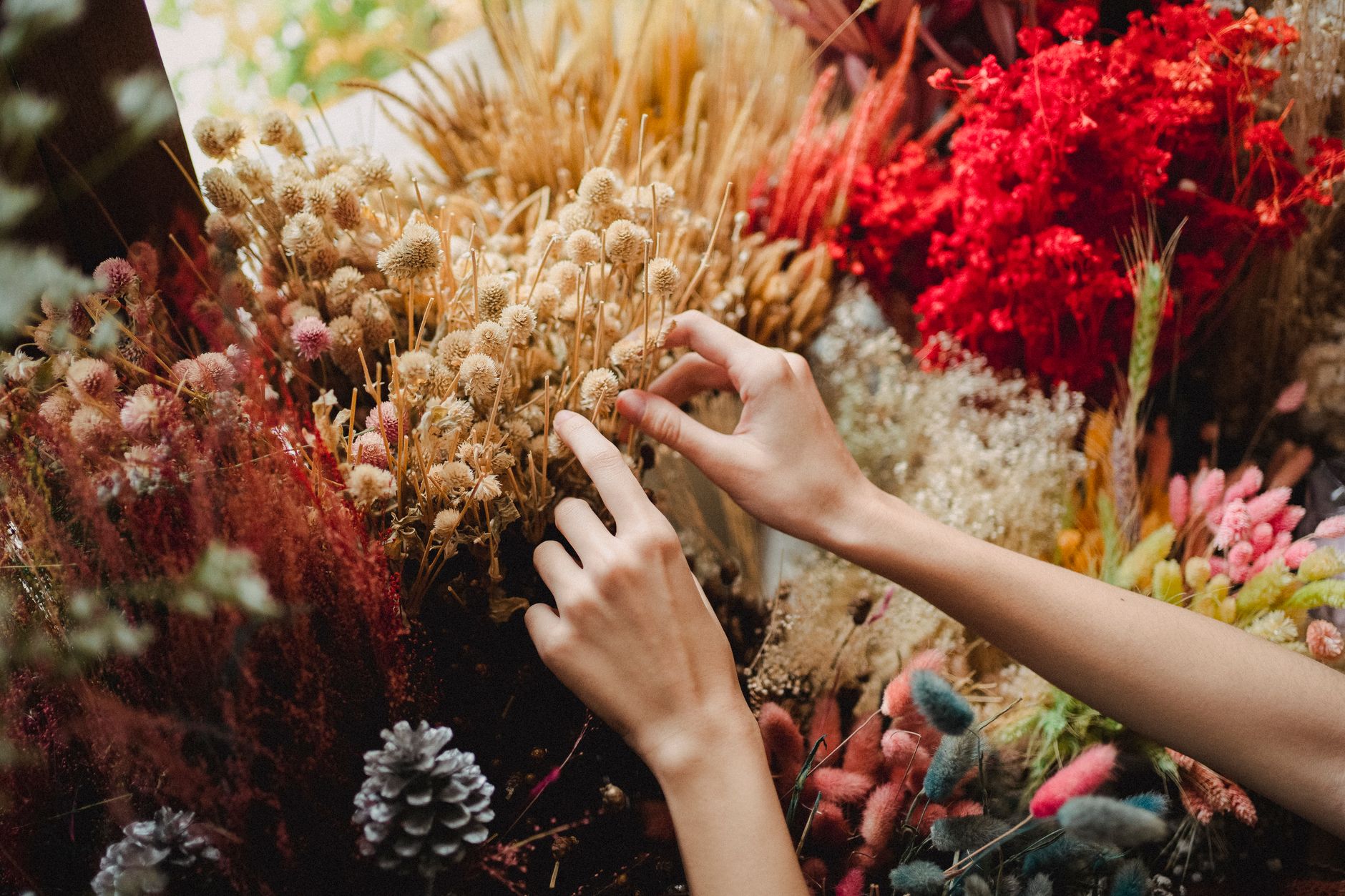
We begin indoors with a 20-minute walk-through of tools, bloom types we're using that week, and why certain flowers behave the way they do—roses drink fast, dahlias bruise easily, eucalyptus lasts longest. You handle each stem, learn to strip lower leaves so they don't rot in water, and practice the "proper cut" at a 45-degree angle. Then we move to the arranging tables: you choose a vessel from our collection (a mason jar, a low ceramic bowl, a tall vase), insert soaked foam, and start placing focal flowers first—usually a larger bloom like a rose or peony—then fill with secondary blooms, greenery, and texture (dried pampas, eucalyptus, waxflower). By hour two, you're building a second arrangement in a different style (tight cluster or loose, asymmetrical). We step back, adjust together, and you photograph your work before it leaves the table.
The real learning happens when you realize your first arrangement feels crowded and your second is airier—that's when proportion clicks. Beginners almost always finish a third small arrangement as a gift, or to experiment with negative space. By the end, you take home care cards and a freshness guide so your blooms last 5–7 days.
Explore our flower arranging approach
Why do beginners feel nervous about their skill level?
Most people assume arranging requires a "design eye" you either have or don't. In fact, it's a craft you learn step-by-step: mechanics first (how to secure stems), then rhythm (repetition and contrast), then confidence. We've hosted surgeons, graphic designers, accountants, and teachers in the same session—each person brings a different visual language, and none of them failed. The fear of "making it look ugly" fades fast because we reframe ugliness: a too-tight arrangement teaches you space; an off-centre stem teaches you balance. We use real flowers, not silk, so there's no penalty for trying. If a stem breaks, we have 50 more. Your job is to notice what worked and what didn't, not to match a magazine photo.
The only genuine issue we see is hesitation to cut expensive blooms. We solve this by showing you the waste pile—we cut, strip, and discard a lot to get to the keepers. Flowers are a crop, not museum pieces. Once that mindset shifts, people relax.
Is this suitable for kids, or only adults?
We welcome families and children aged 6+, though the experience shifts below age 10. A six-year-old will place blooms and enjoy the colours, but won't master the structural concepts. A ten-year-old will understand proportion and do real work. Teenagers often surprise us—they pick up rhythm and composition faster than adults and are less afraid of "getting it wrong." For kids, we:
- Shorten the demo to 10 minutes
- Use a smaller vessel (a jam jar, a bud vase)
- Skip the anatomy talk; focus on "how it feels to hold a stem"
- Let them choose colours and make messy arrangements guilt-free
- Give them a take-home arrangement plus pressed blooms as a bookmark
Family sessions work best as private bookings so kids don't rush while adults learn. Ask us for dates and a quote on WhatsApp to discuss group makeup.
What's the difference between a group session and a private class?
| Format | Group Session | Private Class |
|---|---|---|
| Guest count | 2–8 people | You set the size |
| Cost per person | Lower (shared materials & host time) | Higher total, lower per-person if large group |
| Scheduling | Fixed dates we announce | Flexible, around your group |
| Pacing | Moves at average speed | Tailored to your level & interests |
| Who attends | Strangers or friends | Only your party |
| Follow-up adapts | Generic care cards | Personalized notes per person |
| Ideal for | Solo travelers, couples, meeting locals | Teams, families, multi-day visits, learners with anxiety |
Group sessions are lower-commitment and cheaper; you meet other international guests and local hosts in a relaxed setting. Private bookings suit teams who've taken a Vietnamese cooking class the day before and want another hands-on morning, or families with young kids who need their own pace. Both include the same materials and take-home arrangements.

Do Da Nang classes run year-round, or are there seasonal gaps?
We run workshops March through October in Da Nang. Winter (November–February) is cooler and drier, but flower availability shifts: you see more chrysanthemums, less peony, heavier use of greenery and dried texture. We don't cancel in rain; we adapt. If it's drizzle, we work indoors as normal. If it's a storm, we reschedule with 48 hours' notice (we let you know immediately via WhatsApp and offer three new dates). Most beginners prefer the cooler months anyway—your flowers stay fresher longer if the room temperature is lower. Summer (May–September) means frequent afternoon rain and higher humidity; arrangements droop slightly faster, but the blooms are abundant and vibrant. There's no "best" season for learning—just different flowers and pacing.
Combine with a cooking class in Da Nang
What should you check before booking a Da Nang flower workshop?
Allergies and sensitivities. Tell us if you're allergic to pollen, pollen-heavy flowers like lilies or roses, or have hay fever. We can prep stems to reduce pollen (removing stamens) and offer masks. We also work with some greenery that smells strong; if you're sensitive to eucalyptus or salvia scent, we'll swap it.
Mobility and dexterity. Arranging involves standing for 2–3 hours, holding stems at chest height, and fine motor work (tying, cutting, placing). If you have arthritis, limited reach, or need to sit for long periods, let us know—we provide stools, lower tables, pre-cut blooms, and pre-soaked foam so you focus on placement and design, not prep.
Dietary needs and breaks. We offer water and herbal tea; if you need snacks or have specific dietary needs, ask in advance. Sessions include one 10-minute break; longer breaks are fine—we're not rigid on timing.
What to wear. Clothes you don't mind staining (flower water, green from stems). Closed-toe shoes (thorns, wet floors). If you have very long sleeves or jewellery, consider something simpler—sleeves catch on stems and rings snag. Bring a small bag or box to take home your arrangements; we can provide one, but yours is safer.
Host language and pacing. All classes are English-hosted. If your group speaks another language primarily, tell us—we'll confirm comfort levels in advance. We go slow for beginners; if you've arranged before, we'll ask upfront and challenge you slightly.
Check-in process. We'll coordinate a final WhatsApp message the day before with exact meeting time, studio location (a quiet alley in Da Nang's coastal district), and a photo so you find us easily.
What other hands-on experiences go well with a flower class?
Many guests combine flower arranging with our tea experiences, which share the same "slow looking" and sensory focus. Some book a Vietnamese coffee workshop on the same morning (arrangement first, coffee after), or spend a day on a farm experience outside Da Nang to see where some blooms originate. Couples often pair a class with an evening street food and market tour through Da Nang's local markets—you see the flower stalls in action, meet growers, and eat dinner together. Teams interested in creativity and bonding might add a craft workshop or group and team experience centred on collaboration. If you're staying longer, art and culture classes in Da Nang offer a different creative angle—painting or carving—that complements arranging.

FAQ
Is there a minimum or maximum group size?
Minimum is 2 people (we don't run 1-on-1 group sessions, but will discuss private classes for a solo guest). Maximum is 8 per session to keep the pacing thoughtful. Larger teams can split across two sessions.
Can we bring our own flowers?
We prefer to use our weekly blooms so we know their freshness and condition. If you source flowers locally and want to arrange them, ask us first—we'll assess and may adjust the fee.
What if I'm left-handed?
We set up your table so your left side has the clear space. Tools (scissors, floral knife) work the same. We show left-hand first, right-hand second.
Do I need to know anything about flowers before arriving?
No. We teach you everything. If you have curiosity about blooms or want to grow them at home, bring those questions.
How long do the arrangements I make last?
5–7 days indoors in cool water, changed daily. We give you a care card with specifics for the blooms you used.
Can kids under 6 attend?
Technically yes if a parent stays close, but kids under 6 usually lose interest after 30 minutes. Better to book a private family session so you're not managing attention span in a group.
Ask about dates
Tell us the city, your dates and what you would like to try. We reply on WhatsApp in English with options and availability.
FAQ
Is there a minimum or maximum group size?
Minimum is 2 people (we don't run 1-on-1 group sessions, but will discuss private classes for a solo guest). Maximum is 8 per session to keep the pacing thoughtful. Larger teams can split across two sessions.
Can we bring our own flowers?
We prefer to use our weekly blooms so we know their freshness and condition. If you source flowers locally and want to arrange them, ask us first—we'll assess and may adjust the fee.
What if I'm left-handed?
We set up your table so your left side has the clear space. Tools (scissors, floral knife) work the same. We show left-hand first, right-hand second.
Do I need to know anything about flowers before arriving?
No. We teach you everything. If you have curiosity about blooms or want to grow them at home, bring those questions.
How long do the arrangements I make last?
5–7 days indoors in cool water, changed daily. We give you a care card with specifics for the blooms you used.
Can kids under 6 attend?
Technically yes if a parent stays close, but kids under 6 usually lose interest after 30 minutes. Better to book a private family session so you're not managing attention span in a group.
More like this
Flower arranging workshops
Flower Arranging Workshop Ho Chi Minh City: How to Book
A flower arranging workshop in Ho Chi Minh City teaches you to design seasonal arrangements in a calm studio setting. We run small-group and private sessions with English-speaking hosts who walk you through technique, flower choice, and how to make arrangements last.
Flower arranging workshops
Flower arranging workshop in Ninh Binh for couples
A flower arranging workshop in Ninh Binh lets couples create an arrangement together in a calm setting, learning Vietnamese design principles while working with seasonal blooms.
Flower arranging workshops
Flower Arranging Workshop in Mekong Delta for Foreigners
We run intimate flower arranging workshops in family-owned gardens and workshops across the Mekong Delta, where you'll learn seasonal design by practicing alongside our hosts. Pick your own blooms, arrange three pieces, and take them home.