 Cáo Experiences
Home › Blog › Flower arranging workshops
Beginner Flower Arranging Workshop in Phu Quoc
By the Cáo Experiences team · 2026-11-01
A beginner flower arranging workshop in Phu Quoc feels less like a class and more like time spent with someone who loves flowers, showing you how to see them differently.
We design these sessions for travelers and long-term expats who've never arranged flowers, or who tried once and found it intimidating. Phu Quoc's year-round tropical growing season means you're always working with vibrant, unfamiliar blooms—dahlias, celosia, hypericum berries, heliconias, local gladioli—not the same roses you'd see elsewhere. That's both the thrill and the reason many people feel hesitant. We've learned that beginners worry most about waste, getting proportions "wrong," and whether they'll have a steady hand. None of those things matter. Flowers are forgiving. Your arrangement only needs to please you.
Here's how a session actually unfolds.
What happens in the first 30 minutes—and why it matters?
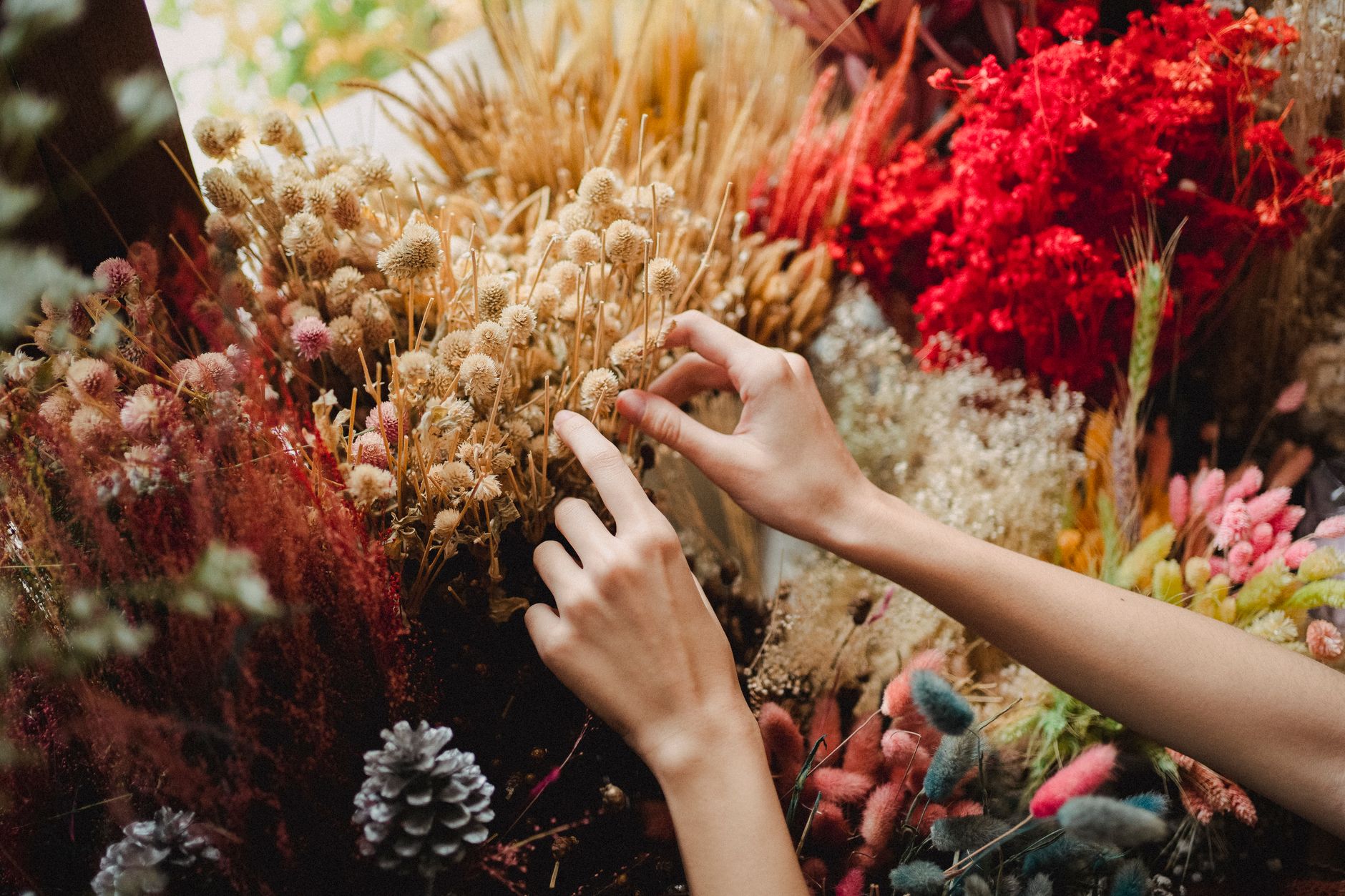
You'll arrive and we'll have fresh flowers already staged on worktables—buckets of stems, greenery, berries, and foliage grouped by type. We start by touching them. You learn to feel the condition of a stem (is it woody or soft?), how to strip lower leaves so they don't rot in water, and which flowers are delicate (orchids, gardenias) versus sturdy (chrysanthemums, sunflowers). We show you our three essential tools: a sharp knife, floral snips, and sometimes a small saw for thick branches. You'll cut practice stems at a 45-degree angle, learning that angle increases water uptake. We never rush this part. A beginner who understands why a stem is prepped a certain way arranges with more confidence than someone just copying motions.
Then we talk about the container you'll be building into. You choose from what we have on hand—perhaps a clear cylinder, a shallow bowl, a ceramic vase—and you rinse it. Container choice shapes everything: a narrow vase suggests tall, linear arrangements; a wide shallow bowl invites a low, sprawling design.
How do you avoid the most common beginner mistakes?
The biggest mistake is thinking you need a plan before you touch a flower. Most of us start with a pencil sketch or a strict pattern, then flowers don't fit the pattern, we panic, and we're done. We teach the opposite: build on a structure, not a sketch. You'll create a loose armature—a base of greenery (eucalyptus, ruscus, or local filler) that gives you anchor points. Then add focal flowers one at a time, turning the vase as you go. Step back. Add another. This way, flowers find their own balance. You're steering, not forcing.
A close second: buying or cutting too many stems. Beginners often overload a vase because they're afraid of empty space. We show you how to hold stems loosely in your hand first, seeing proportion before you commit. One large dahlia, three hypericum sprays, five stems of greenery, two accent pieces. That's often enough for a striking arrangement.
Third: not conditioning flowers after you buy them. If you're arranging at home after the workshop, recut stems under running water, give flowers a long drink in fresh water for a few hours, and arrange in a clean vase with fresh water. This doubles vase life.
Is a workshop different in rainy season, and does weather affect how long flowers last?
Phu Quoc's rainy season (May–September) brings humidity and warmer nights, which speeds flower fading. On a rainy day, we move indoors to a covered studio space—not outdoors—so moisture doesn't damage your finished work or your phone photos. The experience is identical; the flowers are still fresh and seasonal.
If you're arranging flowers in your own home during rainy season, change water every two days instead of three, remove any brown leaves immediately, and keep arrangements away from direct sunlight and near air conditioning if possible. Tropical blooms in humid heat last 5–7 days on average rather than 10–14, based on typical water and temperature conditions. We always tell guests this upfront so they're not disappointed if their arrangement fades faster than a winter bouquet would.
Who is this workshop really for—and who might want something else?
Type | Best suited for | Why consider it | Might prefer instead ---|---|---|--- Complete beginners (any age) | All first-timers, nervous types | Low pressure, all skills welcome, learn fundamentals | Art and culture classes if you want to draw or paint flowers instead Couples or friends | Anyone looking for a shared activity | Relaxed, social, both leave with a keepsake | Tea experiences for a quieter, meditative pairing Families with teens (14+) | Families, multi-generational groups | Kids feel accomplished, no frustration | Family experiences for younger kids or mixed ages Expats in Phu Quoc long-term | People wanting a local creative skill | Repeat sessions build real confidence; flowers are affordable year-round | Craft workshops for textiles, pottery, or other media Corporate groups (4–12) | Small teams, wellness retreats | Non-competitive, conversation-friendly activity | Group and team experiences for larger cohorts or skill-building focus
Most workshops we run are 2–6 people: a couple, a solo traveler with new friends, a small family, or colleagues on a retreat. Larger groups (8+) we split into two sessions or stagger times so no one feels rushed. If you're in Phu Quoc for a few weeks, some guests book two sessions and work with different seasonal flowers both times.

What do you actually take home, and how do you care for it?
Your finished arrangement goes into the container you used in the workshop. We wrap the base loosely in a compostable sleeve or kraft paper so it's easy to carry. You take it home and place it in a cool spot, away from direct sun and ripening fruit (ethylene gas from fruit speeds wilting). Change water every two to three days. Mist leaves lightly if the air is very dry. Expect your arrangement to stay vibrant for a week, with a graceful fade over 10–14 days depending on what flowers are in season.
Some guests photograph their arrangement immediately, share the image, and gift the flowers to a friend or their accommodation host the next day. Others keep theirs on a desk or table and enjoy the slow transformation. Both are lovely.
How does this compare to booking a florist arrangement or taking a class online?
A live workshop is tactile in ways video can't teach. You feel stem resistance as you cut, you smell the flowers (a tropical dahlia smells completely different from a rose), you see how light hits color in a real room. A florist-made arrangement is beautiful but passive; you learn nothing, and it arrives (if shipping) potentially bruised or faded. Online classes let you pause and rewind but lack real feedback—you can't ask why your arrangement looks unbalanced, and you don't leave with a finished piece on the same day.
Our flower arranging workshop philosophy is that confidence comes from doing, not watching. A 2.5-hour session costs less than a florist's premium arrangement and teaches you a skill you'll use for years.
What to check before you book.
1. Confirm the date. Sessions fill during high season (November–March) and mid-year holidays. WhatsApp us early.
2. Ask what flowers are in season that week. Your design will feature what's fresh, not what's on a Pinterest board. Seasonal = better quality, better price, better for the local growers we work with.
3. Check if you have any flower allergies (pollen, fragrance sensitivity). Tell us in your message; we can swap some flowers or adjust without issue.
4. Bring or wear something you don't mind getting wet or stained. Flower stems weep, snips can flick water, and the vase might drip. We have aprons, but many guests prefer old clothes.
5. Arrive 10 minutes early. We'll have water running, stems ready, and space prepared. You'll feel calmer and won't rush the opening.
Explore our flower arranging experience
If you're also interested in other creative experiences during your time in Phu Quoc—perhaps a coffee workshop or a farm and countryside experience nearby—we can help you string together a full retreat day. Many guests book a morning workshop with us and spend the afternoon at a local market or beach.
Or, if you're traveling beyond Phu Quoc, we run flower arranging classes in other regions too, including Hanoi, Ho Chi Minh City, Hoi An, and Da Lat, each with local blooms and host homes.
Get in touch to plan your session

FAQ
Do I need any experience, or am I really a complete beginner?
Complete beginners are our bread and butter. We teach from zero—how to hold snips, why you strip leaves, how to build a structure. If you've never arranged a flower, that's perfect. You'll surprise yourself with what you make in 2.5 hours.
Can I bring kids under 14?
Yes, with a caveat. Kids under 10 often find snips and floral knives a bit fiddly; they get bored if they're not actually cutting and building. Teens 14+ do brilliantly—they're coordinated and enjoy the creative challenge. For younger kids, ask us; we can adapt a session, but family experiences with a craft focus might suit them better.
What if I'm allergic to pollen or strong floral smells?
Tell us when you book. Some tropical flowers have less pollen or fragrance. We can choose arrangements with those blooms, and you'll still have a full, gorgeous result.
How long will my arrangement last at home?
Typically 7–14 days, depending on the season and flowers used. Tropical blooms in Phu Quoc's warm, humid climate fade faster than they would in a cooler place. Fresh water every 2–3 days and a cool spot add a few days.
Can I book a private session for just two people, or does it have to be a group?
Private sessions are available for couples and small groups. Ask us for dates and a quote on WhatsApp; we'll tailor timing, flowers, and flow just for you.
What if it rains?
We move indoors to a studio space. The experience is exactly the same—flowers, tools, teaching, take-home arrangement. Rain doesn't cancel; it just changes the backdrop.
Ask about dates
Tell us the city, your dates and what you would like to try. We reply on WhatsApp in English with options and availability.
FAQ
Do I need any experience, or am I really a complete beginner?
Complete beginners are our bread and butter. We teach from zero—how to hold snips, why you strip leaves, how to build a structure. If you've never arranged a flower, that's perfect. You'll surprise yourself with what you make in 2.5 hours.
Can I bring kids under 14?
Yes, with a caveat. Kids under 10 often find snips and floral knives a bit fiddly; they get bored if they're not actually cutting and building. Teens 14+ do brilliantly—they're coordinated and enjoy the creative challenge. For younger kids, ask us; we can adapt a session, but [family experiences](/family-experiences) with a craft focus might suit them better.
What if I'm allergic to pollen or strong floral smells?
Tell us when you book. Some tropical flowers have less pollen or fragrance. We can choose arrangements with those blooms, and you'll still have a full, gorgeous result.
How long will my arrangement last at home?
Typically 7–14 days, depending on the season and flowers used. Tropical blooms in Phu Quoc's warm, humid climate fade faster than they would in a cooler place. Fresh water every 2–3 days and a cool spot add a few days.
Can I book a private session for just two people, or does it have to be a group?
Private sessions are available for couples and small groups. Ask us for dates and a quote on WhatsApp; we'll tailor timing, flowers, and flow just for you.
What if it rains?
We move indoors to a studio space. The experience is exactly the same—flowers, tools, teaching, take-home arrangement. Rain doesn't cancel; it just changes the backdrop.
More like this
Flower arranging workshops
Flower Arranging Workshop Ho Chi Minh City: How to Book
A flower arranging workshop in Ho Chi Minh City teaches you to design seasonal arrangements in a calm studio setting. We run small-group and private sessions with English-speaking hosts who walk you through technique, flower choice, and how to make arrangements last.
Flower arranging workshops
Flower arranging workshop in Ninh Binh for couples
A flower arranging workshop in Ninh Binh lets couples create an arrangement together in a calm setting, learning Vietnamese design principles while working with seasonal blooms.
Flower arranging workshops
Flower Arranging Workshop in Mekong Delta for Foreigners
We run intimate flower arranging workshops in family-owned gardens and workshops across the Mekong Delta, where you'll learn seasonal design by practicing alongside our hosts. Pick your own blooms, arrange three pieces, and take them home.