 Cáo Experiences
Home › Blog › Flower arranging workshops
Best floristry class in Hoi An: hands-on workshops for beginners
By the Cáo Experiences team · 2026-11-01
At Cáo Experiences, we run flower arranging workshops in small groups (usually 4–8 people) or private pairs at a family workshop space in Hoi An's old quarter. A session takes three to four hours: we begin with a walk to a local flower market to choose blooms together—you'll learn what's in season, how to feel for freshness, which stems last—then return to arrange. You'll complete two or three finished pieces (a small bouquet, a vase arrangement, maybe a seasonal wreath), take them with you, and learn techniques you can use at home. We host in English, adapt for absolute beginners and children, and work around allergies or mobility needs. Cost varies by group size and date; ask us for a quote on WhatsApp. Most beginners worry they'll "mess it up"—we promise you won't: floristry is forgiving, and mistakes teach you fastest.
What makes a real floristry class different from a souvenir workshop?
A true floristry class teaches you why flowers are placed where they are, not just how to stuff stems in foam. You'll learn about stem length, colour balance, negative space, and how different blooms age. A souvenir workshop gets you a pretty photo and something to take home; a real class gets you a skill.
When you show up, we don't hand you a pre-arranged base or a template. Instead, you choose your own flowers, make your own choices about shape and rhythm, and we guide you through the decision-making part—that's the craft. Most tourist-aimed sessions skip this. By the end of a Cáo workshop, you understand how to start from scratch: you know which flowers anchor a design, which are filler, which create movement.

How does the market walk change what you'll arrange?
Walking to buy your flowers together is the core of the session. You meet the flower vendors, see what's actually available that day (not a pre-bought stock), and choose blooms based on colour, texture, and how you're feeling. This is completely honest: some days roses are fresher, some days dahlias are expensive, some days the market is thick with seasonal chrysanthemums you've never worked with.
This isn't a curated "experience"—it's how real florists shop. You'll handle dozens of stems, learn which ones feel crisp and which ones are already drinking water, and notice which colours sing together in morning light. Hoi An's market has vendors who've been selling to florists for years; they'll share tips if you're curious. We translate, but mostly you'll pick up the rhythm just by watching and asking. You return with exactly what you've chosen, which means your arrangement will be unique. You'll care about it more because you found those flowers yourself.
What's a realistic timeline for a beginner to feel confident arranging?
One three-hour session teaches you the grammar—why a stem goes here, why you strip leaves there, why you turn the piece as you build it. You'll finish the workshop feeling "I made that and it looks like a real arrangement." You won't be a florist yet, but you'll have picked up enough that you can buy flowers at home and make something that doesn't fall apart.
Most beginners expect to feel lost; instead, they're surprised at how logical it is once someone shows them the first few placements. The hardest part isn't technique—it's confidence. By hour two, everyone stops asking permission and starts trusting their eye. If you want to go deeper—learning about seasonal design, event arrangements, or running a flower business—you'd book follow-up sessions or private lessons. We can arrange that, but most guests just want to feel capable, which you will be after one class.
How do we adapt classes for kids, seniors, and mixed groups?
Children (ages 6+) can absolutely join. We scale the height of the table, give them smaller vessels to work in, and pair them with an adult if needed. Kids learn fast because they don't overthink colour matching; they just arrange what feels right. We keep sessions relaxed and don't rush them. Seniors appreciate the sitting-down nature of the work and the chance to learn something with their hands. We don't use heavy water-filled bases—you'll lift the finished piece, not deadlift anything.
Mixed-age groups (couples, friends, families) work well because there's no competition. Everyone's arranging their own piece at their own pace, and you can chat, laugh, and help each other. We've had grandparents and teenagers in the same session; the grandparent often teaches the teenager something about patience. If someone has arthritis or limited grip strength, we adapt: thinner stems, easier-to-hold tools, or they direct while someone else places (and it's still their design).
What actually costs more: private or small-group classes?
Option | Group size | Per-person cost basis | When it's worth it ---|---|---|--- Small group (4–8 people) | Shared | Lower per head; you split host time | Meeting other travelers; first-time learners; budget-conscious Private pair/couple | 2 people | Higher per person; just you two | Anniversaries; deep focus; specific requests; total control of timing Private individual | 1 person | Highest per person; all host attention | Serious learners; therapeutic aim; travel with constraints
Private sessions cost more overall but divide equally if you're a couple. Small groups cost less per person but mean you're sharing the host's attention and the pace of others. There's no wrong choice—it depends whether you want a social morning or a quiet, personalized lesson. Ask us for dates and a quote on WhatsApp: we'll quote both, and you'll see the actual numbers.
What happens if the market is busy or flowers aren't ideal that day?
We've been doing this for years, so we know what to do. If the market is packed, we go earlier or work with a backup vendor we know. If certain flowers aren't fresh that morning, we skip them and use what's available—and honestly, this teaches you something more useful than a perfect scenario would. You learn to work with what you've got, which is how real design works. Rain doesn't shut us down; the market runs rain or shine, and the workshop space is covered. We keep extra towels and an umbrella for the walk if needed.
If someone has a pollen allergy, we avoid high-pollen flowers (like lilies in full bloom) and choose lower-pollen options instead. We know which flowers these are. Just let us know when you book.
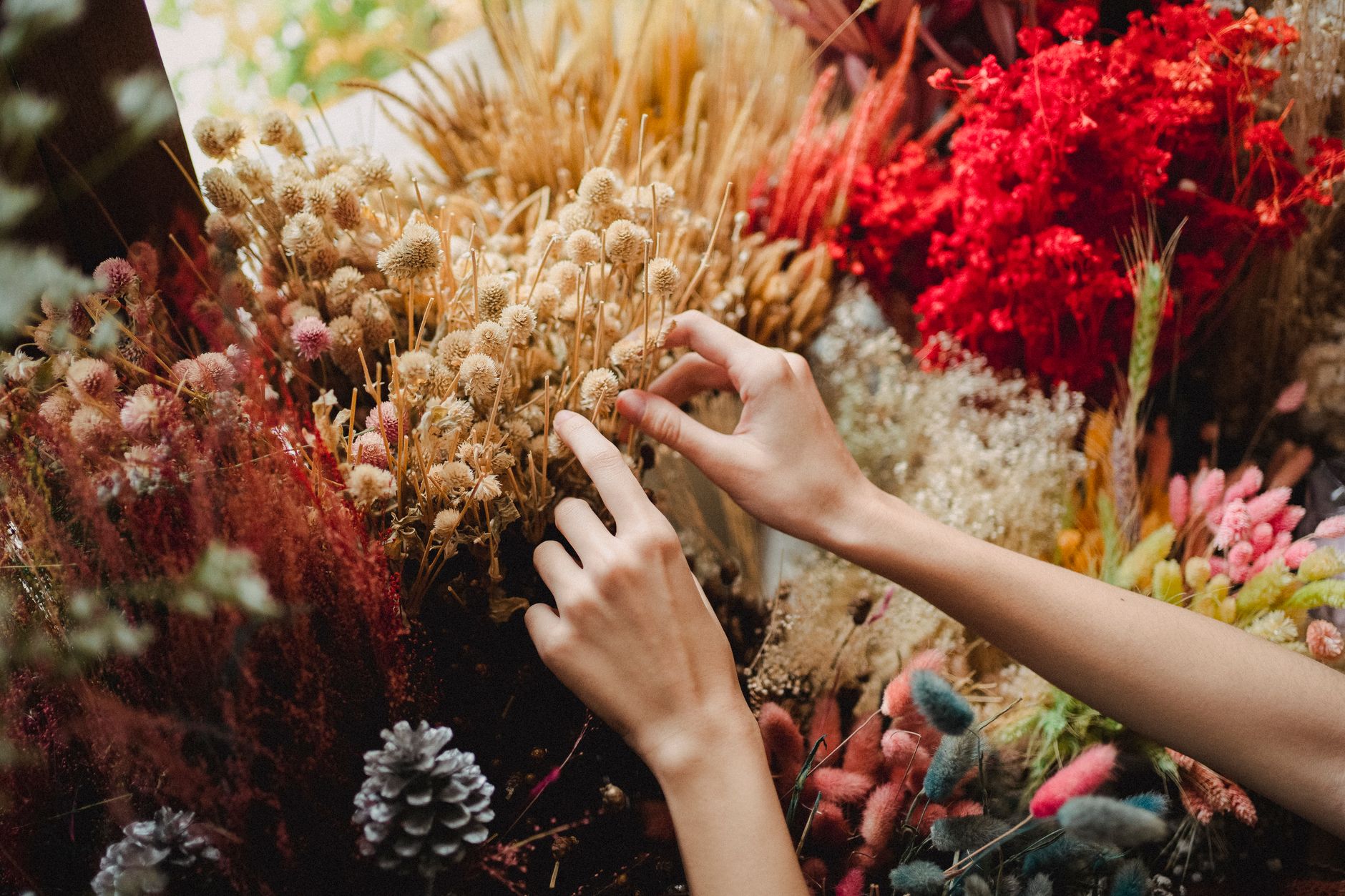
Where exactly in Hoi An do we hold the class?
We work in a family workshop space in a quiet lane off the old quarter—close enough to walk to the market in 10 minutes, far enough away to focus and not feel rushed. It's a real working space with good light, proper flower tools, and water access. It's not a hotel ballroom or a trendy studio; it's where people actually make things. You'll see remnants of other projects: a half-finished wedding order, buckets of stems being reused. This is intentional—it shows you that floristry is a working craft, not a performance.
How do we compare to other experiences in Hoi An?
If you're choosing between flower arranging and other hands-on sessions while in town, here's what makes sense: Vietnamese cooking classes teach you technique and local ingredients through food; a coffee workshop focuses on brewing, bean origin, and taste; floristry focuses on design, colour, and using your hands to build something beautiful in real time. Cooking and coffee are daily-use skills; floristry is a creative meditation that some people return to at home and some people do once and treasure the memory. We've had guests do both a cooking class and a flower class in the same trip—they feed different parts of the brain.
Our flower class is specific to Hoi An because we work with what's available in this town's market. If you're also exploring the region, we run experiences in other locations too, but the market walk and the vendors are unique to each place.
What should you check before booking a class?
Checklist before you commit:
- [ ] Duration fits your schedule: Three to four hours, no short cuts. If you have only 90 minutes, floristry isn't the right fit; you'll feel rushed.
- [ ] Group size suits your personality: Are you social or do you prefer quiet focus? We can tell you the confirmed group size before you pay.
- [ ] Physical demands are okay: Arranging is mostly sitting, but you'll be standing and walking at the market. Let us know if standing is difficult.
- [ ] You've told us about allergies: Pollen, latex (in floral tape), or sensory sensitivities—we adapt once we know.
- [ ] You're flexible on flowers: We use what's fresh and in season. If you have your heart set on peonies in July, they might not be available.
- [ ] Camera/phone for your finished piece: You'll want to photograph your work. We don't mind; just live the first five minutes without the phone out.
- [ ] Wear something you don't mind water and leaf-stain on: It's not messy, but water splashes and leaves mark fabric. Avoid white pants or your favorite shirt.
Does it make sense to combine flower arranging with other experiences?
Yes. Many guests book a cooking class in the morning (finishing around midday with lunch), then a flower class in the afternoon. You're using your hands both times but in completely different ways—food for the body, flowers for the eye. Others pair floristry with a visit to a local tea experience or a farm and countryside outing for a full day of sensory learning. The market walk in the flower class actually connects you to how Hoi An sources its seasonal ingredients, which makes the cooking class deeper if you do that too.
If you're traveling with kids, family-focused experiences like our flower class work better than pure skill-building courses. Kids learn without pressure, and everyone leaves with something tangible. We can also design group and corporate sessions if you're traveling with a team or friend group and want multiple experiences coordinated.
Real expectations: what you'll actually take home.
You'll leave with two or three finished flower arrangements that you've made. In Hoi An's climate, they'll last 3–5 days if you keep them in water and out of direct sun. Some people photograph them, some people gift them to their hotel, some people carry them carefully back to their room and keep them until they fade. The flowers are secondary to what you've learned—how to see space, balance, and movement in a small container. If you try to arrange flowers at home after, you'll surprise yourself at how much you remember.
You'll also leave having met the vendors, having walked a real market, and having spent three hours doing something with zero productivity goal. That's rare in travel. It's one reason people book this more than once, or book it and then tell their friends to do it when they visit Hoi An.
Ask about dates on WhatsApp | More experiences in Hoi An

FAQ
Do I need experience to join a flower arranging class?
No. All our classes are built for absolute beginners. We teach you how to hold the stems, how to strip leaves, how to turn the piece as you work—everything from step one. If you've arranged flowers before, you'll move faster and try bolder combinations, but no prior skill is required or expected.
Can I do this if I have a severe pollen allergy?
Yes. Tell us when you book, and we'll choose low-pollen flowers: roses, hydrangeas, lisianthus, greenery. We avoid lilies, tulips in full bloom, and other high-pollen flowers. We keep antihistamine tablets on hand too. Bring your usual allergy medication if you take one.
What if I'm very shy or I don't speak much English?
The beauty of floristry is that it's quiet work. You don't need to chat; you can just focus on your arrangements. We speak English clearly and use simple language, and most communication happens through showing, not talking. Shy guests often say this was perfect because there's no pressure to perform or entertain.
How long do the flower arrangements last after I take them home?
In a cool room with fresh water and no direct sun, 3–5 days typically. In hot direct light, 2–3 days. We teach you how to change water and trim stems before you leave, which extends the life. Some guests photograph them immediately because they know they'll fade; some enjoy watching the slow change.
Can I bring my partner or friend even if they're not interested in flowers?
Absolutely. People come with partners who are skeptical and leave amazed. It's a hands-on, low-pressure morning, and there's something almost meditative about watching someone focus on something beautiful. They might just sit with a coffee and watch, or they might join in. We've had partners do separate projects and then compare—no pressure either way.
What if the weather is bad on the day of my class?
Rain doesn't cancel floristry. We walk to the market in the rain (Hoi An's old quarter is magical in light rain, and the vendors are used to it), and the workshop space stays dry. We have extra umbrellas and towels. Heavy storm or flooding might require rescheduling, but we've never had to do that in practice.
Ask about dates
Tell us the city, your dates and what you would like to try. We reply on WhatsApp in English with options and availability.
FAQ
Do I need experience to join a flower arranging class?
No. All our classes are built for absolute beginners. We teach you how to hold the stems, how to strip leaves, how to turn the piece as you work—everything from step one. If you've arranged flowers before, you'll move faster and try bolder combinations, but no prior skill is required or expected.
Can I do this if I have a severe pollen allergy?
Yes. Tell us when you book, and we'll choose low-pollen flowers: roses, hydrangeas, lisianthus, greenery. We avoid lilies, tulips in full bloom, and other high-pollen flowers. We keep antihistamine tablets on hand too. Bring your usual allergy medication if you take one.
What if I'm very shy or I don't speak much English?
The beauty of floristry is that it's quiet work. You don't need to chat; you can just focus on your arrangements. We speak English clearly and use simple language, and most communication happens through showing, not talking. Shy guests often say this was perfect because there's no pressure to perform or entertain.
How long do the flower arrangements last after I take them home?
In a cool room with fresh water and no direct sun, 3–5 days typically. In hot direct light, 2–3 days. We teach you how to change water and trim stems before you leave, which extends the life. Some guests photograph them immediately because they know they'll fade; some enjoy watching the slow change.
Can I bring my partner or friend even if they're not interested in flowers?
Absolutely. People come with partners who are skeptical and leave amazed. It's a hands-on, low-pressure morning, and there's something almost meditative about watching someone focus on something beautiful. They might just sit with a coffee and watch, or they might join in. We've had partners do separate projects and then compare—no pressure either way.
What if the weather is bad on the day of my class?
Rain doesn't cancel floristry. We walk to the market in the rain (Hoi An's old quarter is magical in light rain, and the vendors are used to it), and the workshop space stays dry. We have extra umbrellas and towels. Heavy storm or flooding might require rescheduling, but we've never had to do that in practice.
More like this
Flower arranging workshops
Flower Arranging Workshop Ho Chi Minh City: How to Book
A flower arranging workshop in Ho Chi Minh City teaches you to design seasonal arrangements in a calm studio setting. We run small-group and private sessions with English-speaking hosts who walk you through technique, flower choice, and how to make arrangements last.
Flower arranging workshops
Flower arranging workshop in Ninh Binh for couples
A flower arranging workshop in Ninh Binh lets couples create an arrangement together in a calm setting, learning Vietnamese design principles while working with seasonal blooms.
Flower arranging workshops
Flower Arranging Workshop in Mekong Delta for Foreigners
We run intimate flower arranging workshops in family-owned gardens and workshops across the Mekong Delta, where you'll learn seasonal design by practicing alongside our hosts. Pick your own blooms, arrange three pieces, and take them home.