
Home › Blog › Craft workshops
Best pottery class in Da Nang: what to expect
By the Cáo Experiences team · 2026-11-06
A pottery class in Da Nang with Cáo Experiences means three hours in a family ceramics studio in a quiet lane off the old quarter, working clay by hand or on a wheel under one-to-one guidance from a practicing potter. You'll learn centering, pinching, coiling or hand-building techniques, fire your piece in a wood or electric kiln, and collect it after firing. Sessions run for 2–4 guests in English with WhatsApp coordination; we adapt for left-handers, arthritis, tremor, or zero prior skill. Beginners worry about clay sticking or collapse—we show you how pressure and water control prevent both. Rain doesn't stop pottery; we stay indoors. Ask us for dates and a quote on WhatsApp if you're interested in booking. Ask about dates on WhatsApp
What makes pottery different from other Da Nang crafts?
Pottery is the only craft workshop where you take home a fired object—something you've shaped and hardened by heat. Unlike flower arranging (which fades) or coffee cupping (which you drink), your bowl or mug becomes lasting. The tactile feedback is immediate: your hands feel clay move under pressure, resist, hold shape. You learn physics—why walls thin under upward pressure, how moisture changes stiffness, why the base must be thick. This teaches patience. Many guests say a three-hour pottery session feels like a week away from screens because clay demands presence.

Which pottery method suits me—wheel or hand-building?
| Method | Best for | Learning curve | What you make | Our advice |
|---|---|---|---|---|
| Wheel throwing | Symmetry lovers; meditative focus | Steep first hour; rhythm after 90 min | Bowls, cups, cylinders | Book if you want to feel "real pottery" and don't fear wobble |
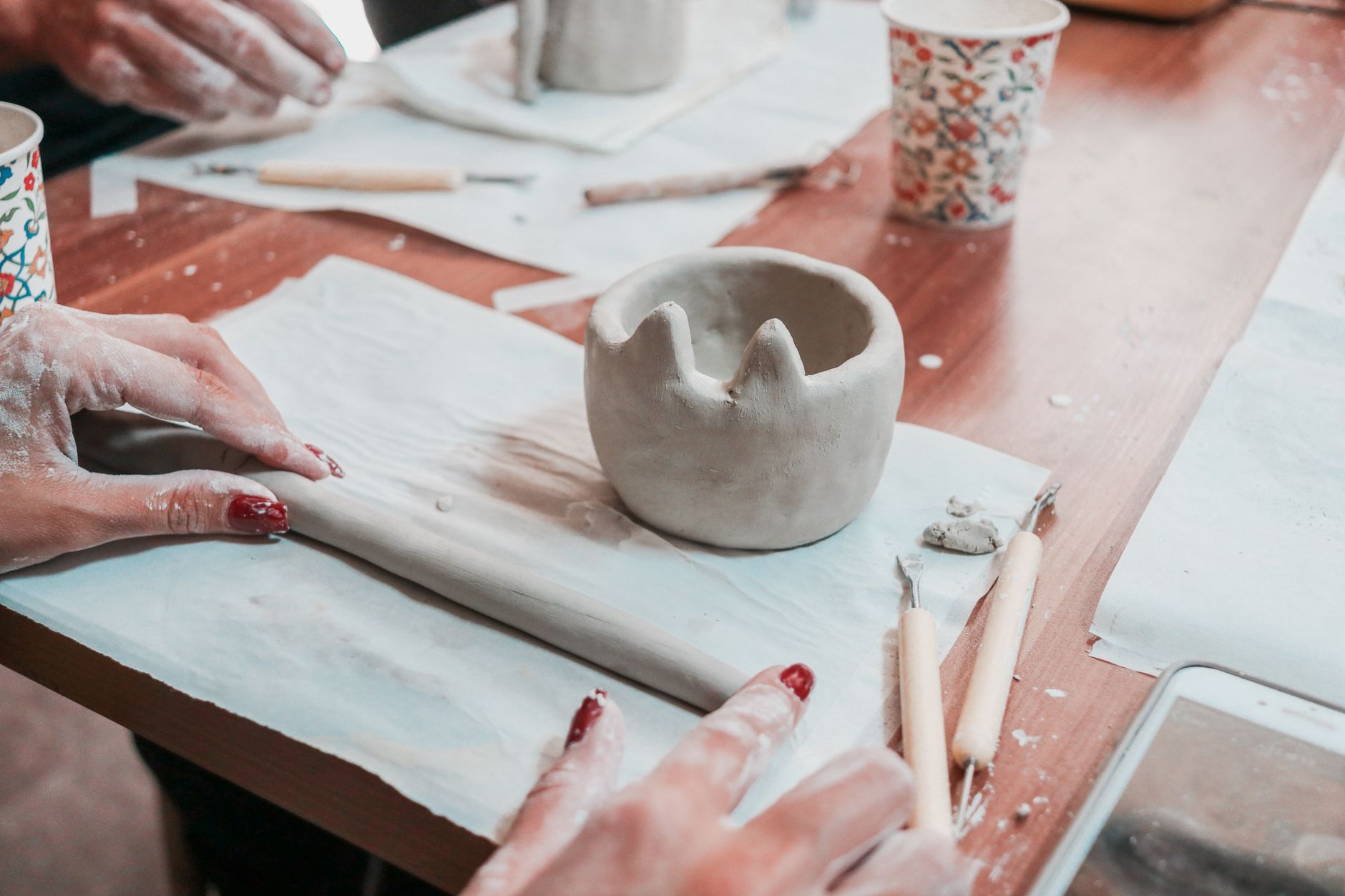
| Hand-building (pinch, coil, slab) | Sculptors; irregular shapes; seniors; kids | Immediate success; endless variation | Bowls, dishes, vessels, organic forms | Book if you want control and to finish a usable piece the same day |
| Mixed approach | Indecisive learners; most first-timers | Balanced; tries both | Thrown base + hand-added detail | Our most popular choice—try wheel 30 min, hand-build 90 min |
Wheel-throwing feels theatrical but demands upper-body stability and hand–eye coordination. Guests with shoulder arthritis often find hand-building gentler. Kids under 8 struggle with wheel centering but excel at coiling. Seniors appreciate the chair-based method and slower pace. Ask us which method suits your body and goals when you message.
What happens hour by hour?
Minutes 0–20: arrival, apron, clay introduction. We show you water ratios, wedging (kneading to remove air), and texture. You touch finished pieces—bowls, mugs—to see what clay can become.
20–75: hands-on technique. If wheel: we demo centering (hardest step), you try it five times, feel the difference between wobble and stillness, then throw a simple bowl. If hand-building: we demo pinching or coiling, you shape, add texture with found objects, refine walls. Your hands get wet, sticky, exhausted in a good way.
75–90: finishing. You trim, sign, or carve a detail. We weigh your piece, log it for firing, discuss kiln schedules (usually 3–7 days).
After class: you pick up your fired, glazed piece 1–2 weeks later, or we arrange courier (a nearby pottery studio handles this; ask us about returns).
The hardest moment is always minute 45—clay feels alien, your walls collapse, water puddles. We pause, let you breathe, remake it smaller. By minute 65, you're smiling. This is normal.
How do we adapt for age, skill and physical limits?
Kids (6–12): shorter session (90 min instead of 180), hand-building only (wheels bore young hands quickly), softer clay, focus on texture and play rather than function. One adult per child is ideal; we coach the grown-up as much as the child. Kids often outpace adults in intuition.
Teenagers (13–17): full session, choice of wheel or hand-build, less instruction more exploration. Many find pottery a rare screen-free zone and ask to come back.
Adults (18–65): standard three-hour session, all methods open. Most want a symmetrical bowl or mug they can use. Couples often choose wheel and hand-build simultaneously—they compete gently, laugh, learn differently.
Seniors (65+): we offer seated wheel-throwing (no standing fatigue) or table-based hand-building, shorter duration (2 hours), extra water breaks, and no pressure to finish. Joint pain? Tell us beforehand. We adapt clay stiffness, reduce repetition, offer arm-rests. One senior guest with mild Parkinson's hand-built a beautiful asymmetrical bowl by letting tremor become texture. She framed the photo.
Allergies & skin: clay dust is minimal indoors but real. If you have respiratory sensitivity, say so; we'll mist the clay and wipe tools frequently. Eczema? Bring gloves; clay can be drying. We provide hand cream.
Left-handers: we demo right-handed but place the wheel so you can sit left-side-on. No fuss, no adaptation needed—just tell us.
Fitness: pottery is surprisingly physical (wrist strength, core engagement). If you tire easily, book a two-hour session instead, or hand-building only. We'll pace it.
What do you need to know before booking a pottery session?
Timing: allow 7–10 days after your session before you collect your piece (kiln firing takes 2–3 days, cooling 2–3, then glaze or finish). If you leave Da Nang sooner, we can arrange courier, but ask about cost and logistics when you book.
What to wear: clothes you don't mind staining (clay doesn't fully wash out immediately; grey or terracotta hides it). Apron provided. Closed shoes (clay on tile is slippery). Hair tie if long.
What to bring: water bottle, phone for photos (many guests photo their work mid-session and after firing). We provide clay, tools, water, apron.
Group size: 2–4 guests maximum. Solo bookings happen but are pricier—ask us for a quote. Groups larger than four split into two sessions.
Physical space: the studio is 30 minutes by taxi from the city center, in a quiet residential lane. Parking available. One flight of stairs, no lift. Not wheelchair-accessible, but we can host you if you can navigate stairs.
Weather: rain is no issue (we're indoors). Heat and humidity are normal; drink water frequently. Air circulation is good.
Expectations check: your first pot will not be Instagram-perfect. That's the point. Wonky bowls have more character. Many guests keep their first piece even if it's lopsided; it reminds them of their hands' learning. If you need perfection, hire a professional potter instead.
For more hands-on craft experiences in Da Nang—including flower arranging and painting—see our Da Nang experiences guide. If you're also interested in tea experiences or farm visits, we can bundle them into a full day.
How does Cáo Experiences compare to other pottery options in Da Nang?
Tourist pottery studios in Da Nang often run large groups (8–15 people) on a fixed daily schedule, with a 45-minute demo and rushed wheel time. Quality varies. You may not fire your piece (it stays at the studio). Staff speak minimal English.
Hotel workshop coordinators sometimes partner with a ceramic teacher who hosts sessions in a shopfront—clean, air-conditioned, but sterile. The instructor is competent but sees you once. No relationships form.
Serious pottery studios (3–4 in the city) cater to long-term residents or expat students on semester courses. Drop-in tourists are not prioritized.
Cáo Experiences sits between: we're small (2–4 guests), English-hosted, we fire and return your piece, we adapt method to you, and we treat each session as a conversation, not a transaction. Our host is a working ceramicist who teaches because they love it, not as side income. You get a phone number to message, flexibility on dates, and honest feedback about what's working and what's not. We're not faster or cheaper than a large-group operator; we're more intimate and honest.

FAQ
Can I make a mug I can actually drink from on my first try?
Yes. A simple hand-built or thrown mug fires successfully most of the time. We'll teach you wall thickness and base stability. Even if it leaks slightly, it's still beautiful. Some guests keep imperfect mugs as desk pencil holders instead.
What if my piece cracks in the kiln?
It happens in 5–10% of firings (clay has hidden air bubbles, thickness varies). If yours cracks, we'll show you the break, discuss what happened (usually too-thick base or too-fast drying), and offer a free second session to remake it. We don't charge kiln fees.
Do you provide glazes, or is it plain terracotta?
We apply a simple food-safe glaze (usually cream or grey) before the kiln. If you prefer raw terracotta, say so. We don't do painted glazes during the session—that's a separate skill; we keep things focused on the hand-shaping itself.
Can I bring my young child if they don't participate?
Preferably not. Kids in the studio distract the potter and the other guests. We recommend booking a family pottery session instead, where both adult and child have clay and we guide both. Ages 6+ work well; under 6 is very challenging.
How long do I have to wait after the session to collect my piece?
7–10 days typically. If you fly out sooner, we can courier your piece, but logistics depend on your destination. Ask us at booking for a realistic timeline and any shipping options.
What if I'm nervous about clay—is pottery really for beginners?
Almost all guests are nervous at minute 20. Clay feels weird—slippery, resistant, alive. By minute 60, that weirdness becomes the appeal. Pottery teaches you that imperfection and instability are where learning happens. If you enjoy getting uncomfortable in a safe space, you'll love it. --- Ask about dates on WhatsApp
Ask about dates
Tell us the city, your dates and what you would like to try. We reply on WhatsApp in English with options and availability.
FAQ
Can I make a mug I can actually drink from on my first try?
Yes. A simple hand-built or thrown mug fires successfully most of the time. We'll teach you wall thickness and base stability. Even if it leaks slightly, it's still beautiful. Some guests keep imperfect mugs as desk pencil holders instead.
What if my piece cracks in the kiln?
It happens in 5–10% of firings (clay has hidden air bubbles, thickness varies). If yours cracks, we'll show you the break, discuss what happened (usually too-thick base or too-fast drying), and offer a free second session to remake it. We don't charge kiln fees.
Do you provide glazes, or is it plain terracotta?
We apply a simple food-safe glaze (usually cream or grey) before the kiln. If you prefer raw terracotta, say so. We don't do painted glazes during the session—that's a separate skill; we keep things focused on the hand-shaping itself.
Can I bring my young child if they don't participate?
Preferably not. Kids in the studio distract the potter and the other guests. We recommend booking a [family pottery session](/family-experiences) instead, where both adult and child have clay and we guide both. Ages 6+ work well; under 6 is very challenging.
How long do I have to wait after the session to collect my piece?
7–10 days typically. If you fly out sooner, we can courier your piece, but logistics depend on your destination. Ask us at booking for a realistic timeline and any shipping options.
What if I'm nervous about clay—is pottery really for beginners?
Almost all guests are nervous at minute 20. Clay feels weird—slippery, resistant, alive. By minute 60, that weirdness becomes the appeal. Pottery teaches you that imperfection and instability are where learning happens. If you enjoy getting uncomfortable in a safe space, you'll love it. --- [💬 Ask about dates on WhatsApp](https://wa.me/84338762340)
More like this
Craft workshops
Craft Workshop in Saigon: Small Group Classes for Beginners
Cáo Experiences runs small-group craft workshops across Saigon where you learn traditional and contemporary making in intimate studio and community spaces. Sessions suit absolute beginners, families, and skill-builders.
Craft workshops
Craft workshop in Saigon for couples: what to choose
Couples in Saigon have three main craft paths: ceramics in a family studio, natural-dye silk painting, or bamboo weaving. Each teaches differently and suits different moods.
Craft workshops
Craft Workshop in Hoi An: What to Expect Step by Step
A craft workshop in Hoi An with Cáo Experiences is a half or full-day session where you learn a traditional Vietnamese skill—lantern-making, silk painting, woodblock printing, or lacquerware—in a working studio or family workshop. You leave with a finished piece you made yourself.