
Home › Blog › Craft workshops
Craft Workshop in Vietnam: What to Choose & How Sessions Run
By the Cáo Experiences team · 2026-11-06
A craft workshop in Vietnam is a hands-on session—usually two to four hours—where international travelers learn a traditional or contemporary craft skill in a working studio or kitchen setting. Cáo Experiences hosts classes in Vietnamese ceramics, silk dyeing, natural indigo batik, wood carving, and mixed-media collage across Hanoi, Hoi An, Da Lat, and Da Nang. Groups are small (two to eight people), taught in English, and no prior experience is needed; beginners worry about messing up, but we adapt pace and materials for all skill levels. You'll make one finished piece to take home. Sessions cost differently depending on craft, group size, and location—ask us for a quote on WhatsApp. Rain rarely stops us: ceramics and painting move indoors; outdoor batik or carving workshops shift to the studio or a covered courtyard. We skip complex or dangerous steps for kids; seniors manage fine-motor work with built-up tools or simplified techniques. The single honest issue: if you expect perfect gallery-quality output in two hours, you'll be surprised—the goal is skill, fun, and understanding the craft, not a masterpiece. Ask about dates on WhatsApp
What crafts can you actually make in a workshop session?
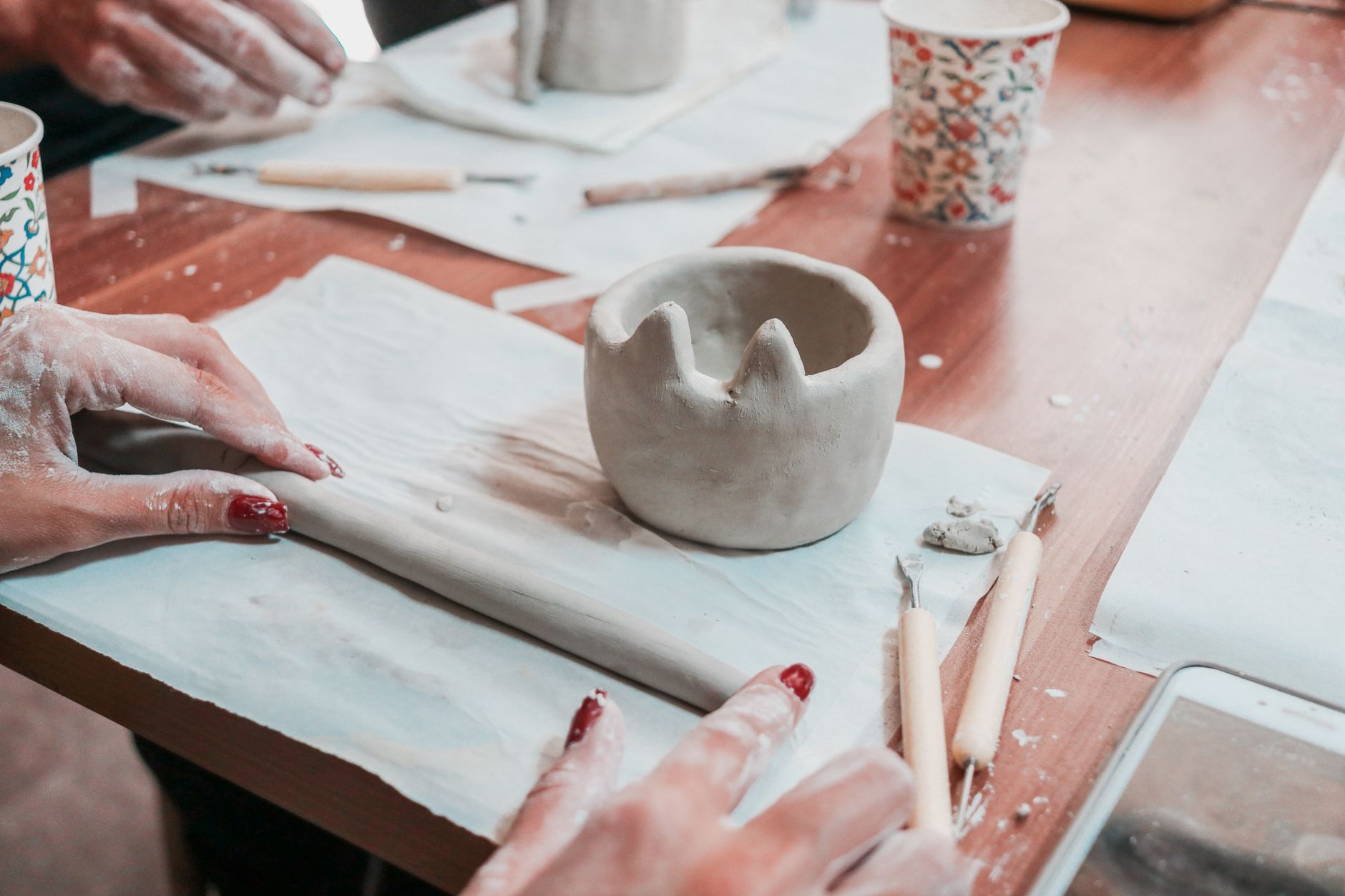
We don't offer every craft equally. Ceramic hand-building—coil pots, pinch bowls, hand-modeled vessels—is our most common offering because it's fast-paced, forgiving, and produces a real usable object in 2–3 hours. Silk dyeing and batik involve folding, wax-resist, and natural dye baths; you'll have a scarf or small textile to wear when you leave. Lacquer painting on wooden blanks (small boxes, trays) teaches traditional gilt and mother-of-pearl inlay, though this one is slower; expect a beautiful painted tray after four hours. Wood carving on soft basswood or relief blocks takes beginners through simple gouges and chisels to create a small spoon or decorative panel. Natural indigo workshops focus on plant-based dyeing; results are subtle and real, not the industrial blues of commercial batik. Mixed-media collage using Vietnamese newspaper, fabric scraps, and acrylic sits somewhere between craft and art; best for people who feel nervous about "skill."
The outcome you can trust is a finished, functional piece you made yourself—not a kit, not something the host completed for you. That honesty matters because some travelers book expecting Etsy-level output; we're clearer.

Which workshop suits your group's skill and comfort?
| Craft | Best for | Time needed | Why it matters |
|---|---|---|---|
| Hand-building ceramics | First-timers, families, mixed ages | 2.5–3 hours | Forgiving. Mistakes blend into the style. |
| Silk dyeing / batik | Groups wanting a wearable souvenir | 2–3 hours | Messy in the best way. No "skill"—chemistry does work. |
| Lacquer & gilt | Art-focused guests, couples, detail lovers | 3.5–4 hours | Slower pacing. Requires steady hand and patience. |
| Wood carving | People who love tools, sculptors, seniors with grip | 2.5–3 hours | Very tactile. Risk of splinters; we provide gloves. |
| Natural indigo | Eco-conscious, textile lovers, photographers | 2.5 hours | Subtle, unpredictable results. Beauty is in imperfection. |
| Collage / mixed-media | Non-visual people, groups with mixed confidence | 1.5–2 hours | Fastest option. No "right" way to arrange it. |
A family with a shy teenager might pick collage (low pressure) or silk dyeing (results feel almost magical). A couple on anniversary trip often chooses ceramics (romantic, intimate space) or lacquer (meditative, beautiful finish). Older guests usually prefer carving or painting (hand-scale, seated the whole time) over indigo (involves repeated bending). Ask us what fits your group on WhatsApp.
How does a craft session actually run, hour by hour?
Hours 1–0:30. You arrive at a family studio or workshop space—often a converted shophouse with high ceilings, natural light, and work tables already set up. We introduce ourselves, show you raw materials (clay, wood blocks, dyed fabrics), and explain the rhythm of the session. For ceramics, this means wedging clay, learning hand-building techniques (coil, pinch, slab), and seeing demos of shaping. For lacquer, it's learning brush control, how the gloss dries, and the order of gold leaf or inlay work. No one sits through a lecture; we show as we go.
Hour 1–2. Hands on. You're building or painting, and we watch, adjust your grip, suggest proportions, give you small challenges. "Make the rim thinner" or "hold the brush lighter." For groups, we rotate our attention; everyone gets stuck at different moments, and that's normal. A beginner making a pinch bowl might worry the walls are too thick; we gently show how to thin from the inside. Someone doing indigo batik gets tangled in the wax step; we hold the fabric and fold together, then they take it from there. First-time carvers grip the gouge too tightly; we loosen their hand and show how the wood itself helps the cut.
Hour 2–3. Most pieces are near complete or finished. For ceramics, they go into our kiln for bisque (first firing); you'll collect them in a few days, or we can ship them. For batik and indigo, pieces hang to dry. Lacquer goes to a drying rack. We photograph your work (you get the photo), and there's tea or water, and quiet talk. Some groups wrap early and leave happy; others stay and chat or ask questions about the craft, Vietnam, or our work.
Hour 3–4. (If your workshop is four hours, like lacquer.) The final layer or detail work happens here—gilding, final brushstrokes, or carving a signature into the wood. The piece becomes visibly yours: a bowl with your finger marks, a scarf with your resist pattern, a box with the color you chose.
After. You take home ceramics that aren't fired (they're leather-hard, dry but unfired). Textiles you take wet; we wrap them. Painted pieces are still tacky but wrapped carefully. Within days, we fire the ceramics in our kiln and arrange collection or shipment to your address; it takes 5–10 days to most countries, and shipping is free over a certain value (ask us the details). We photograph everything and send you the images via WhatsApp.
What's different about workshops in each region of Vietnam?
Hanoi workshops lean toward traditional techniques—lacquer, silk weaving, wood carving on hardwoods—because the city still has family ateliers and a strong heritage craft market. Studios are in converted lanes in the old quarter or quieter neighborhoods west of the Red River. Hanoi groups are often expats or returning Vietnamese, so we sometimes teach side-by-side in English and Vietnamese; energy is focused and curious. Weather is chilly (October–March) or hot and humid (June–August); rain is common in summer, so we confirm studio backup when you book.
Hoi An (UNESCO ancient town) workshops blend tradition and tourism respectfully. Ceramic studios here often overlook rice fields or the Thu Bon river. Batik and indigo are strong because Hoi An has a textile heritage; you might see weavers working nearby while you dye. Groups are usually international tourists mixing with a few expats; the pace is slower, the vibe more reflective. Rain doesn't stop sessions here because studios have good shelter.
Da Lat (pine-forest hill town) workshops often happen in a maker's personal studio or a small garden space. Collage and mixed-media are popular because Da Lat attracts art-minded travelers. The air is cool and dry most of the year, perfect for any craft. Groups tend to be smaller and more creative-minded; there's less time pressure.
Da Nang hosts workshops in smaller numbers because the city focuses more on other experiences like horse riding and tea ceremonies. When craft sessions do run, they're usually at a family ceramics studio near the river or in a quiet residential lane.
Geography shapes not just what you learn but how the session feels—Hanoi is purposeful, Hoi An is slow and poetic, Da Lat is intimate and exploratory, Da Nang is rare and special.
What should kids and seniors know before booking?
Kids (ages 4–12). Young children do best with ceramics, collage, or silk dyeing because these have no sharp tools and fast visual reward. A five-year-old can coil a pot; an eight-year-old can carve soft soap or wood blocks with blunt tools. We remove glass or sharp glazes, use plastic tools when needed, and shorten the session to 1.5–2 hours; focus drops after that age. Parents usually stay in the room and help shape or paint; it's a family moment, not a "kids' class." Indigo and batik are genuinely fun for kids because the dyeing feels like magic, and they leave with a colored scarf.
Seniors (ages 65+). Ceramics and painting suit seated work. Hand carving also works well—the rhythm is meditative, and there's no heavy lifting. We provide chairs with proper back support, larger brushes or tools with ergonomic handles, and we never rush. A senior doing lacquer can spend four hours and feel calm and accomplished. Indigo involves bending and wringing fabric; we can adapt by keeping the vat waist-high and having a younger helper wring the heavy textiles. Strength and grip sometimes flag; we watch for fatigue and suggest breaks. Arthritis is real: we have thicker-handled brushes, grip aids, and simplified techniques. The honest thing is that someone with severe hand mobility might find carving frustrating; we'd suggest painting or ceramic hand-building instead.
A family session with a grandparent, parent, and two kids mixing crafts in the same studio works beautifully—you're not all doing the same thing, but you share the creative energy.

What happens if you have food allergies or rain?
Allergies. Most craft sessions don't involve food, but some workshops end with tea or a snack while pieces dry. We always ask about allergies when you confirm. Tea is usually plain green tea or water; snacks are simple crackers or fruit. If you bring your own, that's fine too. No one minds.
Rain. Vietnam's rain is often warm and brief. For outdoor carving or batik in a garden, we have a covered pavilion or a nearby studio we move to—the session doesn't stop, just shifts location. Indoor studios (most ceramics and lacquer) aren't affected. In monsoon season (May–September in Hanoi, October–December in Hoi An), we confirm the weather the day before and give you a heads-up if we're moving. We've never cancelled a session because of rain; we've just adapted.
Very bad weather (typhoon, hail, flooding).
How do you adapt techniques if you're nervous about making mistakes?
Honestly: everyone worries they'll "ruin it." Here's what we actually do.
Ceramics. If your bowl collapses while you're coiling, that clay goes back in the bucket. You start again; it's not a failure, it's learning. The second bowl almost always works better because your hands now know what too-thin walls feel like. We emphasize that handmade pots have wobbles and asymmetry—that's the point, not a flaw. A slightly lopsided rim is more beautiful than factory-perfect.
Carving. A gouge slips and leaves a mark you didn't mean. We show you how to carve over it or turn it into a design element. One carver meant to make a smooth relief and ended up with texture; it looked like scales and was better than the plan.
Indigo and batik. You can't really mess this up. The dye does unpredictable things, and we call it character. Uneven color, bleeding edges, white spots—all of it is expected and beautiful. We tell you this upfront so you're not disappointed; you're delighted.
Painting and lacquer. A brushstroke goes sideways. We show you how to soften the edge, blend it, or use it as a shadow. Perfectionism is the enemy here; we actively teach "imperfection is the goal."
The real adaptation is mindset: we spend the first 15 minutes explaining that handmade objects look handmade—that's not a bug, it's the whole reason you're here instead of buying a ceramic bowl at a shop.
What to check before you book a craft workshop.
- Group size. Ask how many people will be in the session. Smaller (2–4) means more one-on-one time; larger (6–8) means more energy and less individual attention. We keep groups small deliberately.
- What you take home. Confirm whether your ceramic piece gets fired (and when you'll get it), or whether you take unfired clay home. Ask if shipping is included in the quote.
- Duration and included materials. Some workshops are 2 hours, some 3 or 4. Ask if glazes, dyes, or finishing materials are included or cost extra. (They're included in our standard quote.)
- Studio conditions. Ask about seating, heating or cooling, noise, and whether there's a bathroom. It matters for comfort.
- Rain plan. If the workshop is outdoors (carving in a garden, dyeing under a pavilion), ask where you move if it rains.
- Accessibility. If you have mobility, hearing, or sight needs, tell us before you book so we can arrange the right studio and tools.
- Photos and social media. Ask if the host will photograph your work and whether it's okay for them to share images. We do this automatically unless you say no.
- Feedback and revisions. Some hosts let you adjust or keep working if you're unhappy; we do. Ask if that's flexible or fixed-time.
===Visit our craft workshops page===
The honest move is to message us on WhatsApp with your group, skill level, and what you're drawn to. We'll suggest the right craft, tell you availability and timing, and answer any concern. No surprise costs, no hidden steps.
Pages from our team you may need
FAQ
Do I need any art experience to do a craft workshop?
No. Most of our guests have never done ceramics or batik. We teach from the beginning. Hands are taught, not your art degree. Experience helps but isn't required.
Can I ship my finished ceramic piece home if it needs to be fired?
Yes. After your session, we fire it in our kiln (takes about a week). We can ship it to you via international courier; it takes 5–10 days and we cover shipping on orders above a certain amount. We wrap carefully to prevent breakage. Ask us for shipping details on WhatsApp.
What if I don't like my finished piece?
You still own it. Honestly, most people love what they make—the imperfection is part of the charm. But if you're genuinely unhappy, you can sometimes stay longer and redo part of it, or we might adjust the next step (glaze color, painting) to salvage it. Talk to us about it in the moment.
Are craft workshops good for a team-building experience or corporate group?
Yes. We run group and corporate experiences all the time. A team of 8–12 can do a workshop together, and it builds focus and conversation. Message us for group quotes and availability.
What's the difference between a craft workshop and an art class?
A craft workshop teaches a specific technique to make a functional or finished object (a bowl, a scarf, a carved box). An art class is broader—drawing, painting, mixed-media—and might focus on skills, exploration, or creative expression. Craft is skill + object. Art is skill + ideas. We offer both.
Can I combine a craft workshop with other experiences, like a cooking class or coffee workshop?
Absolutely. Many guests pair a cooking class in the morning with a ceramic workshop in the afternoon, or combine a coffee workshop with silk dyeing. You'll need a full day, and we can coordinate timing and locations. Ask us about pairing options on WhatsApp.
Ask about dates
Tell us the city, your dates and what you would like to try. We reply on WhatsApp in English with options and availability.
FAQ
Do I need any art experience to do a craft workshop?
No. Most of our guests have never done ceramics or batik. We teach from the beginning. Hands are taught, not your art degree. Experience helps but isn't required.
Can I ship my finished ceramic piece home if it needs to be fired?
Yes. After your session, we fire it in our kiln (takes about a week). We can ship it to you via international courier; it takes 5–10 days and we cover shipping on orders above a certain amount. We wrap carefully to prevent breakage. Ask us for shipping details on WhatsApp.
What if I don't like my finished piece?
You still own it. Honestly, most people love what they make—the imperfection is part of the charm. But if you're genuinely unhappy, you can sometimes stay longer and redo part of it, or we might adjust the next step (glaze color, painting) to salvage it. Talk to us about it in the moment.
Are craft workshops good for a team-building experience or corporate group?
Yes. We run [group and corporate experiences](/group-and-corporate) all the time. A team of 8–12 can do a workshop together, and it builds focus and conversation. Message us for group quotes and availability.
What's the difference between a craft workshop and an art class?
A craft workshop teaches a specific technique to make a functional or finished object (a bowl, a scarf, a carved box). An [art class](/art-classes) is broader—drawing, painting, mixed-media—and might focus on skills, exploration, or creative expression. Craft is skill + object. Art is skill + ideas. We offer both.
Can I combine a craft workshop with other experiences, like a cooking class or coffee workshop?
Absolutely. Many guests pair a [cooking class](/cooking-class) in the morning with a ceramic workshop in the afternoon, or combine a [coffee workshop](/coffee-workshop) with silk dyeing. You'll need a full day, and we can coordinate timing and locations. Ask us about pairing options on WhatsApp.
More like this
Craft workshops
Craft Workshop in Saigon: Small Group Classes for Beginners
Cáo Experiences runs small-group craft workshops across Saigon where you learn traditional and contemporary making in intimate studio and community spaces. Sessions suit absolute beginners, families, and skill-builders.
Craft workshops
Craft workshop in Saigon for couples: what to choose
Couples in Saigon have three main craft paths: ceramics in a family studio, natural-dye silk painting, or bamboo weaving. Each teaches differently and suits different moods.
Craft workshops
Craft Workshop in Hoi An: What to Expect Step by Step
A craft workshop in Hoi An with Cáo Experiences is a half or full-day session where you learn a traditional Vietnamese skill—lantern-making, silk painting, woodblock printing, or lacquerware—in a working studio or family workshop. You leave with a finished piece you made yourself.