
Home › Blog › Craft workshops
Craft Workshop Vietnam for Foreigners: Real Hanoi & Hoi An Classes
By the Cáo Experiences team · 2026-11-06
A craft workshop in Vietnam for foreigners is a 3–4 hour hands-on session where you learn one traditional skill—lacquerware, silk painting, woodblock printing, weaving, or ceramics—from a local craftsperson in a family workshop or studio space. Cáo Experiences runs these classes in Hanoi and Hoi An, in English, for groups or private bookings, accepting absolute beginners. You work with real materials, make something you take home, and adapt for kids, seniors, allergies, or rain. Workshops run year-round. Ask us for dates and a quote on WhatsApp—we'll match your skill, group size, and interests to the right artisan and craft.
Craft workshops in Vietnam are not museum tours or gift shops. We work inside actual creative spaces—a lacquer studio in a lane off Hanoi's old quarter, a silk-weaving household in a Hoi An alley, a ceramics workshop tucked away from the main tourist drag. You come as a learner, not a spectator. You touch, measure, mix, paint, carve or spin clay. Your hands get stained. You leave with a piece you made.
We host international travelers, expats, couples, solo guests, families with kids aged 6+, and groups of friends or colleagues. Most have never tried the craft before. That is the norm, not the exception. Our job is to meet you where you are and guide you through.
What craft can you actually learn in a single session?
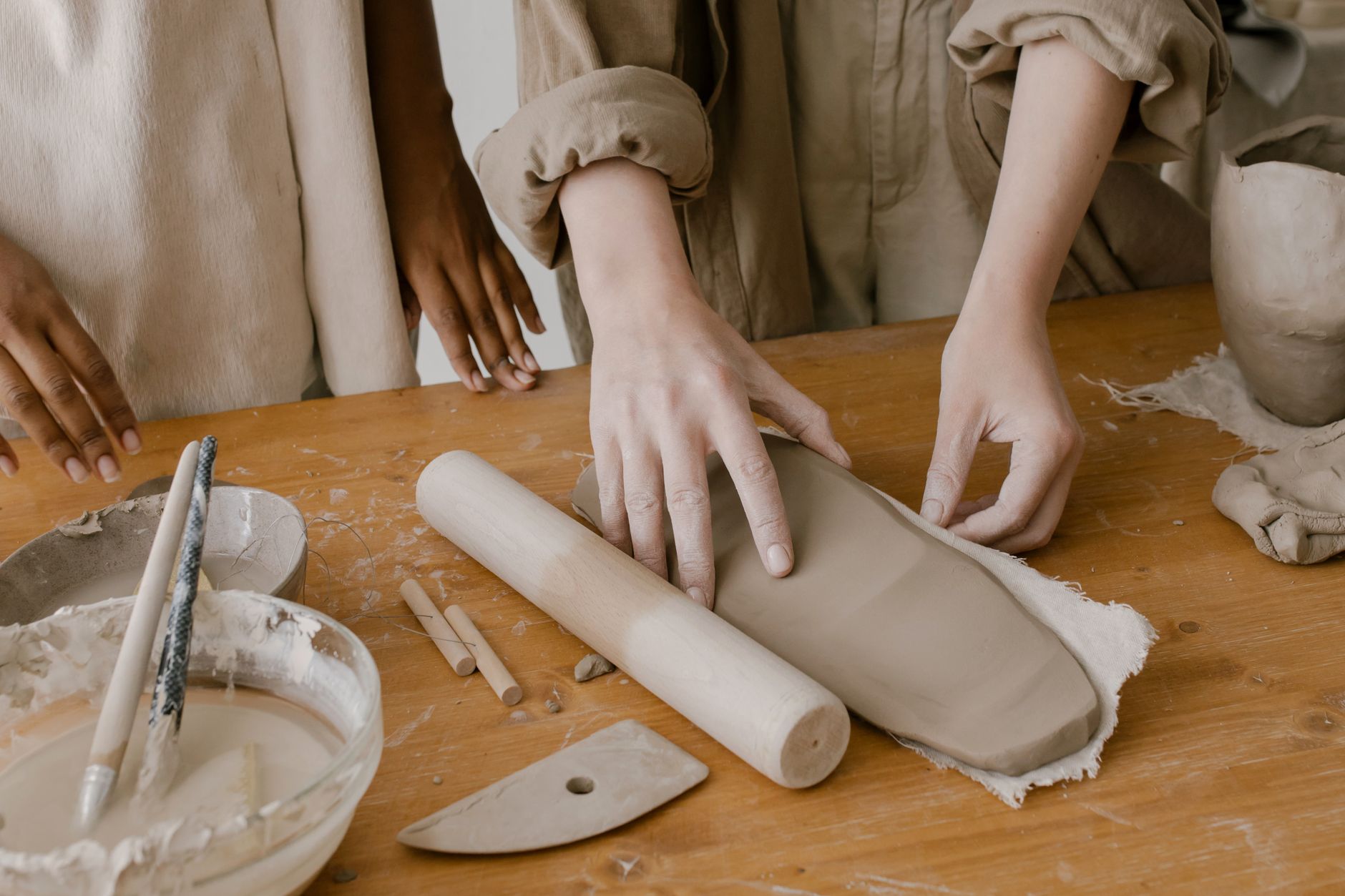
Beginners worry they won't finish anything real or will feel rushed. That's fair. We choose crafts and pacing so you have a complete product to take home—not a half-made attempt gathering dust. In a 3–4 hour session, you might: paint a silk scarf using natural dyes and batik wax resist, carve and print your own woodblock design onto paper or fabric, throw a small ceramic bowl on a potter's wheel and hand-paint it, lacquer a wooden box with multiple coats and gold-leaf detail, weave a small tapestry on a hand loom, or hand-stitch an embroidered textile. The craft depends on the workshop and artisan. We match the depth to your time and patience.
One woodblock-printing guest once worried she "had no artistic talent." We showed her the carving blocks were pre-sketched; she cut and inked them. Her printed scarf hung in her bedroom for years after. Another guest, a logistics manager, spent an hour at the pottery wheel making a wonky bowl. He laughed the whole way. Three weeks later, from overseas, he asked us to fire it and ship it to him because he loved it.
How do we adapt for kids, seniors, and mixed-skill groups?
Kids aged 6–10 often join family sessions. We simplify the craft—a 5-year-old won't throw pottery, but she'll hand-paint pre-fired ceramics with help. Seniors and guests with arthritis or limited mobility do well with seated crafts like silk painting or embroidery, and we skip or modify any heavy lifting. A group of three friends might each want a different craft; we can split them into parallel sessions in the same workspace or pick one craft that works for everyone.
Rain doesn't stop us. Craft workshops run indoors, in studios and kitchens. Some spaces have large windows onto the street, so you still feel the humidity and smell the city—just under a roof. We check the weather 48 hours before and confirm by WhatsApp.
Allergies: tell us upfront. Lacquer fumes, natural dyes, and kiln heat are real. We open all windows, use low-VOC finishes where possible, and move sensitive guests to better-ventilated stations. Food allergies don't usually come up because most crafts aren't food-related, but if you're doing a workshop bundled with a tea or coffee session, we'll note dietary needs.
How does the session actually run, hour by hour?
Hour 1: You arrive, meet the artisan, and sit down. Tea or water while they show you the finished examples and explain the steps in simple English (or through us translating). You watch them do one section—a brush stroke, a carve, a glaze—at real speed. No rush. Questions welcome. Your hands stay in your lap.
Hour 2–3: You try. The artisan guides your hand if needed, corrects gently, lets you repeat. This is where the mess happens. Paint splashes. Clay sticks to your fingers. Woodblock cuts go slightly wrong. It's normal. The artisan has seen a thousand first-timers; they know how to coach without judgment.
Hour 3.5–4: You finish, clean your hands, and the artisan sets your work aside to dry or cure (we handle firing or glazing later and arrange collection or shipping). You take a photo together. You leave with the product and maybe a printout of the steps or an artisan's contact if you want to order more work from them.
Total time on your feet: about 2 hours. Total sitting or light standing: about 1–2 hours. Appropriate for most fitness levels.
What should you wear and bring?
Wear clothes you don't mind getting stained. Not "your favorite shirt"—assume paint or dye will mark you. Closed-toe shoes help (clay wheels and carving tools). A phone or camera is fine; we'll take a video snippet for you too. Bring water; we provide tea, but you might get thirsty from focusing.
Jewelry: remove rings and bracelets so they don't catch on wheels, looms, or wet clay. If you're pregnant, tell us in advance; some crafts (like heavy pottery wheels or lacquer fumes) may need adjustment.
We provide aprons, tools, and materials. You don't buy anything extra. What you make is yours.

How do prices and payment work?
Ask us for dates and a quote on WhatsApp. Pricing depends on the craft, group size (1–8 people typically), and location. Private sessions cost more than joining a scheduled small group, but privacy and timing matter to some guests. We quote in your currency and handle payment before the session via bank transfer or Wise.
| Craft Type | Who It's For | Session Length | What You Take Home |
|---|---|---|---|
| Woodblock printing | Artists, designers, gift-givers | 3 hours | Printed scarf or paper art |
| Lacquerware | Detail-lovers, collectors | 4 hours | Hand-painted lacquer box or tray |
| Ceramics (wheel or hand-building) | Tactile learners, therapists | 3.5 hours | Fired, glazed bowl or vessel |
| Silk painting | Fashion-minded, textile lovers | 3 hours | Hand-dyed silk scarf with design |
| Weaving | Pattern enthusiasts, meditators | 3 hours | Woven wall hanging or bag |
| Embroidery | Meditative crafters, souvenir-seekers | 2.5 hours | Embroidered cloth or patch |
What goes wrong and how to avoid it?
Arriving late. We start on time. If you're 10 minutes late, the artisan pauses and slots you in; if you're 30+ minutes late, the session shrinks and the product may not be finished. Set a phone alarm for 30 minutes before, then 10 minutes before.
Expecting to nail it first try. Pottery wobbles, brush strokes go shaky, carving slips. The artisan will say "again" and hand you the tool again. That is success, not failure.
Not telling us about mobility or sensory issues. If stairs, standing, fumes, or heat are problems, tell us when you WhatsApp to book. We'll find a workshop that fits.
Assuming the craft is "just for women" (especially embroidery or silk painting). We've had male guests produce beautiful embroidered pieces and find it meditative. Craft has no gender. Come as you are.
Booking too short before arrival. Confirm with us at least one week ahead so we can lock the artisan and gather materials. Rush bookings sometimes mean we can't match you to the best fit.
What to check before you book
- Confirm the specific craft. Each workshop offers 4–6 types. Know which one appeals to you, and we'll confirm availability.
- Tell us your group size and any mixed-skill levels (e.g., "two beginners, one ceramicist").
- Flag mobility, allergy, or dietary needs upfront. Not in the session—before we book.
- Check the rain date. Workshops happen indoors, but if you'd rather reschedule, tell us when you book.
- Bring cash only if you want to tip the artisan afterward. (Not required; we include their pay in your quote.)
- Plan 15 extra minutes for chat and photos. The artisan often loves talking about their work.
See how a craft session runs in our step-by-step guide. Many guests pair a workshop with a Vietnamese cooking class, coffee workshop, or tea experience on the same day—we can chain them into a full creative day. Families with kids enjoy flower arranging or pottery alongside art classes. Groups and teams book private workshops for bonding.
Other travelers ask about craft workshops in specific cities—we run workshops in Hanoi, Hoi An, Ho Chi Minh City, Da Nang, and Da Lat. Browse more stories from our hosts to see what past guests made and learned.

FAQ
Do I need any art experience to join a craft workshop?
No. We teach absolute beginners every week. The artisan shows you each step and guides your hands. You'll make something real even if you've never held the tool before.
Can my 8-year-old join? What about my 75-year-old grandmother?
Yes to both. Kids aged 6+ join family sessions; we simplify the craft so they finish a real product. Seniors do well with seated crafts like painting or embroidery. Mobility or health concerns? Tell us upfront so we find the right workshop.
What happens if I hate what I made?
It's yours to keep or leave behind—we don't charge extra. But honestly, almost everyone is surprised by how much they like it, even if it's wonky. The artisan makes it look intentional and beautiful.
How long does the final product last—will it chip or fade?
Fired ceramics last decades if you're gentle. Lacquer lasts years indoors. Silk scarves fade over time in direct sun (normal for silk). Woodblock prints on paper stay bright in a frame. We'll tell you care tips when you finish.
Can you ship my finished piece overseas if I can't carry it?
Yes, for most crafts (ceramics, lacquer, woodblock prints). Fragile items go in a padded box. Arrange this with us after the session. Shipping costs and timelines vary by weight and destination—we'll quote you separately.
Ask about dates
Tell us the city, your dates and what you would like to try. We reply on WhatsApp in English with options and availability.
FAQ
Do I need any art experience to join a craft workshop?
No. We teach absolute beginners every week. The artisan shows you each step and guides your hands. You'll make something real even if you've never held the tool before.
Can my 8-year-old join? What about my 75-year-old grandmother?
Yes to both. Kids aged 6+ join family sessions; we simplify the craft so they finish a real product. Seniors do well with seated crafts like painting or embroidery. Mobility or health concerns? Tell us upfront so we find the right workshop.
What happens if I hate what I made?
It's yours to keep or leave behind—we don't charge extra. But honestly, almost everyone is surprised by how much they like it, even if it's wonky. The artisan makes it look intentional and beautiful.
How long does the final product last—will it chip or fade?
Fired ceramics last decades if you're gentle. Lacquer lasts years indoors. Silk scarves fade over time in direct sun (normal for silk). Woodblock prints on paper stay bright in a frame. We'll tell you care tips when you finish.
Can you ship my finished piece overseas if I can't carry it?
Yes, for most crafts (ceramics, lacquer, woodblock prints). Fragile items go in a padded box. Arrange this with us after the session. Shipping costs and timelines vary by weight and destination—we'll quote you separately.
More like this
Craft workshops
Craft Workshop in Saigon: Small Group Classes for Beginners
Cáo Experiences runs small-group craft workshops across Saigon where you learn traditional and contemporary making in intimate studio and community spaces. Sessions suit absolute beginners, families, and skill-builders.
Craft workshops
Craft workshop in Saigon for couples: what to choose
Couples in Saigon have three main craft paths: ceramics in a family studio, natural-dye silk painting, or bamboo weaving. Each teaches differently and suits different moods.
Craft workshops
Craft Workshop in Hoi An: What to Expect Step by Step
A craft workshop in Hoi An with Cáo Experiences is a half or full-day session where you learn a traditional Vietnamese skill—lantern-making, silk painting, woodblock printing, or lacquerware—in a working studio or family workshop. You leave with a finished piece you made yourself.