
Home › Blog › Farm and countryside days
Farm experience in Ninh Binh for foreigners: what to expect
By the Cáo Experiences team · 2026-11-06
A farm experience in Ninh Binh means spending 6–8 hours alongside a farming family in the countryside south of Hanoi, learning to plant or harvest rice, tend vegetables, and cook lunch in a family kitchen. Cáo Experiences runs these sessions year-round in English; you arrive by car, wade into flooded paddies or dry fields (depending on season), get your hands muddy, eat what you've helped prepare, and leave with soil under your fingernails and a sense of how Vietnamese food actually grows. Most sessions suit couples, small groups, families with kids aged 7+, and solo travelers; we adapt for fitness levels and allergies. No prior farming knowledge is required. Ask us for dates and a quote on WhatsApp—timing depends on the agricultural calendar and your group size. Ask about dates on WhatsApp
What's the difference between wet-season and dry-season farm days?
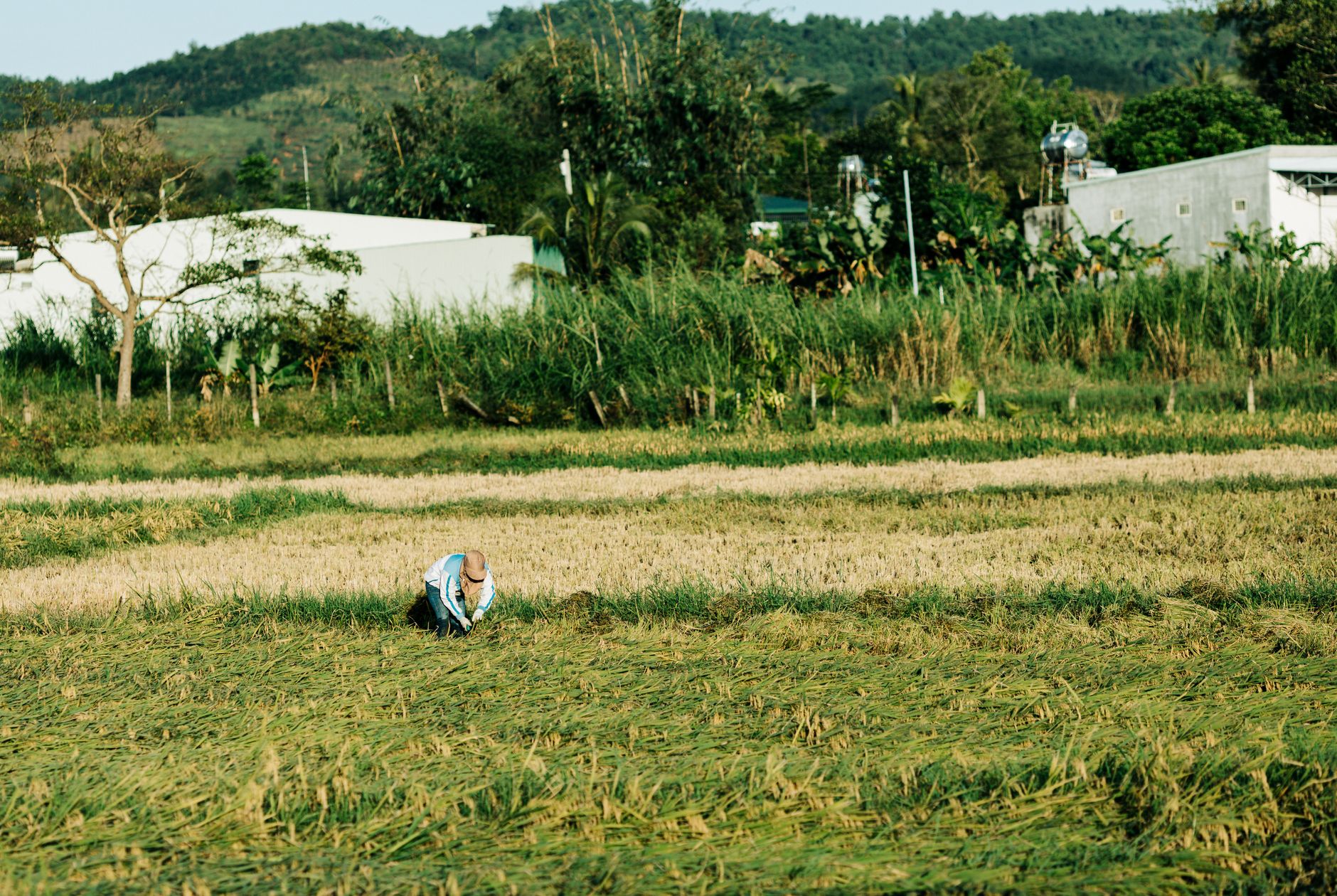
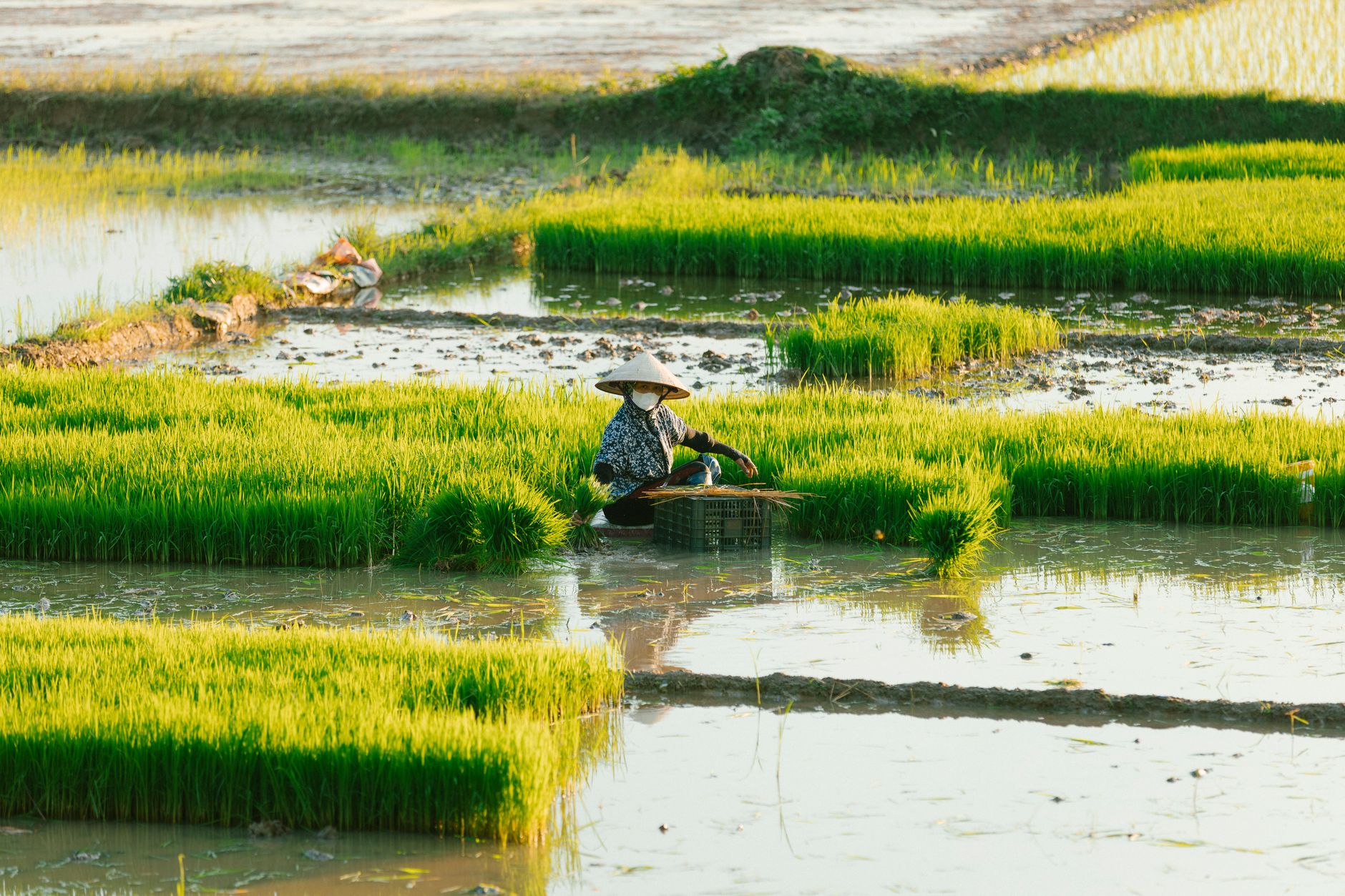
Rice paddies in the Red River Delta flood May–July and again September–October. Wet-season work means wading knee-deep, bending to plant seedlings by hand—harder on the back but visually spectacular and more physically demanding. Dry-season visits (November–April) let you walk on compacted earth, harvest dried grain, or prepare compost and hoe vegetable beds. Wet season is messier and more iconic; dry season is gentler and still real. Choose based on your fitness and tolerance for mud rather than Instagram appeal. We match you to the right season during booking.
Who is a farm experience actually right for?
| Guest type | Why it works | What to check |
|---|---|---|
| Couples wanting authentic rural time | Shared physical work, no crowds, local meal together | Comfortable in mud; bring sandals |
| Families with kids 7–14 | Kids love paddies; parents see food origins | Shaded rest areas; younger kids tire faster |
| Solo travelers over 55 | Slower pace, storytelling, one-on-one mentoring | Knees and lower back; our hosts adapt pace |
| Groups (4–8 friends) | Collective learning, photos, laughter in fields | Uneven fitness levels—we offer parallel tasks |
| Expats and digital nomads | Escape Hanoi desk life, manual work, offline hours | Genuine labor, not wellness theater |
A farm day is not a photo stop. We work at the family's actual rhythm and timeline, which means you might finish earlier or stay longer than planned. This unpredictability is the point.
How does the day actually run, hour by hour?
We pick you up from your Hanoi accommodation early (around 7:00–7:30 a.m.) and drive south toward Ninh Binh for 90 minutes. You'll stop for a quick roadside coffee or breakfast if you're hungry. On arrival, you meet the farming family, who may speak limited English; we translate. From 9:00 a.m. onward, you enter the fields. In wet season, this means rolling up trousers, stepping into cold water, and learning to plant seedlings in neat rows—the family shows you the hand motion, you repeat it 100 times, your back starts to ache, and muscle memory sets in. In dry season, you might harvest, weed, or repair tools. Around noon, you wash up (a bucket and hose behind the house) and move to the kitchen. The mother or daughter starts cooking; you help chop vegetables, mix rice, stir pots. You eat together at a low table, sitting on a mat or stool. Lunch is simple—rice, fish or egg, greens, soup—made from what's in the garden. After eating, you have a rest hour (many families nap; you might sit and talk, or doze). Late afternoon brings lighter tasks: feeding animals, mending, gardening, or just sitting with the family. You leave around 4:00–5:00 p.m., arriving back in Hanoi by 7:00 p.m.
What should you wear and bring?
Wear quick-dry pants or leggings (long enough to roll above the knee), a t-shirt, and a wide-brimmed hat or cap. Bring sunscreen, a small towel, and sandals that can get soaked. We provide rubber boots, but test them on arrival—sizing can be tight. Leave your phone in the car or pocket; reception is spotty anyway. Bring 300,000–our current quote in cash (family may not have change, and lunch costs extra if your group wants to contribute). Don't wear new trainers or jewelry. Sunglasses are useful but not essential. Insect repellent helps in wet season. A dry change of clothes in the car is wise; you will be filthy.
How do we adapt for kids, seniors, and dietary needs?
Children aged 7–10 usually love the tactile work but tire by early afternoon; we build in water play breaks and assign lighter tasks like vegetable harvesting or animal feeding. Seniors with strong legs manage fine; those with knee or hip issues can sit and participate in kitchen prep, tool repair, or storytelling instead of field work. We warn families in advance so they don't expect heavy labor from someone with a bad knee. Vegetarians work as well as omnivores; just tell us when you book, and the family cooks an extra vegetable dish. Allergies—nut, shellfish, gluten—are manageable; we translate your restrictions to the cook beforehand. If rain is heavy, we either postpone or shift the day to kitchen work, crafts, and village walks. Cáo Experiences is built on flexibility, not rigid itineraries.
What's the honest comparison with other Ninh Binh tourism?
Ninh Binh draws tourists to its limestone karsts (Trang An, Mua, Hang Mua), temple complexes, and cave systems. A farm day is the opposite of that: no views, no Instagram moments, no guides pointing at formations. You're instead in a valley farming the flatter land, learning labor, and becoming small. Some travelers want both—a morning at Mua, an afternoon on a farm. We can coordinate that (ask us about combining experiences on WhatsApp). Cave tours are one-off; farm days feel cumulative because you return to the same family (if you book again) and watch the paddies change with the season. If you're in Ninh Binh for nature spectacle, add the farm as a second activity. If you're there for slow tourism and rural immersion, skip the karsts and do the farm fully.
What if you're not fit or strong?
Farm work is real but not competitive. The family works with you, not against you. If you're 60 and have a bad hip, tell us in advance. The host will assign you to vegetable beds, tool repair, or kitchen tasks. If you're recovering from an injury, you can observe and participate lightly—still exhausting (mental and physical), still rewarding. We have no shame in asking you to sit for a bit. Many guests discover they're stronger than they thought, or learn what their actual limits are in a forgiving, low-pressure setting. Some guests come for the company, not the labor—that's fine. We've hosted couples where one does heavy fieldwork and the other photographs and talks with the family's children. There's no "correct" way to experience this.
How does a farm day connect to other Cáo experiences?
Vietnamese cooking classes teach you to prepare food in a kitchen; a farm day shows you where rice, greens, and herbs originate. Many guests do both. Coffee workshops happen in Hanoi or the highlands; farm days are in the lowland Red River Delta—two different agricultural worlds. Wellness and slow experiences often include farm work as a grounding practice. Family experiences overlap heavily here; children especially benefit from open space, mud, and simple meals. If you're spending a week in the north, consider pairing a farm day with a tea experience (tea grows in nearby mountains) or a street food tour (to see where markets source). Ask us about combining sessions; we'll help sequence them.
What to check before you book
- Fitness and flexibility. You'll be bending, walking in mud, and sitting on low stools. Tell us about any joint, back, or mobility concerns—we adapt.
- Season and weather tolerance. Wet-season work is messier; dry-season work is lighter. Rain in either season means kitchen-focused sessions. Do you prefer dirt or indoor activities?
- Language comfort. Our hosts speak basic English; most communication happens through physical demonstration and our on-site translation. If silence makes you anxious, say so.
- Dietary needs and allergies. Flag these at booking, not on the morning. We'll brief the family cook.
- What "authentic" means to you. If you want perfect comfort, hot showers, and meal quality equivalent to a restaurant, this isn't for you. If you want real work, real family time, and simple food, you're in the right place.
- Group size. Groups of 2–6 work best. Larger groups split the family's attention and feel less intimate.
How does Cáo Experiences manage the farm relationship?
We're not a booking platform; we're hosts who work with the same farming families over months and years. We know their calendar, their capacity, their children's names, and when they're tired. We don't oversell these families or treat them as tourist attractions. When you book, we ask for 2–3 weeks' notice so we can confirm with them properly, check the paddies' status, and arrange transport. We handle all WhatsApp coordination. The family doesn't contact you directly, and you don't negotiate or haggle on the day. We manage expectations on both sides—your comfort, their work rhythm, the weather, the food costs. This takes time and care. Ask us for dates and a quote on WhatsApp; we'll explain everything and answer your specific questions.

FAQ
Do I need to speak Vietnamese?
No. Our hosts translate at the farm, and the family shows you work by demonstration. You'll pick up a few words (lúa = rice, cơm = cooked rice, nước = water). Expect gestures and laughter to be your main language.
Can I do this if I've never done farm work?
Yes. Every guest is a beginner. The family assumes you've never planted or harvested and will teach you their way. You'll be slow at first; that's expected.
What happens in heavy rain?
We postpone if forecasts show rain all day. If light rain occurs, we shift to vegetable beds, kitchen prep, tool repair, and village walks. The day still happens; it's just redirected.
Is the meal included in the price?
Lunch (rice, greens, protein, soup, water) is cooked by the family and shared. Costs vary by ingredients and group size; ask for a quote. Soft drinks or alcohol can be purchased separately.
Can I bring my kids?
Yes, ages 7+. Younger children can come if a parent or adult stays close; the paddies have water and can be hazardous. Tell us in advance so we assign lighter tasks.
What if I get sunburned or blistered?
Bring sunscreen and reapply midday. Blisters happen in wet season (tools, repetitive motion); wear gloves if your hands are soft. A first-aid kit is in the car.
Can I book the same family twice?
Yes. Returning guests are welcomed. The family remembers you, and you'll see how the paddies have changed. Ask us about seasonal returns.
How far is it from Hanoi?
90 minutes by car, south toward Ninh Binh. We pick you up from your Hanoi accommodation and return you by evening.
Ask about dates
Tell us the city, your dates and what you would like to try. We reply on WhatsApp in English with options and availability.
FAQ
Do I need to speak Vietnamese?
No. Our hosts translate at the farm, and the family shows you work by demonstration. You'll pick up a few words (lúa = rice, cơm = cooked rice, nước = water). Expect gestures and laughter to be your main language.
Can I do this if I've never done farm work?
Yes. Every guest is a beginner. The family assumes you've never planted or harvested and will teach you their way. You'll be slow at first; that's expected.
What happens in heavy rain?
We postpone if forecasts show rain all day. If light rain occurs, we shift to vegetable beds, kitchen prep, tool repair, and village walks. The day still happens; it's just redirected.
Is the meal included in the price?
Lunch (rice, greens, protein, soup, water) is cooked by the family and shared. Costs vary by ingredients and group size; ask for a quote. Soft drinks or alcohol can be purchased separately.
Can I bring my kids?
Yes, ages 7+. Younger children can come if a parent or adult stays close; the paddies have water and can be hazardous. Tell us in advance so we assign lighter tasks.
What if I get sunburned or blistered?
Bring sunscreen and reapply midday. Blisters happen in wet season (tools, repetitive motion); wear gloves if your hands are soft. A first-aid kit is in the car.
Can I book the same family twice?
Yes. Returning guests are welcomed. The family remembers you, and you'll see how the paddies have changed. Ask us about seasonal returns.
How far is it from Hanoi?
90 minutes by car, south toward Ninh Binh. We pick you up from your Hanoi accommodation and return you by evening.
More like this
Farm and countryside days
Fishing Experience Vietnam for Japanese Travelers: Where to Go & What to Expect
Vietnam's waterways offer Japanese travelers a chance to learn traditional fishing methods directly from locals. Cáo Experiences runs half- and full-day sessions on rivers, lakes and the Mekong Delta where you cast nets, set traps, and cook your catch.
Farm and countryside days
Fishing Experience Vietnam for Foreigners: Hands-On Guide
Fishing in Vietnam isn't a spectator sport—you'll wade into rivers, cast nets, trap fish in baskets, and cook your catch for lunch. We run small-group and private fishing days in the countryside outside Hanoi, Ha Noi region, and the Mekong Delta.
Farm and countryside days
Fishing Experience in Vietnam: 8 Questions to Ask Before You Go
Fishing in Vietnam means wading through rice paddies, learning trap techniques, or casting in rivers with local guides. Here's what to ask before you book.