
Home › Blog › Farm and countryside days
Farm Experience in Vietnam for Solo Travelers: What to Expect
By the Cáo Experiences team · 2026-11-06
A farm experience in Vietnam for solo travelers typically runs four to six hours — morning through lunch — at a working family farm in the countryside outside Hanoi, Ho Chi Minh City, or regional towns. You arrive early, join harvest or tending work (rice, vegetables, herbs, depending on season), help prepare a meal using what you've picked, eat together with the host family, and often learn about their daily rhythms and land use. Cáo Experiences hosts these as small groups (usually three to eight people, though we can arrange private sessions) with English-speaking coordination; you'll work alongside other solo travelers, couples, or small families. Solo travelers appreciate the low-pressure social setting, the lack of "performance" expectation, and the real labor — you're not watching from a tour bus. What to avoid: expecting pristine Instagram scenes or luxury comfort; farm work is unglamorous, muddy, and real. Ask us for dates and a quote on WhatsApp for your specific travel window and location. Ask about dates on WhatsApp
Why solo travelers choose farm stays over group tours
Solo travelers often worry farm work feels isolating or that they'll be the odd one out. In reality, our groups naturally form around shared labor — peeling garlic, bundling herbs, carrying water — and conversation flows more easily than in a formal classroom. You're not being observed; you're working alongside others on something tangible. Solo travelers tell us the quiet, repetitive work (weeding, harvesting) is meditative after city noise, and meeting the host family — even through a translator — feels genuine because you've both sweated doing the same task. The small-group size (typically four to six people per session) means no one is herded; if you want to help in the kitchen, you stay there; if you prefer field work, that's your path. Many solo travelers return for wellness and slow experiences specifically because farm days reset their rhythm.
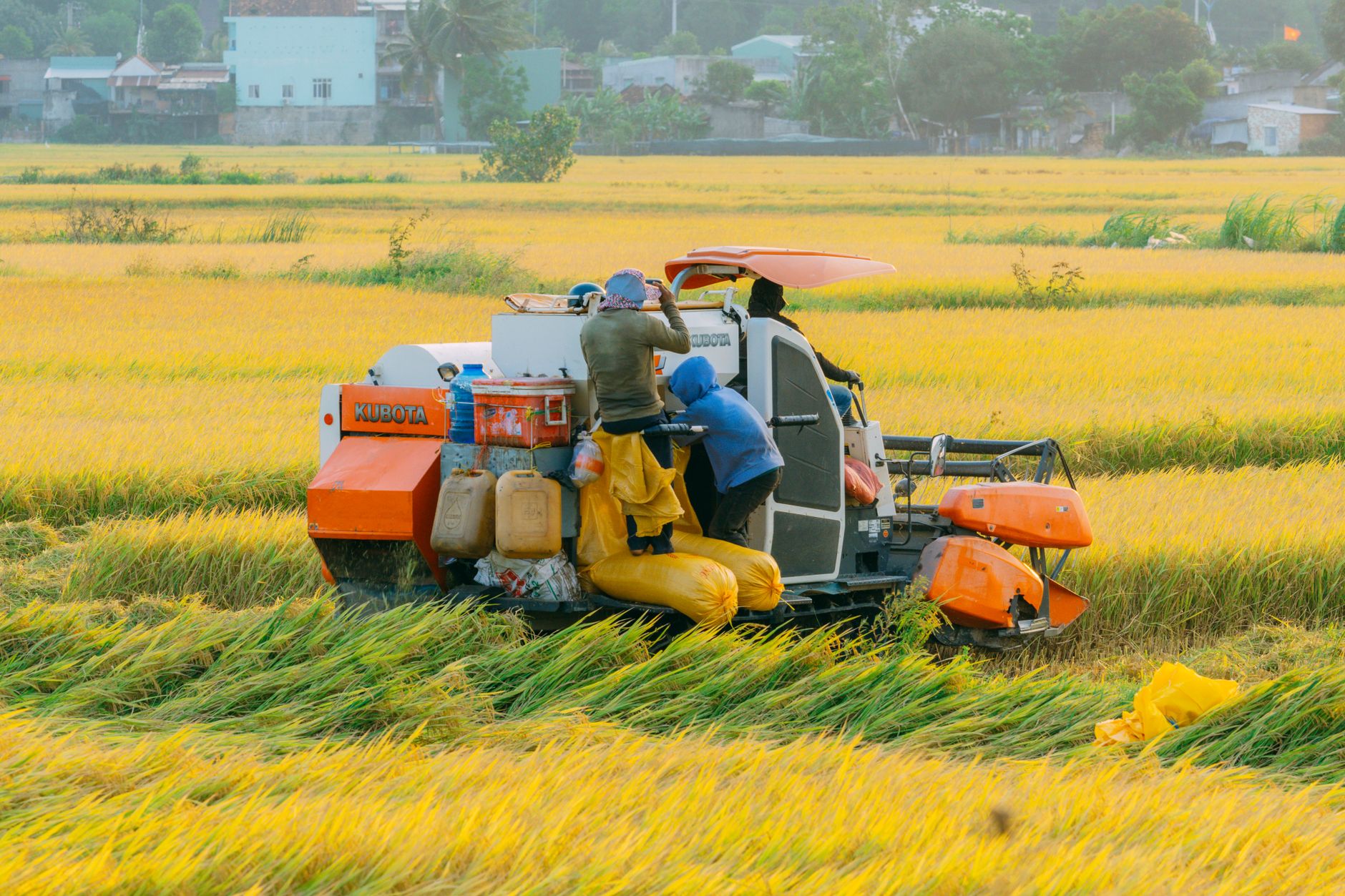
What actually happens: hour-by-hour breakdown
7:00–7:30 a.m.: Pickup from your accommodation, drive to the farm (usually 45 minutes to 90 minutes outside town, depending on location). You meet other guests en route; conversation is light because everyone's half-awake.
7:45–8:00 a.m.: Walk the land with the host farmer. They show you what's in season, point out where you'll work. Questions surface naturally: Why plant there? When do you harvest? How long have you farmed here? Translation happens fluidly, not forced.
8:00–10:30 a.m.: Hands-on work. In wet-season rice paddies, you might transplant seedlings or clear weeds. During dry months, vegetable gardens need weeding, tending, picking. Herb harvesting (mint, basil, dill) for cooking. You work at your own pace; there's no timer or quota. Your body moves in ways city life doesn't require; you notice your hands, your knees, your breath.
10:30–11:00 a.m.: Wash up at the farm (usually a hand pump or outdoor shower), rest in the shade.
11:00 a.m.–1:00 p.m.: Cook together in the family kitchen. You've picked the ingredients this morning; now you prep them — chopping, grinding paste, rolling spring rolls, tending a pot on a wood or charcoal stove. The host teaches technique through demonstration and gentle correction. No recipe card; you learn by watching and doing. Lunch is what you've cooked, eaten at a simple table with the family.
1:00–1:30 p.m.: Tea or coffee, conversation, rest. Some hosts show you their vegetable preserve-making or explain crop rotation. You ask questions; answers come without the sales pitch of a "cultural performance."
1:30 p.m.: Drive back to town.
Weather delays or rain? We've worked it out: if rain makes the fields unsafe or flooded, we pivot to more time in the kitchen, food preservation lessons, or indoor craft (bamboo weaving, basket-making). Spring and autumn mornings can be cold; we suggest layers and a light jacket. We adapt the intensity for guests with joint pain or mobility limits — everyone contributes at their level.
Solo travel + farm work: what actually matters
| Concern | What happens in reality | How we adapt |
|---|---|---|
| "Will I be alone?" | You're with three to seven others doing the same work. Conversation happens naturally during tasks. | We can arrange private sessions if you prefer; usually solo travelers enjoy the low-pressure group dynamic. |
| "I've never farmed before." | Skill is zero; the farmer shows you. You learn by repetition and observation, not instruction. | No experience needed. Kids, seniors, urban professionals all work at the same pace. |
| "What if I hate it?" | A few guests discover they dislike mud or early mornings; they help in the kitchen instead. We remain flexible. | Tell us your comfort level beforehand. We adjust roles; no one is locked into field work. |
| "Will language be a problem?" | Cáo hosts or translators are present. Much communication is gesture and example anyway. | English-speaking coordination before and after; on-farm translation as needed. |
| "Is it physically hard?" | Yes, lightly to moderately. Weeding, carrying, bending. Not gym-hard, but real exertion. | Seniors and those with injuries work in the kitchen or at a slower pace. We have water, shade, rest time built in. |
Where farm experiences happen across Vietnam
Hanoi area (Red River Delta region): We work with family farms growing rice, vegetables, herbs in villages in the delta. Morning light is soft; the landscape is flat, intersected by water channels and bamboo groves. Sessions here feel intimate because the farms are compact and the families have often hosted visitors for years. Solo travelers heading to experiences in Hanoi sometimes combine a farm day with a market visit or Vietnamese cooking class the next day — the ingredients you pick feed into the cooking.
Ho Chi Minh City surroundings (Mekong Delta tributaries and clay-soil farms): Farms are more biodiverse here — fruit orchards alongside vegetables, sometimes aquaculture. The delta heat is real; we go very early. Hosts here often grow specialty items (dragon fruit, passion fruit, herbs for regional cuisine). Pairing a farm visit with a street food and market tour in the city lets you trace ingredients from soil to street cart.
Regional towns (Da Lat, Da Nang hinterlands): Cooler-climate highlands grow temperate crops (tomatoes, lettuce, flowers, strawberries). Experiences in Da Lat include higher-altitude farms; the work is often gentler because the terrain is sloped and the pace slower. Pairing it with flower arranging workshop is popular because Da Lat is Vietnam's flower capital.
Ask us for dates and a quote on WhatsApp — we'll match your travel timeline and location preference to available sessions.

Combining farm work with other hands-on learning
Many solo travelers book a farm day, then layer it with another experience from our lineup in the same location or nearby. A morning on a farm, then an afternoon Vietnamese coffee workshop (especially if the farm region grows coffee or you're visiting the highlands). Or a farm visit followed by a Vietnamese cooking class the next day, where you cook what you've learned to harvest. Some solo travelers blend a farm stay with horse riding experience in regions where both are available. The rhythm — physical work, then craft or skill-building — mirrors how Vietnamese villages actually function; you're not checking boxes on a tourist list; you're living a day the way locals do.
What to bring and how to prepare physically
Clothing: Old clothes you don't mind muddying. Closed-toe shoes or sandals that stay on in wet earth (not flip-flops). Light, long sleeves protect from sun and occasional scratches; a hat helps. Layers if you're visiting in cool months (October–February). Change of shoes for the drive back.
Physical prep: Farm work isn't strenuous, but it's unfamiliar. If you've been sedentary during travel, your legs and back will notice squatting, bending, carrying. No need to "train"; just be honest about your mobility. Tell us if you have a bad knee or wrist; we adjust your role.
Mindset: Expect to move slowly. Expect silence and repetition. Expect to not understand everything the farmer says. Expect to feel pleasantly tired and a bit sore the next day. Solo travelers who approach it as "time off from sightseeing" rather than "must see everything" enjoy it most.
What to check before you book
- Your travel dates: Ask us which farms have availability during your window. Seasons shift; a farm lush in October may be fallow or in different crops in June.
- Your mobility and any injuries: Tell us honestly. We adapt, but we need to know upfront.
- Dietary needs or allergies: Farm lunches are made fresh on-site with what you've picked and host family staples. If you're vegetarian, vegan, or allergic to anything, we coordinate with the host beforehand.
- Language comfort: We provide English-speaking coordination and translation as needed. You won't be dropped at a farm with zero support.
- Rain or weather changes: Farms operate in seasons; rain happens. We have backup plans (indoor cooking, craft work). We reschedule if conditions are unsafe.
- Group size preference: Solo travelers often prefer small groups (four to six people). If you want private, tell us; we can arrange it.
- What "farm experience" means to you: Are you hoping for hard labor, gentle garden time, learning about crops, family connection, quiet reflection, or a mix? We listen to what draws you and match you to the right farm and group.
Real-life moments solo travelers describe after a farm day
"I expected Instagram photos. Instead I came away knowing the names of three family members, why they plant their vegetables in that specific order, and what basil should feel like fresh in your palm."
"I'm not athletic. I thought I'd feel out of place. By the time we were peeling herbs, I was laughing with a woman from Australia about how sore our hands were."
"The quiet work broke my brain in the best way. No phone signal, no 'what should I see next.' Just water, mud, and plants growing."

FAQ
Do I need farming experience?
No. Every guest starts from zero. The farmer teaches by showing you, not lecturing. Kids and seniors work alongside professionals; skill level doesn't matter.
What if I'm vegetarian or have allergies?
Tell us before you book. Farm lunches are made fresh on-site with the ingredients you've picked and the host family's staples. We coordinate dietary needs with the host ahead of time.
How many other solo travelers are usually on a session?
Groups typically include three to eight people — a mix of solos, couples, and small families. You'll never be alone, but it won't feel crowded. We can arrange private sessions if you prefer.
What if it rains?
We have a backup plan. If the fields are unsafe or flooded, we shift to more kitchen time, food preservation lessons, or indoor craft work. Sessions rarely cancel; we adapt.
Can I book a private farm day?
Yes. Ask us for dates and a quote on WhatsApp. Private sessions cost more but give you one-on-one time with the host and flexibility on timing.
Do I need to be fit?
Farm work is gentle physical activity — squatting, bending, carrying light loads. It's not gym training. Seniors and people with minor injuries participate by adjusting their role (kitchen work, slower pace). Tell us about any mobility limits beforehand.
What do I do with the food we cook?
You eat it for lunch with the host family and other guests. Portions are generous; there's rarely leftover to take away.
How far is the farm from the city?
Usually 45 minutes to 90 minutes by car, depending on the location (Hanoi, Ho Chi Minh City, or regional towns). We handle pickup and drop-off from your accommodation. --- Ask about dates on WhatsApp
Ask about dates
Tell us the city, your dates and what you would like to try. We reply on WhatsApp in English with options and availability.
FAQ
Do I need farming experience?
No. Every guest starts from zero. The farmer teaches by showing you, not lecturing. Kids and seniors work alongside professionals; skill level doesn't matter.
What if I'm vegetarian or have allergies?
Tell us before you book. Farm lunches are made fresh on-site with the ingredients you've picked and the host family's staples. We coordinate dietary needs with the host ahead of time.
How many other solo travelers are usually on a session?
Groups typically include three to eight people — a mix of solos, couples, and small families. You'll never be alone, but it won't feel crowded. We can arrange private sessions if you prefer.
What if it rains?
We have a backup plan. If the fields are unsafe or flooded, we shift to more kitchen time, food preservation lessons, or indoor craft work. Sessions rarely cancel; we adapt.
Can I book a private farm day?
Yes. Ask us for dates and a quote on WhatsApp. Private sessions cost more but give you one-on-one time with the host and flexibility on timing.
Do I need to be fit?
Farm work is gentle physical activity — squatting, bending, carrying light loads. It's not gym training. Seniors and people with minor injuries participate by adjusting their role (kitchen work, slower pace). Tell us about any mobility limits beforehand.
What do I do with the food we cook?
You eat it for lunch with the host family and other guests. Portions are generous; there's rarely leftover to take away.
How far is the farm from the city?
Usually 45 minutes to 90 minutes by car, depending on the location (Hanoi, Ho Chi Minh City, or regional towns). We handle pickup and drop-off from your accommodation. --- [💬 Ask about dates on WhatsApp](https://wa.me/84338762340)
More like this
Farm and countryside days
Fishing Experience Vietnam for Japanese Travelers: Where to Go & What to Expect
Vietnam's waterways offer Japanese travelers a chance to learn traditional fishing methods directly from locals. Cáo Experiences runs half- and full-day sessions on rivers, lakes and the Mekong Delta where you cast nets, set traps, and cook your catch.
Farm and countryside days
Fishing Experience Vietnam for Foreigners: Hands-On Guide
Fishing in Vietnam isn't a spectator sport—you'll wade into rivers, cast nets, trap fish in baskets, and cook your catch for lunch. We run small-group and private fishing days in the countryside outside Hanoi, Ha Noi region, and the Mekong Delta.
Farm and countryside days
Fishing Experience in Vietnam: 8 Questions to Ask Before You Go
Fishing in Vietnam means wading through rice paddies, learning trap techniques, or casting in rivers with local guides. Here's what to ask before you book.