
Home › Blog › Farm and countryside days
Farm Experience in Vietnam: What to Expect from Cáo
By the Cáo Experiences team · 2026-11-06
A farm and countryside experience with Cáo Experiences is a full-day or half-day immersion in a family-run smallholding outside a city—usually 30–90 minutes' travel from Hanoi, Ho Chi Minh City, Hoi An or Da Lat. You wake early, work alongside farmers in fields or orchards (planting rice, picking fruit, tending vegetables depending on season), learn to hand-prepare lunch using what you've harvested, rest during heat, sometimes help with animals or crafts. Sessions run 4–8 hours, small groups (2–10 people) with one English-speaking host. No farming background needed; we adapt for age and fitness. Rain happens—we shift to indoor craft, kitchen work, or reschedule. Expect mud, sweat, genuine tiredness, and the specific satisfaction of eating food you grew an hour ago. Ask us for dates and a quote on WhatsApp. Ask about dates on WhatsApp
What does a typical morning on a farm actually feel like?
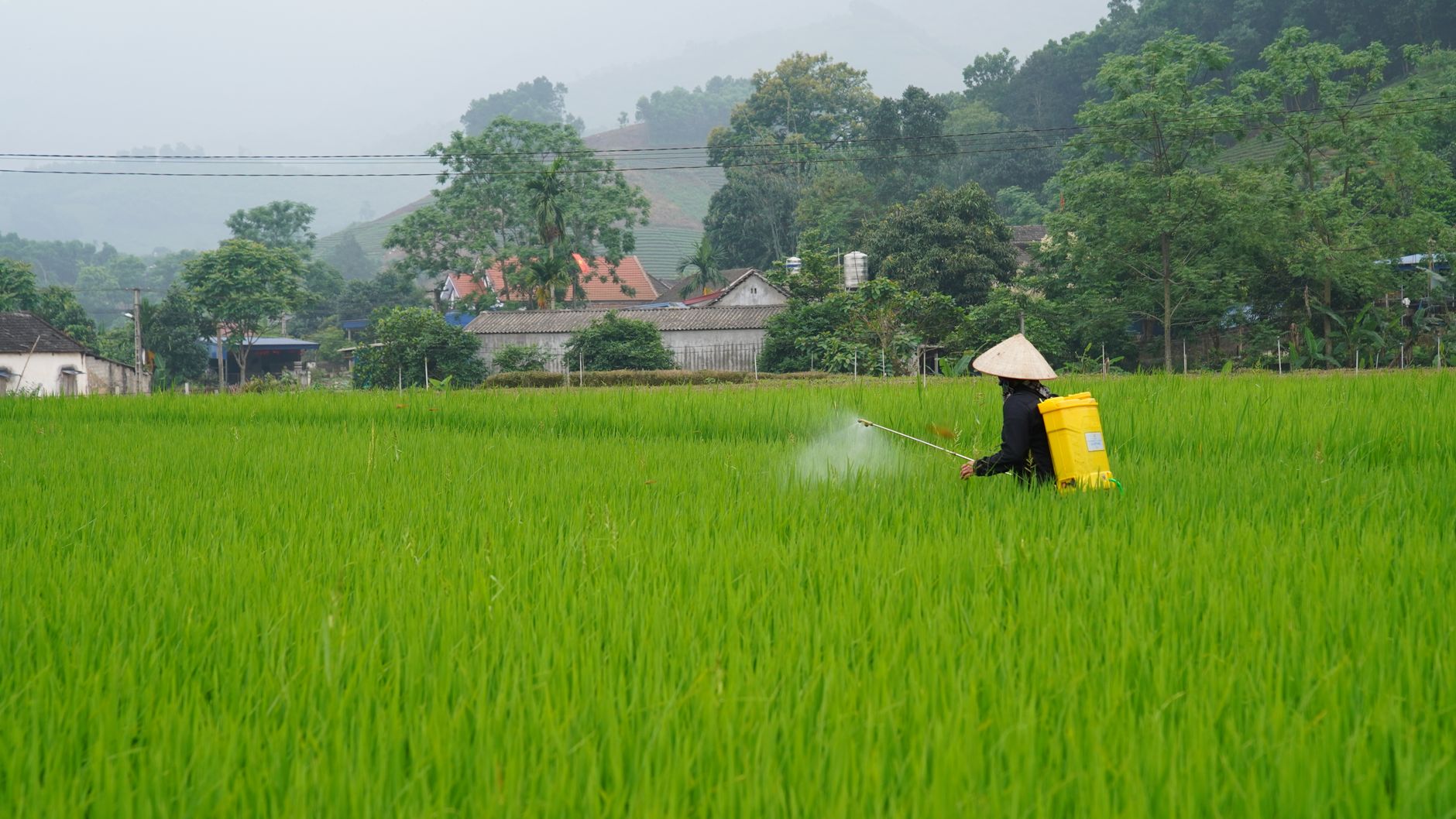
You arrive before dawn or early morning, when the air is cool and work is possible. The farmer meets you at the gate; if you're on rice paddies, boots or sandals go off, feet sink into warm mud, and you learn the planting rhythm—hand-spread seedlings or transplant shoots into rows. If it's an orchard or vegetable plot, you're crouching or climbing, picking ripe fruit or greens, filling baskets, learning which are ready by touch and smell, not color. Your hands get dirty, you notice insects, smell soil, and work stops when the heat peaks around 11 a.m. By noon, everyone is tired in a good way. This is not a tour—you are doing the work, slowly, alongside people whose livelihoods depend on it.
How does the meal-preparation part work?
After the field work, you move to the farm kitchen or a simple outdoor shelter. The farmer or their family—often a grandmother or mother—shows you how to wash and prep the vegetables or fruit you've just picked: how to trim, chop, understand which parts are edible, how heat and seasoning change raw ingredients. You might make a simple curry, stir-fry, soup, or fresh spring rolls using herbs from the garden. There's no restaurant-style precision; the goal is speed, flavor, and using what's at hand. You cook over a low fire or gas stove, taste as you go, and sit together to eat in the kitchen or outside under trees. The meal tastes different when you've grown and cooked it. Water and tea are offered throughout. If you have food allergies or dietary needs, tell us in advance—we coordinate with the farm host and adapt the menu.
Why do rain days change the plan, and what's actually available?
Vietnam's monsoons are real. Heavy rain stops field work—standing water, slippery mud, unsafe footing. On those days, we either reschedule (ask us about flexible dates) or shift the session indoors: you work in the farm kitchen for longer, learning to prepare a bigger or more complex meal; you help with small crafts like basket weaving, herb-drying, or egg-collecting from coops; or you sit with the farmer and family to hear stories over coffee and snacks. Rainy days are quieter, more intimate, and less physically demanding. Bring waterproof shoes or sandals that can dry quickly, and a light rain jacket. We've never canceled—we've only changed the focus.
What should you wear and bring, and what will you actually need?
Wear loose, breathable clothes (cotton or linen, long trousers or cropped pants to protect from sun and insects), closed-toe shoes or sandals you can walk through mud in, a hat, and sunscreen. Bring a small bag with water, a light snack, insect repellent, and a change of shoes if you're worried about the drive back. We provide any tools (baskets, shovels, buckets). Don't bring jewelry or anything you can't afford to lose to mud. Most farms have a water tap to rinse off before you leave; if not, we've arranged a stop on the way back. Your clothes will be dirty—plan to wash them same day.

Who is a farm experience actually suited for, and who should skip it?
Farm work is physical but not intense. We've hosted solo travelers (learning self-reliance), couples (working as a team, romantic dawn), groups of friends (shared challenge, good conversation), and families with kids aged 6+. Grandparents and people with limited mobility can join half-days, doing lighter tasks (picking fruit standing, sitting to prep food, listening and helping with small jobs). If you have serious back or joint problems, let us know—we'll match you with a farm doing less bending work or a shorter day. Very young children (under 5) tire quickly and may not enjoy the repetition. People who dislike insects, mud, early mornings, or manual work should choose a cooking class or coffee workshop instead—both are indoors, skill-focused, and equally rewarding.
How does a farm day compare to other countryside and food experiences?
| Experience | Focus | Duration | Physical demand | Hands-on food | Best for |
|---|---|---|---|---|---|
| Farm day | Planting, harvesting, cooking | 4–8 hours | High (mud, bending, heat) | Cook from crops you picked | Immersion, families, learners |
| Street food tour | Market walk, tasting prepared food | 2–3 hours | Low (walking, standing) | Taste, no cooking | Quick, foodies, solo |
| Cooking class | Technique, menu planning, indoor kitchen | 3–4 hours | Low (standing, fine motor) | Cook full menu | Skill-building, couples |
| Flower arranging | Design, creative, seasonal blooms | 2–3 hours | Low (sitting, arranging) | No food | Relaxation, aesthetics |
| Horse riding | Outdoor skill, rhythm, landscape | 2–3 hours | Medium (balance, legs) | No food | Thrill, riders, nature |
A farm day is slower, dirtier, and more grounded in routine than a market or coffee tour. A cooking class teaches recipes; a farm teaches why those recipes exist.
What to check before you commit to a farm experience
1. Season matters. Dry season (October–April) is easier: less mud, fewer insects, more comfortable. Wet season (May–September) is muddier but has lusher growth and fewer crowds. Check the lunar calendar with us—some farms pause during harvest or planting peaks.
2. Physical fitness. Be honest about your knees, back, and heat tolerance. A 4-hour farm day is more tiring than a 4-hour market walk. If you're recovering from injury, say so—we'll find a gentler option or match you with a specific farm.
3. Food allergies or strict diets. Tell us in the WhatsApp chat. We need 5–7 days' notice so the farm can plan. Vegetarian or pescatarian? Fine—farms grow plenty of veg. Nut allergy? Tell us. We will not guess.
4. Language comfort. Our host speaks English; the farmer may speak only Vietnamese. We translate and explain. If you're anxious about miscommunication, do a group experience first, or ask us to match you with a farmer we know well.
5. Rain gear is real. Flip-flops or sneakers will be muddy and slippery. Bring actual shoes or sandals with grip, and a rain jacket if it's monsoon season. Check the forecast with us before the session.
6. Travel time. Farms are rural—30–90 minutes from the city center. Factor this into your day. We arrange pickup and drop-off or give clear directions; ask about this when you inquire.
Our farm experiences are available year-round in Hanoi, Ho Chi Minh City, Hoi An, Da Lat, and Da Nang. Each region grows different crops and has a different pace. If you want to combine farm work with cooking skills, ask us about our cooking-class options—some hosts can chain them. If you prefer gentler countryside time—tea, walking, craft—look at wellness experiences or group days that blend multiple activities.
See how a session runs

FAQ
Do I need farming experience to join?
No. We've hosted office workers, retirees, kids, and tourists. The farmer teaches you; you copy the rhythm. By hour three, your hands know the motions.
What if I'm very unfit or have a bad knee?
Tell us before booking. We'll match you with a farm doing less bending work (orchards, herb plots, sitting prep) or a shorter day. Half-days exist for this reason.
What if it rains the day I'm booked?
We reschedule or shift to kitchen and craft work indoors. Farms have covered spaces and backup activities. We've never canceled a session.
Can I bring my 4-year-old?
Four is young for a full day—the work is repetitive and the heat is real. Ages 6+ are comfortable. For younger kids, family experiences with play, learning, and shorter time are better.
Do I need to book a group, or can I go solo or as a couple?
Both work. Solo travelers join a small group (usually 2–8 people) and bond over the work. Couples can book private sessions. Ask us for group dates or private pricing on WhatsApp.
Will the food be safe if I have a strict diet (vegetarian, gluten-free, nut allergy)?
Yes, if you tell us 5–7 days ahead. We coordinate with the farm. Vegetarian is easy on farms—they grow abundant vegetables. Allergies need advance notice so we source or adapt.
How do I get to the farm, and is there parking?
We arrange pickup from your hotel or a central landmark, or give detailed directions. For private cars, farms have parking. Public transport is possible but complicated—ask us for your location.
What should I do with my dirty clothes after?
Bring a plastic bag. We'll rinse your feet and hands at the farm. Wash clothes same day at your hotel. Some farms have basic outdoor taps; some don't—plan accordingly.
Ask about dates
Tell us the city, your dates and what you would like to try. We reply on WhatsApp in English with options and availability.
FAQ
Do I need farming experience to join?
No. We've hosted office workers, retirees, kids, and tourists. The farmer teaches you; you copy the rhythm. By hour three, your hands know the motions.
What if I'm very unfit or have a bad knee?
Tell us before booking. We'll match you with a farm doing less bending work (orchards, herb plots, sitting prep) or a shorter day. Half-days exist for this reason.
What if it rains the day I'm booked?
We reschedule or shift to kitchen and craft work indoors. Farms have covered spaces and backup activities. We've never canceled a session.
Can I bring my 4-year-old?
Four is young for a full day—the work is repetitive and the heat is real. Ages 6+ are comfortable. For younger kids, [family experiences](/family-experiences) with play, learning, and shorter time are better.
Do I need to book a group, or can I go solo or as a couple?
Both work. Solo travelers join a small group (usually 2–8 people) and bond over the work. Couples can book private sessions. Ask us for group dates or private pricing on WhatsApp.
Will the food be safe if I have a strict diet (vegetarian, gluten-free, nut allergy)?
Yes, if you tell us 5–7 days ahead. We coordinate with the farm. Vegetarian is easy on farms—they grow abundant vegetables. Allergies need advance notice so we source or adapt.
How do I get to the farm, and is there parking?
We arrange pickup from your hotel or a central landmark, or give detailed directions. For private cars, farms have parking. Public transport is possible but complicated—ask us for your location.
What should I do with my dirty clothes after?
Bring a plastic bag. We'll rinse your feet and hands at the farm. Wash clothes same day at your hotel. Some farms have basic outdoor taps; some don't—plan accordingly.
More like this
Farm and countryside days
Fishing Experience Vietnam for Japanese Travelers: Where to Go & What to Expect
Vietnam's waterways offer Japanese travelers a chance to learn traditional fishing methods directly from locals. Cáo Experiences runs half- and full-day sessions on rivers, lakes and the Mekong Delta where you cast nets, set traps, and cook your catch.
Farm and countryside days
Fishing Experience Vietnam for Foreigners: Hands-On Guide
Fishing in Vietnam isn't a spectator sport—you'll wade into rivers, cast nets, trap fish in baskets, and cook your catch for lunch. We run small-group and private fishing days in the countryside outside Hanoi, Ha Noi region, and the Mekong Delta.
Farm and countryside days
Fishing Experience in Vietnam: 8 Questions to Ask Before You Go
Fishing in Vietnam means wading through rice paddies, learning trap techniques, or casting in rivers with local guides. Here's what to ask before you book.