
Home › Blog › Farm and countryside days
Farm Experience Vietnam vs Thailand: Which Is Right for You?
By the Cáo Experiences team · 2026-11-06
Farm days in Vietnam and Thailand share the appeal of hands-on work—planting, harvesting, cooking with what you've grown—but diverge sharply in landscape and rhythm. In Vietnam, Cáo Experiences runs small-group days in the Mekong Delta (rice paddies, orchards, floating gardens) and foothills around Hanoi; sessions run 4–6 hours, include water-buffalo herding or tea picking, a farm meal you help prepare, and cost less than Thailand equivalents. Thailand's farm stays lean toward hill-tribe villages (north) or coastal orchards (south), often overnight, and attract visitors seeking "authentic poverty tourism." Vietnam's farms are working family operations in rich agricultural zones—you're alongside farmers, not observers. Both are seasonal; Vietnam's rice is May–July and October–November, Thailand's varies wildly by region. Neither is a resort; both require early starts, muddy clothes, and tolerance for insects. Choose Vietnam if you want half-day cultural immersion with cooking; choose Thailand if you'll travel overland and value a multi-day retreat. Ask about dates on WhatsApp --- #
How do farm seasons shape what you'll actually do?
Vietnam's farm calendar is strict and predictable. Rice grows May–July (planting, transplanting, early growth) and October–November (harvesting, threshing). Mekong orchards—mango, coconut, passion fruit—yield year-round but peak May–September. Tea in the foothills near Hanoi and Hà Giang harvest January–October, with spring (March–April) and autumn (September–October) the finest. When you arrive, you work whatever the season demands: knee-deep in paddies during planting, cutting sugarcane or bundling rice straw in harvest, or hand-picking tea leaves before dawn.
Thailand's north (Chiang Mai, Chiang Rai) follows a different rhythm—strawberries, flowers, and corn peak October–March (cool season), and the wet southwest monsoon (May–October) suits rice. The south's coconut and pineapple plantations operate year-round but feel less integrated into local village life. We host farm and countryside experiences timed to Vietnam's actual growing calendar, not tourist demand, so you're not watching idle machinery or empty fields.

What's the physical and cultural difference between paddies and plantations?
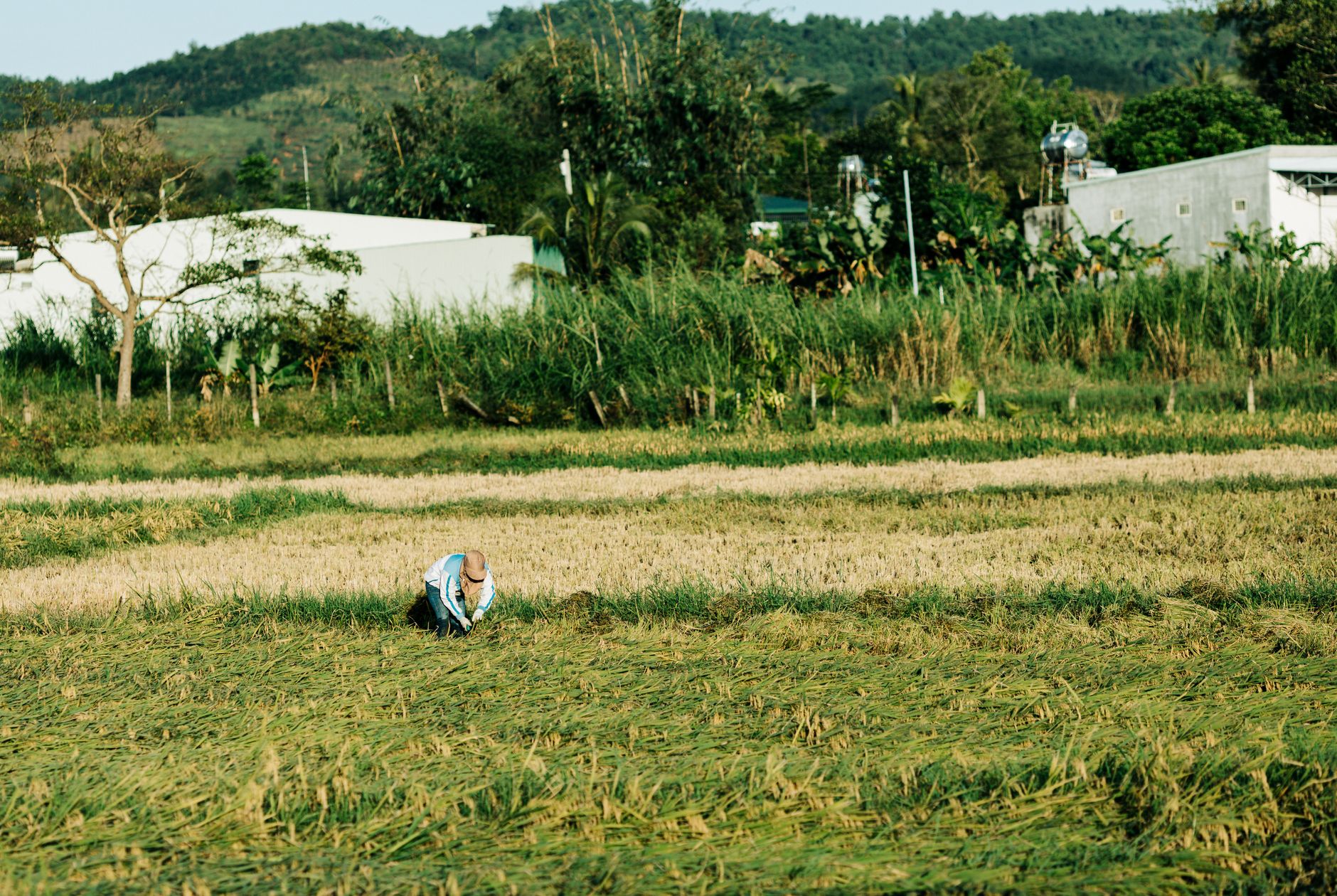
Vietnam's Mekong Delta farm is typically multigenerational family land—2–5 acres, a wooden house on stilts, chickens, a small orchard, and water. You work alongside the family (grandparents, kids, neighbors). Rice paddies are flat, flooded, muddy, and require wading; tea farms are hilly, dry, and demand climbing. The work is quiet and repetitive—ideal for learning rhythm, listening, and talking with farmers about their lives. No megaphones, no "cultural shows." You'll eat breakfast with the family, lunch cooked by the women, and leave by early afternoon, muddy and exhausted.
Thailand's larger operations—especially in the north—are often commercial ventures that host tourists as a scheduled activity. Rows are bigger, equipment more visible, and the farmer's schedule is pre-set around your group. Hill-tribe villages add an ethnographic layer (different language, dress, animist beliefs) that Vietnam's lowland farms don't emphasize; you're learning about subsistence, not just labor. Both teach humility. Vietnam's farms teach interdependence; Thailand's teach marginality. Ask yourself: do you want to work with a family, or observe and help a subsistence economy?
Is rain a dealbreaker—or part of the experience?
Rain in Vietnam's Mekong is warm, brief, and usually happens at dawn or dusk; morning farm sessions are unaffected unless flooding closes roads (rare). Tea-picking in the foothills may start drizzly, but cool weather actually improves the leaves. We reschedule only if rivers rise or local warnings activate—roughly once a year.
Thailand's northern winter (November–February) is nearly dry; May–October monsoons can cancel work days without warning. Southern plantations are wet and muddy most of the year. If rain arrives during your booked day in Vietnam, we adjust the morning's plan (indoor cooking, learning to make tools, visiting a neighbor's workshop) and return to the field if it clears. Wear plastic shoes you don't mind losing; bring a spare shirt. Rain is not a crisis—it's part of farming. Don't book a farm experience expecting sunshine.
What should you pack and wear for a real working day?
Wear old clothes you'll leave muddy: loose pants (jeans trap water; linen dries faster), a long-sleeve shirt (sun protection, insect barrier), and shoes with grip that can get soaked. Flip-flops won't work; bring waterproof shoes or accept that your sneakers will smell of mud for a week. A hat or bandana, sunscreen, and a small towel. Most farms provide hand tools; don't bring expensive jewelry or electronics. Bring curiosity and a willingness to look silly. Seniors can participate in tea-picking, light harvesting, and cooking; those with knee or back issues should ask us in advance—we'll adapt tasks or suggest gentler wellness and slow experiences instead.
Families often bring children aged 6+; kids get muddy fast and love it. We adapt the pace and explain tasks in simpler language. Very young children tire after two hours; plan accordingly or consider a shorter farm and countryside experiences combined with cooking or family-friendly alternatives.
| Item | Why it matters | Don't skip |
|---|---|---|
| Old clothes | You will get muddy; don't wear your favorite shirt | Long sleeves protect from sun and scratches |
| Waterproof shoes | Paddies are wet; flip-flops slip off | Grip soles; accept loss |
| Hat + sunscreen | Southeast Asia sun is intense, even if cloudy | Reapply; start early before peak heat |
| Minimal jewelry | Rings snag on tools; watches get muddy | Leave it at your hotel |
| Open mind | Discomfort is temporary; the story lasts forever | Willingness to fail is the real entry fee |

How does a typical farm morning actually unfold?
You arrive at 5:30 or 6 a.m.—the farmer is already an hour in. We greet the family, wash your hands at the well or outdoor tap, and the farmer shows you the day's work: rice transplanting, tea-leaf picking, or fruit harvesting. You're shown the technique once, then you do it. The first 30 minutes feel clumsy; by hour two you've found a rhythm. The farmer or a family member works beside you, correcting posture, showing shortcuts, and pointing out details (a tea leaf's best growth stage, how to spot ripe mango). Around 8 a.m., breakfast—rice porridge, fried dough, pickled vegetables, coffee or tea—eaten sitting on the porch or inside the house. You eat what the family eats; tell us in advance about allergies or vegetarian diets, and we'll coordinate.
Work resumes for 1.5–2 hours. Around 10 or 10:30 a.m., you're done—the heat rises, the work slows. You wash off at the outdoor pump, change into dry clothes if you brought them. The women of the house or a neighbor will teach you to prepare lunch from the morning's harvest: peeling vegetables, stirring a simple curry or stir-fry, learning one or two techniques you can replicate at home. Lunch is communal; children eat with you; the farmer might ask questions about your country. By midday, you leave—tired, muddy, and possessing a visceral memory of where rice comes from.
We host similar sessions in other regions: fruit orchards near Saigon, experiences in Hanoi foothills, and experiences in Da Lat where temperate vegetables and flowers grow. Each has its own morning rhythm and harvest.
See how a session runs
What's the honest cost comparison, and what's included?
Cáo Experiences' farm and countryside experiences include transportation from your hotel, a farmer host, 4–6 hours of work, breakfast and lunch (cooked with you), and interpretation of farming life and food. Ask us for dates and a quote on WhatsApp—pricing reflects group size, location, and season.
Thailand's multi-day farm stays (north: hill-tribe villages, homestays; south: resort-style agro-tourism) range widely, often requiring you to book directly or through tour operators; single-day farm visits are rarer and sometimes feel staged. Many include transportation, guides, and meals, but "authentic" experiences cost more because they're smaller. Vietnam's half-day format is more economical and suits travelers with limited time; you're working, not relaxing, so comfort expectations are lower—and so is cost. If you're comparing a 1-day Vietnam farm with a 2-night Thailand hill-tribe stay, you're comparing different products. For a true 4-hour comparison: Vietnam's all-in experience (transport, farmer, meals, interpretation) will cost less than Thailand's equivalent because our operations are local and unmediated.
What to check before you book
- Fitness level: Can you squat, kneel, and walk for 4 hours without serious discomfort? Farms aren't gyms; if you have joint issues, tell us and we'll discuss adapting or suggesting wellness and slow experiences instead.
- Dietary needs: Vegetarian? Allergies? Let us know at booking so the farm family can plan. Thai farms may find last-minute dietary requests harder to accommodate.
- Weather tolerance: Can you work in 25–28°C heat, humidity, and potential drizzle? Rain doesn't cancel; flooding does (very rare).
- Noise and insects: Farms are alive with cicadas, mosquitoes, and early morning activity. Not silent retreats.
- Language: We interpret between you and the farmer. Don't expect your host to speak English, but expect warmth.
- Photography: Ask permission before photographing people. Some families are private; we'll guide you.
#
FAQ
Will I understand what's happening if I don't speak Vietnamese?
Yes. We interpret between you and the farmer, and farm work is mostly wordless—you're shown once, then you copy. The farmer watches your hands, not your vocabulary. You'll learn 5–10 farm-related words in Vietnamese; that's enough to smile and say thank you.
Can I do a farm experience if I'm not fit or have arthritis?
Yes, with adjustments. Tea-picking and gentle harvesting require less kneeling than rice work. Tell us your limitations when you ask for dates on WhatsApp, and we'll design a session you can actually enjoy. Some people prefer wellness and slow experiences or a combination with cooking-class.
What if I hate getting muddy?
Farm work is muddy by definition. If that's genuinely a concern, a farm experience isn't for you—consider our coffee-workshop or flower-arranging instead. Muddy shoes and hands are the entry point to understanding farming. Bring old clothes and embrace it, or skip it.
Are farm animals part of the experience?
Often. You might hand-feed chickens, guide water buffalo, or help with minor animal care. Tell us if you're uncomfortable with animals and we'll minimize that element, but farms don't exist without them.
How does a Vietnam farm compare to visiting Hoi An or Hanoi's old quarter?
A farm is a doing experience; destinations/hoi-an and destinations/hanoi sightseeing are seeing experiences. You won't visit a famous landmark or Instagram spot. You'll be covered in mud alongside someone's grandmother, learning why food costs what it does. They're complementary—one day on a farm, one day exploring an ancient town—not either-or.
Can families with young kids do this?
Yes, ages 6+. Children love getting muddy and watching animals. We adjust pace and teach at a simpler level. Very young children (under 6) tire quickly and may not stay engaged for a full 4-hour session; ask us about family-experiences for shorter, mixed-activity options.
Do you offer farm experiences outside the Mekong Delta?
Yes. We run farms near destinations/hanoi (tea, vegetables), destinations/da-lat (flowers, temperate crops), and occasionally other regions. Each has different crops and seasons. Ask us about specific locations when you message WhatsApp. Ask about dates on WhatsApp
Ask about dates
Tell us the city, your dates and what you would like to try. We reply on WhatsApp in English with options and availability.
FAQ
Will I understand what's happening if I don't speak Vietnamese?
Yes. We interpret between you and the farmer, and farm work is mostly wordless—you're shown once, then you copy. The farmer watches your hands, not your vocabulary. You'll learn 5–10 farm-related words in Vietnamese; that's enough to smile and say thank you.
Can I do a farm experience if I'm not fit or have arthritis?
Yes, with adjustments. Tea-picking and gentle harvesting require less kneeling than rice work. Tell us your limitations when you ask for dates on WhatsApp, and we'll design a session you can actually enjoy. Some people prefer [wellness and slow experiences](/wellness) or a combination with [cooking-class](/cooking-class).
What if I hate getting muddy?
Farm work is muddy by definition. If that's genuinely a concern, a farm experience isn't for you—consider our [coffee-workshop](/coffee-workshop) or [flower-arranging](/flower-arranging) instead. Muddy shoes and hands are the entry point to understanding farming. Bring old clothes and embrace it, or skip it.
Are farm animals part of the experience?
Often. You might hand-feed chickens, guide water buffalo, or help with minor animal care. Tell us if you're uncomfortable with animals and we'll minimize that element, but farms don't exist without them.
How does a Vietnam farm compare to visiting Hoi An or Hanoi's old quarter?
A farm is a *doing* experience; [destinations/hoi-an](/destinations/hoi-an) and [destinations/hanoi](/destinations/hanoi) sightseeing are *seeing* experiences. You won't visit a famous landmark or Instagram spot. You'll be covered in mud alongside someone's grandmother, learning why food costs what it does. They're complementary—one day on a farm, one day exploring an ancient town—not either-or.
Can families with young kids do this?
Yes, ages 6+. Children love getting muddy and watching animals. We adjust pace and teach at a simpler level. Very young children (under 6) tire quickly and may not stay engaged for a full 4-hour session; ask us about [family-experiences](/family-experiences) for shorter, mixed-activity options.
Do you offer farm experiences outside the Mekong Delta?
Yes. We run farms near [destinations/hanoi](/destinations/hanoi) (tea, vegetables), [destinations/da-lat](/destinations/da-lat) (flowers, temperate crops), and occasionally other regions. Each has different crops and seasons. Ask us about specific locations when you message WhatsApp. [💬 Ask about dates on WhatsApp](https://wa.me/84338762340)
More like this
Farm and countryside days
Fishing Experience Vietnam for Japanese Travelers: Where to Go & What to Expect
Vietnam's waterways offer Japanese travelers a chance to learn traditional fishing methods directly from locals. Cáo Experiences runs half- and full-day sessions on rivers, lakes and the Mekong Delta where you cast nets, set traps, and cook your catch.
Farm and countryside days
Fishing Experience Vietnam for Foreigners: Hands-On Guide
Fishing in Vietnam isn't a spectator sport—you'll wade into rivers, cast nets, trap fish in baskets, and cook your catch for lunch. We run small-group and private fishing days in the countryside outside Hanoi, Ha Noi region, and the Mekong Delta.
Farm and countryside days
Fishing Experience in Vietnam: 8 Questions to Ask Before You Go
Fishing in Vietnam means wading through rice paddies, learning trap techniques, or casting in rivers with local guides. Here's what to ask before you book.