 Cáo Experiences
Home › Blog › Flower arranging workshops
Flower Arranging Class in Vietnam: How to Book with Cáo
By the Cáo Experiences team · 2026-11-01
A flower arranging class in Vietnam with Cáo Experiences is a hands-on, English-hosted workshop where small groups (2–8 people) spend 2–3 hours learning to build arrangements using seasonal Vietnamese flowers. We meet in a calm studio space near the old quarter or countryside, depending on location; you'll cut, condition, and structure blooms with guidance from our host, then walk away with a finished arrangement. No prior skill needed—beginners are the norm. Cost varies by group size and location; ask us for dates and a quote on WhatsApp. We adapt for all ages and skill levels. To book: contact us via WhatsApp with your preferred dates, group size, and location (Hanoi, Saigon, Hoi An, Da Nang, or Da Lat), and we'll confirm availability and send you session details. Ask about dates on WhatsApp
What exactly happens during a flower arranging session?
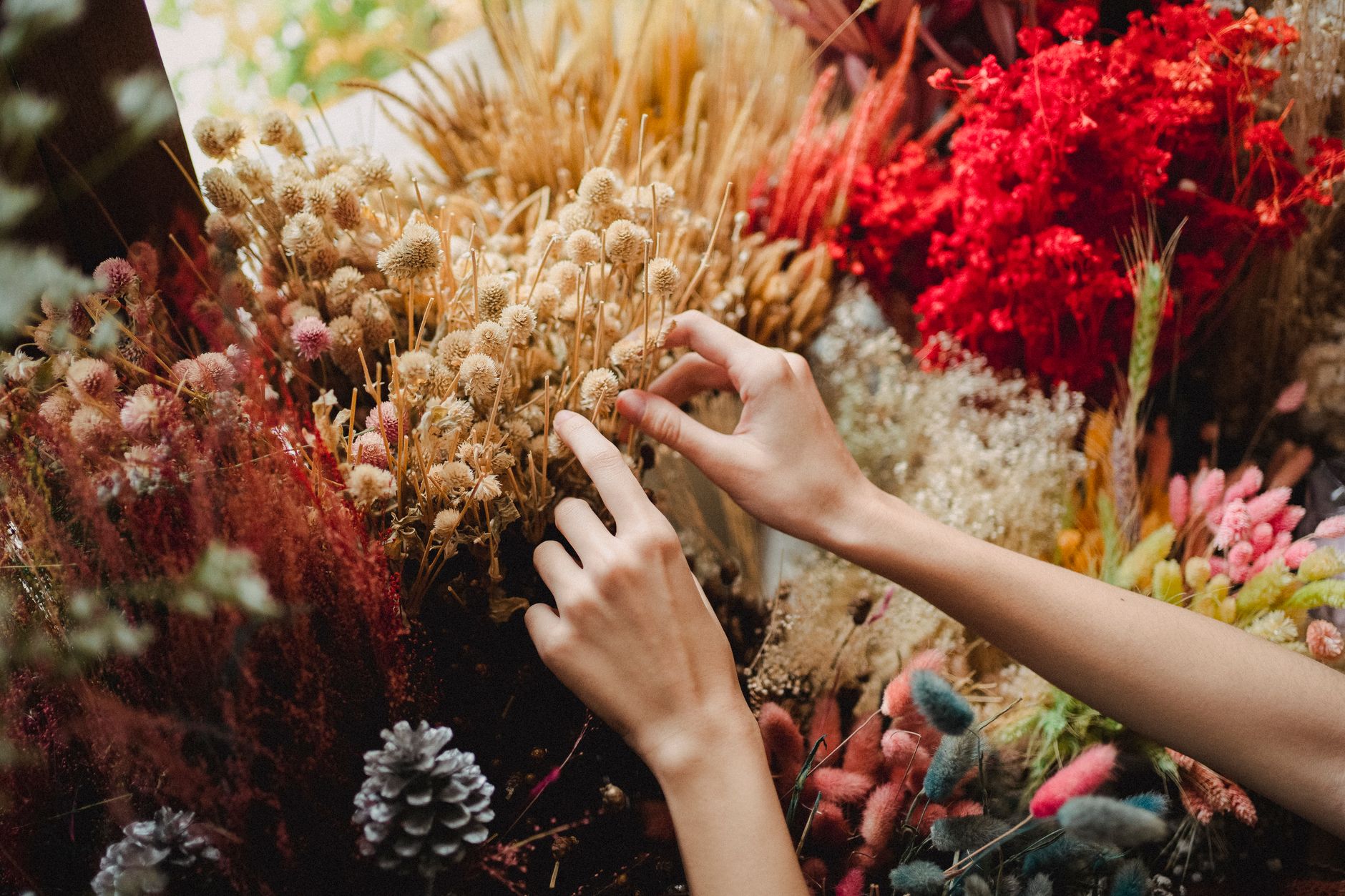
We start with a 10-minute walk through the space and an intro to the flowers we're working with that day—what's in season, why certain stems last longer, how to read the bloom's "face." Then we move to your workspace (a low table or counter; you sit or stand, your choice). We show you how to hold scissors safely, strip leaves below the waterline, and make clean cuts at a 45-degree angle. Most guests are surprised how much difference angle makes to water absorption.
Next, we guide you through structure: we pick one focal bloom—usually a garden rose, sunflower, or chrysanthemum—and you build around it with filler and secondary flowers. We don't dictate design; we ask questions: What colors calm you? Do you like it tall and airy, or round and full? We walk around, adjust, suggest tweaks. By hour two, you're moving faster, making your own choices.
Finally, we trim the vase, fill it, and you take your arrangement home (or to your hotel). The whole thing leaves you with a tangible thing you made, not just a memory.

Where in Vietnam can you take a flower arranging class?
We offer flower arranging workshops in five cities. In Hanoi, we work in a family studio tucked away in a quiet lane off the old quarter—natural light, close to where you can walk to cafes afterward. Saigon sessions happen in a bright, open space near District 1, near markets and evening street food areas if you want to extend your day. Hoi An classes run in a heritage-style room within walking distance of the Ancient Town, so many guests combine it with a evening stroll. Da Nang and Da Lat both have countryside options—Da Lat especially offers cooler air and access to local flower farms if you're curious about where blooms come from.
Each location sources flowers from local suppliers or growers within the same region. Hoi An and Da Nang bloom year-round; Da Lat, being cooler, has different seasonal peaks. Hanoi and Saigon reflect tropical seasons. Ask us which location suits your trip length and energy—a short city visit might fit Hanoi; a countryside retreat might suit Da Lat.
How do you book a flower arranging class step by step?
Step 1: Message us on WhatsApp. We answer within 24 hours (usually faster). Give us: your preferred date(s) (we list what's open), your group size (solo, couple, family, team), which city, and any access needs.
Step 2: Confirm the session details. We send you the exact time, studio address, what to wear (closed shoes, no heavy perfume—it masks flower scent), and what we'll provide (vases, water, scissors, floristry foam, blooms).
Step 3: Receive a quote. We ask us for dates and a quote on WhatsApp—no hidden fees. The quote covers the class, all materials, and a takeaway arrangement.
Step 4: Pay via bank transfer. We share bank details; you pay a small deposit to hold the spot, balance one week before (or full upfront if you prefer).
Step 5: Show up 5 minutes early. We'll have water running, blooms prepped, and tea ready. Most people feel nervous until they cut the first stem—then it clicks.
What should you know before booking a flower arranging class?
| Question | Real answer | What to do |
|---|---|---|
| Will I mess it up? | Yes, once or twice. Blooms forgive you. | We show you how to fix breaks; they teach you what not to do next time. |
| What if I'm allergic? | Tell us before day one. | We can use hypoallergenic filler (green foam, eucalyptus) and avoid pollen-heavy blooms. |
| Can kids join? | Yes, ages 6+. Under 6, it's tricky (scissors, foam, mess). | We use blunt shears for young kids and shorten the session. See our family experiences page. |
| What if it rains? | Our studios are indoors. | No impact; same experience. |
| Can I ship my arrangement home? | Not easily. Blooms bruise in transit. | Take a photo, enjoy it in-country, and we can help arrange a keepsake afterward (pressed petals, photos). |
| How many people is the right group size? | 2–6 is ideal; we run up to 8. | Smaller = more host attention. Larger = more shared energy and fun. |

How do flower arranging classes differ by location and season?
Hanoi (year-round, best Sept–Nov): Spring brings peonies and cherry; summer is roses and sunflowers; autumn explodes with dahlias and chrysanthemums; winter (Dec–Feb) is quieter—mostly roses, carnations, statice. Humidity is high; blooms wilt faster in June–July, so we swap frequently.
Saigon (best Nov–Feb): Tropical blooms year-round: anthuriums, bird of paradise, orchids, roses. Nov–Feb feels fresher and less sticky; July–Sept is hot and humid, but blooms are cheaper and bolder. Flower markets are chaotic and huge—many guests love combining a class with a street food and market tour the same morning.
Hoi An (best Oct–March): Cooler, quieter. Spring and autumn bring imported blooms—tulips, hydrangeas—alongside local roses. Blooms last longer in cool air. Good for a slower pace.
Da Nang (best Mar–May, Oct–Nov): Coastal, warm but less humid than Saigon. Seasonal blooms peak in shoulder months. Pairs well with wellness and slow experiences or a countryside farm experience nearby.
Da Lat (best Sept–Nov, March–May): Mountain coolness = longer bloom life and unusual local flowers (gladiolus, carnations, daisies). Winter (Dec–Feb) is misty and romantic but colder—bring a layer. Best for anyone drawn to quiet, altitude, and fresh air.
What if you want to combine flower arranging with other experiences?
Many guests book a half-day class, then explore. In Hanoi, it's natural to add a Vietnamese coffee workshop in the same neighborhood, or a cooking class the next day. In Saigon, a morning class + afternoon street food and market tour works well. Hoi An guests often stack a morning flower class with an evening art and culture class exploring lantern-making or calligraphy. In Da Lat, a farm experience or tea experience in the countryside complements a morning at the studio.
For groups or teams, we offer group and corporate experiences—flower arranging is a calm team-builder, especially before a brainstorm or dinner. Couples often book flower arranging + a wellness and slow experience like a guided tea tasting or afternoon in a quiet garden.
What to check before you book
- Bloom availability. If you have a favorite flower, ask us if it's in season during your dates. We'll swap suggestions if not.
- Group size. Smaller groups get more hands-on time; larger groups feel more social. Know what you want.
- Physical access. Studios are ground-floor or low-step. Let us know if you use a mobility aid.
- Allergies or sensitivities. Pollen, latex gloves, floristry foam dust—tell us everything so we prep.
- Takeaway space. Your arrangement is heavy (water + blooms). Bring a bag or box, or ask us to box it safely for you.
- Camera policy. We love photos; some guests film for socials. Just ask the host if they're happy on camera.
- Cancellation. Life happens. Ask us about our policy on dates changed or cancelled.
FAQ
Do I need any flower arranging experience?
No. Most guests are absolute beginners. We teach you how to hold shears, condition stems, and build shape from scratch. You'll feel clumsy at first; by the end, you'll surprise yourself.
Can I book a private class just for my group?
Yes. Private classes are the norm for couples, families, and small teams. We also run open small-group sessions if you want to meet other travelers. Ask us for dates and availability.
What happens to my arrangement after the class?
You take it home (or to your hotel). In cool rooms, most last 5–7 days. Take a photo in case you want to remember it, and enjoy it in-country—shipping live flowers is risky.
Are there any allergies or health issues I should worry about?
Pollen can trigger hay fever; floristry foam dust can irritate airways; latex gloves cause reactions in some people. Tell us upfront, and we swap to hypoallergenic materials, unscented blooms, and nitrile gloves.
Can children join a flower arranging class?
Yes, ages 6+. Younger kids get bored or unsafe with scissors. For kids, we use blunt shears, shorter stems, and a simpler structure. See experiences for families and kids for age-friendly pacing.
What should I wear?
Closed shoes (water spills; foam crumbles), comfortable clothes you don't mind getting damp, and no heavy perfume (it masks flower scent and overwhelms the space). Bring a light cardigan if you run cold; studios are cool.
Is there a rainy-day option?
Yes. Our studios are indoors. Heavy rain doesn't change anything—sometimes it makes the experience even more calm and cozy.
Ask about dates
Tell us the city, your dates and what you would like to try. We reply on WhatsApp in English with options and availability.
FAQ
Do I need any flower arranging experience?
No. Most guests are absolute beginners. We teach you how to hold shears, condition stems, and build shape from scratch. You'll feel clumsy at first; by the end, you'll surprise yourself.
Can I book a private class just for my group?
Yes. Private classes are the norm for couples, families, and small teams. We also run open small-group sessions if you want to meet other travelers. Ask us for dates and availability.
What happens to my arrangement after the class?
You take it home (or to your hotel). In cool rooms, most last 5–7 days. Take a photo in case you want to remember it, and enjoy it in-country—shipping live flowers is risky.
Are there any allergies or health issues I should worry about?
Pollen can trigger hay fever; floristry foam dust can irritate airways; latex gloves cause reactions in some people. Tell us upfront, and we swap to hypoallergenic materials, unscented blooms, and nitrile gloves.
Can children join a flower arranging class?
Yes, ages 6+. Younger kids get bored or unsafe with scissors. For kids, we use blunt shears, shorter stems, and a simpler structure. See [experiences for families and kids](/family-experiences) for age-friendly pacing.
What should I wear?
Closed shoes (water spills; foam crumbles), comfortable clothes you don't mind getting damp, and no heavy perfume (it masks flower scent and overwhelms the space). Bring a light cardigan if you run cold; studios are cool.
Is there a rainy-day option?
Yes. Our studios are indoors. Heavy rain doesn't change anything—sometimes it makes the experience even more calm and cozy.
More like this
Flower arranging workshops
Flower Arranging Workshop Ho Chi Minh City: How to Book
A flower arranging workshop in Ho Chi Minh City teaches you to design seasonal arrangements in a calm studio setting. We run small-group and private sessions with English-speaking hosts who walk you through technique, flower choice, and how to make arrangements last.
Flower arranging workshops
Flower arranging workshop in Ninh Binh for couples
A flower arranging workshop in Ninh Binh lets couples create an arrangement together in a calm setting, learning Vietnamese design principles while working with seasonal blooms.
Flower arranging workshops
Flower Arranging Workshop in Mekong Delta for Foreigners
We run intimate flower arranging workshops in family-owned gardens and workshops across the Mekong Delta, where you'll learn seasonal design by practicing alongside our hosts. Pick your own blooms, arrange three pieces, and take them home.