 Cáo Experiences
Home › Blog › Flower arranging workshops
Flower arranging workshop in Da Lat small group
By the Cáo Experiences team · 2026-11-01
A flower arranging workshop in Da Lat through Cáo Experiences is a hands-on half-day or full-day session where small groups (usually 4–8 people) learn to compose vases, hand-tied bunches, and sculptural designs using fresh seasonal flowers sourced from Da Lat's highland growers. Sessions run in English with one host per group and happen in a garden or studio space with long work tables, clippers, and plenty of natural light. You'll make two to four pieces depending on session length, all yours to take home. The cool mountain climate keeps blooms crisp longer than in Hanoi or Saigon. We adapt the difficulty for complete beginners—no prior design experience needed—and welcome families with kids aged 10+, couples, and solo travelers. Ask us for dates and a quote on WhatsApp. Ask about dates on WhatsApp
What happens in a Da Lat flower workshop session?
You arrive mid-morning or after lunch at a workspace with north-facing natural light, where we've already arranged your flowers and materials on a shared table. We start with a 15-minute walk-through of the fundamentals: stem length, water-absorption, focal flower placement, and color balance—no jargon, just what your eye needs to know. Then you pick three to five blooms from the day's selection and begin. A host moves between people, adjusting grip, suggesting rotations, asking what you're drawn to. Most guests finish their first piece (a low vase arrangement, usually) in 45 minutes. Coffee and water available throughout. After a short break, you move to a second design—perhaps a hand-tied bouquet or a tall container—using what you learned. By the end, you've made pieces that look like they belong in a home, not a florist's trash bin.

Why is Da Lat different from arranging classes in other cities?
Da Lat sits 1,500 metres above sea level, and the year-round cool air means flowers here last 2–3 times longer than in coastal heat. Roses, carnations, dahlias, and stock come from nearby growers within hours of harvest—not flown in cold-stored from distant farms. Because blooms stay turgid and flexible for days after your session, mistakes feel less permanent, and you gain confidence faster. The light in Da Lat's misty mornings also teaches colour accuracy better than harsh Hanoi sun or Saigon humidity glare. We source directly from small highland family plots where growers know their stems, not from a wholesaler's anonymous bundles. That transparency matters: you'll hear where each flower came from, how long it's been cut, what water temperature suits it. Most other cities' classes rely on imported or long-stored stock, which demands technical tricks to revive.
How do we adapt for different skill levels and ages?
Beginners outnumber experienced arrangers in every session. We never assume you've held a stem before. If you're nervous about "ruining" flowers, we explain that 30% of professional arrangements fail their first draft—every florist re-strips, recuts, rebuilds. Kids aged 10 and up tend to be faster learners than adults because they're less afraid of asymmetry. We give younger guests slightly fewer stems to manage and pair them with a sibling or parent. Seniors or guests with limited hand strength get pre-cut stems (we do the macro cuts; they do placement) and lighter containers. We have tall work tables, adjustable by request, so nobody stands uncomfortably. Allergies to pollen or certain plant families are fine; we simply skip those blooms. If someone says "I want it to look calm," we choose pale, spaced flowers; if "I want drama," we reach for deep reds, tight spirals, bold foliage. Skill level doesn't matter—intent and attention do.
What's the real difference between a half-day and full-day workshop?
A half-day session (three hours) includes one large arrangement plus one smaller hand-tied bouquet, with time for a shared coffee break and a slow cleanup. You leave with two finished pieces. A full-day workshop (five to six hours) gives you time for a relaxed lunch break (we don't provide it; you choose a nearby spot), two or three larger arrangements, and a chance to experiment with a trickier technique—perhaps a spiral stem hand-tie or a compact cube design using floral foam. You also spend more time refining each piece rather than rushing; a host can show you detail work like leaf wrapping or stem spiralling. Full-day suits couples wanting an intimate, unhurried morning, groups who want to deepen skill, and people building confidence before trying a professional-level course. Half-day is ideal for busy schedules, families (kids focus better in shorter blocks), and travellers sampling multiple flower arranging experiences.
Explore flower arranging
What to bring and wear: practical checklist
| Item | Why | Notes |
|---|---|---|
| Comfortable shoes | You'll stand 2–3 hours | Slip-ons okay; heels risk a petal. |
| Apron or dark shirt | Flower water stains | Bring one or ask us to loan. |
| Hair tie (if long) | Keeps flowers out of face | Loose hair catches on stems. |
| Glasses/contacts | Detail work is close | Reading glasses helpful for small foliage. |
| Phone for photos | Share your work | Bring a charger; some folks stay 30 mins after. |
| A box or bag | Transport your pieces home | Bring one; we can provide newsprint wrap. |
| Small notebook | Optional: write care tips | We give printed care sheets too. |
Wear layers. Da Lat mornings are cool (12–16°C depending on season), and the workspace has open sides for airflow. By noon it warms to 18–22°C. Avoid heavy perfume—it clashes with flower scent and can irritate others. Bring water; the altitude and focus work make you thirsty. We provide wet towels and a waste station, so your hands stay clean. Leave jewellery that snags (dangly bracelets) at the hotel.
How do you take your arrangements home safely?
This matters because most travellers fly out within a week and want their pieces to last. We wrap finished designs in paper, not plastic—plastic traps ethylene gas and wilts blooms. For flights, wrap loosely in newspaper, place in a sturdy box with a sturdy bottom, and keep away from direct sun in your luggage until you board. We'll give you printed care instructions: change water every two days, recut stems at 45° with a sharp knife, remove lower leaves, keep away from fruit and direct heat. Arrangements you carry on the plane stay fresher than checked luggage because there's no cargo-hold cold stress. If you're returning to a hotel in Hanoi or Ho Chi Minh City, pack loosely and mist with water before boarding. Most guests' pieces last 5–7 days at room temperature, longer in a cool room or if kept in a fridge overnight.
What to check before you book
Do you have dietary or allergy concerns? Tell us when you book. Pollen allergies are manageable (we use low-pollen varieties or omit them); latex gloves available for those with plant-contact sensitivity.
Are you flexible on dates? Da Lat's flower supply shifts with seasons. Certain blooms peak in autumn; others in spring. We'll tell you what's freshly available when you enquire, and often there's a choice of three to five designs depending on what's just come in.
How many in your group? Small groups mean personalized attention but also smaller groups sometimes run at quieter times. Ask whether your preferred date has minimum attendees or if we'll hold a private session.
Can you climb stairs? Most Da Lat workshops sit on ground level or one flight. If mobility is limited, let us know; some venues have ramps.
What happens if the weather is bad? Da Lat rain is usually afternoon mist or brief showers, and covered workspaces handle this. If heavy rain floods access roads, we'll reschedule within 48 hours, no penalty.
How does this compare to other experiences in Da Lat?
Many travellers pair a flower workshop with farm and countryside visits in the same morning—a coffee or tea experience upstream, arrangement session after. Both appeal to the same mindset: slowing down, learning a local skill, taking home something handmade. A farm visit teaches you where flowers grow; a workshop shows you what you can do with them. Some groups also book a tea experience in Da Lat's cool-climate gardens, which sits nicely after arranging because both are meditative and visual. If you're in a group and want breadth, ask us about pairing a short flower session with a craft workshop—say, weaving or pottery—so everyone tries two skills in one day.
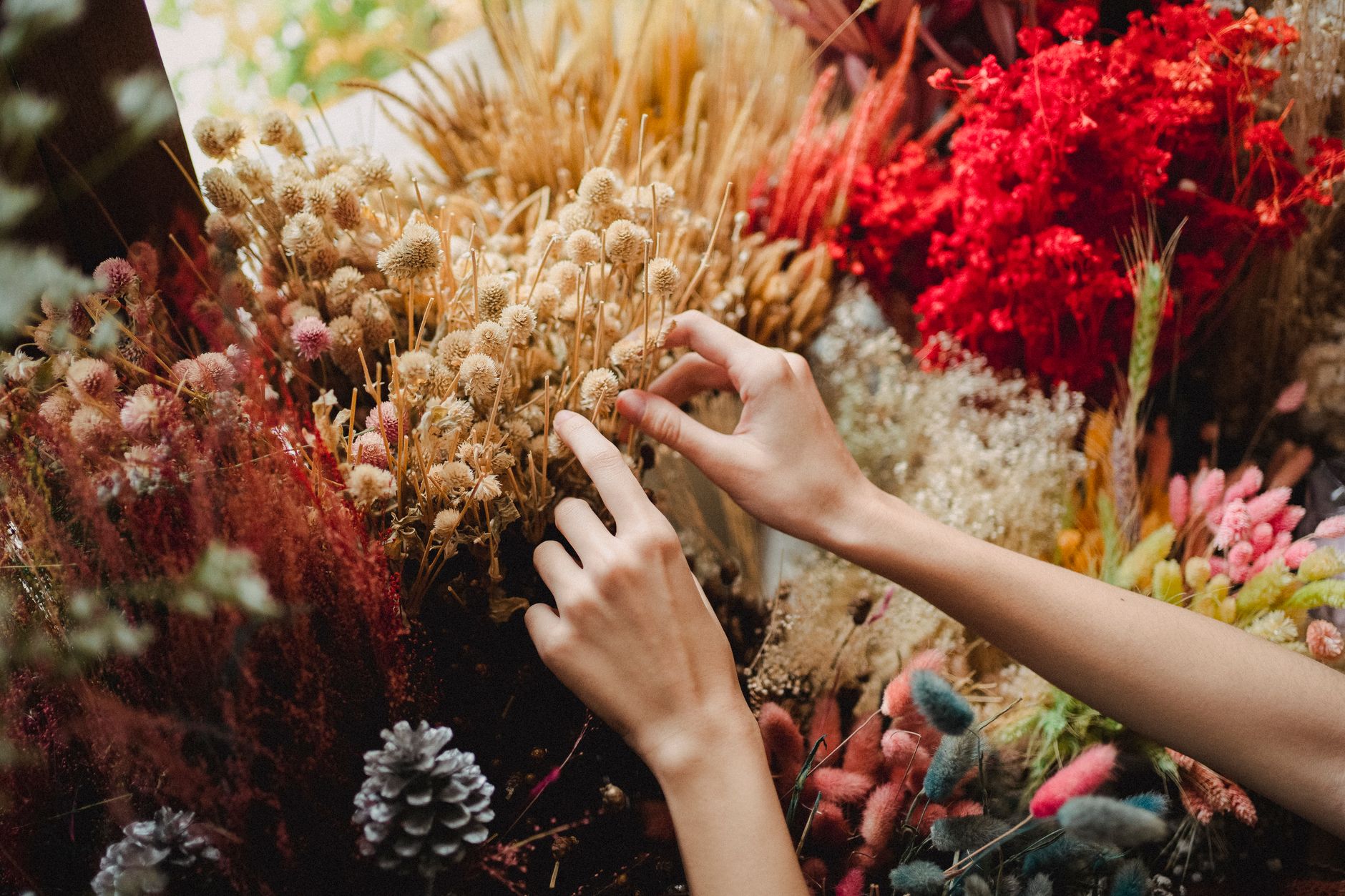
When's the best time to arrange in Da Lat?
Autumn (September–November) brings the most variety: chrysanthemums, zinnias, celosia, and imported roses. Spring (February–April) offers cherry blossoms, peonies, and tulips. Summer (May–August) leans toward dahlias and statice. Winter (December–January) is quieter for supply but still viable. We never run sessions without fresh stock, so we'll always suggest the strongest design options for your dates. The absolute best time is when you can travel—the flowers adjust.
Why book with Cáo Experiences instead of going solo to a market?
You can buy loose flowers at Quang Ba flower market or other major markets and arrange at home, but without instruction, you'll spend our current quote on stems and waste half through poor water uptake, bad cutting angles, and overcrowding. A workshop teaches you the cuts, the physics, the eye—skills you then use for life. You also get to take home a professional-looking piece on day one. And you work with a host who sources the freshest stock that morning, not leftover bundles from yesterday. Most importantly, you're in a group learning together, not intimidated or alone.
How do we handle groups vs. private sessions?
Small-group workshops (4–8 people) run on regular dates. You meet other travellers, share the learning pace, and the cost per person is lower. Hosts move between stations, adjusting for each person's speed and style.
Private sessions suit couples, families, or groups who want the host's full focus and to set their own pace. We can do these on almost any date. Ask us for availability.
Both formats teach the same fundamentals. Group energy often makes it fun; privacy makes it intimate.
Can you arrange flowers if you have arthritis or limited hand strength?
Yes. We adjust stem length, pre-cut heavy material, and shift to lighter containers. Hand-tied arrangements require less gripping than vase work. If you're uncertain, describe what you can and can't do when you WhatsApp us; we'll confirm feasibility before you book.
Where does the fresh water come from, and how long do arrangements last after you leave?
We use tap water (safe in Da Lat) mixed with flower food if provided. At home, change water every two days and recut stems. Most arrangements last 5–10 days depending on bloom type—roses and carnations longest; dahlias and zinnias 5–7 days. The cooler your room, the longer they persist. A humid mountain climate helps too.
I'm visiting Da Lat for only one day—is a workshop worth the time?
Absolutely. A half-day session (three hours) leaves your afternoon free for other activities. Many solo travellers and couples find that a focused, hands-on skill like flower arranging is more memorable than a second museum or viewpoint. You'll also have a finished piece as a keepsake.
What if I want to combine this with cooking or another Cáo experience?
Perfect. You can do a Vietnamese cooking class in the morning and arranging in the afternoon, or vice versa. Or pair it with a coffee workshop in a Da Lat highland café. We'll coordinate timings and pickup via WhatsApp. Multi-experience days feel luxurious without being rushed.

FAQ
Do I need any prior floral design experience?
No. Most guests are arranging for the first time. A host teaches the core techniques in the first 15 minutes: stem length, water absorption, focal placement, and colour. Confidence builds as you make your first piece.
What happens if I don't like the flowers available on my date?
We source daily from highland growers. If stock is low or unusual, we'll tell you when you book and suggest rescheduling or choosing a design that suits what's fresh. We never compromise on quality.
Can children join, and what age is ideal?
Yes, ages 10 and up do well. Younger kids can attend but may need a parent working alongside them. We provide shorter stems and lighter containers. Teens often excel because they're fearless about asymmetry.
Is the workshop outdoors, and what if it rains?
It's in a covered garden or studio space. Da Lat rain is usually afternoon mist or brief showers. Heavy rain is rare and we reschedule within 48 hours. Ask when you book about the specific venue's weather setup.
How do I transport my arrangement if I'm flying out?
Wrap loosely in paper (not plastic), place in a sturdy box, and keep away from direct sun and fruit until you board. We provide care instructions and wrapping materials. Most pieces last 5–7 days at room temperature.
Ask about dates
Tell us the city, your dates and what you would like to try. We reply on WhatsApp in English with options and availability.
FAQ
Do I need any prior floral design experience?
No. Most guests are arranging for the first time. A host teaches the core techniques in the first 15 minutes: stem length, water absorption, focal placement, and colour. Confidence builds as you make your first piece.
What happens if I don't like the flowers available on my date?
We source daily from highland growers. If stock is low or unusual, we'll tell you when you book and suggest rescheduling or choosing a design that suits what's fresh. We never compromise on quality.
Can children join, and what age is ideal?
Yes, ages 10 and up do well. Younger kids can attend but may need a parent working alongside them. We provide shorter stems and lighter containers. Teens often excel because they're fearless about asymmetry.
Is the workshop outdoors, and what if it rains?
It's in a covered garden or studio space. Da Lat rain is usually afternoon mist or brief showers. Heavy rain is rare and we reschedule within 48 hours. Ask when you book about the specific venue's weather setup.
How do I transport my arrangement if I'm flying out?
Wrap loosely in paper (not plastic), place in a sturdy box, and keep away from direct sun and fruit until you board. We provide care instructions and wrapping materials. Most pieces last 5–7 days at room temperature.
More like this
Flower arranging workshops
Flower Arranging Workshop Ho Chi Minh City: How to Book
A flower arranging workshop in Ho Chi Minh City teaches you to design seasonal arrangements in a calm studio setting. We run small-group and private sessions with English-speaking hosts who walk you through technique, flower choice, and how to make arrangements last.
Flower arranging workshops
Flower arranging workshop in Ninh Binh for couples
A flower arranging workshop in Ninh Binh lets couples create an arrangement together in a calm setting, learning Vietnamese design principles while working with seasonal blooms.
Flower arranging workshops
Flower Arranging Workshop in Mekong Delta for Foreigners
We run intimate flower arranging workshops in family-owned gardens and workshops across the Mekong Delta, where you'll learn seasonal design by practicing alongside our hosts. Pick your own blooms, arrange three pieces, and take them home.