 Cáo Experiences
Home › Blog › Flower arranging workshops
Flower Arranging Workshop Vietnam for Australian Travelers
By the Cáo Experiences team · 2026-11-01
A flower arranging workshop at Cáo Experiences is a two to three-hour hands-on class where you learn to build balanced arrangements using fresh seasonal flowers sourced from local markets. We run sessions in Hanoi and other cities, hosted in English by florists who work with weddings and events. You choose a style—low bowl, tall vase, or gift posy—and we guide you through color pairing, stem length, mechanics, and the principles Vietnamese florists use daily. Most Australian visitors book midweek mornings; no experience needed. Ask us for dates and a quote on WhatsApp, and we'll confirm flower availability, numbers and timing. Sessions suit couples, groups, solo travelers, and people aged 8 to 80 who want a real craft memory, not a decorative afterthought.
Why do Australian travelers choose flower arranging over other crafts in Vietnam?
Australian visitors often spend weeks in Southeast Asia doing the same landmarks—temple tours, night markets, cooking demos. Flower arranging is tactile, unrushed, and teaches you something you can actually use at home. You're not photographing; you're building with your hands. Many Australians tell us they took a Vietnamese cooking class elsewhere, but this one stuck because you leave with a finished piece, and your host talks you through her own arrangements for clients' weddings and corporate events. The work is quiet—no loud kitchens, no crowds. You sit together, choose colors, and listen to how Vietnamese florists think about balance and shape. That's rare.

What flowers do we use, and do they change seasonally?
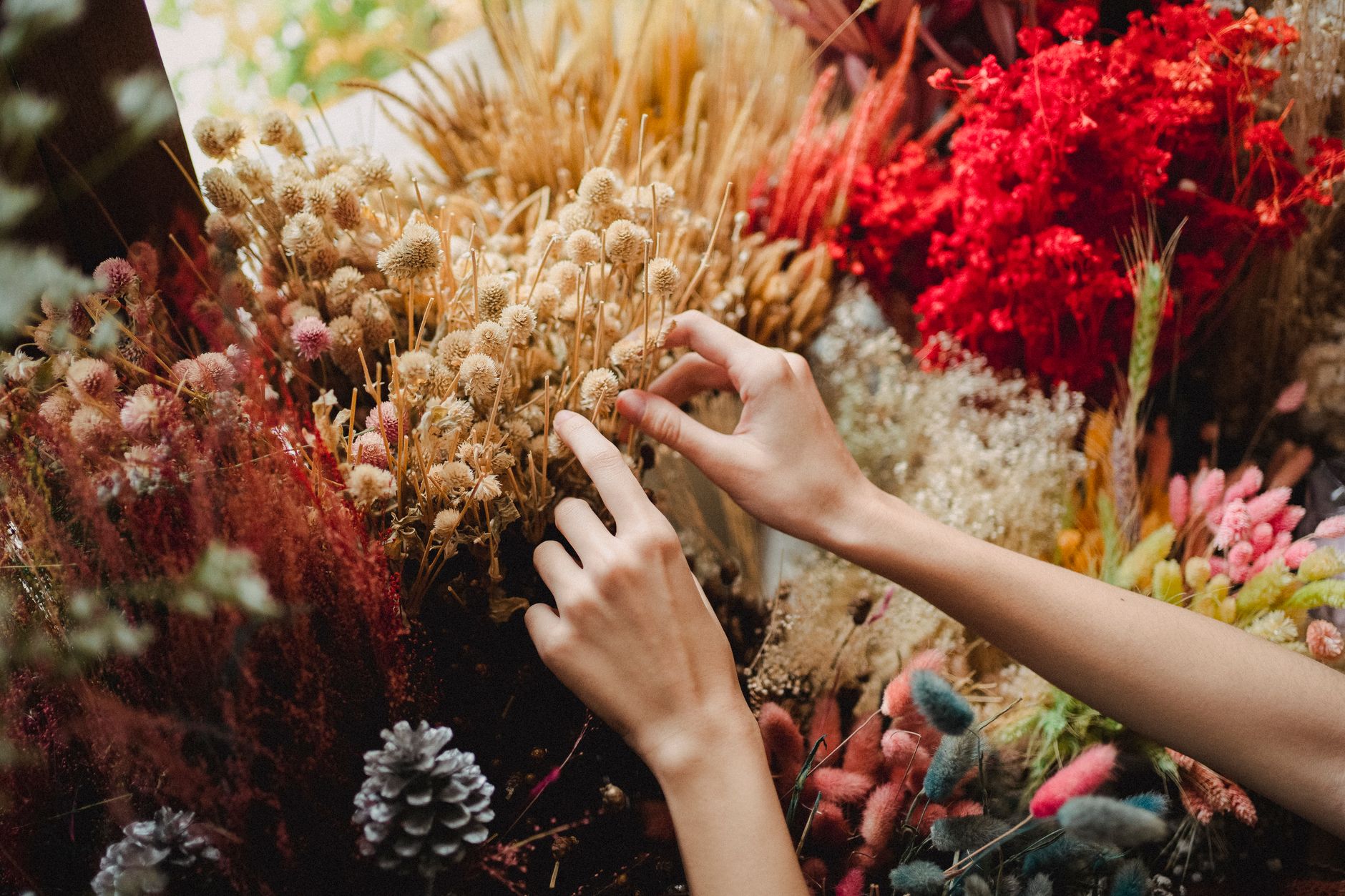
Vietnam's flower markets peak year-round, but what's fresh and affordable shifts. Right now in 2026, you might work with chrysanthemums, roses, celosia, or locally grown lilies and daisies depending on season and rain. We never promise a specific bloom—that's how you spot vendors making false claims. Instead, we source from a family-run market trader early on session days and show you what arrived that morning. If you have a strong preference—say, peonies or protea—tell us on WhatsApp when you book, and we'll check availability. Rainy season (May–September) means shorter stems and higher prices for imported stock; we adapt by teaching you compact styles that work beautifully in small vases. Winter (November–February) brings steady cold-chain imports and local garden roses. We've never cancelled a session due to flowers; we've never had to use dried or fake blooms, which we won't do.
How do beginners feel during the class, and what do we adapt?
Most guests arrive nervous. "I've never done this." "My arrangements will look sad." Within 15 minutes—once you've made the first cut and placed one stem—that evaporates. We start with the frame: where the tallest stem goes, the width, the depth. Then we fill. It's architectural, not magical. Kids (aged 8–12) worry less; they just enjoy the snipping and color. Seniors sometimes have arthritic hands; we let them sit at a lower table, pre-cut some stems, and focus on placement rather than mechanics. Allergies to pollen or flower scent are uncommon but real—if you have them, we use shorter-pollen varieties or teach you the techniques on less fragrant blooms. Non-English speakers come with a friend who translates, or we use diagrams and demonstration. We've never had anyone leave unhappy because the setup was wrong.
What's the difference between a workshop and a one-off class at a flower shop?
Most flower shops in Vietnam run same-day drop-ins with 10–15 people in a busy space; the teacher talks at you, you follow, and you rush. Our flower arranging workshop is small—four to six people, sometimes private—in a quiet workspace where you ask questions and we slow down. We're Cáo Experiences: we coordinate everything on WhatsApp before you arrive, you know what to bring, and we adapt if rain floods the street or you need dietary breaks. A shop session is a transaction; ours is a conversation. You'll learn why your arrangement holds up at home for two weeks, not three days. You'll know how to buy flowers yourself and not get cheated. Most of our guests say they'd never thought they could arrange until they sat down here.
Which Australian cities do most visitors travel from, and is that relevant?
Our workshops suit visitors from Sydney, Melbourne, Brisbane, and Perth equally—timezone doesn't matter once you're here. But we've noticed Sydney travelers often pair a flower workshop with a coffee workshop or a street food and market tour in the same week, because they like multi-sensory itineraries. Melbourne visitors tend to book art and culture classes or craft workshops alongside floristry. This matters because if you're already spending three to four days in one city, we can cluster your sessions and you'll save travel time. If you're doing a countryside escape, we run farm and countryside experiences and flower sessions in Da Lat or near Hanoi's outskirts. No Australian airline requires you to declare fresh flowers at departure, but we'll brief you on what travels well and what doesn't if you want to take your finished piece home—usually roses, celosia, and preserved greenery survive the journey; soft tulips and dahlias don't.
How do you decide what style of arrangement to make?
We offer three main structures: low (a spread-wide bowl arrangement for a dining table), tall (a vase arrangement for a corner or hallway), and hand-tied (a bouquet you hold, gift-style). When you arrive, we show images of each and talk through where you'd use it. If you're making it for someone else—a friend, a hotel desk, a family member—that shapes the choice. A low bowl feels generous and finished; a tall vase is dramatic; a posy is intimate. We walk you through the mechanics of each: how many stems, what size vase, how to prep the holder. Then you pick. We've never had someone choose wrong. A guest from Brisbane once said, "I thought I'd do the complicated one," but chose low because it matched her apartment light better. That's the point—we're teaching you to think, not to follow a recipe.
Comparison: Workshop Styles at a Glance
| Style | Best for | Session focus | Skill feel | Keep-fresh timeline |
|---|---|---|---|---|
| Low bowl | Tables, desks, compact spaces | Balance, symmetry, water mechanics | Calming | 10–14 days |
| Tall vase | Corners, entries, visual impact | Height, drama, structural support | Engaging | 7–12 days |
| Hand-tied gift | Gifting, events, portability | Wrapping, spiral stem, presentation | Rewarding | 5–9 days |
What should you wear, bring, and check before booking?
Wear clothes you don't mind getting wet—there's water, dye from deep leaves, and occasional stem bits. Bring a small bag if you want to take your arrangement home (we can pack it, but a sturdy bag helps). If you're traveling with a big suitcase, ask on WhatsApp whether we can hold it while you work; we usually can. Check: Do you have a flower or pollen allergy? Tell us. Are you left-handed? Yes, but pruners feel weird at first—we have left-handed shears. Do you have limited dexterity? We adapt the whole class. Are you vegetarian or have dietary needs? We always offer tea and water; some sessions include light snacks, which we confirm when you book. Is it raining heavily? We've never cancelled, but heavy flooding means we shift timing or move to an indoor backup venue. Do you want professional photographs? Tell us, and we'll ask our host to document the work (you can use them freely). None of these need you to worry; just say them on WhatsApp.
Check dates and availability
What to check before you book
Does the workshop include flowers, tools, and a vase? Yes. We source flowers that morning and provide pruners, floral tape, and your choice of vase or vessel. You take your arrangement home. Ask on WhatsApp if you want to keep the vase; some workshops include it, some don't—we'll be clear.
Can I take my finished arrangement on a flight home? Most yes, but tall vases are fragile. We can wrap it in bubble wrap, but checked luggage is safer than carry-on. Tight bouquets travel better than loose styles. Ask your airline about plant material (usually fine for 24–48 hours out of water). We'll brief you on packing.
Is there a "best time" to book—spring, summer, autumn? No real off-season. Summer (April–September) has more local color but also heat and humidity; you'll work a bit faster. Winter (November–February) is cooler and feels more leisurely. Rainy season (May–September) means fewer imported blooms but lower prices and tighter, tighter arrangements that teach you constraint. None is "best"—it's preference.
What if I'm a lefty or have weak hands? We've taught both. Pruners are weird for lefties for five minutes, then your brain adapts. Weak hands: we let you sit close, pre-cut some stems, and you focus on color and placement. Many guests with arthritis say arranging is meditative because there's no rush.
Do I need to speak Vietnamese? No. We run everything in English. Our host might use a Vietnamese word for a flower or technique—she'll explain it. That's a feature, not a bug.

FAQ
Can children do a flower workshop, and at what age?
Yes, from about age 8. Kids enjoy the snipping and color work. We modify heights and use lighter pruners. Younger kids (5–7) can join a session, but they'll need a parent to help with cutting and stem mechanics. We've had great success pairing family experiences that include floristry with other crafts or activities in the same day.
How long does a finished arrangement last in water at home?
Typically 10–14 days for a low bowl or vase, depending on flower type and water care. We teach you how to re-cut stems, change water daily, and remove fading blooms. Roses and celosia last longer; dahlias and garden flowers fade faster. We'll give you care notes on the day.
What if it rains heavily on my session date?
We've never cancelled. Our workspace is indoors. Very heavy flooding (rare) might mean we shift the time or move to a backup venue nearby. We'll message you on WhatsApp the morning of the session if there's any change.
Can I book a private session for a group, or are mixed groups only?
Both. Small mixed groups (four to six people) are common. Private sessions for 4–10 people work well for friends, couples, or team experiences. Ask on WhatsApp for private dates; the cost per person is usually similar, but we'll quote you.
Do you offer gift vouchers or can I book this as a gift for someone?
Yes. Contact us on WhatsApp with the recipient's name and preferred dates. We'll send you a quote and arrange the details so the gift-giver doesn't see the specifics. The recipient books directly with us near the date.
I want to combine flower arranging with other activities—what works well?
Absolutely. Many guests pair it with a Vietnamese coffee workshop in the morning, then floristry in the afternoon. Others do floristry + street food tour the same day. We can suggest combinations based on your interests and how much time you have. WhatsApp us your rough itinerary.
Ask about dates
Tell us the city, your dates and what you would like to try. We reply on WhatsApp in English with options and availability.
FAQ
Can children do a flower workshop, and at what age?
Yes, from about age 8. Kids enjoy the snipping and color work. We modify heights and use lighter pruners. Younger kids (5–7) can join a session, but they'll need a parent to help with cutting and stem mechanics. We've had great success pairing [family experiences](/family-experiences) that include floristry with other crafts or activities in the same day.
How long does a finished arrangement last in water at home?
Typically 10–14 days for a low bowl or vase, depending on flower type and water care. We teach you how to re-cut stems, change water daily, and remove fading blooms. Roses and celosia last longer; dahlias and garden flowers fade faster. We'll give you care notes on the day.
What if it rains heavily on my session date?
We've never cancelled. Our workspace is indoors. Very heavy flooding (rare) might mean we shift the time or move to a backup venue nearby. We'll message you on WhatsApp the morning of the session if there's any change.
Can I book a private session for a group, or are mixed groups only?
Both. Small mixed groups (four to six people) are common. Private sessions for 4–10 people work well for friends, couples, or [team experiences](/group-and-corporate). Ask on WhatsApp for private dates; the cost per person is usually similar, but we'll quote you.
Do you offer gift vouchers or can I book this as a gift for someone?
Yes. Contact us on WhatsApp with the recipient's name and preferred dates. We'll send you a quote and arrange the details so the gift-giver doesn't see the specifics. The recipient books directly with us near the date.
I want to combine flower arranging with other activities—what works well?
Absolutely. Many guests pair it with a [Vietnamese coffee workshop](/coffee-workshop) in the morning, then floristry in the afternoon. Others do floristry + [street food tour](/street-food-tour) the same day. We can suggest combinations based on your interests and how much time you have. WhatsApp us your rough itinerary.
More like this
Flower arranging workshops
Flower Arranging Workshop Ho Chi Minh City: How to Book
A flower arranging workshop in Ho Chi Minh City teaches you to design seasonal arrangements in a calm studio setting. We run small-group and private sessions with English-speaking hosts who walk you through technique, flower choice, and how to make arrangements last.
Flower arranging workshops
Flower arranging workshop in Ninh Binh for couples
A flower arranging workshop in Ninh Binh lets couples create an arrangement together in a calm setting, learning Vietnamese design principles while working with seasonal blooms.
Flower arranging workshops
Flower Arranging Workshop in Mekong Delta for Foreigners
We run intimate flower arranging workshops in family-owned gardens and workshops across the Mekong Delta, where you'll learn seasonal design by practicing alongside our hosts. Pick your own blooms, arrange three pieces, and take them home.