
Home › Blog › Ho Chi Minh City
Ho Chi Minh City Slow Travel Ideas: Hands-On Experiences Beyond Tourist Routes
By the Cáo Experiences team · 2026-11-06
Slow travel in Ho Chi Minh City is about trading speed for depth: spending three hours in a family kitchen learning to make fresh spring rolls from scratch, or sitting with a third-generation coffee roaster while he explains why water temperature matters. It's not museum tours or rooftop bar crawls. Instead, you'll find yourself in a lane off the old quarter making Vietnamese food, or in a quiet studio arranging flowers the way local florists do, or at a farm outside town understanding where your breakfast comes from. Cáo Experiences runs these hands-on sessions in English—cooking classes, coffee workshops, flower arranging, craft work, countryside days, tea ceremonies, horse riding, and family sessions. Most run half a day to a full afternoon, small groups or private, adapted for kids, seniors, allergies, and rain. Ask us for dates and a quote on WhatsApp: slow travel here means actually belonging for a few hours, not rushing through the next checklist.
What does slow travel actually feel like in a city this fast?
Ho Chi Minh City moves at breakneck speed—motorbikes honk, vendors call, money changes hands in seconds. Slow travel is the opposite: you sit down, you make something with your hands, you listen to why someone chose their craft. The difference is attention. When you join a Vietnamese cooking class, you're not eating at a restaurant where the cook stays invisible behind swinging doors. You're asking why this cook pounds garlic by hand instead of a blender, watching the smell change as it browns, tasting the difference. That single detail—understanding why—is what slow travel is. It reframes the whole city. After three hours making food, a bowl of pho tastes like a choice someone made, not just lunch.
Why skip the major landmarks and do something hands-on instead?
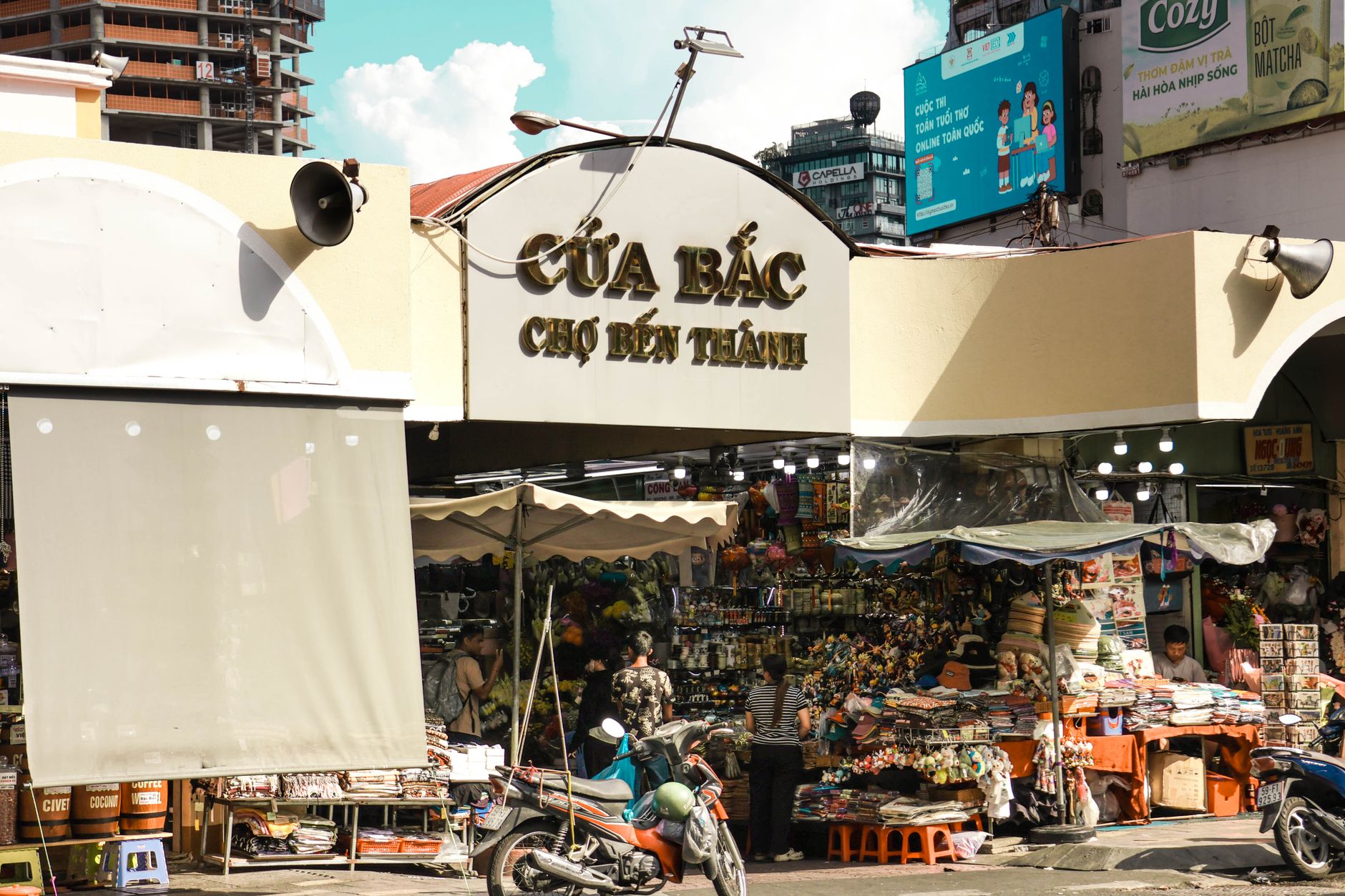
The big public landmarks—Hoan Kiem Lake in Hanoi's north, Ben Thanh market downtown, the War Remnants Museum—matter historically and geographically. But they're also crowded, and they make you a spectator. A hands-on experience inverts that: you become the maker. When you take a street food and market tour, yes, you visit a local market (not Ben Thanh—a neighborhood market where residents actually shop), but the guide isn't pointing from ten steps away. You're inside a stall learning how vendors pick herbs, tasting raw ingredients before they're cooked, asking why one seller's fish smells different from another's. That sensory, active learning sticks in your body and memory far longer than a photograph. Slow travel isn't about visiting fewer places; it's about visiting fewer places but inhabiting them.
How do cooking classes actually work when you've never cooked Vietnamese food?
Most guests walk in nervous: "I'm not a cook," they say. Within fifteen minutes, someone's hands-kneading dough and laughing. Here's what happens: you arrive at a family kitchen in a lane off the old quarter (or a studio space—ask which suits you). The first thing is never "watch me." It's "here, hold this knife, feel the weight." You prep ingredients alongside the host, and they're watching your knife skills, your pace, your questions. If you're cautious, they slow down and show you three ways to hold the blade. If you're bold, they hand you a whole fish and say, "bones out, one motion." You cook two or three dishes—typically a curry, a soup, a fresh vegetable dish, or spring rolls. Everything gets tasted. Beginners worry they'll "mess it up," but in a home kitchen with three people, there's no mess-up—only learning. Our cooking classes run about four hours. Allergies? You tell us beforehand; we adapt the menu. Kids? Yes, they love this—they get to eat what they made.
What can you actually learn from a coffee workshop that tastes different from café culture?
Café culture in Ho Chi Minh City is loud, social, Instagram-ready. A Vietnamese coffee workshop is the opposite: silent, focused, technical. You'll sit with someone who has spent years sourcing beans, roasting them, and understanding how heat, time, and grind size change what you taste. The session starts with tasting—not sipping for pleasure, but identifying: what does acid taste like? body? sweetness? Then you grind beans by hand, seeing how size changes extraction. You brew using a metal filter (called a phin)—the traditional method—and that simple tool teaches you more about coffee than any espresso machine, because you're controlling every variable: water temperature, pour speed, wait time. Most workshops run two to three hours. By the end, your palate has shifted. A cup of coffee becomes a readable object—you can taste the decisions someone made.
How do craft and flower workshops fit into slow travel?
Slow travel often means learning a skill that belonged to the place you're visiting—not forever, but genuinely, for a day. When you join a flower arranging workshop, you're not just making a pretty bouquet to photograph. You're learning a technique that florists here use every day—how to choose stems by weight and curve, how color temperature changes space, why proportion matters. You start by stripping leaves (therapeutic, meditative), then arranging in front of a teacher who corrects your angle by millimeters. It's like learning to write in a new alphabet: hard, then suddenly click, your hands understand. Craft workshops range from ceramics to weaving to silk painting—each one teaches a specific hand skill. The slowness comes from the repetition: your hands make the same motion fifty times until they learn it without your brain narrating. Kids love this too; they focus more quietly than anywhere else. Bring clothes you don't mind getting wet or clay-stained.
What does a full-day countryside or farm experience actually include?
City slow travel is possible (see above), but the deepest slow experience usually happens outside the city. Farm and countryside experiences outside Ho Chi Minh City run from half a day to a full day. You'll travel to a place growing vegetables, herbs, or flowers—or raising animals. The morning usually starts with harvest: you're picking vegetables, cutting herbs, learning what ready means (a tomato doesn't ripen all at once; you harvest it at the exact ripeness you want). Then usually cooking: whatever you picked becomes lunch, cooked in a farmhouse kitchen. You eat together at a long table. Afternoons might include a countryside walk, a horse riding session at a nearby stable, or a tea experience in a quiet pavilion. Bring water, a hat, closed shoes (not flip-flops—uneven ground). Rain doesn't stop it; it actually slows things more beautifully. Ask us beforehand if you have any mobility concerns; we adapt the itinerary.

Comparison: Types of Slow-Travel Experiences in Ho Chi Minh City
| Experience | Duration | Group size | Best for | Physical demand | What you take home |
|---|---|---|---|---|---|
| Cooking class | 3–4 hours | 2–8 people | Foodie couples, friends | Moderate (standing, chopping) | Recipe knowledge, confidence with flavors |
| Coffee workshop | 2–3 hours | 2–6 people | Coffee enthusiasts, early risers | Low (sitting mostly) | Palate shift, brewing technique |
| Flower arranging | 2–3 hours | 2–8 people | Creatives, gift-givers, families | Low (seated, hands-on) | Arrangement skills, eye for proportion |
| Street food tour | 3–4 hours | 2–10 people | Adventurous eaters, photographers | Moderate (walking, standing) | Market knowledge, vendor relationships |
| Farm day | 4–8 hours | 2–8 people | Families, wellness-focused, couples | Moderate–High (harvest work, walking) | Understanding of local agriculture, grounding |
| Craft workshop | 2–4 hours | 1–6 people | Makers, kids, solo travelers | Low–Moderate (depends on craft) | A finished handmade object, technique |
| Tea experience | 1.5–2 hours | 1–6 people | Slow-lifers, contemplatives | Low (seated) | Appreciation for preparation ritual |
| Horse riding | 1.5–2 hours | 1–4 people | Nature-seekers, adventurers | High (balance, leg strength) | Connection to the animal, countryside perspective |
How do we adapt these experiences for kids, seniors, and dietary needs?
For kids: Most of our experiences work with children aged 6 and up. Cooking classes become treasure hunts ("find the ingredient that smells like licorice"). Flower arranging is surprisingly calm for fidgety kids—they focus. Farm days are adventures. We skip anything requiring sustained standing if a child is young; we swap in easier tasks. Allergies or picky eating? We plan the menu beforehand and adjust.
For seniors: Cooking classes work brilliantly—no age limit on learning. We provide a chair if standing gets tiring. Horse riding depends on mobility and comfort; discuss it with us first. Farm experiences are walkable at whatever pace suits you. Coffee and tea workshops are perfectly paced for contemplation.
For dietary restrictions: Vegetarian, vegan, gluten-free, allergies to shellfish, nuts, specific spices—tell us in advance when you book. We don't substitute or "make it work" last-minute. We plan the entire menu around your needs. This means you eat the same food as everyone else, just made according to your body.
For rain: It doesn't stop our sessions. Cooking classes happen indoors regardless. Coffee and tea workshops continue. Flower arranging, craft, and street food tours adjust but rarely cancel—we just move to covered spaces. Farm days might shift timing (earlier if it's early morning rain, later if afternoon). Horse riding gets rescheduled if the ground becomes unsafe.
What to check before you book a slow-travel experience
- Duration: Be honest about your energy. A four-hour cooking class is standing and focusing the whole time. If that sounds tiring, choose a coffee workshop or tea experience instead.
- Group size: Do you want to meet strangers and make friends, or spend time with your partner? Speak up—we run private sessions and group sessions.
- Physical ability: Mention any back pain, knee issues, balance concerns, or mobility aids. We're not asking to judge; we're asking to design the right experience and avoid injury.
- Dietary restrictions: List all of them. Include spice tolerance, texture preferences, and cultural or religious restrictions. Communicate at booking, not the morning of.
- Language: All our sessions run in English. If you're part of a non-English-speaking group, tell us; we can sometimes arrange interpretation.
- Rainy-season logistics: Ho Chi Minh City's rainy season (May–September) is humid and wet. Bring a light rain jacket, not an umbrella. Wear moisture-wicking clothes if you'll be chopping and cooking. Shoes should be closed and non-slip.
- What to wear: No single dress code exists. Cooking class = something washable. Horse riding = closed shoes and long pants (to protect legs). Everything else = comfortable, breathable clothes suitable for the weather.
More slow-travel experiences across Vietnam
If you have time beyond Ho Chi Minh City, we also host sessions in other regions. Hanoi experiences lean toward ancient arts and historic Old Quarter food. Hoi An experiences center on artisan crafts and lantern-making. Da Lat experiences emphasize farm stays and flower culture. Da Nang experiences include coastal farm days and beach-area workshops. Each region has different paces and rhythms. But if you're based in Ho Chi Minh City or passing through for a week or more, start here—depth over distance is the slow-travel principle.
How to book, and why the "ask us" approach matters
We don't post fixed schedules or prices online. Why? Because slow travel is personal. A cooking class for two newlyweds is different from one for four friends. A farm day for a five-year-old is different from one for a retired couple. Our dates, group size, dietary accommodations, pacing, and pricing are built around you—not a template. When you message us on WhatsApp, you're not booking a slot; you're describing what slow travel means to you. Do you have one afternoon free? Two days? Kids? Mobility concerns? Specific foods you're craving or trying to avoid? We listen, then we quote you a date and price tailored to that. This also means we can tell you honestly if something doesn't fit—and suggest something better. Fast booking, standardized prices, and one-size-fits-all itineraries defeat the whole purpose of slow travel.
FAQ
Is slow travel in Ho Chi Minh City actually slower than Hanoi or Hoi An?
No—it's just different pacing. Ho Chi Minh City's speed is external (the city moves fast). Slow travel inside it means ignoring that noise. Hanoi and Hoi An feel naturally slower because the towns themselves are quieter, so the contrast is gentler. Choose based on how much time you have, not on which city is "more" slow.
Can I join a cooking class if I'm vegetarian or vegan?
Yes, completely. Tell us at booking. We plan a full menu of vegetable, herb, tofu, and grain dishes—not meat dishes with substitutions. You'll eat the same food as omnivorous participants, just tailored to your diet.
How early do markets open, and do we really visit at 6 a.m. on our street food tour?
Local markets start busiest around 6–7 a.m. We can structure the tour that way, or start later if you prefer (about 9 a.m., slightly less crowded). Market pace depends on your preference; discuss it when you book. Bring water and wear comfortable shoes.
What if I have zero experience with horses—can I still ride?
Yes. Our horse riding experience accommodates beginners. The first thirty minutes is groundwork: how to hold the reins, mount, sit, communicate via weight. Instructors adjust the route to your skill. If you're nervous, tell us; we may slow the pace or stick to walking. Closed shoes and long pants required.
Do I need to bring anything special—apron, ingredients, tools?
No. Cooking classes provide everything: apron, knives, cutting boards, pots, ingredients. Craft workshops and flower arranging provide materials and tools. We ask you to wear something washable and bring water. If you have dietary restrictions or allergies, we need to know beforehand, not the morning of.
What's the real difference between a "group" session and a "private" session?
Group sessions run with 2–10 people you don't know. You meet them, cook or craft together, often make friends. Private sessions are just you, your partner, or your family. Private costs more but suits people who want flexibility, privacy, or a custom itinerary. Both are slow travel; the pace and social dynamic differ.
Ask about dates
Tell us the city, your dates and what you would like to try. We reply on WhatsApp in English with options and availability.
FAQ
Is slow travel in Ho Chi Minh City actually slower than Hanoi or Hoi An?
No—it's just different pacing. Ho Chi Minh City's speed is external (the city moves fast). Slow travel inside it means ignoring that noise. Hanoi and Hoi An feel naturally slower because the towns themselves are quieter, so the contrast is gentler. Choose based on how much time you have, not on which city is "more" slow.
Can I join a cooking class if I'm vegetarian or vegan?
Yes, completely. Tell us at booking. We plan a full menu of vegetable, herb, tofu, and grain dishes—not meat dishes with substitutions. You'll eat the same food as omnivorous participants, just tailored to your diet.
How early do markets open, and do we really visit at 6 a.m. on our street food tour?
Local markets start busiest around 6–7 a.m. We can structure the tour that way, or start later if you prefer (about 9 a.m., slightly less crowded). Market pace depends on your preference; discuss it when you book. Bring water and wear comfortable shoes.
What if I have zero experience with horses—can I still ride?
Yes. Our [horse riding experience](/horse-riding) accommodates beginners. The first thirty minutes is groundwork: how to hold the reins, mount, sit, communicate via weight. Instructors adjust the route to your skill. If you're nervous, tell us; we may slow the pace or stick to walking. Closed shoes and long pants required.
Do I need to bring anything special—apron, ingredients, tools?
No. Cooking classes provide everything: apron, knives, cutting boards, pots, ingredients. Craft workshops and flower arranging provide materials and tools. We ask you to wear something washable and bring water. If you have dietary restrictions or allergies, we need to know beforehand, not the morning of.
What's the real difference between a "group" session and a "private" session?
Group sessions run with 2–10 people you don't know. You meet them, cook or craft together, often make friends. Private sessions are just you, your partner, or your family. Private costs more but suits people who want flexibility, privacy, or a custom itinerary. Both are slow travel; the pace and social dynamic differ.
More like this
Da Lat
Da Lat local experiences with locals: what to expect
Da Lat's misty mountains and year-round spring weather draw travelers seeking escape from the lowlands. Real local experiences—not tours—happen in family kitchens, forest gardens, and craft workshops where you work alongside people who live here.
Da Lat
Da Lat experiences with hotel pickup: day trips and classes
Da Lat's cool mountain air, flower farms, and craft culture draw visitors year-round. We arrange hands-on experiences with hotel pickup so you skip transport logistics and focus on learning.
Da Lat
Da Lat workshops and classes: hands-on learning in the highlands
Da Lat's cool mountain air and creative community make it ideal for intimate workshops. We run hands-on classes in cooking, coffee, crafts and more—learn a real skill, not a tourist tick.