
Home › Blog › Flower arranging workshops
Morning flower arranging workshop in Da Nang: step-by-step guide
By the Cáo Experiences team · 2026-11-06
We run morning flower arranging sessions in a bright studio space in central Da Nang, starting at 9 a.m. and running two to three hours. Each person works with fresh seasonal flowers—dahlias, chrysanthemums, eucalyptus, roses, depending on what's available at the local flower market that week—plus scissors, floral foam, and vessels we provide. You learn our host's approach to color balance, stem length, depth, and asymmetry; by the end, you've made one complete arrangement to take home. Groups are small (four to eight people); we adapt for beginners, kids, and anyone with limited mobility. Rain doesn't stop us—we stay indoors. Ask us for dates and a quote on WhatsApp to check availability and any dietary or access needs. Ask about dates on WhatsApp
Who should book a morning flower arranging class in Da Nang?
A morning session suits people who want to be back by lunchtime, families with young children, or anyone who finds afternoon heat tiring. We've hosted solo travelers, couples on romantic breaks, friend groups from nearby towns, and multigenerational families (grandparent, parent, child all learning together). If you've never arranged flowers, that's ideal—we assume zero experience. Seniors enjoy the seated work and gentle pace; kids as young as seven can participate with a parent's hand nearby. People training for floral design work sometimes book private sessions to go deeper. Visit our flower arranging workshop page to see what other seasons and times we offer.
What happens step by step in the first hour?
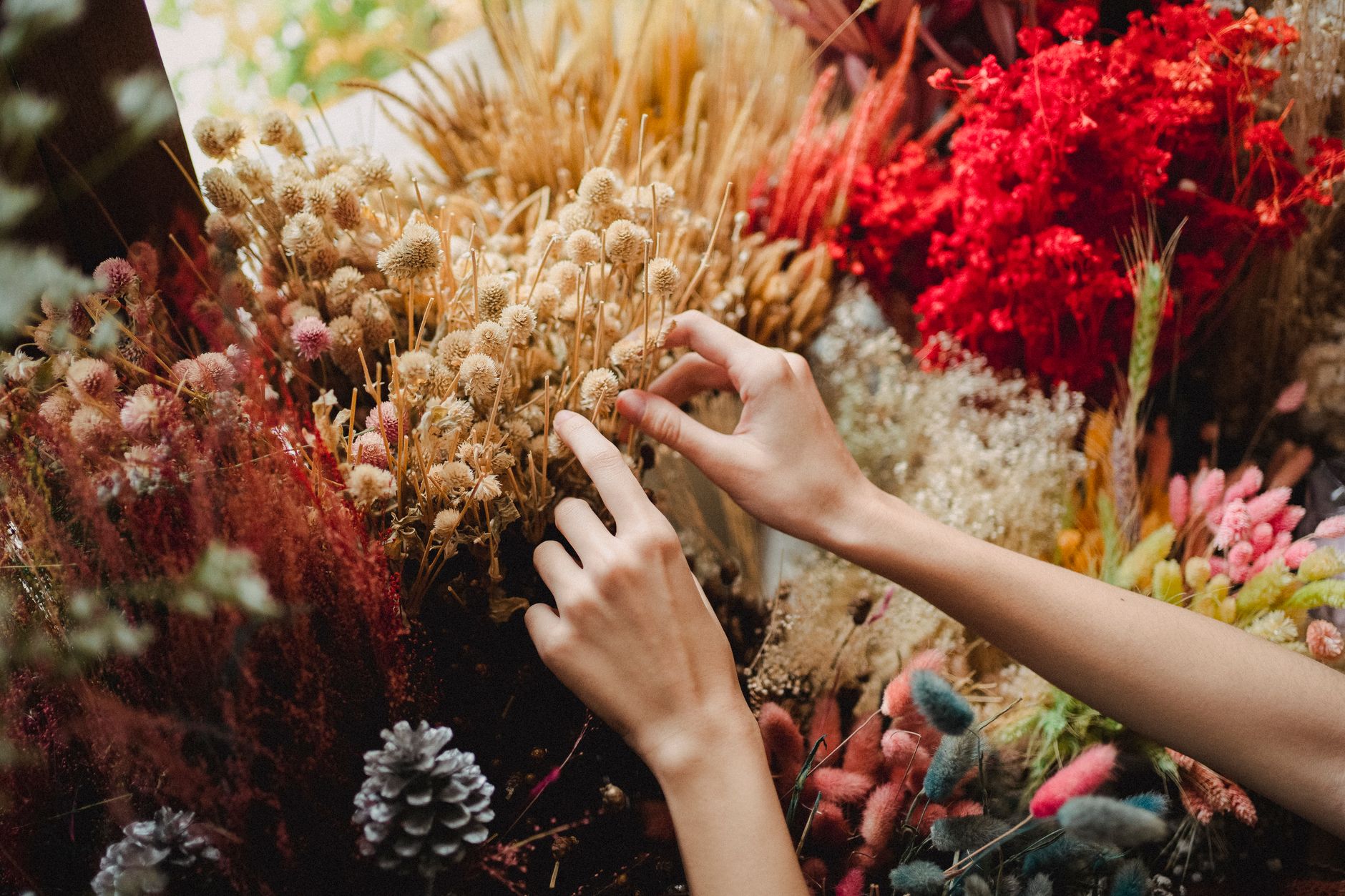
We start with tea or coffee in the studio, then show you the flowers—color families, which stems hold water longest, how to strip leaves without bruising the stem. You handle each type: dahlias (heavy heads, strong stems), chrysanthemums (small blooms, good for filler), eucalyptus (aromatic, lasts weeks). We demonstrate how to cut a stem at 45 degrees in running water, then soak the floral foam. By thirty minutes in, you're choosing your three or four main colors and arranging them in loose form, learning why we place tall stems first, then shorter ones in the gaps.
How do we teach asymmetrical design without overwhelming beginners?
Most people expect symmetry—flowers in perfect rows. We show why asymmetrical arrangements look more natural and interesting. Our host arranges a sample dahlia stem high and to the left, then fills the lower right with smaller blooms and greenery. You see the "movement" it creates. We don't use rigid rules; instead, we say: "Does your eye rest, or does it jump?" You adjust stems by pulling them forward, turning them, or lowering them. If you're nervous, you can copy the demo exactly—that's fine. If you want to experiment, we encourage it. Most people find this freeing after an hour.
What's the actual cost, and what's included in the two-hour version?
Ask us for dates and a quote on WhatsApp. Pricing depends on group size (private vs. open group), flower availability that week, and whether you want a take-home vessel or use one we provide. The workshop includes all flowers, foam, scissors, instruction, and the arrangement itself. We provide water, tea, and coffee. You bring nothing except an idea of colors you like (reds, pastels, warm tones—just a loose preference helps us source). If you have a small vase at your accommodation, you can use that instead of ours, though it may affect what we recommend.
What to check before booking: a practical checklist
Before you buy, ask yourself:
- Mobility: Can you stand or sit comfortably for 2–3 hours? We can arrange a high table and stool if standing is difficult.
- Allergies: Do you have pollen sensitivities or latex allergies? Tell us on WhatsApp; we'll note it and may adjust flowers or foam type.
- Transport: Can you carry a finished arrangement home safely (damp, fragile)? We can wrap it; you need a bag or small box.
- Group size: Do you prefer an intimate private session or the energy of meeting travelers? Open groups are smaller and more relaxed.
- Rain plan: Rare, but if heavy rain floods the lane, we reschedule to the next available morning—no penalty.
- Kids: Under twelve? Tell us the age. We'll brief you on water safety and sitting time before you book.
What to bring:
- Comfortable clothes (flowers can wet your sleeves—an apron helps, but not required).
- A phone to take photos of the demo and your result.
- A small bag to carry your arrangement home, or ask us to wrap it flat.
What doesn't work for us:
- Groups larger than eight without a co-host (we'll suggest a private follow-up session instead).
- Expecting to take home multiple arrangements in one session (it takes focus; one per person is the norm).
How does a rainy morning change what we do?
The studio is indoors, so rain doesn't stop the workshop—it sometimes makes mornings quieter and the flowers last longer in cooler, humid air. Flash flooding is rare in central Da Nang, but in the unlikely event of street-level water, we'll let you know by 8 a.m. and offer a rescheduled date or a full credit.
Can we adapt for kids, seniors, or specific allergies?
For kids (seven to twelve): We lower the table, use child-safe scissors (blunt-tipped), and keep stems shorter and lighter. Parents work alongside—it's a shared moment. Older kids sometimes surprise us by being more creative than adults. Under seven, we recommend a parent brings one as a lap participant rather than a full student.
For seniors: We use a high table with a comfortable chair, larger-grip scissors if arthritis is a concern, and pre-cut some stems to reduce repetitive motion. The pace is gentler; nobody rushes. We often find that seniors' eye for balance is sharper than younger participants'.
For allergies: Tell us pollen allergies before booking—we can swap high-pollen flowers (lilies, some chrysanthemums) for others. Latex-free foam is available; just confirm on WhatsApp. We keep antihistamines in the studio but ask you to bring your own medication if you need it regularly.

How is a morning class different from an afternoon or weekend session?
Morning light is cooler and softer, so greens look more vivid and colors feel fresher. The studio is quieter—fewer urban sounds—which helps concentration. Mornings also mean you're done by lunchtime and can explore Da Nang's old quarter, beaches, or nearby coffee spots afterward. Afternoon sessions can feel rushed if the heat rises; weekends draw more tourists and larger groups, which some people love and others find noisy. We offer all three; morning is best for focus and peace.
What happens after the workshop—how long do your flowers last?
Your arrangement will last seven to ten days with care: change water every two days, recut stems by half an inch, remove leaves below the waterline, and keep it out of direct sun and drafts. We give you a printed care card. Some people take photos and press flowers as souvenirs; others enjoy watching the arrangement evolve. Many guests book our tea experience or a farm day trip the next morning to extend their stay mindfully. If you love the skill, some travelers return for a second session focusing on larger installations or wedding bouquets.
Is this experience good with partners, friend groups, or families?
Absolutely. Couples find it romantic—quiet, creative, and you each make something to keep or swap. Friend groups (three to six people) often laugh and compare designs, turning it into a playful session. Families with kids five and up can all participate; younger siblings sometimes sit in a corner sketching flowers while the older ones arrange. Solo travelers often bond with other guests if it's an open group, though private sessions are available too. We've hosted everything from a business team building connection to a grandmother and granddaughter on holiday. The shared focus makes it easy to talk or stay silent, whatever suits you.
Can I book a private session, and how is it different from open groups?
Yes. Private sessions are just you (or your group) with our host for two to three hours. The host tailors the pace, flower choice, and depth to your preferences. If someone in your group is a complete beginner and another is semi-experienced, we can differentiate without anyone feeling lost. Private sessions also let you choose an unusual time (early 7 a.m. to catch sunrise light, or mid-morning if your schedule allows). Pricing is higher per person than open groups, but the experience is more intimate. Ask us on WhatsApp for private session availability and quotes. You can also book our group and team experiences page if you're organizing for a company or large gathering.
Why choose a morning class over online flower tutorials or buying pre-made arrangements?
Online tutorials can't answer your question in the moment or adjust the demo if you're confused. Pre-made arrangements are beautiful, but making one yourself—feeling the weight of the stem, making decisions about color—builds a connection to the flowers and the place. Our host is in Da Nang year-round and knows which blooms are in season, what's fresh that week, and what grows locally. You also leave with tangible proof you did it. Many guests say the two hours are the most present they've felt on their trip—no phone, just hands, flowers, and a conversation with someone who does this every week.
What other creative workshops and experiences does Cáo Experiences offer in Da Nang?
If you love hands-on learning, we also run craft workshops (pottery, silk dyeing, weaving), Vietnamese cooking classes where you shop at a market then cook lunch, art and culture classes exploring local techniques, and wellness experiences like tea ceremonies and slow mornings. Many guests book two or three over a multi-day stay. See our Da Nang experiences page for the full schedule.
What to check before you book
| Question | Why it matters | What to do |
|---|---|---|
| How many hours do I have? | Rushing cuts learning short. | Book 2–3 hours minimum. |
| Am I allergic to pollen or latex? | We need to source safely for you. | Tell us in your WhatsApp message. |
| Do I want a take-home vase? | Some people prefer their own vessel. | Ask on WhatsApp if you have one. |
| Is rain expected? | We work indoors; mostly not an issue. | Bring an umbrella to the studio; we wrap arrangements. |
| Do I prefer small or larger groups? | Affects pace, noise, connection. | Specify: private session or open group. |
| What colors do I love? | Helps the host source the right blooms. | Send a photo or color name before the date. |

FAQ
Can complete beginners do this, or do I need prior flower experience?
Complete beginners are our ideal students. We teach from scratch—how to hold scissors, strip leaves, build structure. You'll finish a complete arrangement in the first session. No experience needed; just curiosity and two hours.
What if I want to take flowers home but I'm traveling by bus or plane the same day?
We can wrap your arrangement flat and compact in a sturdy box. For flights, ask TSA or your airline in advance—fresh flowers are usually allowed in carry-on, but policies vary. We'll prepare it travel-ready if you let us know.
How many flowers will I use, and is there waste?
You'll use roughly 8–12 stems (depending on size and your design). Leftover foliage and trimmings stay in the studio for composting or our host's personal arrangements. We try to minimize waste by grouping orders with other morning sessions.
What's the age limit for kids?
Five and up can sit and observe or do simple tasks with help. Seven to twelve can lead their own arrangement with guidance. Teenagers and adults work fully independently. Under five, we'd recommend a parent-and-child lap experience instead.
Is there wheelchair access to the studio, and can someone arrange flowers while seated?
Our studio is street-level with a wide door. We have a high work table and sturdy chair; arrangement is fully doable while seated. Tell us about mobility needs when you book, and we'll prepare the space.
What if I want to learn about wedding bouquets or event arrangements instead of a small vase arrangement?
Book a private session and mention your interest on WhatsApp. Our host can teach larger structures, color palettes for events, and how to build a hand-tied bouquet. Price will reflect the longer session and extra flowers.
Can I bring my own flowers, or do they have to be sourced locally?
We source fresh blooms from a local flower market the morning of your session, so they're peak quality. You're welcome to request specific colors or flower types; we'll do our best to find them. Bringing your own isn't ideal, as freshness matters for the lesson.
Ask about dates
Tell us the city, your dates and what you would like to try. We reply on WhatsApp in English with options and availability.
FAQ
Can complete beginners do this, or do I need prior flower experience?
Complete beginners are our ideal students. We teach from scratch—how to hold scissors, strip leaves, build structure. You'll finish a complete arrangement in the first session. No experience needed; just curiosity and two hours.
What if I want to take flowers home but I'm traveling by bus or plane the same day?
We can wrap your arrangement flat and compact in a sturdy box. For flights, ask TSA or your airline in advance—fresh flowers are usually allowed in carry-on, but policies vary. We'll prepare it travel-ready if you let us know.
How many flowers will I use, and is there waste?
You'll use roughly 8–12 stems (depending on size and your design). Leftover foliage and trimmings stay in the studio for composting or our host's personal arrangements. We try to minimize waste by grouping orders with other morning sessions.
What's the age limit for kids?
Five and up can sit and observe or do simple tasks with help. Seven to twelve can lead their own arrangement with guidance. Teenagers and adults work fully independently. Under five, we'd recommend a parent-and-child lap experience instead.
Is there wheelchair access to the studio, and can someone arrange flowers while seated?
Our studio is street-level with a wide door. We have a high work table and sturdy chair; arrangement is fully doable while seated. Tell us about mobility needs when you book, and we'll prepare the space.
What if I want to learn about wedding bouquets or event arrangements instead of a small vase arrangement?
Book a private session and mention your interest on WhatsApp. Our host can teach larger structures, color palettes for events, and how to build a hand-tied bouquet. Price will reflect the longer session and extra flowers.
Can I bring my own flowers, or do they have to be sourced locally?
We source fresh blooms from a local flower market the morning of your session, so they're peak quality. You're welcome to request specific colors or flower types; we'll do our best to find them. Bringing your own isn't ideal, as freshness matters for the lesson.
More like this
Flower arranging workshops
Flower Arranging Workshop in Phu Quoc: How to Book
A flower arranging workshop in Phu Quoc teaches you to design with fresh tropical and temperate stems in a hands-on morning or afternoon session. We run small-group classes in English, hosted in a garden studio setting—no experience needed.
Flower arranging workshops
Floristry class in Sapa: what to expect
A floristry class in Sapa means learning seasonal arrangement techniques in a quiet studio space, using fresh local flowers. We guide you through cutting, composition and color pairing—no experience needed.
Flower arranging workshops
Floristry class in Hanoi for solo travelers: what to expect
Solo travelers in Hanoi often wonder whether a flower-arranging class suits a single person. We run weekly small-group and private sessions where solo guests learn hand-tied bouquets, seasonal wreaths, and Vietnamese floral design—no skills needed, English-led, afternoons and mornings available.