
Home › Blog › Art and culture classes
Painting Class in Hoi An: Find Your Style, Step by Step
By the Cáo Experiences team · 2026-11-06
At Cáo Experiences, a painting class in Hoi An runs for two to three hours in a working studio within the old quarter—a quiet lane off the main streets, near morning light. You arrive, we show you the paints, brushes, and paper or canvas we have ready, and your host (who paints daily) demonstrates one technique—say, wet-on-wet watercolor or how to block in an oil underpainting. Then you paint. Some people choose a postcard reference we've pinned up; others paint the window view, a bowl of fruit, or something from memory. We move around, ask questions, adjust your grip or suggest a different color mix—never correcting, just offering options. You work at your own pace. Complete beginners sometimes worry they'll be "bad at it"; the honest truth is you're not being graded, and after one hour most people relax and enjoy the mark-making itself. We adapt for rain (we have good covered light indoors), kids (shorter sessions, wilder subjects), and mixed skill levels (one class, different projects). Ask us for dates and a quote on WhatsApp. Ask about dates on WhatsApp
What Do You Actually Paint in a Two-Hour Session?
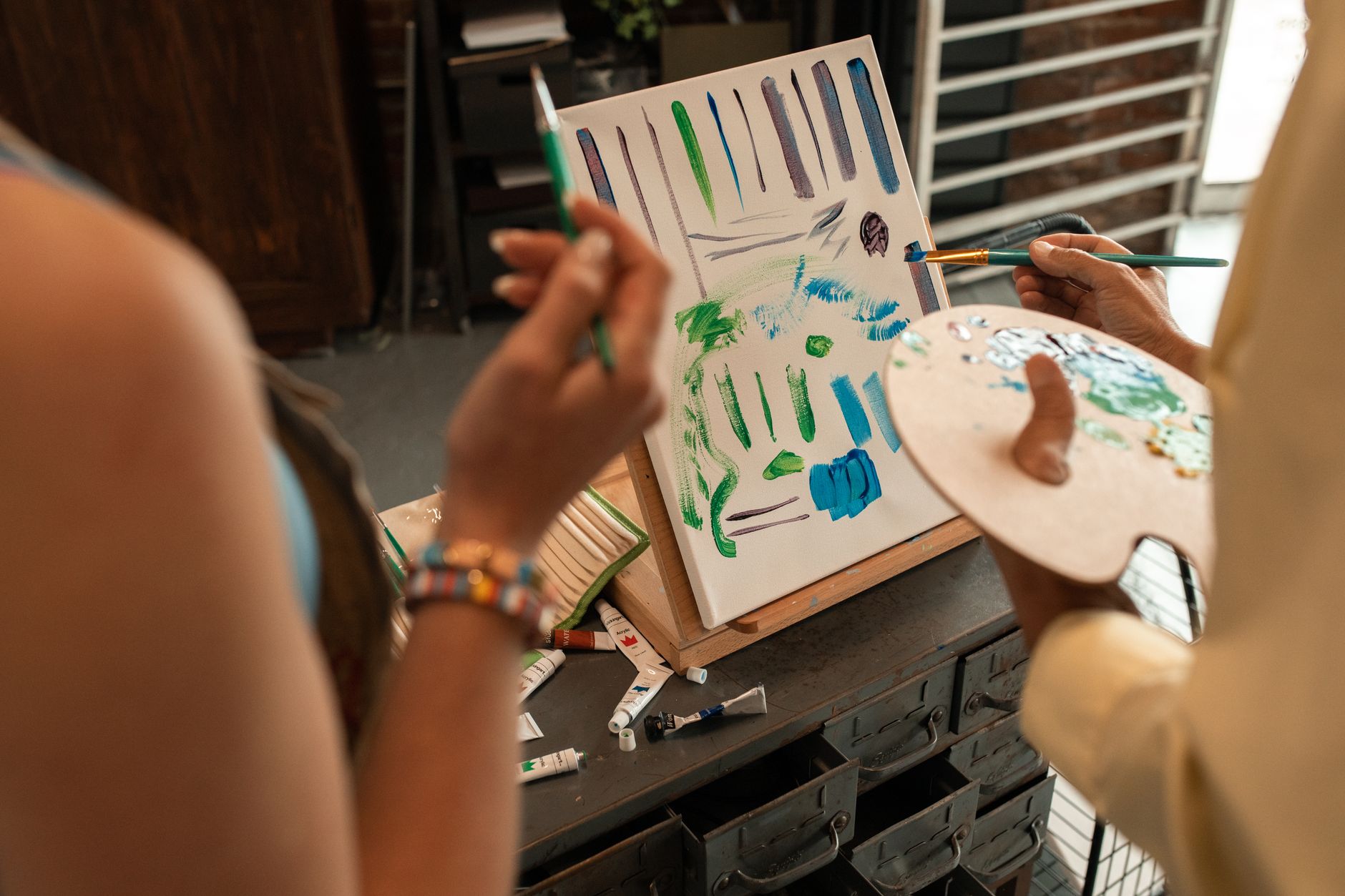
You don't arrive with a syllabus or step-by-step instructions. Instead, your host shows you a technique—say, how watercolor blooms on wet paper, or how to mix skin tones—then suggests a subject: the alleyway outside, a still life we arrange, your own memory, or an abstract study with colors you love. Beginners often spend the first 30 minutes just getting comfortable with the brush and water, watching the paint move. By minute 60, most people stop watching their hand and start watching the paper or canvas, which means you've stopped overthinking. We've seen people paint a portrait of a family member from a phone photo, a quick landscape of the Thu Bon river, or loose abstract marks in reds and golds—all in one session. The point isn't a finished, frameable piece (though sometimes it is). The point is you see how paint behaves, what you prefer, and whether you want to paint again next week or next year.

Watercolor Versus Oil: Which Should You Choose?
Watercolor dries fast, needs less setup, and forgives happy accidents—a puddle of blue becomes sky or water. Oil takes longer, lets you blend colors for hours, and feels more painterly if you've seen art history documentaries. Neither is "better." Watercolor suits people who like working quickly, love transparency and light, or are worried about mess—water washes out of brushes instantly, and we have paper towels everywhere. Oil suits people who like a slower pace, want to rework sections, or enjoy the smell and buttery texture of paint (though some people find the smell off-putting in a small room). We ask you in advance which appeals to you, because we set up materials differently. Both are taught at the same pace; beginners don't need to choose based on "difficulty." The honest difference: if you love the idea of making rich, dark, layered color that takes days to dry properly, oil might call to you. If you want to see a finished piece dry while you're still in the room, watercolor is the choice. Most first-timers don't know until they try, so we're happy to set up both and you can switch halfway through.
See all art and culture classes
How Do We Adapt for Complete Beginners, Kids, and Mixed Skill Levels?
A beginner's worry is always: "I can't draw, so I can't paint." The answer is honest—if you can't draw, we draw lightly in pencil first, so you paint inside a simple outline. Or we suggest a subject so loose (rain, wind, a feeling) that "wrong" doesn't exist. Kids under 12 usually work for 60–90 minutes instead of two hours, and we choose subjects that excite them—animals, their own face, their favorite place—rather than still-life apples. We use washable paints if parents ask. If one person in a group is advanced and another is painting their first ever picture, we simply give them different subjects and different prompts: the experienced painter might explore color harmony or gesture; the beginner might paint a single object and focus on the shape and shadow. We move between them equally. Rain actually helps—the light softens, and moody paintings often feel more natural in grey weather. We have a good covered workspace indoors, and the old-quarter lanes are quieter in rain, so it's often a better session, not worse.
| Painting type | Time to try | Skill barrier | Who picks this first | What to know |
|---|---|---|---|---|
| Watercolor | 2–3 hours | None; rewarding fast | Nervous beginners, gift-givers | Blooming/bleeding is not a mistake |
| Oil | 2–3 hours | None; meditative pace | People who like slowing down | Smell is strong; you'll bring it home |
| Mixed media (pencil + watercolor) | 2 hours | None; very forgiving | Kids, very anxious adults | Easiest entry; loosest expectations |
What Happens Step-by-Step in Your First Session?
Minute 0–10: You arrive at the studio. We offer water (we have filtered water in a jug), show you the space, and ask what you gravitated toward—landscapes, portraits, abstracts, animals? We set up a small table with reference images pinned up, or we open a window and point at what's outside. We wash our hands and lay out paints, brushes, water jars, paper, and palette.
Minute 10–20: Your host paints a quick five-minute demo. Not a masterclass; just showing how they personally mix a green, or how they hold the brush for a loose line. You watch. No notes needed.
Minute 20–25: You do a tiny practice mark on scrap paper—one brush stroke, one color, one sensation. You're not "starting your painting"; you're saying hello to the paint.
Minute 25–90: You paint. Your host walks around, sits beside you, asks what you're thinking, suggests a color, shows you how they'd solve a problem, or simply lets you work in silence. No one watches you constantly.
Minute 90–120: You finish, step back, and we take a photo if you want. We talk about what surprised you. By the end, most people know whether they want to paint again, and which medium felt right.
Should You Book a Private Class or a Small Group?
Private sessions let you work on your own project—say, a portrait commission, or exploring one technique deeply—with your host's full attention. You set the pace and subject entirely. Small groups (usually 3–4 people) let you relax around other people learning; many people find that energy less pressured, and it's easier to laugh at a wobbling brushstroke when someone else just did the same thing. Private costs more; small groups feel more social. Both happen in the same studio and both teach the same skills. Choose private if you have a specific goal (painting your garden, exploring abstract color theory) or if you're coming with one close friend or partner and want that intimacy. Choose a small group if you like learning alongside strangers, prefer a lower cost structure, or want to feel part of a creative community for an afternoon. We can also run a group session just for your family or team—ask us about group and team experiences if you're visiting with others.
Explore group and team experiences
What to Check Before You Book
Materials included? We provide all paints, brushes, water, and paper or canvas. Bring nothing except yourself and maybe a small notebook if you like jotting feelings during the session.
Dress code? Wear clothes you don't mind if they get paint on them. An apron or old shirt is wise. Hoi An's old quarter is warm; layers aren't needed, but a light scarf or cardigan helps indoors if air-con is on.
Rain day? We have indoor studio space. Sessions run the same; light is softer, which some painters prefer.
Mixed skill levels in one group? Yes, and we adapt. One person isn't waiting for another; we just give different prompts and check in equally.
Can I keep my painting? Yes. Small sketches and studies are yours to take home or leave (some people leave them as gifts in the space). Larger pieces: ask us—we can roll and wrap them for travel, but oversized oil paintings are heavy to carry.
Allergies or medical needs? Tell us beforehand. Paint fumes are mild in our open studio; if you have respiratory concerns, we can use low-odor acrylics or ensure extra ventilation.
What if I've never painted and I'm terrified? Most people are. By minute 40, they stop thinking about "being good" and start thinking about color. That shift is the real lesson.
Why Hoi An for a Painting Class?
Hoi An's old quarter is full of lanterns, weathered shutters, river light, and narrow lanes—subjects painters have loved for decades. The pace here is slower than Hanoi or Saigon; people walk instead of rush. That slowness seeps into your painting time too. We host classes year-round; the best light is early morning or late afternoon (golden hour), but rain-soft mornings have their own mood. Unlike a Vietnamese cooking class where you're learning a skill to take home, a painting class is more about permission—permission to sit, try, make marks, and not get it "right." That's something the tourist tempo in Hoi An naturally invites.
Related Experiences in Hoi An
If you're drawn to hands-on creativity, you might also explore flower arranging (using fresh blooms from local markets—similar meditative pace, different medium), craft workshops (printmaking, weaving, ceramics), or farm and countryside experiences (painting from nature sites outside town). Many people do two experiences in one trip—a class in the morning, a walk or meal in the afternoon.

FAQ
Is watercolor or oil paint better for someone who's never painted before?
Neither is harder. Watercolor feels faster and lighter; oil feels richer and slower. Try whichever appeals to you—if you hate it, we can switch mid-session.
Do I need to bring my own paints or brushes?
No. We provide all materials—paints, brushes, water, paper, canvas. Just bring yourself and wear something you don't mind if paint gets on it.
What if I can't draw? Can I still do a painting class?
Yes. We lightly pencil in outlines first, or we choose subjects where "wrong" doesn't exist—abstracts, landscapes, gestures. Drawing isn't required to paint.
How many people are usually in a group class?
Small groups are typically 3–4 people. Private sessions are one-on-one or two people (like a couple). Both happen in the same studio.
Can kids do a painting class? What age is best?
Kids 6 and up enjoy it. Younger kids work for 60–90 minutes instead of two hours. We use washable paints and pick topics they love—animals, their own face, their favorite place.
What happens if it rains during my session?
We have a covered indoor studio with good light. Sessions run the same. Rain often creates softer, moodier light that suits painting.
Can I take my painting home?
Yes. Small sketches and studies are yours. Larger pieces are rolled and wrapped for travel, though oil paintings are heavy if you're flying.
How much does a painting class cost?
Ask us for dates and a quote on WhatsApp—pricing depends on group size, length, and materials. We keep it transparent.
Do you teach oil or watercolor, or both?
Both. We ask you beforehand which appeals to you, and we set up materials accordingly. You can also switch mediums mid-session if you want to try both.
What if I'm visiting Hoi An and I want to do a painting class same-day? Do you have spots?
Sometimes. Message us on WhatsApp with your preferred dates and we'll see what's open. Advance booking (a few days) is more reliable.
Ask about dates
Tell us the city, your dates and what you would like to try. We reply on WhatsApp in English with options and availability.
FAQ
Is watercolor or oil paint better for someone who's never painted before?
Neither is harder. Watercolor feels faster and lighter; oil feels richer and slower. Try whichever appeals to you—if you hate it, we can switch mid-session.
Do I need to bring my own paints or brushes?
No. We provide all materials—paints, brushes, water, paper, canvas. Just bring yourself and wear something you don't mind if paint gets on it.
What if I can't draw? Can I still do a painting class?
Yes. We lightly pencil in outlines first, or we choose subjects where "wrong" doesn't exist—abstracts, landscapes, gestures. Drawing isn't required to paint.
How many people are usually in a group class?
Small groups are typically 3–4 people. Private sessions are one-on-one or two people (like a couple). Both happen in the same studio.
Can kids do a painting class? What age is best?
Kids 6 and up enjoy it. Younger kids work for 60–90 minutes instead of two hours. We use washable paints and pick topics they love—animals, their own face, their favorite place.
What happens if it rains during my session?
We have a covered indoor studio with good light. Sessions run the same. Rain often creates softer, moodier light that suits painting.
Can I take my painting home?
Yes. Small sketches and studies are yours. Larger pieces are rolled and wrapped for travel, though oil paintings are heavy if you're flying.
How much does a painting class cost?
Ask us for dates and a quote on WhatsApp—pricing depends on group size, length, and materials. We keep it transparent.
Do you teach oil or watercolor, or both?
Both. We ask you beforehand which appeals to you, and we set up materials accordingly. You can also switch mediums mid-session if you want to try both.
What if I'm visiting Hoi An and I want to do a painting class same-day? Do you have spots?
Sometimes. Message us on WhatsApp with your preferred dates and we'll see what's open. Advance booking (a few days) is more reliable.
More like this
Art and culture classes
Calligraphy class Hue: what to expect and how to start
Calligraphy classes in Hue teach you to hold the brush like a local, understand character structure, and leave with real work. We run them in an artist's studio space where you'll work alongside other learners—no previous art experience needed.
Art and culture classes
Best painting class in Hoi An: find your style
Hoi An's painting classes range from traditional lacquer to watercolour, silk and ink. We show you how to choose the right fit for your skill and schedule.
Art and culture classes
Best Painting Class in Da Nang: What to Know Before You Book
Painting classes in Da Nang range from casual drop-in sessions to structured multi-week courses. We walk you through what each type offers, who they suit best, and what to check before you commit.