
Home › Blog › Craft workshops
Pottery Class Hanoi Bat Trang: Learn Hand-Thrown Ceramics
By the Cáo Experiences team · 2026-11-06
A pottery class in Bat Trang (the centuries-old ceramic village on Hanoi's outskirts) typically runs 2–3 hours and includes wheel-throwing, hand-building or both, plus glazing and firing. You make one or two pieces—usually a bowl, cup or vase—under guidance from a resident potter. Classes suit complete beginners through returning potters; no prior skill needed. Cáo Experiences hosts small groups (2–6 people) or private sessions in a family studio nestled among active kilns and clay workshops. The experience covers basics: centering clay, opening the form, shaping walls, and finishing. You leave with your unfired piece; we handle kiln work and post-fire collection or delivery. Costs vary by group size and firing options—ask us for dates and a quote on WhatsApp. Avoid booking during lunar new year (workshops close), and wear clothes you don't mind getting dusty.
A pottery class in Bat Trang connects you directly to Vietnam's oldest craft tradition. We host sessions in a working studio where clay dust still clings to the air and kilns fire continuously. Unlike tourist demonstrations, you spend the full time at the wheel or workbench—not watching. Your hands do the centering, shaping and finishing. By the end, you own a piece you've thrown yourself.
What exactly happens during a 2-hour pottery session?
We arrive at the studio by 9 a.m. or mid-afternoon (timing depends on the season and kiln schedule). Your host briefs you on safety—no loose sleeves, hair tied back, feet clear of pedals—and shows you how the wheel works: speed control, water use, posture. Most beginners spend 15 minutes just centering a ball of clay; it feels impossible, then suddenly clicks. Once centered, you open the base with your thumbs, slowly widen the walls, and refine the rim. If the piece wobbles or tears, you recenter and restart—that's normal. We encourage experimenting: thick walls, thin walls, tall forms, squat bowls. Many people throw twice in one session: the first piece teaches you the motion; the second shows what you've learned. After 90 minutes at the wheel, you trim the base (removing the clay nub that anchors it), add a foot ring if you wish, and set it aside to dry slowly. The kiln work and glazing happen over the following weeks; we handle those. You pick up your finished piece in person or we arrange delivery.
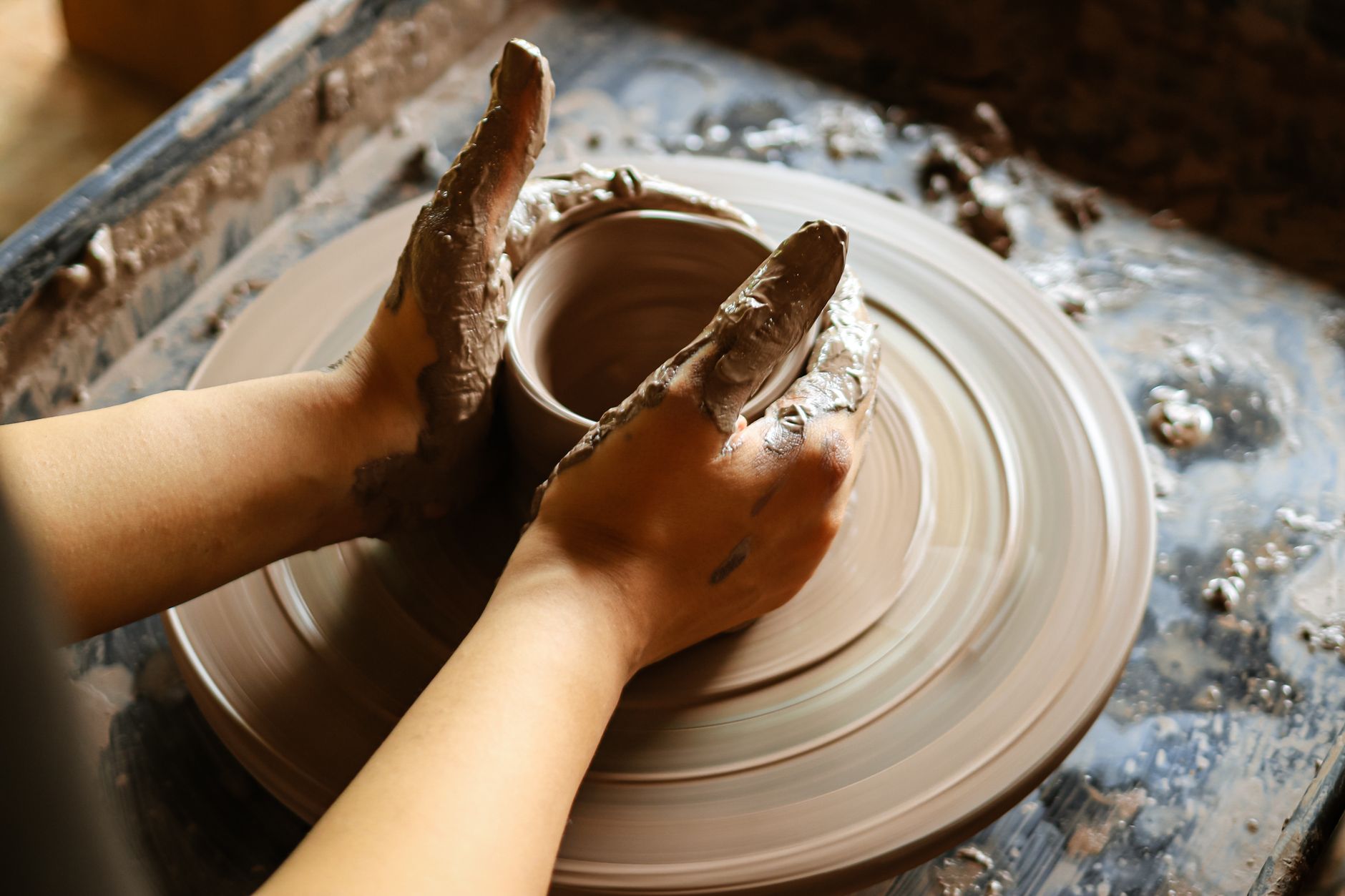
Why is Bat Trang the right place to learn pottery?
Bat Trang sits 15 km southeast of central Hanoi and has been a pottery hub since the 13th century. Today, dozens of family workshops still operate shoulder-to-shoulder. When you walk between studios, you hear wheels spinning, smell wet clay and kiln smoke, and see stacks of finished pieces—bowls, jars, roof tiles—drying or firing. This context matters. Learning pottery in a tourist center feels abstract. Learning it in a working village, surrounded by potters who've done this for decades (some families span three or four generations), grounds the skill in real practice. You're not in a classroom; you're a guest in an active workshop. The clay quality is genuine—local, prepared on-site. The glazes are the same ones the family uses for their commercial work. This authenticity translates into a deeper experience.
Do you need pottery experience to join a class?
Complete beginners are our most common guests. The wheel is intimidating at first—clay is wet, it's spinning, your hands feel clumsy—but that fear disappears within the first 10 minutes of actually touching the clay. We adjust our pace entirely to skill level. If you've never thrown before, we spend time on centering and opening. If you've taken classes elsewhere, you might focus on refining technique, trying a larger form, or experimenting with hand-building (coil pots, slabs, sculptural pieces). We also host potters returning after years away; they often want to refresh muscle memory and tackle a more ambitious project. Seniors do well on the wheel because it requires patience and focus, not strength. Children (ages 8+) typically work with hand-building—coil pots, pinch pots, textured forms—rather than the wheel; it's safer and more intuitive. We adapt every session to the person standing in front of us, not a fixed curriculum.

What happens to your piece after you leave?
This is the part many first-timers don't expect: your unfired pot needs to dry slowly over 1–2 weeks before it can go in the kiln. If it dries too fast, it cracks. We store your piece in a humidity-controlled area of the studio, turning it occasionally. Once it's bone-dry (you can feel it—it's lighter and sounds hollow when tapped), it goes into the next kiln firing. We'll use a clear glaze or a color you choose from the studio's standard palette. The kiln reaches about 1200°C and cools over several days. We then contact you to collect it or arrange delivery. The whole process—from wheel to finished pot in your hands—takes 3–4 weeks. If you're in Hanoi for only a few days, we can sometimes kiln-fire and glaze-fire faster for an extra cost, but we never recommend rushing the drying phase.
What should you wear and bring?
Wear cotton or linen clothes you're comfortable getting clay-stained; pottery dust is stubborn and may not wash out of expensive fabrics. Wear closed-toe shoes—clay splatter happens, and you want foot protection around a spinning wheel. An old apron or smock is ideal but optional; we have aprons at the studio. Bring a small towel if you prefer to dry your hands during the session rather than using the studio cloth. Don't wear jewelry (rings snag, necklaces can catch on the wheel), and avoid loose sleeves or scarves. A phone or camera works fine if you want to document your progress, though we also take photos for you. Bring water or ask us for tea; clay work is absorbing and you'll realize mid-session you're thirsty. No need to bring anything else—clay, tools, and glazing supplies are all provided.
| Consideration | What it means for you | How we adapt |
|---|---|---|
| First time on a wheel | 15–20 min to feel stable; may not finish a piece | Extra hands-on coaching; a second pot if time allows |
| Returning potter | Want to refine or try new forms | Minimal instruction; focus on your goals |
| Mobility or strength limits | Difficulty standing, or hand/wrist pain | Seated wheel option; hand-building focus instead |
| Allergy to clay dust | Respiratory sensitivity | Wet clay minimizes airborne dust; ask us in advance |
| Rainy day | Puddles in the lane, slippery path | Session still runs indoors; we arrange pickup if needed |
| Group of mixed ages | Kids, adults, seniors together | Separate wheels; different projects; all same 2-hour slot |
What to check before you book
Confirm the session date works with the studio's kiln schedule (they fire on set days; we'll tell you which). Check that you can collect or receive your finished piece 3–4 weeks later, or arrange delivery. Let us know if you have a wrist, shoulder or hand injury—some people modify the grip or switch to hand-building. If you're sensitive to clay dust, mention it; wet clay doesn't create much airborne particles, but a clay-laden studio isn't ideal for acute asthma. Verify the weather: pottery happens indoors, but the lane to the studio can be muddy in heavy rain—we'll advise whether to reschedule or go ahead. Ask how many people will be in your group and whether you prefer a private session or small group. Private sessions let you move at your own pace; small groups (3–4 people) often inspire friendly energy. Finally, confirm pickup or delivery logistics for your finished piece so there's no surprise wait.
Related experiences that pair beautifully with a pottery class: our flower arranging workshop teaches composition and color balance—skills that deepen your eye for glazing and form. A farm and countryside experience often includes time at a pottery workshop owner's home, where you see clay sourcing and traditional firing. Our art and culture classes sometimes feature ceramic history and glaze chemistry for guests who want the theory behind the practice. Or explore other craft workshops in Hanoi and beyond—woodblock printing, silk weaving, lacquerware—to sample multiple traditions in one visit. Each builds confidence and respect for Vietnamese artisanal skill.

FAQ
Can I glazethe piece myself?
We show you color options and help you apply glaze before the final kiln fire, so you're involved in that step. Full glazing technique takes longer and requires practice, so for first-timers we typically guide you through a simple dipping or brushing. You choose the color; we ensure it's applied correctly and fires well.
How much does a finished piece weigh to fly home?
A typical thrown bowl is 500–800 grams (light enough to pack easily). A large vase can be 1–1.5 kg. Ceramics are fragile, so wrap yours well in clothes or bubble wrap if you're flying. We can also box and ship if you prefer—ask us for logistics and a quote.
Can my young child do this?
Children 8+ can hand-build pots (coil, pinch, slab techniques) under supervision. Kids under 8 find the wheel too difficult and potentially unsafe. We've hosted family groups where kids build while parents throw—same studio, different tables, shared experience.
What if I have no artistic skill?
Pottery isn't about artistic skill on day one—it's about muscle memory and repetition. Your first pot will be uneven, wobbly or thick-walled. That's how everyone starts. By week two, people who've thrown twice already see improvement. We celebrate wonky as authentic.
How do I get my finished piece if I've left Hanoi?
Arrange delivery to your hotel or address in Vietnam before you leave, or have a local friend collect it. We can also vacuum-pack and ship internationally—ask us for options and costs on WhatsApp.
Ask about dates
Tell us the city, your dates and what you would like to try. We reply on WhatsApp in English with options and availability.
FAQ
Can I glazethe piece myself?
We show you color options and help you apply glaze before the final kiln fire, so you're involved in that step. Full glazing technique takes longer and requires practice, so for first-timers we typically guide you through a simple dipping or brushing. You choose the color; we ensure it's applied correctly and fires well.
How much does a finished piece weigh to fly home?
A typical thrown bowl is 500–800 grams (light enough to pack easily). A large vase can be 1–1.5 kg. Ceramics are fragile, so wrap yours well in clothes or bubble wrap if you're flying. We can also box and ship if you prefer—ask us for logistics and a quote.
Can my young child do this?
Children 8+ can hand-build pots (coil, pinch, slab techniques) under supervision. Kids under 8 find the wheel too difficult and potentially unsafe. We've hosted family groups where kids build while parents throw—same studio, different tables, shared experience.
What if I have no artistic skill?
Pottery isn't about artistic skill on day one—it's about muscle memory and repetition. Your first pot will be uneven, wobbly or thick-walled. That's how everyone starts. By week two, people who've thrown twice already see improvement. We celebrate wonky as authentic.
How do I get my finished piece if I've left Hanoi?
Arrange delivery to your hotel or address in Vietnam before you leave, or have a local friend collect it. We can also vacuum-pack and ship internationally—ask us for options and costs on WhatsApp.
More like this
Craft workshops
Craft Workshop in Saigon: Small Group Classes for Beginners
Cáo Experiences runs small-group craft workshops across Saigon where you learn traditional and contemporary making in intimate studio and community spaces. Sessions suit absolute beginners, families, and skill-builders.
Craft workshops
Craft workshop in Saigon for couples: what to choose
Couples in Saigon have three main craft paths: ceramics in a family studio, natural-dye silk painting, or bamboo weaving. Each teaches differently and suits different moods.
Craft workshops
Craft Workshop in Hoi An: What to Expect Step by Step
A craft workshop in Hoi An with Cáo Experiences is a half or full-day session where you learn a traditional Vietnamese skill—lantern-making, silk painting, woodblock printing, or lacquerware—in a working studio or family workshop. You leave with a finished piece you made yourself.