
Home › Blog › Flower arranging workshops
Private Flower Arranging Class in Hanoi: What to Expect
By the Cáo Experiences team · 2026-11-06
A private flower arranging class in Hanoi with Cáo Experiences runs for a half-day session in a light-filled studio in a quiet lane off the old quarter. You'll work with fresh, seasonal flowers—often sourced that morning—and learn foundational techniques: stem prep, focal-point placement, depth, and balance. The class suits couples, small friend groups, or solo learners; we adapt for zero experience, left-handed arrangers, and those with seasonal allergies. You'll make one finished arrangement to take home. The session includes water bottles, aprons, and step-by-step English instruction from a host who arranges regularly. We reschedule for rain without penalty. Ask us for dates and a quote on WhatsApp to confirm availability and group size.
What makes a private class better than a drop-in workshop?
A private session means we time the class to your arrival, skip the crowd wait, and adapt pace to your skill level without rushing. If you're nervous about being watched, or you need a toilet break, or your friend learns faster than you do, we handle it naturally. Our host answers questions in depth rather than moving on to the next group rotation. You control who attends—it can be just you, your spouse, or your book club. The flowers stay fresher because we prep them for your group size alone, not for a dozen classes staggered across the day.
How do we choose flowers for your arrangement?
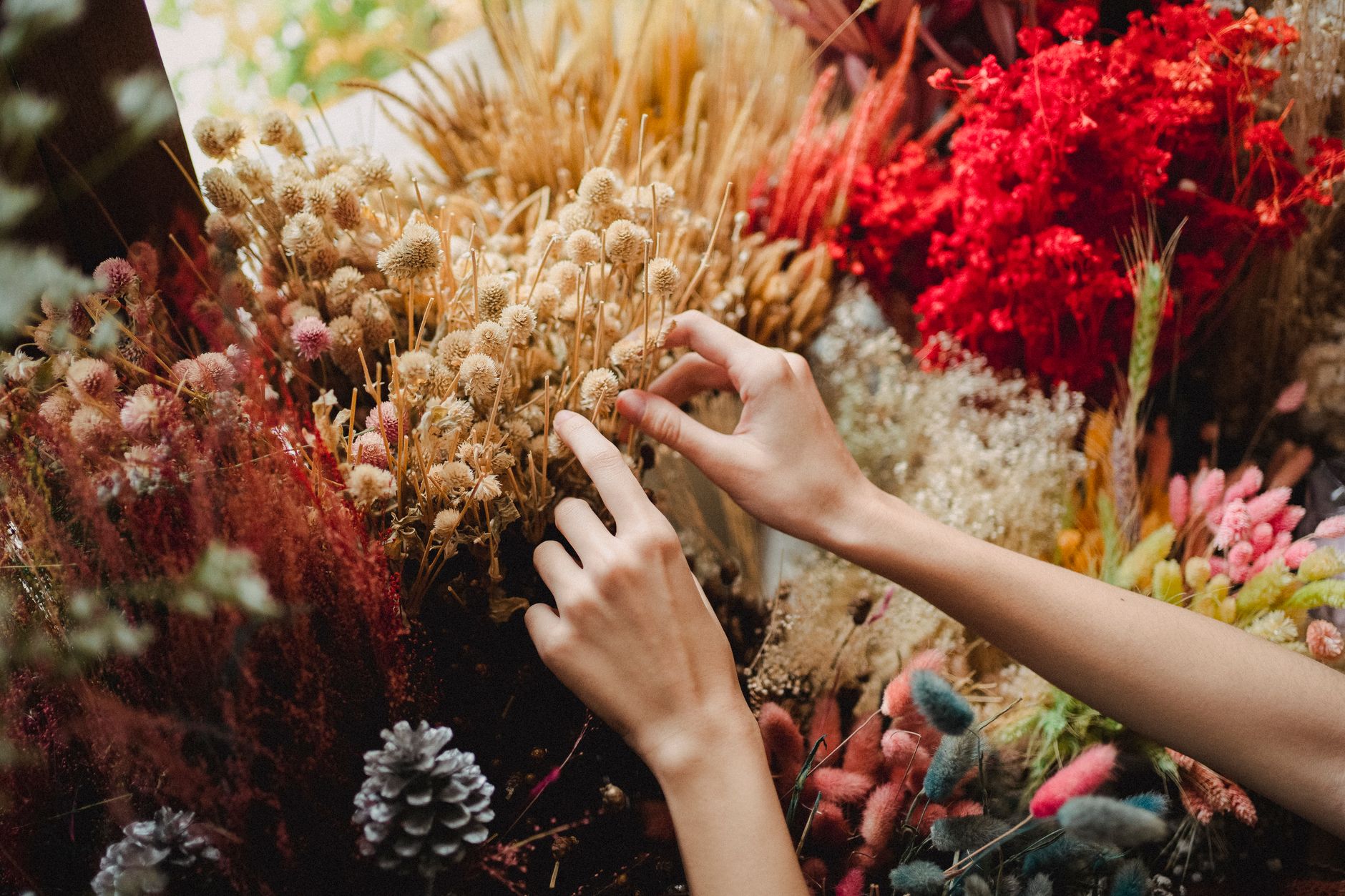
We visit a local market each morning and select blooms based on season, freshness, and color—spring tulips and ranunculus, summer dahlias and veronica, autumn chrysanthemums, winter roses and carnations. We avoid heavily treated, flown-in imports whenever possible. On your arrival, we lay out 4–6 stem types and ask what draws you: do you want a tight, formal look or loose and garden-style? Do you prefer warm tones (reds, oranges, creams) or cool (blues, purples, whites)? Your choices shape what we hand you. If you have allergies to pollen or specific flowers, tell us when you book so we source alternatives before you arrive.
What do you learn step-by-step during the session?
We start with prep: stripping lower leaves, cutting stems at 45 degrees, conditioning in water. You'll see why this matters—a dried leaf in water breaks down and clogs the stem, blocking water uptake. Then we place a frog (a stem holder) or build a grid with tape, depending on your vase shape. Next comes the focal flower—usually the largest, most eye-catching bloom—positioned slightly off-center and forward. You add secondary flowers to frame it, then fill gaps with foliage or smaller blooms. The host walks you through each layer, and you do the work. Most guests finish in 2–3 hours feeling proud of a design that actually looks balanced and lasts a week or more at home.
Can beginners really create something gallery-worthy?
Yes, because we build in principles, not guesswork. A beginner's biggest fear is ending up with a stiff, gappy bunch. We prevent that by teaching you to think in three dimensions: front, sides, back, and height. Once you know that the tallest stem should be 1.5 times your vase height, and secondary stems should step down toward the front, the math does the work. We show you this with your own hands—you'll move a stem and see it click into place. By the end, you have a real arrangement, not a practice piece. We take a photo for you. Many guests tell us they've done arrangements solo since the class because they understood the why, not just the how.
How do we adapt for different ages and abilities?
Kids as young as 8 can join a family session if they're interested in flowers; we give them shorter stems, use lighter vases, and focus on color play. Seniors often prefer sitting arrangements and lighter materials. We adjust table height and provide ergonomic scissors. If someone has arthritis and can't grip, we prep more stems pre-cut and let them focus on placement and design. For visitors with limited English, we use diagrams and our host speaks slowly, repeating names of techniques. If you're left-handed, we hand you scissors and explain angles for your side. If you've done floristry before and want to try advanced structures—like a pedestal vase or asymmetrical design—we build that in. Tell us what you need when you message us.
What happens if the weather turns bad or you need to cancel?
Hanoi rain in summer comes suddenly and hard, but we work inside, so drizzle doesn't affect us. We also reschedule if you get sick or have a genuine conflict—just message us. We ask for reasonable notice (ideally 2–3 days) so we don't prep flowers for nobody. If we cancel on our side due to a host emergency, we offer an alternative date or a full rescheduling conversation. No hidden fees, no forfeiture.
Comparing Private Classes with Other Options in Hanoi
| Option | Group Size | Duration | What You Make | Best For | Key Trade-off |
|---|---|---|---|---|---|
| Private Cáo class | 1–4 people | 2–3 hours | One finished arrangement | Couples, nervous beginners, custom pace | Ask us for dates and a quote |
| Drop-in workshop | 6–12 people | 1.5–2 hours | One arrangement (rushed pace) | Solo travelers, tight schedules | Less personal feedback |
| Corporate team session | 8–20 people | 2–3 hours | One per person, team connection | Office groups, morale | Logistics, noise, shared flowers |
| Cooking class as add-on | 1–4 people | 4–5 hours | Arrangement + meal | Full day immersion | Longer commitment |
What to Check Before You Book
Timing: We run classes Tuesday–Sunday. Monday is prep day. Confirm your preferred date and time zone (UTC+7 Hanoi) when you message.
Group size: Private means 1–4 guests. If you're 5+, we may split into two parallel sessions or recommend a team experience.
Flowers and allergies: Let us know if you're allergic to pollen, sensitive to fragrance, or vegan-concerned about flower sourcing. We'll adapt.
Vase and takeaway: You'll carry your finished arrangement home. Bring a bag or box if you're traveling, or ask us about wrapping options.
Language: We host in English. If you speak Vietnamese and prefer it, mention that—we can usually arrange it.
Rain and reschedule: We're indoors, so normal rain is fine.
Photography: We take a photo of your work. Ask if you'd prefer we didn't share it in stories.

Why a Private Class Beats Online Videos
Online tutorials show you technique, but they can't feel the stem's resistance when you cut it, can't adjust your grip in real time, and can't tell you why your arrangement looks off-balance while another person's clicked. A host stands beside you—"Turn that stem a quarter-left, yes—see how the line now echoes the vase curve?"—and suddenly you get it. You also leave with real flowers, not screenshots. And you've met someone in Hanoi who knows flowers, not a screen.
Building a Habit: From One Class to Your Own Work
Many guests ask if they can take a second class or join a craft workshop to deepen skills. We're happy to teach intermediate techniques—working with thorny branches, building tall arrangements, using unusual containers—or to combine flower work with tea experiences or art and culture classes on the same day. Some visitors come back on a return trip to Hanoi. Others tell us they arrange flowers weekly at home now and send us photos.
How a Private Session Fits Into a Hanoi Visit
If you're staying in Hanoi for a week, a private flower class is a focused, creative break from temple visits and street food tours. You can pair it with a morning street food and market tour—you'll see the flowers at market source—or a coffee workshop on another morning for a full wellness day. If you're traveling with family, family experiences including a junior arranging session are available. If your group is a small team or friend trip, we also offer group and corporate experiences that combine arranging with a countryside day or cooking class.
See how a session runs
Our Process: From Booking to Taking Your Arrangement Home
Step 1: You message us on WhatsApp with your preferred dates, group size, and any allergies or preferences. We respond within a few hours with available slots and next steps.
Step 2: You confirm, and we send a WhatsApp reminder 3 days before with the exact time, studio address (a quiet lane in the old quarter, easy to find with Google Maps), and what to wear (apron provided, but loose clothes and closed shoes help).
Step 3: You arrive 10 minutes early. We settle you, offer water, show you the flowers, and chat about your vision—do you want color? Texture? Something that matches your home?
Step 4: The class runs 2–3 hours. We prep stems, you arrange. Questions welcome anytime.
Step 5: You finish your arrangement, photograph it, and wrap it carefully (or in your bag). We give you care tips: change water every 2 days, recut stems, remove any wilting petals. Most arrangements last 7–10 days.
Step 6: You leave with a real skill and a story to tell.
Practical Details: What to Bring and Wear
Wear comfortable clothes you don't mind getting wet or muddy—water will splash, and soil from the stems is normal. Closed shoes help if the studio floor is wet that day. Bring a phone if you want to photograph your work. We provide aprons, scissors, water, and towels. If you're coming straight from the airport or hotel, don't worry about being travel-worn; many guests do, and we're used to it. A small bag or box to carry your arrangement home is useful if you're traveling light—we can also wrap it in kraft paper to protect it.
Beyond Hanoi: Arranging Classes in Other Cities
If you're visiting Da Lat—Vietnam's flower-growing hub—we run flower arranging workshops with locally grown blooms you won't find elsewhere. We also host classes in Hoi An and Da Nang. Each city's flowers differ by season and climate, so the designs feel locally rooted.
Real Questions Guests Ask Before Booking
We've listed the ones we hear most. If yours isn't here, ask us on WhatsApp—we'll answer honestly.

FAQ
Do I need any experience to join?
No. We've taught total beginners and experienced gardeners side-by-side. We meet you where you are and adapt pace and complexity.
What if I'm worried I'll wreck the flowers?
Flowers are forgiving. We use fresh material, not precious heirlooms. Mistakes—a stem snapped, a petal lost—happen and teach you what not to do next time. By the end, you'll have a balanced, lasting arrangement you made.
Can I arrange flowers for someone else's wedding or event after one class?
One class gives you solid foundations; arranging for a wedding requires practice and speed we don't cover in a single session. Many graduates tell us they make arrangements for their own homes regularly. If you want to explore event floristry, ask us about a follow-up workshop or a longer mentorship.
How long do the flowers last after the class?
With proper care—fresh water every 2 days, stems recut, wilted petals removed—most arrangements last 7–10 days. Some last two weeks if the flowers were very fresh that morning and you follow our tips.
What if I'm allergic to pollen but love the idea?
Tell us when you book. We can source low-pollen varieties (roses, orchids, some dahlias) and use foliage-heavy designs. Some guests wear a light mask while working; we have them on hand.
Can we do a private class just for two people?
Yes. Private means we tailor it to your group. Two people often book for anniversary or date-day experiences, and we can adjust flowers, music, and pace accordingly.
Do you offer classes in Vietnamese?
Yes. Tell us when you message, and we'll arrange it. We also host bilingual sessions if your group is mixed.
What if someone in our group can't stand for 3 hours?
We have stools and can set up a low table for seated work. Some guests do the whole class sitting. Mobility or fatigue concerns—let us know ahead, and we adjust without fuss.
Ask about dates
Tell us the city, your dates and what you would like to try. We reply on WhatsApp in English with options and availability.
FAQ
Do I need any experience to join?
No. We've taught total beginners and experienced gardeners side-by-side. We meet you where you are and adapt pace and complexity.
What if I'm worried I'll wreck the flowers?
Flowers are forgiving. We use fresh material, not precious heirlooms. Mistakes—a stem snapped, a petal lost—happen and teach you what not to do next time. By the end, you'll have a balanced, lasting arrangement you made.
Can I arrange flowers for someone else's wedding or event after one class?
One class gives you solid foundations; arranging for a wedding requires practice and speed we don't cover in a single session. Many graduates tell us they make arrangements for their own homes regularly. If you want to explore event floristry, ask us about a follow-up workshop or a longer mentorship.
How long do the flowers last after the class?
With proper care—fresh water every 2 days, stems recut, wilted petals removed—most arrangements last 7–10 days. Some last two weeks if the flowers were very fresh that morning and you follow our tips.
What if I'm allergic to pollen but love the idea?
Tell us when you book. We can source low-pollen varieties (roses, orchids, some dahlias) and use foliage-heavy designs. Some guests wear a light mask while working; we have them on hand.
Can we do a private class just for two people?
Yes. Private means we tailor it to your group. Two people often book for anniversary or date-day experiences, and we can adjust flowers, music, and pace accordingly.
Do you offer classes in Vietnamese?
Yes. Tell us when you message, and we'll arrange it. We also host bilingual sessions if your group is mixed.
What if someone in our group can't stand for 3 hours?
We have stools and can set up a low table for seated work. Some guests do the whole class sitting. Mobility or fatigue concerns—let us know ahead, and we adjust without fuss.
More like this
Flower arranging workshops
Flower Arranging Workshop in Phu Quoc: How to Book
A flower arranging workshop in Phu Quoc teaches you to design with fresh tropical and temperate stems in a hands-on morning or afternoon session. We run small-group classes in English, hosted in a garden studio setting—no experience needed.
Flower arranging workshops
Floristry class in Sapa: what to expect
A floristry class in Sapa means learning seasonal arrangement techniques in a quiet studio space, using fresh local flowers. We guide you through cutting, composition and color pairing—no experience needed.
Flower arranging workshops
Floristry class in Hanoi for solo travelers: what to expect
Solo travelers in Hanoi often wonder whether a flower-arranging class suits a single person. We run weekly small-group and private sessions where solo guests learn hand-tied bouquets, seasonal wreaths, and Vietnamese floral design—no skills needed, English-led, afternoons and mornings available.