
Home › Blog › Experiences for families and kids
Activities for Toddlers in Vietnam: Korean Traveler's Guide
By the Cáo Experiences team · 2026-11-06
Toddlers in Vietnam thrive at family experiences built around short, sensory activities: cooking sessions where they stir and taste (ages 2+), farm visits to see animals and pick vegetables (all ages), flower arranging with soft stems (ages 3+), and art classes with washable materials. Most sessions run 90 minutes to 2 hours, small groups (4–8 kids) in family kitchens, gardens, or studios in Hanoi, Hoi An, Da Nang, and Da Lat. Cáo Experiences hosts in English and communicate via WhatsApp; we adapt every session for dietary needs, nap schedules, and rainy weather. Ask us for dates and a quote on WhatsApp — no hidden costs, transparent pricing. Ask about dates on WhatsApp
Why toddlers engage with hands-on classes, not tour buses?
Toddlers lose focus in car seats within 45 minutes. Hands-on classes—where they do something with their hands—hold attention longer because the activity itself is the reward. In a cooking class, a 2-year-old kneads dough and eats what they made. On a farm visit, they touch a chicken or pick a mango. These aren't passive sightseeing moments; they're multi-sensory memories. We've found that the sessions that work best avoid long travel time and loud crowds. A kitchen tucked in a lane off the old quarter beats a famous restaurant tour for toddler energy.
Conclusion: Hands-on beats passive for toddlers every time.

Which activities suit which ages (2–5)?
| Age | Best Activity | Why It Works | Duration |
|---|---|---|---|
| 2–3 years | Farm and countryside experiences, cooking with soft dough | Short steps, animals, edible rewards, minimal instruction | 60–90 min |
| 3–4 years | Cooking classes, flower arranging | Follow simple steps, proud of output, eat or take home flowers | 90 min |
| 4–5 years | Art and culture classes, craft workshops, market walks | More patience for process, make gifts, choose their own path | 90–120 min |
Younger toddlers (2–3) need movement and frequent snacks. We pause every 20 minutes, offer water, and let them wander a safe perimeter. Three- to five-year-olds can sit longer but still lose interest without visible progress—they need to make something. All ages handle noise and mess better in small, familiar spaces.
Conclusion: Match activity length and complexity to your child's attention span and personality.
What do Korean families ask about most?
Korean families often arrive with questions about allergens (sesame, shellfish, eggs appear in many Vietnamese cooking classes), nap timing (we schedule around typical afternoon sleeps), and whether siblings of very different ages can join the same session. We handle allergies by teaching in a family kitchen where we control ingredients—unlike restaurant tours where you're eating food prepared elsewhere. For mixed-age siblings, we've run parallel activities: a 2-year-old makes simple dough shapes while a 4-year-old learns to use chopsticks or arrange flowers. Korean families also ask about weather backup plans; if it rains, cooking and art classes move indoors, but farm visits shift to a different date.
Conclusion: Ask us specifics about allergies and timing before booking.
How do we adapt sessions for toddlers who've never cooked or crafted?
No experience needed. In cooking classes, beginners start with texture work—touching, squeezing, kneading—before any heat. A 2-year-old might just press dough into shapes. A 4-year-old learns to measure rice or stir a simple broth. We never rush toddlers or force steps. If a child wants to watch instead of participate, that's fine; watching is learning. In flower arranging, we use soft stems and large vases so little hands can't break anything easily. In art classes, washable paint and chunky brushes let messy play happen without stress.
Conclusion: Toddlers learn through play; we design for their pace, not ours.
What's actually involved in a typical toddler session, hour by hour?
A 90-minute cooking class at a family kitchen typically runs like this:
- 0–10 min: Arrival, meet the host, tour the kitchen, wash hands. Kids get excited by the space.
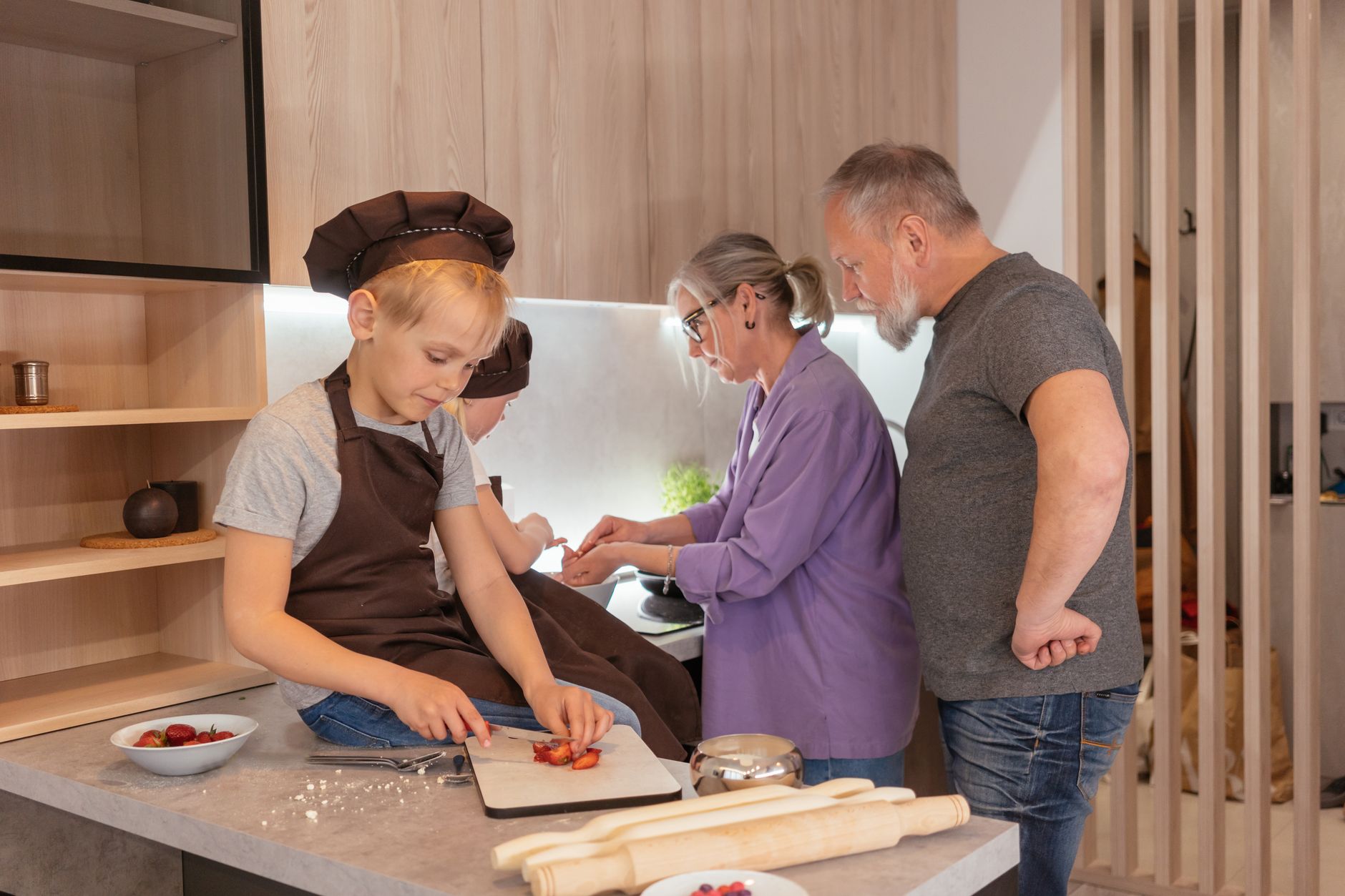
- 10–30 min: Hands-on prep (washing vegetables, breaking eggs into a bowl, stirring). We keep this sensory, not instructional.
- 30–50 min: Cooking or assembly (the host does heat; kids add ingredients, taste as they go).
- 50–90 min: Eat the meal together, chat, take photos. This relaxed ending is where kids remember the morning.
For farm and countryside experiences, the rhythm shifts:
- 0–10 min: Walk to animals, say hello.
- 10–50 min: Hands-on time (feed chickens, pick vegetables, touch a rabbit). We let kids linger if they're engaged.
- 50–90 min: Snack, walk back, rest.
Rainy-day backup: cooking and crafts move indoors; farms reschedule to the following week.
Conclusion: Sessions are short, full of action, built around eating or taking home a creation.
Which experiences work for Korean families visiting multiple cities?
If your trip spans Hanoi, Hoi An, and Da Nang, book experiences in Hanoi early (markets are busiest in the morning), then experiences in Hoi An mid-trip (the old town is quieter on weekdays). Experiences in Da Nang are good for a final, calmer day before departure. Da Nang hosts often combine a cooking class with a market walk or a farm experience on the same morning. Hanoi suits flower arranging and art classes because studios are centrally located. Each city has different produce seasons, so availability of farm visits varies—ask us what's ripe when you're traveling.
Conclusion: Plan activities around your itinerary; we'll match availability to your dates.
Checklist: Before you book a toddler activity
- Allergies: List all foods your child avoids (sesame, shellfish, eggs, dairy, nuts). Tell us in your first message.
- Nap schedule: What time do they sleep? We'll schedule around it.
- Languages: Do they speak Korean, English, or both? Our hosts speak English; most can manage simple Korean phrases.
- Siblings: Are other kids joining? Different ages OK, but tell us in advance.
- Rain: Do you have a flexible date, or must it be specific? Some activities reschedule easily; ask.
- Pace preference: Do they like to move fast or linger? We adapt.
- Take-home: Do you want to keep what they make (flower arrangement, art)? Some sessions include a package for travel.
What to check before you book
- Confirm the host speaks English and can accommodate toddler pace. (We do; ask us to confirm.)
- Tell us allergies and dietary rules upfront—not day-of. We source ingredients before you arrive.
- Check the session length. If your toddler's nap is 1 p.m., don't book a 10 a.m. start for a 2-hour cooking class.
- Ask about cancellation or reschedule. (We're flexible with toddlers; illness and weather happen—ask our policy on WhatsApp.)
- Confirm what's included. Meals, take-home gifts, photos—varies by activity. Clarify before booking.
Ready to book?
Browse family experiences to see what fits your trip. Contact us via WhatsApp with your child's age, any allergies, preferred city, and dates. We'll send you a quote, activity details, and a schedule. No pressure, no hidden fees. We've hosted Korean families for years; we know what questions to ask.
See how a session runs

FAQ
Do toddlers need prior experience in cooking or crafting?
No. Our sessions are designed for complete beginners. Kids learn by doing, not by instruction. We start simple—touching, mixing, watching—and let each child set their own pace. No pressure to perform or follow along perfectly.
What if my toddler is shy or doesn't want to participate?
Totally normal. We have quiet kids watch and help at their own comfort level. Often they warm up after 10 minutes. We never force participation. Watching is learning; they absorb more than you'd think.
How do you handle food allergies?
Tell us upfront—we source ingredients before you arrive and can adapt recipes. Our family-kitchen venues let us control everything. Restaurant tours can't guarantee this. Always list allergies in your first WhatsApp message.
Can older siblings (6–10) join a toddler session?
Yes. We often run two-tier activities: younger kids do simpler steps, older ones learn more advanced techniques, same session. Both stay engaged. Tell us ages in advance so we plan.
What if it rains on the day of the experience?
Cooking, art, and craft sessions move indoors and run as scheduled. Farm visits and market tours reschedule to the next available date. No refund—we reschedule for free.
How long is a typical toddler session?
60–120 minutes, depending on activity. Younger toddlers (2–3) do 60–90 min; older ones (4–5) can handle up to 120. We build in snack and rest time. Sessions end before energy crashes.
Ask about dates
Tell us the city, your dates and what you would like to try. We reply on WhatsApp in English with options and availability.
FAQ
Do toddlers need prior experience in cooking or crafting?
No. Our sessions are designed for complete beginners. Kids learn by doing, not by instruction. We start simple—touching, mixing, watching—and let each child set their own pace. No pressure to perform or follow along perfectly.
What if my toddler is shy or doesn't want to participate?
Totally normal. We have quiet kids watch and help at their own comfort level. Often they warm up after 10 minutes. We never force participation. Watching is learning; they absorb more than you'd think.
How do you handle food allergies?
Tell us upfront—we source ingredients before you arrive and can adapt recipes. Our family-kitchen venues let us control everything. Restaurant tours can't guarantee this. Always list allergies in your first WhatsApp message.
Can older siblings (6–10) join a toddler session?
Yes. We often run two-tier activities: younger kids do simpler steps, older ones learn more advanced techniques, same session. Both stay engaged. Tell us ages in advance so we plan.
What if it rains on the day of the experience?
Cooking, art, and craft sessions move indoors and run as scheduled. Farm visits and market tours reschedule to the next available date. No refund—we reschedule for free.
How long is a typical toddler session?
60–120 minutes, depending on activity. Younger toddlers (2–3) do 60–90 min; older ones (4–5) can handle up to 120. We build in snack and rest time. Sessions end before energy crashes.
More like this
Experiences for families and kids
Family workshop Vietnam vs Thailand: where to take kids in 2026
Vietnam and Thailand both offer immersive family workshops, but the pace, cost structure, and focus differ significantly. We run both types of sessions at Cáo Experiences and can help you choose.
Experiences for families and kids
Family Workshop Vietnam Gift Voucher: What Works Best
A family workshop gift voucher in Vietnam lets relatives experience cooking, craft, horse riding or tea together—no tickets, no queues, real hands-on time. We help you pick the right session type and duration for the ages and interests in your group.
Experiences for families and kids
Family workshops in Vietnam for Indian travelers: what to expect
Indian families visiting Vietnam often wonder how to keep children engaged and learn something authentic together. Cáo Experiences runs small-group and private workshops—cooking, coffee, flower arranging, craft, and farm days—designed for kids, parents, and grandparents, hosted in English with real