
Home › Blog › Street food and market tours
Best Food Tour in Vietnam: Street Eats + Market Walks in 2026
By the Cáo Experiences team · 2026-11-06
The best food tour in Vietnam isn't a bus ride to five restaurants. It's a walk with someone who knows the neighborhood rhythm—which vendor opens first, whose bánh hoai is worth waiting for, whether today's crab is good. We host street food and market tours where you move on foot, stop when something smells right, and taste food the way locals do: standing up, paying cash, moving on.
What makes a food tour actually good?
A real food tour answers a question before you taste: Why does this dish taste like this? You're not just eating bánh chưng; you're learning why it's square, why it's made 24 hours before, and why some families cook it the night before Tết and others buy it. A good tour walks in real time—early morning at the market when vendors are selling to families, not to tourists. It includes 5–8 tastings max, not 12, so your stomach doesn't shut down. And it adapts: if it rains, you move to a covered market or reschedule. If someone's allergic to shellfish, the guide knows which vendors to skip and which broth is safe. The best tours are small (under 8 people) so you can ask without holding up a line.

How do we run a session step by step?
We meet you 6:30 or 7 a.m. at a landmark near the main market—never inside yet. First, we walk the perimeter, pointing out stall layouts: where the tofu vendors cluster, where the herb section is, why certain fish arrive on certain days. Then we enter and taste something raw: fresh herbs, a sliced papaya, maybe a spring roll wrapper hot off the griddle. Next stop is usually a pho or bánh mì stall where the owner has been cooking since 5 a.m. You order (we translate), sit or stand, and eat while it's hot. We explain the broth (how long it's been simmering, what bones went in), the noodle type, the herbs. Then we walk again—maybe 10 minutes to a cơm tấm vendor, or a chè stall. By 10 a.m., you've tasted four dishes, talked to two vendors, and understand why Vietnam's street food works. If it's raining hard, we'll reschedule or move to a covered market. If someone feels full, we skip a stop and sit with coffee instead.
Who should book and who shouldn't?
Food tour fit | Why it works | What to know ---|---|--- Couples or friends (2–4 people) | Intimate, easy to ask questions, vendors relax more | Book private so timing is totally yours Families with kids 8+ | Kids taste real food, see cooking, learn without screens | Budget extra time; kids get bored standing Solo travelers | Meet locals and other guests, go at your pace | Groups often mixed—you won't be alone Vegetarians | We pre-note all dietary needs; plenty of tofu, herb, veg stalls | Shellfish paste in some broths—tell us first Seniors or slower walkers | Morning pace is easy, sitting breaks included, no climbing | Confirm you can walk 2–3 km total NOT fit | Tours with 20+ people; no diet communication; fixed itineraries in rain
What's the difference between cities?
Each city has a different food rhythm and market culture, which shapes the tour.
Hanoi market tours start near Hoan Kiem Lake or in the Old Quarter neighborhoods like Hang Buom or Bat Dan lanes. Vendors are older, have been there 20+ years, and make everything by hand. You'll see bánh hoai steamed in bamboo, miến chicken soup simmered overnight, and people eating standing up at dawn before work. The pace is faster and the crowd density is real. Rain is frequent in spring and autumn; covered markets are your backup.
Saigon (Ho Chi Minh City) tours often start at Ben Thanh market area or in District 1 and 5 neighborhoods. The market is bigger, more mixed—tourists and locals side by side—so you see both. Bánh mì here is wider and crispier than Hanoi style. Cơm tấm (broken rice with egg, pork, tomato) is huge at lunch. Humidity is intense year-round; early starts are essential.
Hoi An sits between Hanoi and Saigon in food culture—lots of Chinese influence, banh hoai is the local dish, and the market is smaller and easier to navigate. Tours here often combine the market with a short Vietnamese cooking class (30 min walk away, or longer sessions in a family kitchen in a lane off the old quarter) so you taste, then learn to cook something you just saw.
Da Nang and Da Lat have smaller, quieter markets. Da Nang leans seafood; Da Lat leans vegetables and fruit because of the cool climate. Tours here are less crowded but require more patience—fewer vendors, slower pace, but very local.
What allergies and dietary needs do we actually handle?
We ask on WhatsApp before booking: vegetarian, vegan, shellfish allergy, peanut allergy, spice intolerance, digestion issues, religious diet. Then we pre-scout the tour route and flag which vendors to skip and which are safe. For example:
- Shellfish allergy: Many broths use shrimp paste or fish sauce made from anchovies. We taste these first, tell you, and skip them. Vegetable broths exist but are rarer; we'll find them or substitute a noodle salad.
- Peanut allergy: Crushed peanuts top many salads (bánh tôm, noodle dishes). We note which vendors use them and which don't.
- Vegetarian/vegan: Plenty of tofu stalls, vegetable soups, and herb-forward dishes. But we confirm: are eggs ok? Fish sauce? Many "vegetarian" Vietnamese dishes have fish sauce base. We'll adapt and be honest if a tour doesn't have enough options.
- Spice intolerance: We taste first, tell you the heat level, and add chili on the side so you control it.
- Digestion issues: We spread tastings over 3–4 hours so your stomach isn't overwhelmed. We skip raw herbs if you prefer.
By the time the tour starts, you know exactly what to expect. No surprises.
What to wear, bring, and expect weather-wise?
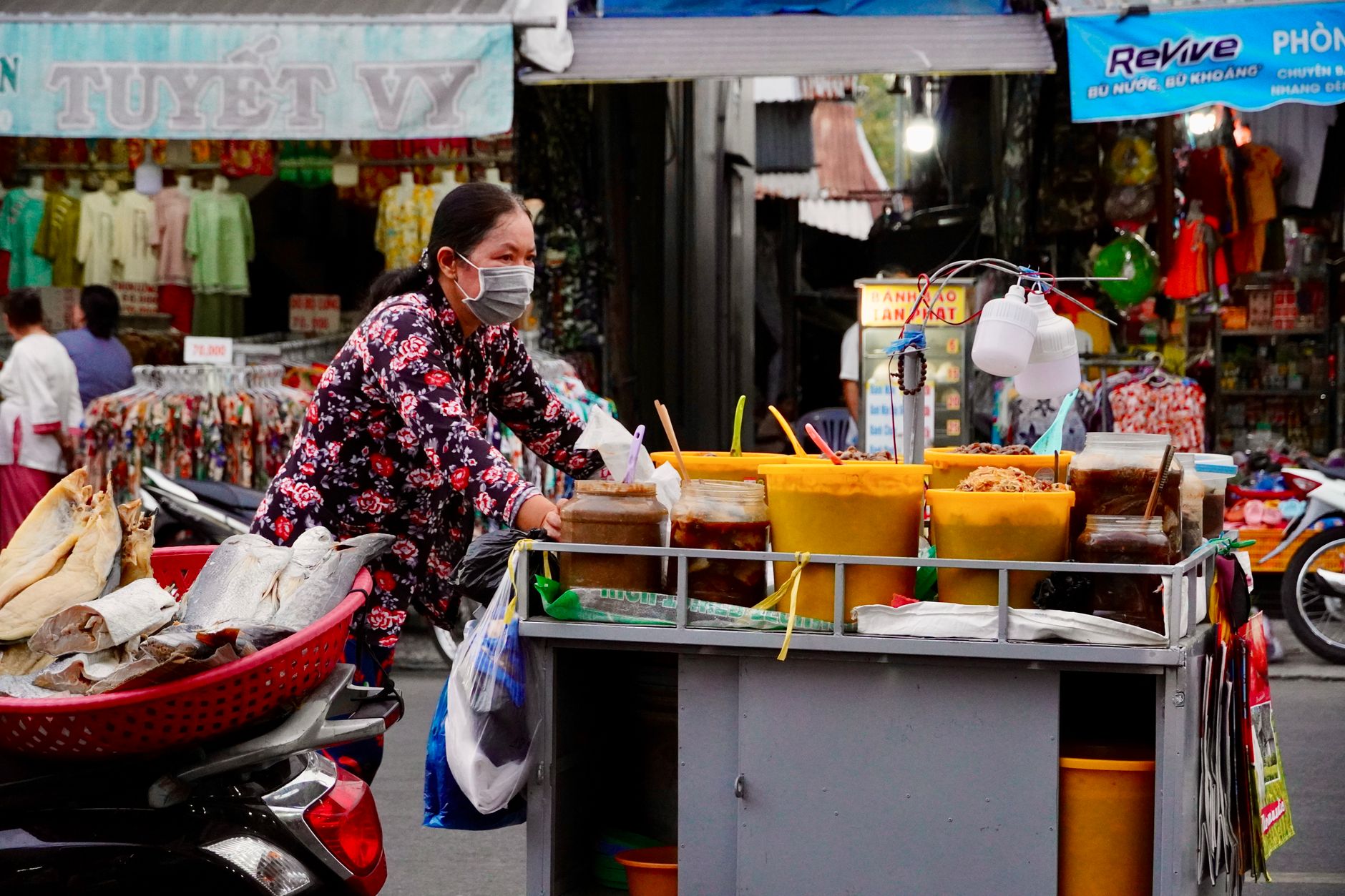
Wear comfortable walking shoes (you'll do 2–3 km, mostly flat, often wet). Wear layers or a light jacket—early mornings are cool, midday is hot. Bring a small bag or backpack (hands free for eating). Bring cash in local currency—vendors don't take cards, and the bill for a pho is under our current quote (roughly our current quote based on 2026 rates). Bring hand sanitizer and tissues (some stalls have running water, some don't). Bring a hat or cap and sunscreen—street markets have no shade.
Rain: If it's heavy, we reschedule. If it's light drizzle, most markets are covered or semi-covered, so we go. Bring a compact umbrella or be ready to share one. Some of the best food-tour memories happen in light rain—vendors are less busy, you move slower, and the food tastes warmer.
Peak seasons (October–November, March–April) mean more tourists on the same streets. Early-morning timing helps you beat the crowds. Summer (May–September) is hot and wet; tours still run but vendors start earlier (6 a.m. instead of 7 a.m.) and wrap up by 10 a.m. to avoid the heat.
How do we adapt for kids and families?
Kids under 8 rarely sit still for a full 3.5-hour tour, but kids 8–14 often love it if you prep them. We suggest:
- Tell them the plan: "We're going to taste a bánh mì, see how it's made, walk to a pho stall, taste that, then sit with ice cream."
- Make it a game: "Count how many herbs you see on this table" or "What do you think is in the broth?"
- Let them order or pay: Handing the vendor our current quote and saying "bánh mì, please" in Vietnamese (we teach you) is memorable.
- Shorter tours: We can do 2-hour versions (4–5 tastings) if your kid gets tired.
- Skip things: If your child is full, we skip a stop and sit with juice or coffee while you talk.
Parents appreciate that kids see real food being made (not plated in a restaurant), taste unfamiliar flavors, and understand that cooking is a skill. Some kids end up asking for second helpings. Some push food around their plate. Both are fine—no pressure.
What should you check before you book?
- Confirm your diet needs on WhatsApp first. Don't assume—ask if the route works for your allergies.
- Check the weather forecast. If heavy rain is predicted, ask us about rescheduling options.
- Wear comfortable shoes. Blisters ruin a food tour.
- Eat a light dinner the night before. You'll taste better on a slightly empty stomach, not a full one.
- Bring cash. Credit cards won't work.
- Ask the guide which dishes are best today. Markets are seasonal; what's fresh changes weekly. The guide knows.
- Don't pre-book restaurants. The best part of a food tour is discovering a vendor, tasting, and deciding if you want to come back alone. A fixed itinerary kills that.
Beyond the tour: what's next?
After a food tour, many guests want to go deeper. Some book a Vietnamese cooking class (we run those in family kitchens and dedicated spaces, 3–5 hours, you learn to make 2–3 dishes from scratch). Some book a Vietnamese coffee workshop (because street coffee is more than instant—there's egg coffee, drip coffee, and history). Some want to visit a farm and countryside to see where the ingredients come from. All of these pair well with a morning food tour, and we can suggest combinations on WhatsApp.

FAQ
Is a food tour different from a cooking class?
Yes. A food tour is tasting and learning; you're a guest. A cooking class is hands-on; you chop, stir, and cook. Both are good—some people do one before the other, some just do a tour.
Can I request a private tour instead of a group?
Yes. Private tours are just your group (1–8 people), so timing and stops are totally yours. Ask us on WhatsApp for availability and to discuss your route preferences.
What if I'm vegetarian and the tour seems meat-heavy?
Tell us before booking. Vietnam has many vegetable-based dishes (tofu, herbs, soups, noodle salads), but street vendors vary. We'll pre-scout and either confirm the route works or suggest a different timing or location.
How much should I budget for food on the tour?
We include 5–8 tastings in the tour fee. Each tasting (a bowl of pho, a bánh mì, etc.) costs 30,000–a quoted price when paid to the vendor. Ask us for the total quote on WhatsApp—prices vary by city and season.
What if it rains on the day of my tour?
Light drizzle is fine—most markets are covered. Heavy rain? We reschedule to the next available date or move to a covered market. Confirm rain policies when you book.
Can I do a food tour if I'm alone?
Yes. Group tours often include other solo travelers, so you're not alone. Private tours are also an option if you prefer. Ask us on WhatsApp which dates have group tours running.
Do I need to speak Vietnamese?
No. The guide translates and orders for you. But if you want to learn a few words (bánh mì, pho, xin), we'll teach you—vendors love it.
Ask about dates
Tell us the city, your dates and what you would like to try. We reply on WhatsApp in English with options and availability.
FAQ
Is a food tour different from a cooking class?
Yes. A food tour is tasting and learning; you're a guest. A cooking class is hands-on; you chop, stir, and cook. Both are good—some people do one before the other, some just do a tour.
Can I request a private tour instead of a group?
Yes. Private tours are just your group (1–8 people), so timing and stops are totally yours. Ask us on WhatsApp for availability and to discuss your route preferences.
What if I'm vegetarian and the tour seems meat-heavy?
Tell us before booking. Vietnam has many vegetable-based dishes (tofu, herbs, soups, noodle salads), but street vendors vary. We'll pre-scout and either confirm the route works or suggest a different timing or location.
How much should I budget for food on the tour?
We include 5–8 tastings in the tour fee. Each tasting (a bowl of pho, a bánh mì, etc.) costs 30,000–80,000 VND when paid to the vendor. Ask us for the total quote on WhatsApp—prices vary by city and season.
What if it rains on the day of my tour?
Light drizzle is fine—most markets are covered. Heavy rain? We reschedule to the next available date or move to a covered market. Confirm rain policies when you book.
Can I do a food tour if I'm alone?
Yes. Group tours often include other solo travelers, so you're not alone. Private tours are also an option if you prefer. Ask us on WhatsApp which dates have group tours running.
Do I need to speak Vietnamese?
No. The guide translates and orders for you. But if you want to learn a few words (bánh mì, pho, xin), we'll teach you—vendors love it.
More like this
Street food and market tours
Best Street Food Tour in Sapa: What to Expect, How to Choose
Street food tours in Sapa connect you with hill-town cooks and night markets. We'll walk you through what these sessions offer, who they're for, and how to avoid common missteps.
Street food and market tours
Best Street Food Tour in Hue: What to Choose, Who It's For
A street food tour in Hue isn't one thing—it's a choice between styles, neighborhoods, and paces. We break down what actually happens on each type, and how to know which fits your group.
Street food and market tours
Best Food Walking Tour in Vietnam: Hanoi Street Food Guide
A food walking tour in Vietnam immerses you in bustling markets and street lanes where vendors have cooked the same dishes for decades. We show you what to taste, how to order, and the stories behind each bite.