
Home › Blog › Experiences for families and kids
Best kids cooking class in Hue: hands-on family sessions
By the Cáo Experiences team · 2026-11-06
Cáo Experiences runs hands-on cooking classes for children and families in Hue, held in a family kitchen in a quiet lane off the old quarter. Sessions last 2.5 to 3 hours and include market shopping (in a morning), prep work at the stove, and eating what you cook. Kids aged 6–16 work at their own pace; younger siblings can sit in or help with soft tasks. We adapt recipes for allergies and give each child a printed card of steps to take home. Groups are capped at 6 children, so each gets real time with the host. Sessions run on demand; ask us for dates and a quote on WhatsApp. Ask about dates on WhatsApp
What dishes do kids actually make in a Hue cooking class?
We never teach the same menu twice. A typical session might cover fresh spring rolls (your kids roll them, seal them, dip them); a simple stir-fry with chicken or tofu and seasonal greens; and a soup or braise simmered on the stove. Older kids—12 and up—can tackle whole fish or more complex knife work; younger ones focus on rolling, stirring, tasting and seasoning. Every dish uses ingredients from Hue's morning markets or the host's garden. Kids take home a handwritten recipe card with diagrams. The point is not perfection: it's muscle memory, confidence and understanding why food tastes the way it does.
How do we keep younger children engaged without losing older siblings?
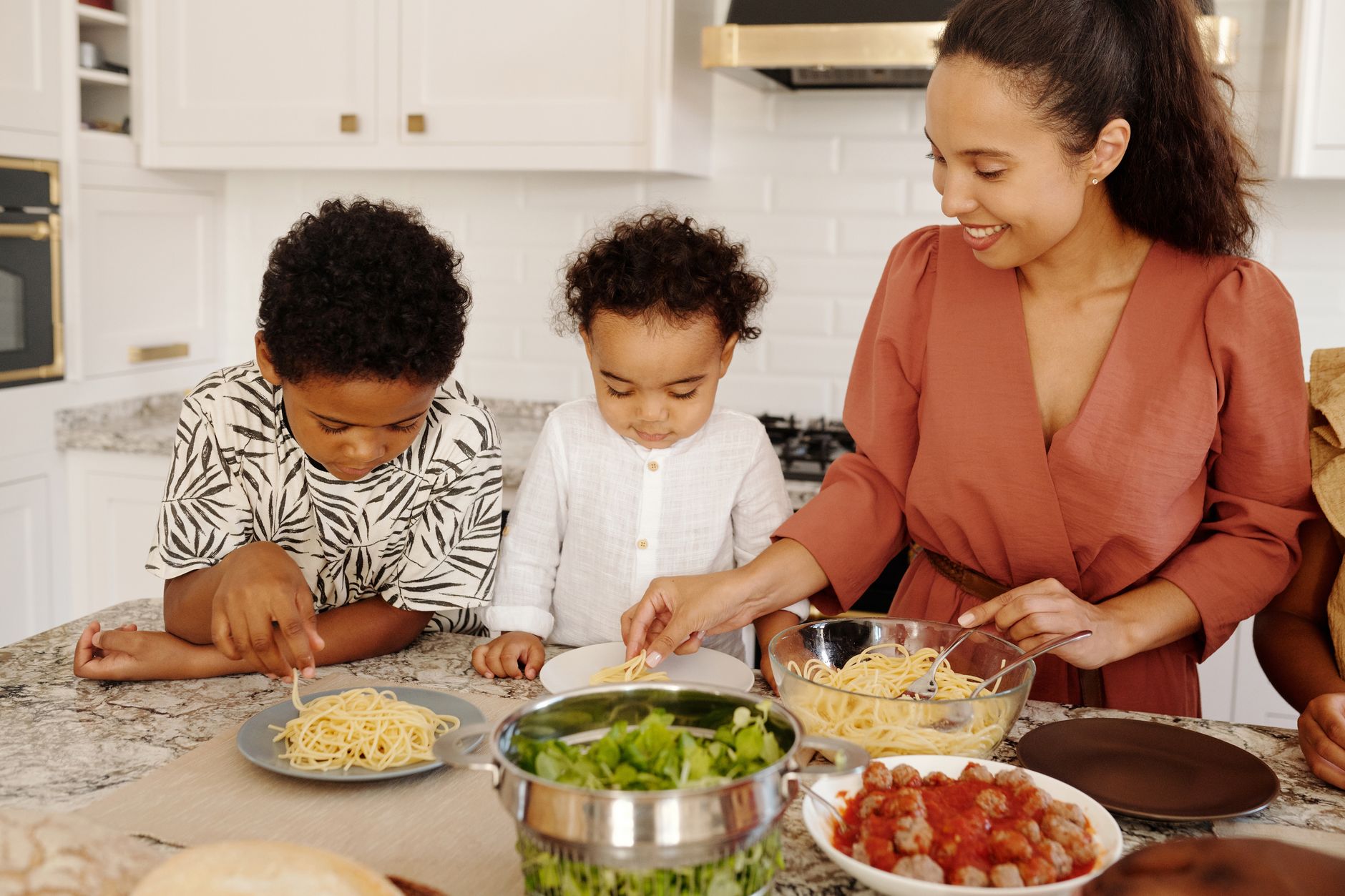
A 6-year-old and a 14-year-old have very different needs. We split tasks by skill: the younger child rolls spring rolls while the older one learns knife technique on herbs and vegetables at their own station. A single host moves between them, so no one waits. Younger kids rarely feel bored—they're tasting, touching, asking questions. If a sibling is too young to cook safely, they sit at a corner table with a snack and watch; some families prefer sending just the school-age children while parents explore nearby. We've never had a child who felt left out or ignored.
What if my child has allergies or won't eat certain foods?
Tell us what to avoid when you message on WhatsApp. We build a whole alternative menu if needed—swap fish for chicken, skip shellfish, use coconut cream instead of dairy. Hue's markets stock almost everything, so we replan the shopping list in advance. Kids with dietary restrictions learn that cooking for themselves means confidence: they choose what goes in, taste it as they make it, and often try things they thought they'd hate. We've had vegetarian kids cook a pork-and-herb dish alongside their own tofu version, side by side.
Is there a best age to start, and what about teenagers?
We've taught children from age 6 upward. Below 6, most lack the attention span or reach to feel truly involved—they do better sitting in. From 6–8, they excel at rolling, mixing and stirring; they tire of standing by 2.5 hours. Ages 9–12 are our sweet spot: they're curious, strong enough for real knives (with guidance), and proud of what they make. Teenagers often surprise themselves—they come in expecting to be bored and leave asking when the next class is. Many teens cook at home for the first time after a session here.

How does weather affect a kids cooking class?
Rain doesn't stop us: we cook indoors in the family kitchen year-round. Hue's heat and humidity in summer can make the kitchen feel warm, but we adjust by starting earlier (7 a.m. instead of 9 a.m.) or choosing dishes that don't require the stove running long. A typhoon or flood would force a reschedule—rare in Hue and we'd give you a new date. The only real constraint is the market: if the morning market is closed (Tet, or a once-a-year civic event), we source ingredients from a nearby shop instead, and the class runs the same way.
Explore family experiences in Hue
Comparison: Kids classes vs. family private sessions vs. group workshops
| Format | Group kids class | Private family session | Adult-only class | Best for |
|---|---|---|---|---|
| Group size | 4–6 kids, 1–2 parents | Your family only | Couples, friends | Siblings learning together |
| Pace | Kid-paced, flexible | Tailored to your level | Adult skill-focused | Mixed ages 6–16 |
| Menu | Seasonal, pre-set | Custom to your tastes | Techniques, depth | Quick wins, fun |
| Interaction | Peer learning, shared laughs | Hands-on with host | Detailed instruction | Energy, variety |
| Booking | Scheduled dates | Your timing | Fixed dates | Flexibility + bonding |
What to check before you book a kids cooking class
Age fit: Confirm the host is comfortable with your child's age. Cooking classes for 5-year-olds look different from those for 13-year-olds—we size everything to the group.
Duration: 2.5–3 hours is standard. If your child has low stamina or is used to short activities, mention it; we can compress or split tasks.
Allergies and aversions: List them now, not on the day. No sulking because "I don't eat vegetables"—we cook together, and tastes change.
Language: We teach in English. If your child is bilingual or learning Vietnamese, that's a bonus, but not required.
Transport to the market: Morning classes include a walk to a local market. If walking or crowds upset your child, tell us; we can adjust or source ingredients from a shop.
What to bring: Comfortable shoes, a light top (kitchens are warm), a water bottle, and a notepad if your child likes to sketch recipes.
Cancellation: Ask our terms on WhatsApp before booking.
Why choose Cáo Experiences over other kids cooking options in Hue
We are built around small groups and real kitchens—not restaurants pretending to offer classes, not large tour groups where kids are passengers. A host in Hue who runs our sessions cooks at home; children see actual family meals being made, not performance food. The kitchen is a lane kitchen, not a fancy school, so mistakes feel normal and spills are fine. We adapt every session to who shows up: if a child is shy, the host slows down; if a child is confident, they get the next challenge. No two classes are identical. You'll take home a handwritten recipe, a taste memory, and a child who sees cooking as something they can do—not something that happens to them on a restaurant plate.
For a deeper look at how our family experiences work, or to explore other hands-on options in Hue—from farm and countryside days to flower arranging workshops—get in touch.
See all Hue experiences | Contact us now

FAQ
Can my child attend a kids cooking class if they've never cooked before?
Yes—most haven't. We start with basics: how to hold a knife, how salt tastes, why you stir a soup. Confidence grows fast when you taste your own work. Experienced young cooks learn knife speed and flavor layering instead.
Do kids eat lunch as part of the class?
You eat what you cook—at the end of the session. It's usually three dishes, eaten family-style in the kitchen. It's not a formal lunch, more a celebration of the work.
What if my child is picky or nervous about trying new foods?
They see the ingredients go in raw, watch them cook, and taste as they go. Many picky eaters are braver when they made the dish. We never force tasting; peer pressure (other kids eating happily) works better than adult nagging.
Can I stay in the kitchen during the class, or should I leave?
Your choice. Some parents love watching and helping. Others prefer to explore Hue and return at the end. The class works either way—tell us what suits your family.
How do you handle a child who gets bored or tired halfway through?
Honestly, it rarely happens because children are moving, mixing and tasting the whole time. If a child is genuinely exhausted, the host will bring them into a sit-down role—rolling from a chair, stirring while seated. We've never had a family cut a session short.
Ask about dates
Tell us the city, your dates and what you would like to try. We reply on WhatsApp in English with options and availability.
FAQ
Can my child attend a kids cooking class if they've never cooked before?
Yes—most haven't. We start with basics: how to hold a knife, how salt tastes, why you stir a soup. Confidence grows fast when you taste your own work. Experienced young cooks learn knife speed and flavor layering instead.
Do kids eat lunch as part of the class?
You eat what you cook—at the end of the session. It's usually three dishes, eaten family-style in the kitchen. It's not a formal lunch, more a celebration of the work.
What if my child is picky or nervous about trying new foods?
They see the ingredients go in raw, watch them cook, and taste as they go. Many picky eaters are braver when they made the dish. We never force tasting; peer pressure (other kids eating happily) works better than adult nagging.
Can I stay in the kitchen during the class, or should I leave?
Your choice. Some parents love watching and helping. Others prefer to explore Hue and return at the end. The class works either way—tell us what suits your family.
How do you handle a child who gets bored or tired halfway through?
Honestly, it rarely happens because children are moving, mixing and tasting the whole time. If a child is genuinely exhausted, the host will bring them into a sit-down role—rolling from a chair, stirring while seated. We've never had a family cut a session short.
More like this
Experiences for families and kids
Family workshop Vietnam vs Thailand: where to take kids in 2026
Vietnam and Thailand both offer immersive family workshops, but the pace, cost structure, and focus differ significantly. We run both types of sessions at Cáo Experiences and can help you choose.
Experiences for families and kids
Family Workshop Vietnam Gift Voucher: What Works Best
A family workshop gift voucher in Vietnam lets relatives experience cooking, craft, horse riding or tea together—no tickets, no queues, real hands-on time. We help you pick the right session type and duration for the ages and interests in your group.
Experiences for families and kids
Family workshops in Vietnam for Indian travelers: what to expect
Indian families visiting Vietnam often wonder how to keep children engaged and learn something authentic together. Cáo Experiences runs small-group and private workshops—cooking, coffee, flower arranging, craft, and farm days—designed for kids, parents, and grandparents, hosted in English with real