
Home › Blog › Street food and market tours
Best Street Food Tour in Hanoi: Real Routes & What to Expect
By the Cáo Experiences team · 2026-11-06
A street food tour in Hanoi with Cáo Experiences is a guided walk through Old Quarter lanes and market edges where we stop at family stalls, taste dishes prepared in front of you, and learn the history of each recipe from the vendors themselves. Sessions run 3–4 hours (morning or early evening), include 6–8 tastings plus water and context, and suit everyone from curious solo travelers to families with kids. You walk slowly, eat real portions, and hear stories about ingredient sourcing and technique—not restaurant versions. We adapt for dietary restrictions, arrange a rain-date swap, and keep groups under 8 people so there's room to breathe and ask questions. Ask us for dates and a quote on WhatsApp.
How does a real Hanoi street food tour actually flow?
We meet at a quiet spot in the Old Quarter around 7 a.m. (for morning tours) or 5 p.m. (evening). First, we walk past the chaos—motorbikes, vendors setting up—and you begin noticing the rhythm: certain stalls always occupy the same corner, regulars know the owner by name, and the smells shift block by block.
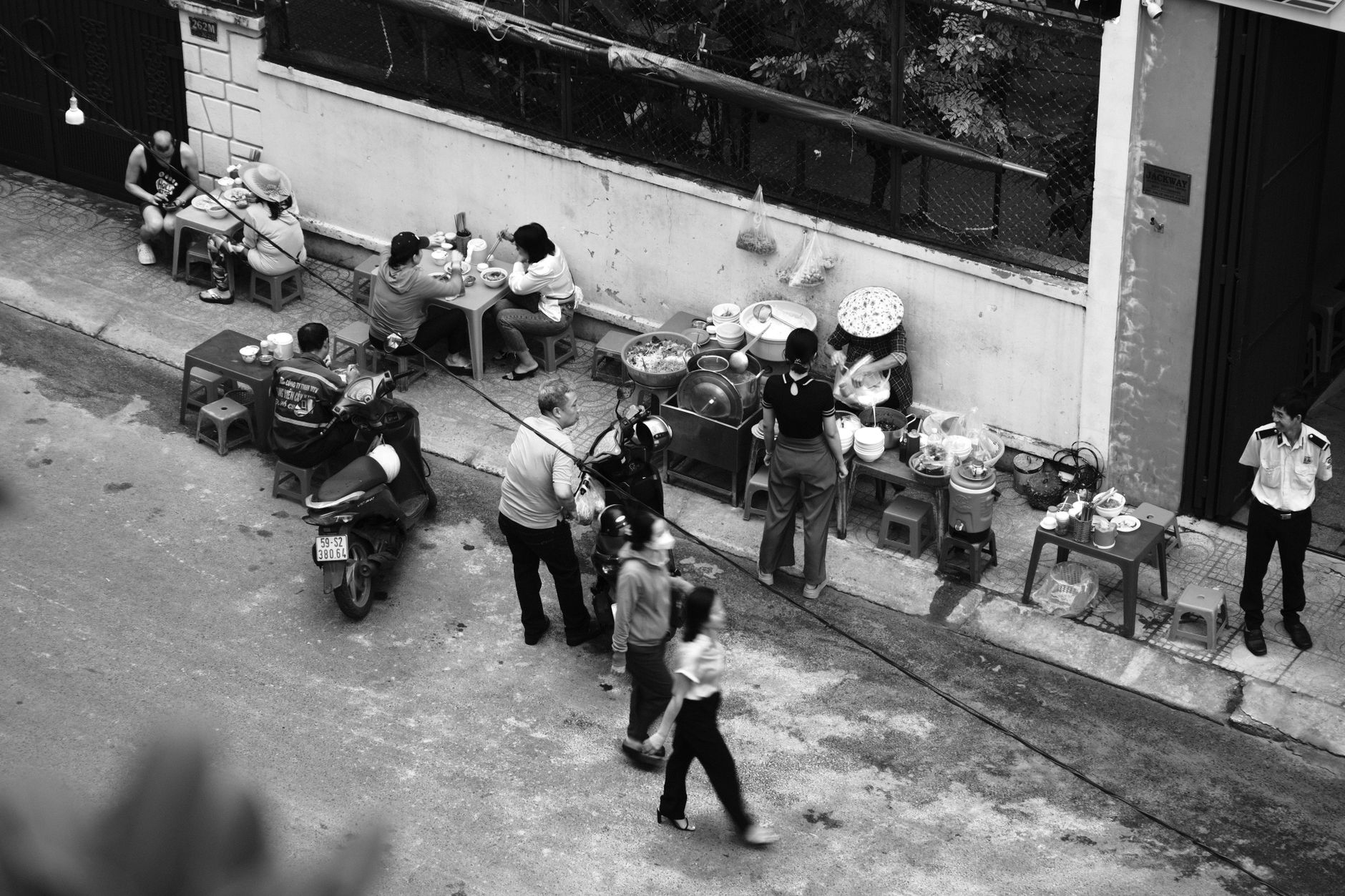
Our first stop is often a breakfast vendor in a narrow lane off the main roads—think plastic stools, a metal cart with a steel pot, and maybe four tables. We introduce you to the owner (we're known here), order a round of a specific noodle or soup dish, and sit while they cook one portion at a time in front of you. You taste it warm, we explain the broth-building time (often 8+ hours the night before), and point out which greens or proteins are seasonal.
By stop three, you've noticed your legs know the rhythm of dodging a delivery bike, spotting a new vendor by the smell of a single ingredient, and understanding why a stall with a queue moves so fast. By hour four, you've tasted contrasts—something acidic, something rich, something grilled—and the owner of the last stop usually gives you a small gift: extra herbs, a sauce recipe written on paper, or an introduction to their neighbour's shop.
It's not about glamour. It's about paying attention. See how a session runs

What's the difference between morning and evening food tours?
Morning tours (6:30–10 a.m.) hit breakfast vendors—egg coffee at a café in a tight alley, sticky rice steamed in bamboo leaves, broths that have simmered all night. The stalls are full of locals eating before work; energy is high and rushed. You taste what Hanoians actually eat at 7 a.m.
Evening tours (5–8 p.m.) focus on drinks and snacks—spring rolls still warm from the oil, grilled meats on sticks, pickled vegetables, and bia hơi (fresh beer) at a standing table. The Old Quarter shifts from work mode to social mode; families eat together; the light turns golden. Vendors serve fresher ingredients because they've rested the coolers.
Neither is "better"—they're different meals. Morning suits early risers and those wanting to understand daily routine. Evening works for late arrivals, people avoiding midday heat, and those wanting a more relaxed pace. We often recommend morning for first-timers (the sheer number of stalls competing for business means you taste quality quickly) and evening for groups or couples seeking a slower vibe.
Should you book a group tour or a private session?
| Tour Type | Who It's For | What Happens | Why Choose It |
|---|---|---|---|
| Small Group (4–8 people) | Couples, solo travelers, new friends | You meet others, walk together, share stories | Lower quote, built-in conversation, fresh perspective from other guests |
| Private (2–4 people) | Families with young kids, dietary needs, specific interests | Custom route, pace set by you, vendors know it's coming | No waiting, full attention from host, easier with kids or allergies |
Small-group tours cost less per person because costs distribute. Private tours let you linger at a vendor you love, skip a stop your kid dislikes, or ask deeper questions without feeling you're slowing others down. If you're traveling with children under 8, we usually recommend private—vendors are less startled by a toddler, and you control breaks for bathroom stops or rest.
If you're a solo traveler or pair and enjoy meeting people, small groups feel like luck—you often exchange contacts with someone who becomes a friend. If you're a family or have a strict allergy profile, private is worth the difference because adaptation is seamless.
What to check before you book a street food tour
Mobility: We walk 2–3 km total, mostly on narrow, uneven lanes with motorbikes passing. Bring comfortable, flat shoes with grip (not flip-flops). If stairs or extended standing are difficult, mention it when you ask for a quote—we can design a shorter, more-stationary route.
Dietary restrictions: Tell us before you book. We can arrange vegetarian or pescatarian stops, skip shellfish if you're allergic, modify portions for kids. Some vendors can't swap meat for tofu at their stall (their specialty is pork-only), so we'll route you past those and hit vendors with flexibility. Nut allergies, celiac, and vegan diets all work—we've done dozens.
Timing: Morning tours mean 6:30 a.m. pickup; you'll be tired the night before travel. Evening tours suit jet lag better. Rain doesn't cancel—we reschedule to the next good weather day and confirm by WhatsApp. Extreme heat (above 35°C) means we shorten the walk or move stops closer.
Group size: If you want a private session, book it explicitly; don't assume a "small group" is solo-friendly (it's not). If you're two couples, private costs less per person than two separate small-group spots.
What's included: Most tours include 6–8 tastings, 1–2 drinks, and water. Dessert or a final coffee is sometimes separate (ask). No tips are required, but many guests leave small cash tips at stalls they love—vendors appreciate it directly.
Why does Cáo Experiences' street food tour feel different?
We're not tour operators who book you into a franchise route. Our hosts live in or near Hanoi, know vendors by first name, and eat at these stalls regularly outside of tours. When a family stall shuts for a week because the owner's mother is ill, we know it and adjust. When a vendor's nephew invents a new twist on a dish, we taste it first and decide if it fits the route.
We also pair street food with cooking classes and market visits if you want context—learning to make the sauce before tasting it, or understanding how ingredients reach the vendor that morning. Some guests do a dawn market walk first (you see fish being sorted, herbs bundled, rice sacks stacked) and a street food tour the next day; it deepens everything.
And we're honest about what's hard: street food isn't Instagram-clean. You'll sit on plastic stools next to a drain. Vendors don't speak English (we translate). A dish might seem simpler than restaurant versions because it is simpler—that's the point. If you want plating and air conditioning, a restaurant tour is better. If you want to understand how a city feeds itself, this is real.
See how a session runs
How do rain and heat affect your tour?
Rain: Light drizzle? We go; locals eat in the rain and so do we. Plastic sheets cover the stall, vendors hand you napkins, it's part of the experience. Heavy rain (thunderstorms, visibility dropping) means we WhatsApp you the morning-of and offer to reschedule within 48 hours—no penalty.
Heat: Hanoi summers (May–September) peak around 35–38°C by midday. Morning tours (starting at 6:30 a.m.) avoid the worst; by 10 a.m., you're back resting. Evening tours start at 5 p.m., when it's still hot but the light is softer. We bring extra water, walk slowly, and stop in the shade longer. If it's above 38°C, we suggest evening or offer to shorten the route to 2 hours and 4 stops.
Can kids join a street food tour? What age is best?
Ages 3–6: Private tours only. Distances are short (1 km max), vendors are warned a toddler is coming, and you can pick them up if needed. Many kids this age find the chaos overwhelming or want to wander. We build in extra time and patience.
Ages 7–12: Both small-group and private work well. Kids are curious and can walk longer. They usually love the interactive element—watching food cooked, touching herbs, asking "why" repeatedly. Portions are smaller; they often taste one soup and one roll rather than a full menu.
Ages 13+: Treat them like adults. They ask smart questions and often eat more adventurously than parents.
Bring hand sanitizer, snacks they'll eat if they're picky, and a positive attitude about mess. Vendors are used to kids and often give them extra spring rolls.
What about experiences for families and kids beyond street food?
If your family wants more hands-on time, we run Vietnamese cooking classes where kids chop vegetables, roll spring rolls, and eat what they made—often more engaging than a tour if they're the type who likes to do rather than watch. Some families pair a street food tour (morning) with a cooking class (afternoon), so kids taste street versions and then cook similar dishes in a kitchen setting.
We also offer farm and countryside experiences where kids meet chickens, help harvest, and eat food from the same plot—a different kind of food story. And art and culture classes sometimes include food (a tea ceremony, a flower-arranging class where you drink tea between arrangements). Ask us what works for your family's age range and energy level.
What to wear and bring on a street food tour
- Shoes: Flat, closed-toe, with grip. Lanes are wet and uneven. Not flip-flops or heels.
- Clothes: Lightweight, breathable. Long pants or a skirt that covers knees (respect local norms). In morning rain, a light rain jacket, not an umbrella (you need both hands).
- Bag: Small crossbody or daypack. You'll sit on plastic stools; a large backpack is awkward. Leave valuables at your hotel.
- Cash: Vendors don't use cards. Bring small bills and coins for tips if you love a stall.
- Phone: Battery check—walking and photo stops eat power. One guest's phone died during a private tour and they missed documenting a vendor's technique.
- Sunscreen & hat: Morning sun before 8 a.m. is softer, but still bring it. Evening tours: none needed.
How to compare street food tours if you're looking at other options
When you search "street food tour Hanoi," you'll see franchise operations (20+ people, set route, big commissions to hotels) and smaller independent guides. Here's what to compare:
| Factor | Franchise Tour | Small Independent | Cáo Experiences |
|---|---|---|---|
| Group size | 15–25 people | 4–8 people | 2–8 people (you choose private or small group) |
| Flexibility | Fixed route, fixed timing | Flexible but depends on one guide's schedule | Flexible; multiple hosts; reschedule without penalty |
| Dietary adaptation | Difficult; you're one of many | Possible; ask in advance | Standard; mention when you book |
| Language | English-speaking guide | Guide may speak limited English | English throughout; translations at every stop |
| Vendor relationship | Commercial; vendors are used to it | Personal; guide may know them | Personal; we eat here outside tours too |
The cheapest tour usually means more people and less story. The most expensive might mean a single premium guide whose schedule is rigid. Mid-range (where we sit) often balances cost, group intimacy, and adaptation.
Ready to book? Here's what to do next
- Check availability: WhatsApp us with your dates (ideally 2 weeks ahead; we can sometimes fit last-minute requests).
- Tell us about you: Group size, dietary needs, kids' ages, morning or evening, private or small group.
- Get a quote: We'll tell you the structure, answer questions, and confirm details.
- Confirm 48 hours before: We send you the pickup location, phone number, and weather check.
- Show up, eat, ask questions: No script—we adapt as we walk.
If you want to go deeper, combine your tour with a Vietnamese cooking class the next day, or try a Vietnamese coffee workshop for a different food angle. Both run in Hanoi and complement street food perfectly.
Ask us for dates and a quote on WhatsApp.

FAQ
Is street food safe to eat in Hanoi?
Yes, if you eat where locals eat. Busy stalls move fast and flavor depends on fresh ingredients and technique. Vendors we stop at are established and have regular customers. If you're anxious, eat earlier stops first (your stomach acclimates). Bring antidiarrheal tablets, don't drink tap water, and wash hands before eating.
How much does a street food tour cost?
Ask us for dates and a quote on WhatsApp. Pricing depends on group size (private vs. small group), session length, and any add-ons like a cooking class the next day.
Can I do a street food tour if I'm vegetarian?
Yes. We route you to vendors with vegetable noodles, fried tofu, spring rolls with mushroom, and greens. Some stalls specialize in meat only, so we skip those. Tell us when you book, and we'll design the route around vegetarian stops—you'll taste 6–8 dishes, not fewer.
What if I don't like a dish at a stop?
You don't have to finish it. Vendors understand not everyone likes everything. We move to the next stop and you taste something different. No pressure. Some tours feel like an obligation to eat everything; ours doesn't.
Can I book a street food tour and a cooking class on the same day?
Not easily. A street food tour takes 3–4 hours (morning or evening); a cooking class is usually 3–4 hours. Doing both on the same day leaves you tired and eating twice (which isn't fun). We recommend tour one day, cooking class the next. Ask us when you contact us.
Do you offer tours in other cities (Saigon, Hoi An, Da Nang)?
Yes. Experiences in Saigon, Hoi An, and Da Nang include street food and market tours. Each city has different foods and vendors. Hanoi is the most famous, but Saigon's seafood stalls and Hoi An's cao lau are equally worth exploring.
Ask about dates
Tell us the city, your dates and what you would like to try. We reply on WhatsApp in English with options and availability.
FAQ
Is street food safe to eat in Hanoi?
Yes, if you eat where locals eat. Busy stalls move fast and flavor depends on fresh ingredients and technique. Vendors we stop at are established and have regular customers. If you're anxious, eat earlier stops first (your stomach acclimates). Bring antidiarrheal tablets, don't drink tap water, and wash hands before eating.
How much does a street food tour cost?
Ask us for dates and a quote on WhatsApp. Pricing depends on group size (private vs. small group), session length, and any add-ons like a cooking class the next day.
Can I do a street food tour if I'm vegetarian?
Yes. We route you to vendors with vegetable noodles, fried tofu, spring rolls with mushroom, and greens. Some stalls specialize in meat only, so we skip those. Tell us when you book, and we'll design the route around vegetarian stops—you'll taste 6–8 dishes, not fewer.
What if I don't like a dish at a stop?
You don't have to finish it. Vendors understand not everyone likes everything. We move to the next stop and you taste something different. No pressure. Some tours feel like an obligation to eat everything; ours doesn't.
Can I book a street food tour and a cooking class on the same day?
Not easily. A street food tour takes 3–4 hours (morning or evening); a cooking class is usually 3–4 hours. Doing both on the same day leaves you tired and eating twice (which isn't fun). We recommend tour one day, cooking class the next. Ask us when you contact us.
Do you offer tours in other cities (Saigon, Hoi An, Da Nang)?
Yes. [Experiences in Saigon](/destinations/ho-chi-minh-city), [Hoi An](/destinations/hoi-an), and [Da Nang](/destinations/da-nang) include street food and market tours. Each city has different foods and vendors. Hanoi is the most famous, but Saigon's seafood stalls and Hoi An's cao lau are equally worth exploring.
More like this
Street food and market tours
Best Street Food Tour in Sapa: What to Expect, How to Choose
Street food tours in Sapa connect you with hill-town cooks and night markets. We'll walk you through what these sessions offer, who they're for, and how to avoid common missteps.
Street food and market tours
Best Street Food Tour in Hue: What to Choose, Who It's For
A street food tour in Hue isn't one thing—it's a choice between styles, neighborhoods, and paces. We break down what actually happens on each type, and how to know which fits your group.
Street food and market tours
Best Food Walking Tour in Vietnam: Hanoi Street Food Guide
A food walking tour in Vietnam immerses you in bustling markets and street lanes where vendors have cooked the same dishes for decades. We show you what to taste, how to order, and the stories behind each bite.