
Home › Blog › Experiences for families and kids
Family Workshop in Vietnam: Hands-On Classes for Kids & Parents
By the Cáo Experiences team · 2026-11-06
A family workshop in Vietnam is a hands-on class where parents and kids (typically ages 5+) learn together—cooking Vietnamese dishes, arranging flowers, making crafts, or exploring coffee and tea in intimate settings run by local hosts. Sessions last 2–3 hours, run in English with WhatsApp coordination, and happen in family kitchens, studios, or countryside locations. Cáo Experiences scales activities by child age: younger kids (5–10) focus on play and simple techniques; teens join adult rhythms. All diets, allergies, and skill levels are welcomed. Cost varies by session type and group size; ask us for dates on WhatsApp. The main thing families worry about is whether kids will sit still—most don't, and we adapt: kids move between stations, taste as they go, and take home what they made.
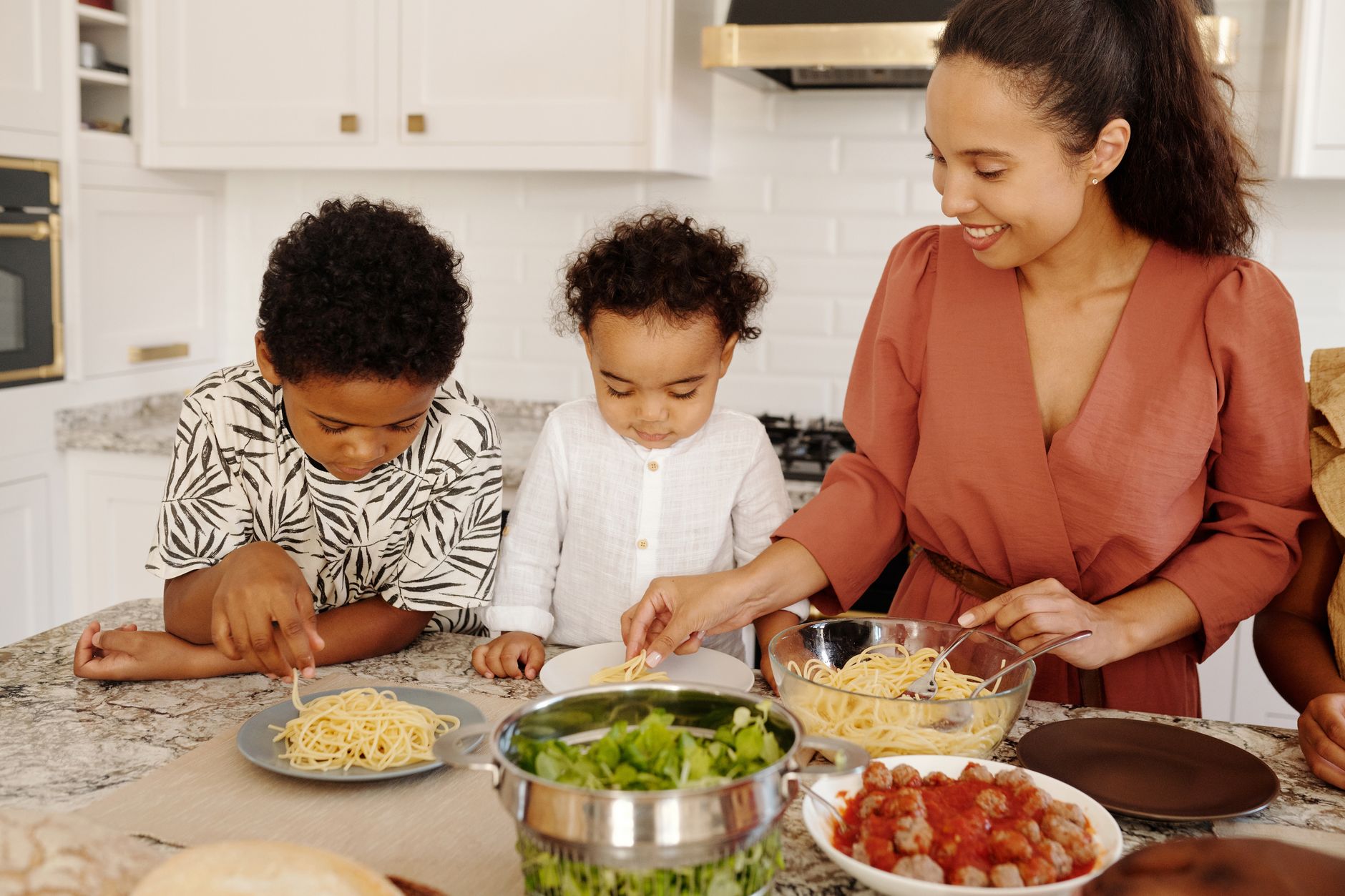
A family workshop teaches parents and children something real—cooking a soup, tying a flower knot, shaping clay—rather than watching a demo. You're not in a classroom. You're in a host's working space, making mistakes together, tasting ingredients, asking "why" and getting an answer that fits your child's curiosity.
We've found the best workshops share one thing: they're small enough that a host can see your kid's hand and adjust the knife, the pace, the next step. That's why we cap groups at 6–8 people per session, and often run private groups for families.
What age groups actually work in family workshops?
Young kids (5–8) need shorter tasks, more play, more tasting breaks. Tweens (9–12) can focus for a full session and want to know the "why" behind steps. Teenagers often surprise us—they engage deeper, ask about ingredients, challenge techniques. We've run sessions with newborns (parents do the workshop, baby sleeps or eats nearby), and with grandparents (who move slowly and love the stories). There's no fixed age gate; we adapt the workshop to your actual group.
For kids under 5, we suggest watching a parent work rather than joining hands-on, or choosing a shorter session (1–1.5 hours instead of 2–3). Rainy days? We move to covered studios or host kitchens—the work doesn't change, just the view outside.

Which workshop types suit families best?
Vietnamese cooking classes top the list because eating together is the reward—kids who won't sit still for a craft will taste their own spring rolls or noodle soup. Flower arranging draws families where kids like color and pattern; we give them smaller stems and let them lead a section. Craft workshops range from pottery to wood carving; kids aged 7+ can manage basic tools under close watch. Coffee workshops work for families with kids 10+, who can grind beans and pour water without spilling entire pots. Farm and countryside experiences suit families wanting movement: kids help feed animals, harvest vegetables, or walk the property while parents learn about rural life. Tea experiences are quieter and best for kids who already sit through a meal calmly.
The honest truth: a 4-year-old in a serious tea ceremony won't thrive. A 14-year-old in a simple cooking class might feel bored. We talk through your kids' habits and interests on WhatsApp before booking, and we've never forced a mismatch.
Do kids learn anything, or is it just play?
Both. In a cooking class, a child learns how to hold a knife without fear, why salt changes flavor, that cilantro isn't poison just because they've always rejected it. They see a host season soup and taste it in three stages (under-salted, right, over-salted)—that's a sensory lesson no recipe book gives. A 9-year-old we taught to make pho broth asked why we simmered bone instead of boiling it; the host explained collagen break-down in simple words, and the kid checked the pot temperature every 10 minutes after that.
In a craft workshop, a child's hands learn fine motor control, patience, and that mistakes (a wobbly pot rim, a paint drip) are fixable. Parents often tell us later: "I've never seen them concentrate that long." Craft builds confidence because the thing they made is real and theirs.
The workshop isn't school; there's no test. But if your child leaves saying "I made that" or "can we make this at home?", learning happened.
What happens if a child gets sick or scared during the session?
We pause. A host will move the child to a quieter corner, give them water, and let a parent comfort them. If they're too unwell, we stop, reschedule, and apply the session cost to a future date—ask us for dates and our booking terms. Fear of knives, fire, or mess is common. We start by letting the child watch, handle the tool without using it, or work with a parent's hands on theirs. We've had kids go from "I'm scared of hot water" to "I'm pouring the broth" in one afternoon. Sometimes it takes two sessions. We don't rush.
Allergies: we ask before every booking. If a child can't eat peanuts, we source a kitchen without peanut oil residue, swap ingredients, or redesign the menu. For kids with sensory sensitivities (texture, smell, loud noise), we offer quieter workshops like flower arranging or art classes in smaller, calmer venues.
How do you keep it family-friendly when weather turns bad?
Rain shuts down farm visits and outdoor horse riding, but it doesn't stop cooking, crafting, or tea. If a session is roofed—a kitchen, a studio—we run it as planned.
Cold weather in Da Lat affects horse riding—we skip steep trails and stick to flat terrain, or we book on a warmer day. Extreme heat (April–May in Saigon) means we schedule early morning or evening sessions instead.
We check the forecast 48 hours before each booking and message you with the plan. We've never cancelled for weather alone; we adapt the activity or timing.
| Workshop type | Best for kids age | Rainy-day plan | Allergy-friendly? |
|---|---|---|---|
| Cooking class | 5+ | Run indoors (no change) | Yes, swap ingredients |
| Flower arranging | 7+ | Run indoors (no change) | Yes (no food) |
| Craft workshop | 6+ | Run indoors (no change) | Yes (no food) |
| Coffee workshop | 10+ | Run indoors (no change) | Yes, oat/plant milk available |
| Farm experience | 4+ | Postpone or switch to craft | Depends on farm animals |
| Horse riding | 8+ | Postpone (unsafe wet ground) | Yes (no food) |
| Tea experience | 8+ | Run indoors (no change) | Yes (specify restrictions) |
What do we provide, and what should you bring?
We supply all ingredients, tools, and materials. If you're cooking, you take home what you made (packed in a simple container). If you're crafting, you carry your piece with you (ask about size and fragility when booking). We provide water, sometimes tea or coffee. You bring: comfortable clothes you don't mind getting dirty, an appetite (we cook, you eat), and a phone to take photos.
For younger kids, bring a small snack (crackers, fruit) in case they're hungry between tasting. For sun-heavy days, bring sunscreen and a hat. For horse riding, wear closed-toe shoes and long trousers. For farm visits, wear shoes you can get muddy.
We have aprons; kids often request one because it feels official. We have hand soap and paper towels. If a child has a favorite spoon or utensil, bring it—some kids feel braver with their own thing.
See how a session runs
Where can families book workshops across Vietnam?
We run sessions in Hanoi, Saigon, Hoi An, Da Nang, and Da Lat. Each city offers different workshop types:
- Hanoi has cooking classes in old-quarter family kitchens, flower arranging in central studios, and craft workshops in converted shophouses.
- Saigon offers coffee workshops, cooking classes, and farm days outside the city.
- Hoi An specializes in craft workshops (silk, lanterns) and cooking in riverside houses.
- Da Nang runs beach-town cooking and coffee sessions.
- Da Lat focuses on farm experiences and flower arranging.
We coordinate everything by WhatsApp: you tell us your location, dates, kids' ages, and dietary needs; we propose a workshop, confirm availability, and send you a WhatsApp link to finalize. You don't book online; you chat with us.
What to check before you book a family workshop
- Child age and interests: Does your 7-year-old love cooking or hate mess? We tailor, but you know best.
- Session duration: 2–3 hours is standard; if your child naps at 2 p.m., choose a morning slot.
- Dietary restrictions: Allergies, vegan, texture sensitivities—mention them early so we source the right kitchen.
- Group size: Private (just your family) or small-group (6–8 people)? Private costs more but lets us focus entirely on your kids.
- Location accessibility: Some kitchens are up three flights of stairs with no lift. If a family member has mobility limits, tell us—we'll find a ground-floor venue.
- What you take home: A pot of soup is heavier than a flower arrangement. Pack accordingly or ask about storage.
- Cancellation: Ask about our policy if your child gets sick or weather forces a postpone.
More ideas from our hosts
See more family experiences and workshops we run, or read stories from other sessions. If you're traveling with a larger group—extended family, friends—group bookings get better flexibility on dates and custom menus.

FAQ
Can a baby or toddler come to a workshop?
Yes, if a parent holds or watches them. Babies who sleep in carriers or strollers do fine. Toddlers (1–3) are harder to keep engaged and may distract the parent from learning; we suggest either skipping the workshop or having one parent do it while the other watches the toddler nearby.
What if my child is allergic to common ingredients like fish sauce or peanuts?
We ask about allergies before booking and source an ingredient-safe kitchen. We swap or omit ingredients, and we source from places that don't cross-contaminate. Tell us immediately on WhatsApp so we can confirm the workshop is possible.
Do kids get to eat what they cook?
Yes. That's the whole point. In a cooking class, you taste as you go and sit down to eat your meal at the end. In a craft workshop, there's no food unless it's a special "decorate cookies" session.
What happens if my child refuses to participate or gets bored?
A host will offer a gentler task, let them watch, or involve a parent more closely. If they're truly miserable, we pause, reschedule, and credit the session to a future date. We've rarely had to do this because small groups and hands-on work keep kids engaged.
Can we customize a workshop for our family, or do we book a set schedule?
Both. We run scheduled small-group sessions (you join others) and private workshops (just your family). Private workshops are flexible on date, time, menu, and activity—ask us about customizing on WhatsApp.
Do you teach in English? Will my child understand the host?
Yes, all our workshops are hosted in English. Hosts explain steps slowly, use hand gestures, and repeat if needed. Kids pick up techniques by watching and doing, not just listening, so language barrier is minimal.
Ask about dates
Tell us the city, your dates and what you would like to try. We reply on WhatsApp in English with options and availability.
FAQ
Can a baby or toddler come to a workshop?
Yes, if a parent holds or watches them. Babies who sleep in carriers or strollers do fine. Toddlers (1–3) are harder to keep engaged and may distract the parent from learning; we suggest either skipping the workshop or having one parent do it while the other watches the toddler nearby.
What if my child is allergic to common ingredients like fish sauce or peanuts?
We ask about allergies before booking and source an ingredient-safe kitchen. We swap or omit ingredients, and we source from places that don't cross-contaminate. Tell us immediately on WhatsApp so we can confirm the workshop is possible.
Do kids get to eat what they cook?
Yes. That's the whole point. In a cooking class, you taste as you go and sit down to eat your meal at the end. In a craft workshop, there's no food unless it's a special "decorate cookies" session.
What happens if my child refuses to participate or gets bored?
A host will offer a gentler task, let them watch, or involve a parent more closely. If they're truly miserable, we pause, reschedule, and credit the session to a future date. We've rarely had to do this because small groups and hands-on work keep kids engaged.
Can we customize a workshop for our family, or do we book a set schedule?
Both. We run scheduled small-group sessions (you join others) and private workshops (just your family). Private workshops are flexible on date, time, menu, and activity—[ask us about customizing on WhatsApp](/contact).
Do you teach in English? Will my child understand the host?
Yes, all our workshops are hosted in English. Hosts explain steps slowly, use hand gestures, and repeat if needed. Kids pick up techniques by watching and doing, not just listening, so language barrier is minimal.
More like this
Experiences for families and kids
Family workshop Vietnam vs Thailand: where to take kids in 2026
Vietnam and Thailand both offer immersive family workshops, but the pace, cost structure, and focus differ significantly. We run both types of sessions at Cáo Experiences and can help you choose.
Experiences for families and kids
Family Workshop Vietnam Gift Voucher: What Works Best
A family workshop gift voucher in Vietnam lets relatives experience cooking, craft, horse riding or tea together—no tickets, no queues, real hands-on time. We help you pick the right session type and duration for the ages and interests in your group.
Experiences for families and kids
Family workshops in Vietnam for Indian travelers: what to expect
Indian families visiting Vietnam often wonder how to keep children engaged and learn something authentic together. Cáo Experiences runs small-group and private workshops—cooking, coffee, flower arranging, craft, and farm days—designed for kids, parents, and grandparents, hosted in English with real