
Home › Blog › Experiences for families and kids
Kids cooking class in Ha Long Bay: what to know
By the Cáo Experiences team · 2026-11-06
Cáo Experiences runs Vietnamese cooking classes for families in Ha Long Bay in a family kitchen near the waterfront. Sessions run 3–5 hours (morning or full-day); children aged 5 upwards participate hands-on under supervision; beginners are the norm. A session includes market walk, prep, cooking 3–4 dishes together, and eating what you make. We adapt recipes and knife work for age and interest; younger kids (5–8) focus on mixing, rolling, and tasting; older kids (9+) handle more knife and heat. Private classes suit single families; small-group sessions (4–8 people, mixed families) cost less per head. Allergies and dietary needs are fine—we adjust ingredients. Rain rarely stops us: kitchen work continues. Ask us for dates and a quote on WhatsApp; availability depends on local guide and kitchen schedule, not a fixed calendar. Ask about dates on WhatsApp
Can young kids really cook, or do they just watch?
Kids aged 5–8 do the cooking—not play at it. They mix paste, roll spring rolls (hands get messy; that's the point), tear herbs, taste raw ingredients, and stir pots under your or our hand's guidance. We don't let them stand idle. Younger kids can't safely use sharp knives or high heat, so we pre-cut vegetables and you control the wok flame; they do everything else. By the end, they've made food from scratch and eaten it. That sticks.

What dishes do children actually cook in Ha Long Bay?
Most sessions include spring rolls (fresh or fried), a stir-fry (chicken, tofu, or vegetables), and a soup or dipping sauce. The kitchen decides based on what's fresh at market that morning. Kids help choose at the market walk, so they own the menu. Portion sizes and spice levels are set for kids; we don't serve the mouth-burning versions. Older kids (12+) can tackle caramelized pork, crispy fish, or more complex sauces if interested. The point is learning technique and flavor, not checking off a list.
How is a half-day class different from a full-day one?
| Session type | Duration | What's included | Best for | Group size |
|---|---|---|---|---|
| Half-day morning | 3 hours | Market walk, 2–3 dishes, eat | Families with younger kids, limited time, first-timers | 2–8 people |
| Half-day afternoon | 3 hours | Kitchen only, 3 dishes, eat | Families arriving mid-morning, no market | 2–8 people |
| Full-day | 5–6 hours | Market at dawn, 4–5 dishes, eat lunch together, rest | Families staying 1+ nights, older kids, immersive feel | 4–10 people |
Half-day suits families with kids under 8 or those visiting Ha Long for one day only; full-day lets older kids absorb technique and spend real time together. Afternoon classes work if you've already explored the morning; we simply skip the market and cook in the kitchen. Private classes can split the difference—you choose start time and length.
What do I need to bring or wear?
Wear light, cool clothes; a kitchen gets warm. Closed-toe shoes or sandals (oil splashes happen). Bring sunscreen if you're doing a dawn market walk. Water bottle. Kids should tie back long hair. Apron provided. Don't bring phones into the kitchen—we ask you to be present. The kitchen is not a photo studio; we take a few pictures at the end if you ask, but the focus is doing, not documenting.
How do we adapt for allergies, diet, or rain?
Allergies and diet. We ask about these when you message us. Fish sauce, shrimp paste, eggs, peanuts, and shellfish are common in Vietnamese cooking. We can omit or substitute most of them without breaking the dish. Tell us early, and we shop accordingly. Vegetarian and vegan sessions run the same way—different proteins, same techniques.
Rain. Ha Long Bay rains hard and fast, but a kitchen has a roof. If the market walk is unsafe (flooding, typhoon), we skip it and source ingredients ourselves; the cooking lesson happens as planned. Storms that close the bay (rare) mean rescheduling—we coordinate new dates via WhatsApp.
Who is this class actually for?
Families with kids aged 5–16. Siblings cook together; parents learn too and often remember more than the kids do. Grandparents, aunts, cousins welcome—mixed-age groups work well because older kids help younger ones, and you all eat together at the end.
First-time visitors to Ha Long. You get local flavor, market insight, and a real skill, not a staged tour.
Families wanting a screen-free, hands-on memory. Kids retain far more from cooking than from watching a cooking show. They taste the dish they made; it tastes better because they made it.
Not ideal: Very young kids (under 5) struggle with attention and height at the counter; toddlers are safer elsewhere. Extremely picky eaters may stress—we adapt, but the goal is trying new food. Groups larger than 10 need two kitchens or two instructors; we can arrange that, but it changes logistics and the fee.
What should I check before booking?
1. Child age and skill level. Tell us how old your kids are and whether they've cooked before. We adapt.
2. Market walk timing. Dawn markets are cold and busy; afternoon classes skip this. Decide what suits your group.
3. Dietary needs and allergies. List them. We need time to plan.
4. Arrival and departure. When do you arrive in Ha Long? When do you leave? We fit the class into your schedule.
5. Group size and privacy. Private class (just your family) costs more per head but is quieter. Small-group classes mix families and are more social. Both are good; know the difference.
6. Backup plan for rain or cancellation. We reschedule via WhatsApp if the bay closes (very rare). Otherwise, the kitchen is always open.
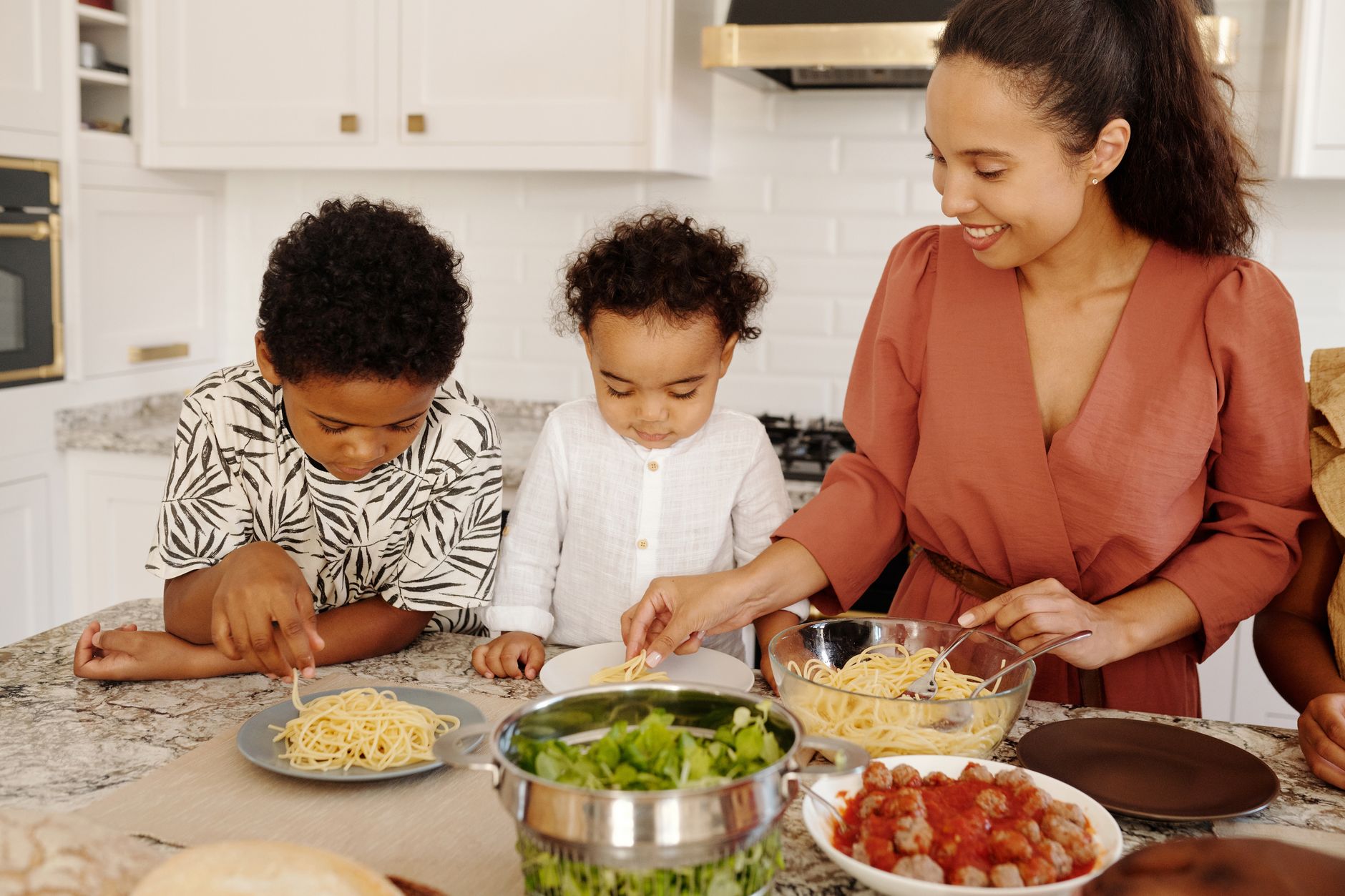
How does a typical morning session flow?
6:30 a.m. Meet at a family kitchen near the waterfront. Coffee or tea while we talk about the day.
7:00 a.m. Walk to a local market (10 minutes). You and the kids pick out vegetables, herbs, meat, and fish with the instructor. Kids ask questions; they learn what is in season and how to choose.
8:00 a.m. Return to the kitchen. Kids wash and help arrange ingredients. Instructor shows a technique (how to roll, how to slice, how to stir-fry). Kids do it, supervised.
9:00 a.m. Cook dish 1 (usually spring rolls). Every child has a task.
9:45 a.m. Cook dish 2 (stir-fry). Older kids near the wok; younger kids prep and stir cold ingredients.
10:30 a.m. Cook dish 3 (soup or sauce). Kids taste and adjust seasoning.
10:45 a.m. Eat together. You sit down, eat what you cooked, talk. Instructor answers questions.
11:30 a.m. Clean up (kids help), photos, goodbye.
Exact timing shifts based on group size and pace; this is the shape of a half-day.
Can siblings of different ages do the same class?
Yes. A 7-year-old and a 14-year-old cook in the same kitchen. We give them different tasks suited to their size and confidence. The 7-year-old rolls spring rolls and stirs a cold salad; the 14-year-old handles a knife and tastes the fish sauce and adjusts seasoning. They learn from watching each other. Younger kids feel included; older kids feel trusted. Both ages end up talking about the class for weeks.
Is this better than a cooking class in Hanoi or Ho Chi Minh?
Ha Long Bay classes are smaller, quieter, and more local. You cook in a family kitchen, not a cooking school. The market is real and uncrowded (not Ben Thanh or Quang Ba). If you're staying in Ha Long for a day or more, it makes sense. If you're passing through and based in Hanoi, a Vietnamese cooking class in Hanoi may fit better. We run classes in both places; ask us what suits your itinerary.
What if my child won't eat it after making it?
Most kids eat it. They made it; they're proud. But some are genuinely fussy. We offer alternatives (plain rice, bread, mild versions). We don't force eating. The lesson is in the making, not the eating, though eating is the best part. By the end of the session, many kids try something they usually refuse.
Ask about dates on WhatsApp | See our other family experiences
How private classes differ from small-group sessions
| Aspect | Private (your family only) | Small group (4–8 people, mixed families) |
|---|---|---|
| Focus | Your kids, your pace, your kitchen time | Kids meet other kids, more social |
| Cost per head | Higher | Lower |
| Customization | Full—your menu, timing, allergies centered | Shared—menu set by instructor and group needs |
| Noise and energy | Quieter, less busy | Lively, kids interact and help each other |
| Flexibility | More—can start/end as you wish | Fixed time window |
| Best for | Families wanting quiet time, very specific diets | Families open to meeting others, first-timers |
Why Ha Long for a kids cooking class at all?
Ha Long Bay is famous for boat tours and limestone scenery, not food. That's precisely why a cooking class stands out. You're not competing for attention with a dozen other tourists in a busy restaurant. The kitchen is calm, the market is local, and the instructor knows the families who grow and fish what you're cooking. Kids remember the whole day—the water, the morning light, the smell of herbs, the taste—not just the food. It's immersive in a way a city class can't be.
If you want to layer food into a Ha Long trip, we also run street food and market tours for families and tea experiences if kids are interested in tasting traditional Vietnamese tea. Ask us about combining classes.
See how a session runs | Read more family experiences | Ask about dates on WhatsApp

FAQ
What age is too young for a kids cooking class?
Children aged 5 can participate safely and have fun. Below 5, they struggle to reach the counter and sit still for 3 hours. We've had 4-year-olds in private family classes; it works if a parent stays very close and the session is short.
Can adults cook alongside kids, or do we watch?
You cook. We don't separate kids from parents. Parents learn the same recipes and help their kids. Many families say the parents enjoyed it as much as the kids did.
Do you teach in English?
Yes. All our sessions are hosted in English. The instructor speaks English; kids do too or are learning. No Vietnamese language needed.
What if kids get bored or want to leave early?
Rare. A 3-hour session is short enough to hold attention. If a child is genuinely upset, we pause, take a break, or reschedule. We've never had a family leave early, but it's allowed. No refund applies once the session starts; that's why we ask your expectations upfront.
Is the food we cook safe for kids to eat?
Yes. We use fresh ingredients, clean kitchen, proper cooking temperatures. If a child has a compromised immune system, tell us; we take extra care. Typical allergens (shellfish, fish sauce, peanuts, eggs) are common in Vietnamese cooking; we omit or substitute on request.
How do you handle very picky eaters?
We teach cooking, not eating. If your child won't try the food, they've still learned a skill. We adapt recipes to be less spicy or strong-flavored if you ask. Some picky eaters become adventurous in a kitchen; others don't. Either way, the class is worthwhile.
Can we request specific dishes?
In a small-group class, the menu is set by the instructor and usually chosen the morning of, based on what's fresh at market. In a private class, yes—tell us what you'd like, and we plan accordingly.
How much does it cost?
Ask us for dates and a quote on WhatsApp. Pricing depends on group size (private vs. small-group), session length (half or full day), and the number of kids. We'll send a breakdown.
Do you pick us up from our hotel?
No. We provide the kitchen address and directions. Most hotels in Ha Long are close (10–20 minutes by taxi or hotel car). We coordinate the exact meeting point via WhatsApp after booking.
Ask about dates
Tell us the city, your dates and what you would like to try. We reply on WhatsApp in English with options and availability.
FAQ
What age is too young for a kids cooking class?
Children aged 5 can participate safely and have fun. Below 5, they struggle to reach the counter and sit still for 3 hours. We've had 4-year-olds in private family classes; it works if a parent stays very close and the session is short.
Can adults cook alongside kids, or do we watch?
You cook. We don't separate kids from parents. Parents learn the same recipes and help their kids. Many families say the parents enjoyed it as much as the kids did.
Do you teach in English?
Yes. All our sessions are hosted in English. The instructor speaks English; kids do too or are learning. No Vietnamese language needed.
What if kids get bored or want to leave early?
Rare. A 3-hour session is short enough to hold attention. If a child is genuinely upset, we pause, take a break, or reschedule. We've never had a family leave early, but it's allowed. No refund applies once the session starts; that's why we ask your expectations upfront.
Is the food we cook safe for kids to eat?
Yes. We use fresh ingredients, clean kitchen, proper cooking temperatures. If a child has a compromised immune system, tell us; we take extra care. Typical allergens (shellfish, fish sauce, peanuts, eggs) are common in Vietnamese cooking; we omit or substitute on request.
How do you handle very picky eaters?
We teach cooking, not eating. If your child won't try the food, they've still learned a skill. We adapt recipes to be less spicy or strong-flavored if you ask. Some picky eaters become adventurous in a kitchen; others don't. Either way, the class is worthwhile.
Can we request specific dishes?
In a small-group class, the menu is set by the instructor and usually chosen the morning of, based on what's fresh at market. In a private class, yes—tell us what you'd like, and we plan accordingly.
How much does it cost?
Ask us for dates and a quote on WhatsApp. Pricing depends on group size (private vs. small-group), session length (half or full day), and the number of kids. We'll send a breakdown.
Do you pick us up from our hotel?
No. We provide the kitchen address and directions. Most hotels in Ha Long are close (10–20 minutes by taxi or hotel car). We coordinate the exact meeting point via WhatsApp after booking.
More like this
Experiences for families and kids
Family workshop Vietnam vs Thailand: where to take kids in 2026
Vietnam and Thailand both offer immersive family workshops, but the pace, cost structure, and focus differ significantly. We run both types of sessions at Cáo Experiences and can help you choose.
Experiences for families and kids
Family Workshop Vietnam Gift Voucher: What Works Best
A family workshop gift voucher in Vietnam lets relatives experience cooking, craft, horse riding or tea together—no tickets, no queues, real hands-on time. We help you pick the right session type and duration for the ages and interests in your group.
Experiences for families and kids
Family workshops in Vietnam for Indian travelers: what to expect
Indian families visiting Vietnam often wonder how to keep children engaged and learn something authentic together. Cáo Experiences runs small-group and private workshops—cooking, coffee, flower arranging, craft, and farm days—designed for kids, parents, and grandparents, hosted in English with real