
Home › Blog › Experiences for families and kids
Kids Cooking Class in Vietnam on a Budget
By the Cáo Experiences team · 2026-11-06
A kids cooking class in Vietnam costs far less than international cooking schools because we teach in local family kitchens, not commercial venues. At Cáo Experiences, small-group sessions run 2–3 hours and include a market walk (where kids learn ingredient names), hands-on prep and cooking of 3–4 dishes, and eating together. Classes suit ages 6–16 and work for beginners; we slow down, let kids taste everything, and adapt portions and heat levels. What to avoid: rushing kids through steps, skipping the eating part, or choosing a class that treats children as spectators. We host in Hanoi, Saigon, Hoi An, Da Nang and Da Lat and coordinate dates and quotes on WhatsApp—ask us to match your budget and schedule. Ask about dates on WhatsApp
Why is a cooking class cheaper for kids than for adults?
Kids' sessions cost less because we cook simpler dishes with fewer steps, use smaller portions, and run shorter hours—typically 2 to 2.5 hours instead of a full morning or afternoon. We also teach in intimate family kitchens rather than commercial cooking schools with overhead costs. A child learns the same technique (rolling spring rolls, stir-frying, knife safety) but in a setting that feels less formal and takes less space. The pace is slower, which means fewer ingredients wasted and less fuel used. Expect to ask us for a quote—pricing depends on group size, your location, and which city you're in, but the structure keeps costs genuinely low.
What do kids actually cook and eat in a 2-hour session?
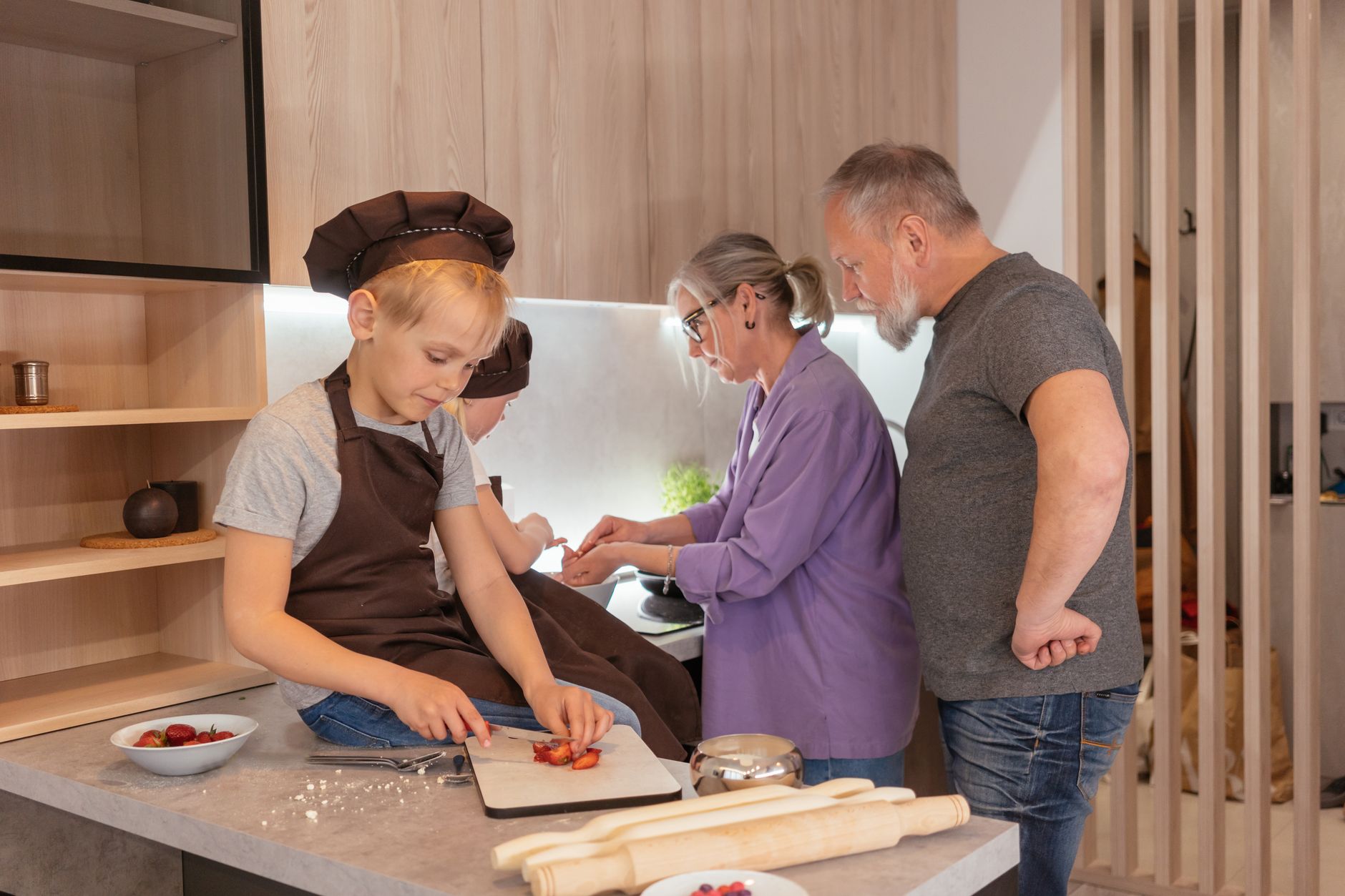
Most sessions include a quick market visit (10–15 minutes) where kids hear and repeat Vietnamese words for vegetables, herbs, and proteins, then return to a family kitchen to cook 3–4 dishes: typically a spring roll or fresh roll, a stir-fry of vegetables or chicken, a soup, and a simple dessert like sticky rice or fried banana. Kids prep vegetables, mix sauce, taste as they go, and sit down to eat everything they made—no pretend food, no samples from a fridge. We encourage messy hands and questions. A typical run: market (15 min) → wash and prep (25 min) → cooking at the stove (35 min) → eating and chatting (20 min). Younger children (6–8) do more prep work; older kids (10+) handle the stove with guidance.
How do you handle kids who are picky eaters or have allergies?
We ask about allergies and dislikes on WhatsApp before booking and adapt the menu without fuss. If a child won't eat fish sauce, we make a lighter dipping sauce. If dairy allergies exist, we cook the soup without it. For picky eaters, we let them taste small amounts, never force, and often find they're braver trying something they made themselves. We also keep ingredients visible—kids can see what goes into each dish and ask questions. If a child wants extra of one dish instead of trying all four, that's fine; the goal is enjoyment and learning, not finishing everything. Let us know early, and we'll source or skip ingredients without changing the core lesson.
What should kids wear, and what if it rains?
Kids should wear clothes they don't mind getting wet or stained—cooking means splashes, oil spots, and flour dust. Closed-toe shoes (sneakers or sandals with ankle straps) are essential for safety near the stove. Avoid long loose sleeves that can catch on pots. We provide aprons. Rain doesn't cancel sessions; family kitchens have good roofs and ventilation. The market walk might get damp, but it's part of the charm—kids see vendors working in the rain, learn how fresh food markets operate year-round, and return to the warm kitchen. In heavy downpour, we shorten the market section and go straight to cooking. Bring a small towel if you're worried, but we have them on hand.
Which Vietnamese cities offer budget kids cooking classes, and what's different about each?
Hanoi cooking classes happen in family kitchens tucked in old-quarter lanes; kids learn from multi-generational cooks in homes full of hanging herbs and traditional tools. Saigon classes are faster-paced, often with kids from expat families, and tend toward quick stir-fries and fresh spring rolls. Hoi An cooking sessions emphasize Central Vietnamese flavors and often include a short walk through the Ancient Town market before cooking. Da Nang and Da Lat classes are smaller and quieter, with produce from different seasons and local specialties. All run at similar budgets; the difference is atmosphere and what's in season. If you're visiting one city, ask us which neighborhoods have the warmest family kitchens and the most welcoming hosts.

How do we keep groups small and actually hands-on?
We cap sessions at 4–5 kids per host to ensure every child touches the ingredients, handles the knife (with guidance), and has space at the stove. Larger groups mean kids queue and watch; we don't do that. One host, one helper (usually a family member from the kitchen), and a small group means conversation, questions, and real learning. If you're a family of six, we can run a private session just for you, or split into two groups. This approach costs more than herding twenty kids through a commercial kitchen, but you'll notice the difference the moment you walk in.
Comparison: Budget Kids Cooking vs. Other Options
| Experience | Duration | Group Size | Hands-on Time | Cost Basis | Best For |
|---|---|---|---|---|---|
| Family kitchen class (Cáo) | 2–2.5 hrs | 4–5 kids | 70% | Lower (no venue markup) | Curious learners, small families |
| Commercial cooking school | 3–4 hrs | 8–12 kids | 40% | Higher (rent, staff, materials) | Larger groups, certificates |
| Hotel cooking demo | 1.5 hrs | 10–20 kids | 20% | Medium–high | Convenience, no market walk |
| Private home session (booking platform) | 2–3 hrs | Variable | 60% | Medium (no group discount) | One family, customized menu |
| Farm and countryside day | 4–6 hrs | 6–8 | 80% | Medium (transport, food) | Kids who want to harvest and cook |
What to check before you book a kids cooking class
Ask these questions on WhatsApp:
- Does the session include a market walk, or kitchen-only?
- Can kids touch the stove, or do they just watch?
- What happens if a child has a nut allergy or is vegetarian?
- How many kids per host, and who is the host?
- Do you serve lunch as part of the session, or is it bring-your-own?
- What if it rains—do you reschedule or adapt?
- Is the kitchen in a home or a commercial space? (Home kitchens tend to be warmer and less sterile.)
- Do you teach knife safety, or skip knives for this age group?
- Can siblings of different ages join the same session?
Honest answers to these will tell you whether a class prioritizes learning and safety or just volume.
Real concerns parents bring, and how we address them
"My kid has never cooked—will they feel lost?" We assume zero experience. Every step is explained, and there's no pressure to be fast or perfect. Kids work at their own pace; if someone needs extra help rolling a spring roll, we stay with them. Others might finish early and help prep the next dish. No judgment, no leaderboard.
"Will the food be too spicy?" We cook mild and keep chili, fish sauce, and hot sauce on the side. Kids add their own heat. A 7-year-old can taste mild ginger and garlic without coughing; a teenager might go for the full flavour. We don't tone down authenticity, but we don't force spice either.
"Is it sanitary? Are there health permits?" Family kitchens follow the same food safety rules as commercial ones in Vietnam. Ingredients are fresh (we buy them that morning), and hands are washed constantly. We're not a street stall; we're teaching in a residential kitchen with running water and a stove. If you have serious concerns, ask to know the kitchen's address beforehand.
"My kid is shy—will they be pressured to talk?" No. Some kids chatter the whole time; others cook quietly and let their hands do the talking. We ask questions but don't force answers. By the end, almost everyone opens up because they made something real and they're hungry.
Other family experiences that pair well with cooking
If your kids love hands-on learning, consider pairing a cooking class with a farm visit (see vegetables grow, then cook them) or a street food and market tour (taste what other vendors sell, understand Vietnamese food culture). Flower arranging and craft workshops work well for the same age groups and have similar small-group, budget-friendly setups. Art and culture classes often include kids and teach Vietnamese traditions. All are coordinated through us on WhatsApp, and we can mix experiences into a longer trip if you'd like.
For a deeper dive into family-focused experiences across Vietnam, see our full range—many suit budget travelers and curious children.

FAQ
At what age can a child join a cooking class?
We welcome kids from age 6 upward. Younger children (6–8) do lots of prep work and stir-frying with help; older kids (10+) handle more stove time. We've also run mixed-age family sessions where a 5-year-old preps vegetables while a 12-year-old cooks. Ask us to assess your specific child's interest and coordination.
Do you teach knife skills, or is that too risky?
We teach safe knife handling from age 7 or 8—how to grip, cut carrots and herbs, and keep fingers clear of the blade. We use child-safe knives and smaller blades, and a host always stands beside the child. For younger kids, we handle the knife work, but they still mix, taste, and plate the final dish.
Can I join the class with my child, or is it kids-only?
Parents are welcome to stay, sit, taste, and take photos—but not to cook for their child or take over. Some families love cooking together; others prefer to drop off and let the child have independence. Tell us which you'd prefer when you book.
What if my child gets bored or wants to leave early?
It rarely happens because kids are cooking, eating, and in a small group. But if a child is overwhelmed, we pause, let them rest, offer water, and either restart or end gently. We never pressure a child to stay. If you're worried, ask us to match your child with a group their age or run a private session.
How do I book, and how far in advance?
Message us on WhatsApp with your preferred city, dates, number of children, and any allergies or dislikes. We'll confirm availability, send you a quote, and coordinate the kitchen location and time. We typically need 5–7 days' notice, but sometimes accommodate shorter requests. Ask us for dates on WhatsApp. --- Ask about dates on WhatsApp
Ask about dates
Tell us the city, your dates and what you would like to try. We reply on WhatsApp in English with options and availability.
FAQ
At what age can a child join a cooking class?
We welcome kids from age 6 upward. Younger children (6–8) do lots of prep work and stir-frying with help; older kids (10+) handle more stove time. We've also run mixed-age family sessions where a 5-year-old preps vegetables while a 12-year-old cooks. Ask us to assess your specific child's interest and coordination.
Do you teach knife skills, or is that too risky?
We teach safe knife handling from age 7 or 8—how to grip, cut carrots and herbs, and keep fingers clear of the blade. We use child-safe knives and smaller blades, and a host always stands beside the child. For younger kids, we handle the knife work, but they still mix, taste, and plate the final dish.
Can I join the class with my child, or is it kids-only?
Parents are welcome to stay, sit, taste, and take photos—but not to cook for their child or take over. Some families love cooking together; others prefer to drop off and let the child have independence. Tell us which you'd prefer when you book.
What if my child gets bored or wants to leave early?
It rarely happens because kids are cooking, eating, and in a small group. But if a child is overwhelmed, we pause, let them rest, offer water, and either restart or end gently. We never pressure a child to stay. If you're worried, ask us to match your child with a group their age or run a private session.
How do I book, and how far in advance?
Message us on WhatsApp with your preferred city, dates, number of children, and any allergies or dislikes. We'll confirm availability, send you a quote, and coordinate the kitchen location and time. We typically need 5–7 days' notice, but sometimes accommodate shorter requests. Ask us for dates on WhatsApp. --- [💬 Ask about dates on WhatsApp](https://wa.me/84338762340)
More like this
Experiences for families and kids
Family workshop Vietnam vs Thailand: where to take kids in 2026
Vietnam and Thailand both offer immersive family workshops, but the pace, cost structure, and focus differ significantly. We run both types of sessions at Cáo Experiences and can help you choose.
Experiences for families and kids
Family Workshop Vietnam Gift Voucher: What Works Best
A family workshop gift voucher in Vietnam lets relatives experience cooking, craft, horse riding or tea together—no tickets, no queues, real hands-on time. We help you pick the right session type and duration for the ages and interests in your group.
Experiences for families and kids
Family workshops in Vietnam for Indian travelers: what to expect
Indian families visiting Vietnam often wonder how to keep children engaged and learn something authentic together. Cáo Experiences runs small-group and private workshops—cooking, coffee, flower arranging, craft, and farm days—designed for kids, parents, and grandparents, hosted in English with real