
Home › Blog › Experiences for families and kids
Kids cooking class Vietnam for Australian travelers
By the Cáo Experiences team · 2026-11-06
A kids cooking class in Vietnam through Cáo Experiences is a 2–3 hour hands-on session where children work in a family kitchen in a local lane or courtyard, prepping and cooking 2–3 Vietnamese dishes under close guidance. Australian families book these during school holidays or extended trips. The group stays small (usually 4–8 children plus siblings or parents) so we watch each child's pace and knife skills carefully. We adapt recipes on the day if a child has allergies (common: peanuts, seafood, gluten), adjust knife work for under-10s, and include snack breaks. Kids learn a bit of market culture too, sometimes visiting a local ingredient stall beforehand. We speak English throughout. Cost varies by group size, location, and whether parents join—ask us for dates and a quote on WhatsApp. Unlike tourist cooking schools that rush through steps, we pause, explain why each technique matters, and let kids taste each component as they go. Ask about dates on WhatsApp
Why Australian families choose these classes
Australian parents often hesitate: will the food be too spicy, will my child get bored, is it safe? In practice, kids surprise us. They're more adventurous when they've made the dish themselves—they'll eat fresh spring rolls with fermented fish sauce even if they'd refuse it at a restaurant. We cook milder versions on request and always have rice or mild broth as a safety net. The hands-on element keeps attention better than a passive food tour; 7-year-olds are proud to roll their own bánh chưng or knead dumpling dough. Australian visitors also appreciate that we keep groups small and English-speaking, avoid hard-sell market stops, and finish by 1–2 p.m. so afternoon naps or pool time remain possible. Most returning Aussie families tell us it was the one activity the whole group—including picky eaters and teenagers—actually wanted to do twice.

What does a session actually look like, hour by hour?
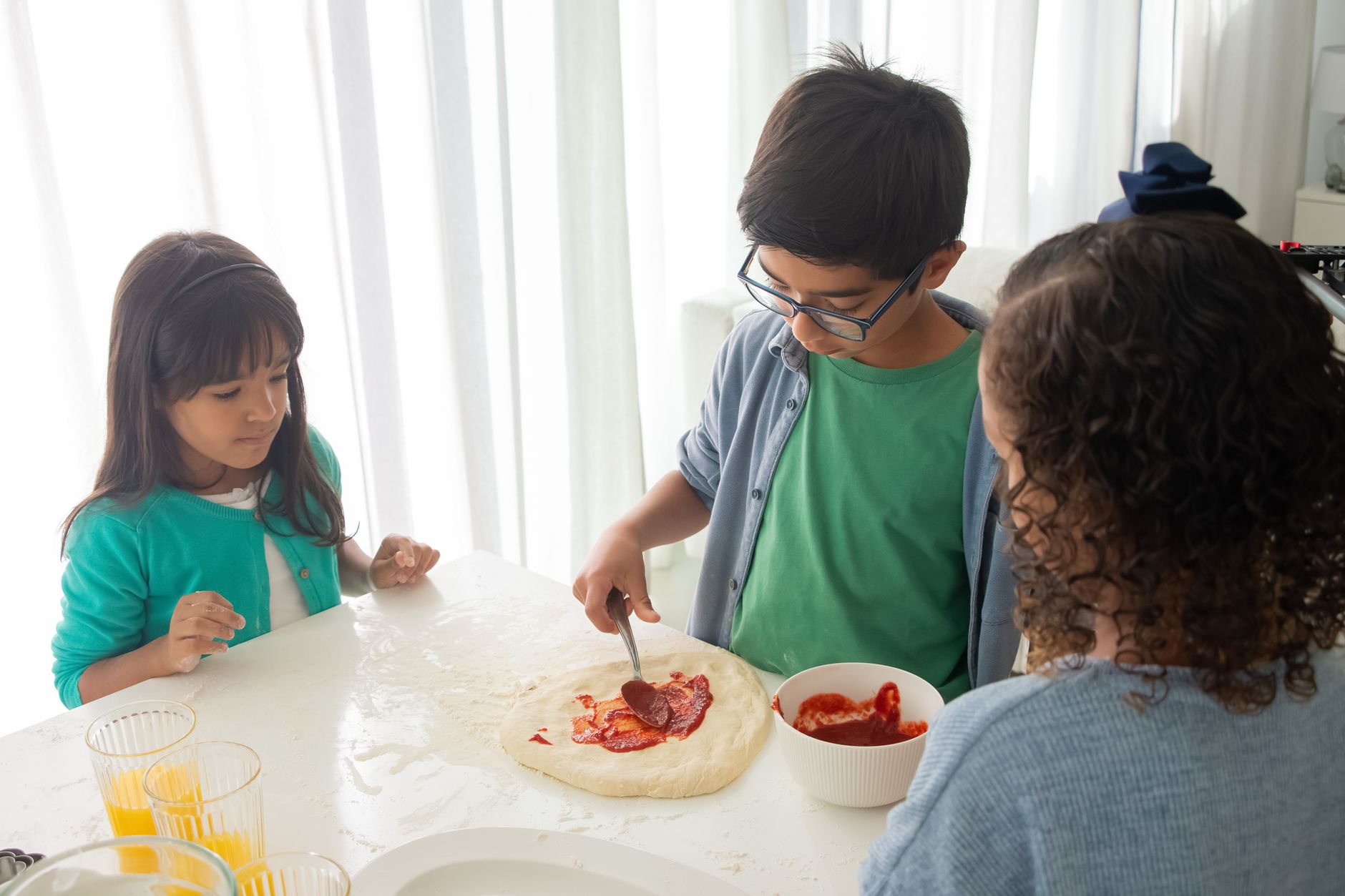
We meet in a residential kitchen (not a commercial school) and begin with a quick walk-through: you'll see the ingredients laid out, smell them, maybe touch a lemongrass leaf or taste a tiny piece of chili. Kids under 10 sit on cushions or stools next to the counter so they can see everything. We assign tasks by age and confidence—a 6-year-old might pluck herb leaves and stir; an 11-year-old rolls spring rolls or grinds paste; a 15-year-old tackles knife work and temperature control. We demo each step first, then the child does it while we steady their hand or adjust their grip. Around the midpoint (usually after 1 hour), we pause, taste what we've made so far, and drink water or coconut juice. The final 30–45 minutes is plating and eating together at a low table or on the kitchen floor—kids taste their own dishes first, then try what others cooked, and we chat about flavors, ingredients, and what they'd like to cook at home. We send any leftovers home in containers if parents want them.
Which ages actually thrive—and which ones struggle?
Children aged 6–8 enjoy the sensory play and one-on-one attention; they may not eat much of the final dish, but they remember the doing. Ages 9–12 are our sweet spot—old enough for real knife skills, young enough to stay focused, and proud of finished food. Teenagers (13–16) often come reluctant but engage when we let them choose a dish, handle heat, or teach a younger sibling. Younger than 6, attention wanes and kitchen safety requires constant hovering (we can do it, but fatigue sets in). Older teens sometimes find it uncool until they're invited to a friends' house and actually know how to cook bánh mì or a proper stir-fry—then it clicks. We adapt activity length: under-8s do 1.5 hours max; 9–15 year-olds do 2.5–3 hours comfortably; mixed-age groups tend to be 2–2.5 hours so nobody gets bored or exhausted. If a child has sensory sensitivities (texture aversion, strong smell discomfort), tell us beforehand and we'll adjust the menu.
How do we handle allergies, dietary needs, and picky eaters?
When you book via WhatsApp, we ask about allergies, strong dislikes, and any dietary rules. Peanut allergies are common; we keep peanuts away from the prep area entirely and use separate utensils. Seafood allergies mean we swap fish sauce for a lighter soy-vinegar base or skip that dish and add another. Gluten-free kids can use rice-flour wrappers or skip wheat-based items; we always have rice. For genuine picky eaters, we build in a "milder version" option: less chili, no fermented paste, or a side of plain rice. The key is that a child who cooked something usually tries it—peer pressure works in our favor. If a child refuses the final dish entirely, we don't force it; they've still learned technique and taste-tested ingredients along the way. Parents often report that kids eat more adventurously for weeks after because they understand how the food was made and feel ownership.
What's the real difference between a class here and cooking schools in Australia?
A table comparing the two:
| Factor | Class in Vietnam | Typical Australian school |
|---|---|---|
| Language | English, host speaks Vietnamese too | English only |
| Group size | 4–8 kids, often mixed ages | 8–15, same age brackets |
| Kitchen style | Residential, low tables, floor seating | Commercial kitchen, benches |
| Ingredients | Fresh market items bought same morning | Pre-prepped, batch ingredients |
| Menu | Adapted on the day per allergies | Set menu, limited swaps |
| Cost basis | Per-group quote, varies by location | Fixed per-child fee, higher per child in small groups |
| Cultural context | Learn why Vietnamese eat this dish, story of vendor | Food history only |
| Spice level | Adjusted live; kids taste mild versions | Standard recipe |
| Pace | Slower; kids taste every stage | Faster; focus on final dish |
| Souvenir | Photo, memory, leftover food | Recipe card, maybe a cookbook |
The biggest difference: here, the kitchen belongs to someone's home. Kids relax more, ask more questions, and aren't rushed. You're a guest, not a customer passing through a class schedule.
Which cities and seasons work best for families?
Hanoi and Ho Chi Minh City have year-round options; both have family kitchens in quiet lanes where kids can move freely and the noise doesn't disturb neighbors. Hanoi's autumn (September–November) and spring (March–May) are most comfortable—cooler kitchens, fewer mosquitoes. Ho Chi Minh City's dry season (November–April) is similar. Hoi An and Da Lat are quieter, better for families wanting fewer tourists and more personalized attention; Da Lat's cooler weather suits families sensitive to heat. Rainy season (May–September) is fine—we cook indoors anyway—but book earlier as some families avoid it. We've never cancelled a session for rain; it's the only time tourists actually explore street food or take family experiences indoors. If your child gets carsick, we can arrange pickups within 10 km of your accommodation; longer journeys, we split them or suggest a city-based session instead.
What should you ask before booking?
Before you reach out, clarify these points:
- How many kids and what ages? This shapes the menu and whether parents can join.
- Any allergies, dislikes, or dietary rules? (vegetarian, halal, kosher, nut-free, etc.)
- Does your child have cooking experience? (Never done it before vs. cooks at home changes our pace.)
- Do you want the market or ingredient-sourcing part, or just cooking? We can include a 20-minute market walk if the child is interested; otherwise, we focus on the kitchen.
- What time of day suits your schedule? Morning sessions (8–11 a.m.) work for families with afternoon activities; afternoon (2–5 p.m.) suits late risers.
- Do you want to take food home, or eat and leave? We can pack leftovers; some families prefer to keep hands clean for the rest of the day.
- Is transport included in your request, or will you arrange it? We can suggest pickup points or recommend local transport.
What to check before you book
- Confirm your child's age and any mobility or sensory needs. We adapt for everything, but earlier notice helps.
- Ask whether the kitchen has AC or fans if your child overheats easily.
- Clarify the group size: private (just your family) vs. small group (1–2 other families). Mixed-age groups are usually more fun but louder.
- Take photos during the session—we encourage it, and kids love showing their work to relatives back in Australia.
Pages from our team you may need

FAQ
Will my 7-year-old really learn to cook, or is it mostly play?
Both. She'll learn real knife technique, fire safety, and why ingredients matter. She'll also have fun—that's how kids absorb. You'll see her dice garlic or stir a pan with genuine focus, not just pretending.
What if my child refuses to eat the food they cooked?
It happens. We don't force. They've learned the skill and tasted components; many try the finished dish weeks later at home, once the pride wears off and hunger takes over. We always have rice as a backup.
Can parents join, or do we have to sit outside?
Parents can stay and help, or step back and watch, or leave for coffee nearby. Most Aussie parents stay to photograph and help younger kids, but it's your call. Tell us when you book.
How much does it cost compared to cooking classes in Sydney or Melbourne?
We don't publish prices because groups vary widely (2 kids vs. 10, private vs. mixed, half-day vs. full day). Ask us for a quote on WhatsApp with your group size and preferences. The cost basis is usually lower in Vietnam due to local labor and ingredients, but we prioritize small-group quality over budget pricing.
Do we need to book in advance, or can we drop in?
Please book at least 5–7 days ahead via WhatsApp so we can source ingredients, arrange the kitchen, and prepare for your child's allergies or preferences. Drop-ins don't work; we need prep time.
Can you accommodate vegetarian or vegan children?
Absolutely. We cook vegetable-based dishes, tofu spring rolls, and plant-only broths. Tell us at booking so we source the right ingredients and skip fish sauce or animal-based sides.
Is the food safe for Australian kids with typical sensitivities?
Yes. We use fresh, visible ingredients; no additives or mystery sauces. If your child has a nut allergy, we avoid that kitchen section entirely. Spice is adjustable. If they're used to Western food only, we offer milder versions of every dish alongside the traditional version.
Ask about dates
Tell us the city, your dates and what you would like to try. We reply on WhatsApp in English with options and availability.
FAQ
Will my 7-year-old really learn to cook, or is it mostly play?
Both. She'll learn real knife technique, fire safety, and why ingredients matter. She'll also have fun—that's how kids absorb. You'll see her dice garlic or stir a pan with genuine focus, not just pretending.
What if my child refuses to eat the food they cooked?
It happens. We don't force. They've learned the skill and tasted components; many try the finished dish weeks later at home, once the pride wears off and hunger takes over. We always have rice as a backup.
Can parents join, or do we have to sit outside?
Parents can stay and help, or step back and watch, or leave for coffee nearby. Most Aussie parents stay to photograph and help younger kids, but it's your call. Tell us when you book.
How much does it cost compared to cooking classes in Sydney or Melbourne?
We don't publish prices because groups vary widely (2 kids vs. 10, private vs. mixed, half-day vs. full day). Ask us for a quote on WhatsApp with your group size and preferences. The cost basis is usually lower in Vietnam due to local labor and ingredients, but we prioritize small-group quality over budget pricing.
Do we need to book in advance, or can we drop in?
Please book at least 5–7 days ahead via WhatsApp so we can source ingredients, arrange the kitchen, and prepare for your child's allergies or preferences. Drop-ins don't work; we need prep time.
Can you accommodate vegetarian or vegan children?
Absolutely. We cook vegetable-based dishes, tofu spring rolls, and plant-only broths. Tell us at booking so we source the right ingredients and skip fish sauce or animal-based sides.
Is the food safe for Australian kids with typical sensitivities?
Yes. We use fresh, visible ingredients; no additives or mystery sauces. If your child has a nut allergy, we avoid that kitchen section entirely. Spice is adjustable. If they're used to Western food only, we offer milder versions of every dish alongside the traditional version.
More like this
Experiences for families and kids
Family workshop Vietnam vs Thailand: where to take kids in 2026
Vietnam and Thailand both offer immersive family workshops, but the pace, cost structure, and focus differ significantly. We run both types of sessions at Cáo Experiences and can help you choose.
Experiences for families and kids
Family Workshop Vietnam Gift Voucher: What Works Best
A family workshop gift voucher in Vietnam lets relatives experience cooking, craft, horse riding or tea together—no tickets, no queues, real hands-on time. We help you pick the right session type and duration for the ages and interests in your group.
Experiences for families and kids
Family workshops in Vietnam for Indian travelers: what to expect
Indian families visiting Vietnam often wonder how to keep children engaged and learn something authentic together. Cáo Experiences runs small-group and private workshops—cooking, coffee, flower arranging, craft, and farm days—designed for kids, parents, and grandparents, hosted in English with real