
Home › Blog › Experiences for families and kids
Kids Cooking Class Vietnam for Singaporean Travelers
By the Cáo Experiences team · 2026-11-06
A kids cooking class in Vietnam is a half-day or full-day hands-on workshop where children and parents learn to prepare authentic Vietnamese dishes in a family kitchen or teaching kitchen, usually in Hanoi, Ho Chi Minh City, Hoi An, or Da Lat. Sessions run 2.5 to 4 hours, include a market walk or ingredient tour (depending on the type), and end with eating what you've cooked. Cáo Experiences structures these for mixed ages—kids can knead dough, roll spring rolls, stir noodles, and taste—while parents help with knife work and heat control. You'll typically make 3–5 dishes: perhaps pho broth, banh mi fillings, spring rolls, and a vegetable stir-fry. No dietary restrictions are barriers; we adapt recipes for allergies and preferences in advance via WhatsApp. Ask us for dates and a quote on WhatsApp to confirm availability and customize for your family's ages and tastes.
Why Singaporean Families Choose Cooking Classes Over Restaurant Meals
Many Singaporean parents expect their kids to sit passively through meals abroad—but a cooking class flips that. In a kitchen, children become co-chefs: they're focused, learning technique, and tasting food they've made themselves. Restaurant meals teach nothing about how Vietnamese food comes together; a class teaches technique, ingredient knowledge, and cultural context in 3 hours. Most kids aged 6–12 find rolling spring rolls and stirring wok pans more engaging than guided museum tours. After a class, your kids will request pho and banh mi at home, understand why Vietnamese food tastes the way it does, and have a genuine memory with their siblings and parents. That's why cooking classes often rank as the highlight of a family trip.
How a Typical Session Runs, Hour by Hour
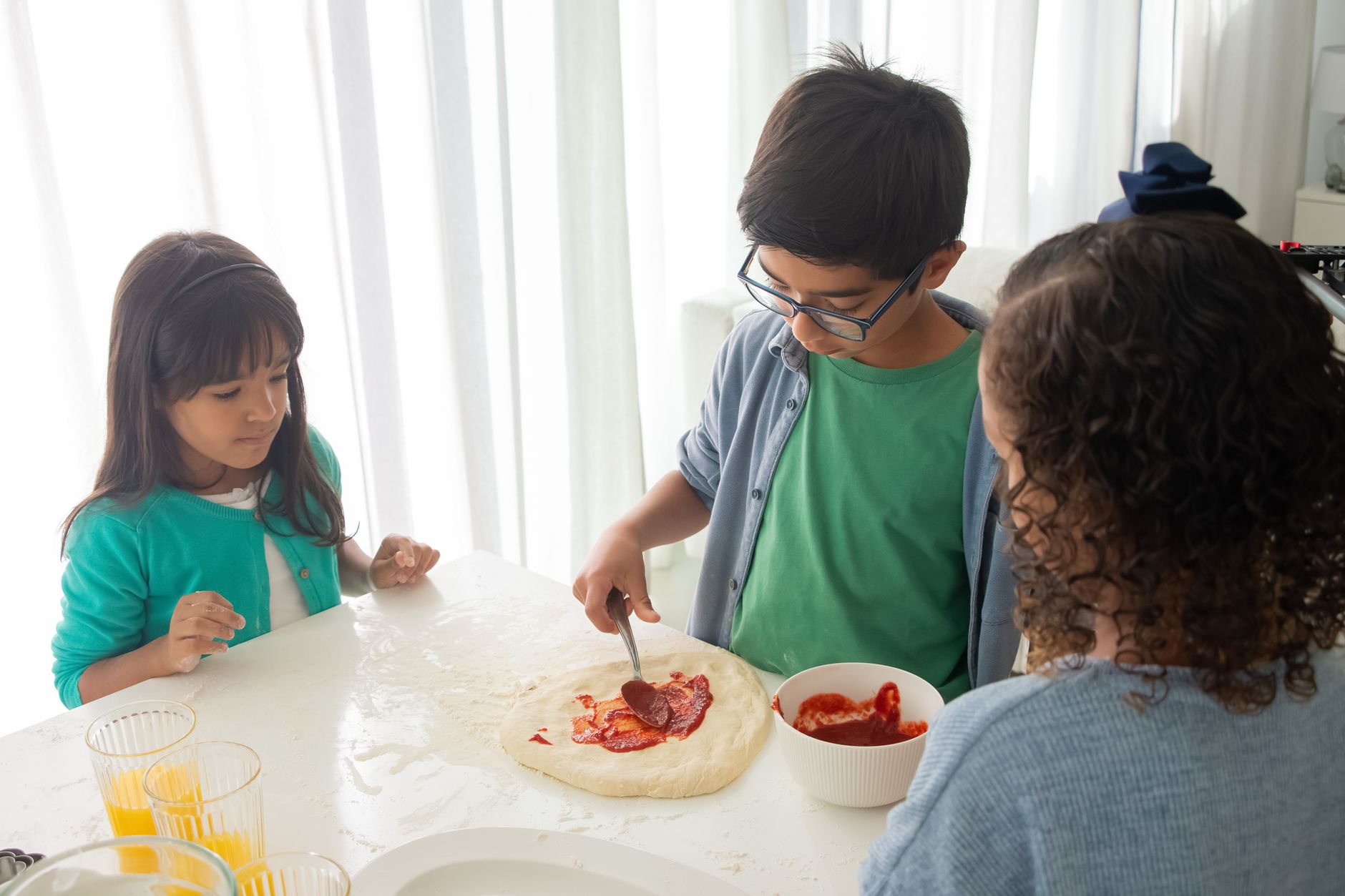
We meet you at your hotel or a central point, then walk (or ride) to a family kitchen in a lane off the old quarter or a residential street where we teach. The layout is simple: one large table, a stove or multiple burners, cutting boards, and enough space for everyone to move. Here's the flow:
- Minutes 0–15: We greet your family, explain what you'll make today, and show you where things are. Kids wash their hands; we answer questions about Vietnamese food.
- Minutes 15–35: First dish prep (usually spring rolls or banh mi filling). Kids handle the filling and rolling; you help fold or flatten. Our host talks about ingredients and regional variations.
- Minutes 35–60: Second dish starts (maybe a simple stir-fry or noodle soup). Kids chop soft vegetables with child-safe knives or assist with mixing. Adults manage the heat.
- Minutes 60–90: A third dish—often something quicker, like a sauce or garnish—or we refine the first dishes and plate them.
- Minutes 90–150: Eating together at a big table. We pour drinks, you taste, ask questions, and relax. No rush. We explain flavours, history, and how to buy and cook these dishes at home.
Timing is flexible. If your 4-year-old is tiring, we slow down. If your teens want to tackle knife skills, we extend that phase. Rain doesn't stop us; we work indoors. Allergies and dislikes are handled upfront: vegetarian families skip meat; peanut-allergic kids use sunflower oil and skip certain garnishes.
What Kids of Different Ages Actually Do (Not Just Watch)
| Age | What they do | Why it works | When to adapt |
|---|---|---|---|
| 5–7 | Roll spring rolls, tear herbs, stir bowls, taste everything | Hands-on, low pressure, immediate reward | If scissor grip is weak, we pre-chop; if overwhelmed, shorter 2.5-hour session |
| 8–10 | Roll, chop soft veg with supervision, plate dishes, ask questions | Building confidence and knife awareness | Longer class (3.5 hrs) keeps them engaged |
| 11–14 | Manage a wok, chop herbs and vegetables, taste and critique flavours | Teen interest in technique and heat | They often lead a dish; we step back |
| 15+ | Nearly full participation; can handle a whole dish independently | Genuine skill building | Treat them as apprentices; they teach younger siblings |
A 5-year-old will roll a spring roll three times and be proud; an 11-year-old will roll 12 and want to perfect the fold. We don't rush either. Parents often discover their kids can concentrate longer in a kitchen than at a desk—because the outcome is food.
Hanoi, Ho Chi Minh City, Hoi An—Which City Suits Your Family Best
Each city offers a different class feel and cuisine focus:
Hanoi (experiences in Hanoi): Northern pho, bun cha, banh mi, and egg coffee are signature. Markets are more chaotic and sensory—great for older kids who enjoy crowds. Kitchen setups often include wood-fired stoves or charcoal burners, which is visually striking. Families with kids aged 8+ often prefer Hanoi because the market walk is an experience in itself.
Ho Chi Minh City (experiences in Saigon): Southern food is sweeter, uses more fresh herbs, and emphasizes seafood. Markets feel more organized. Kitchens are often in residential alleyways, quieter and less intense. Great for younger kids (5–7) or families wanting a calmer vibe.
Hoi An (experiences in Hoi An): Ancient town setting. Smaller group sizes, family-run kitchens in old shophouses, and traditional recipes (cao lau, banh hoai). Perfect for multi-generational groups—grandparents enjoy the heritage angle, kids enjoy the intimate setting. Weather is generally pleasant except in rainy season (Sept–Nov).
Da Lat (experiences in Da Lat): Cooler climate, farm-to-table focus, and fewer tourists. Classes often include a market visit or farm walk before cooking. Ideal for families wanting a slower pace and fewer crowds. Best in dry season (Dec–April).
Allergies, Diets, Picky Eaters—How We Adapt in Advance
Before booking, you'll tell us via WhatsApp:
- Peanut, shellfish, or tree-nut allergies (common in Vietnam).
- Vegetarian, vegan, or meat-only preferences.
- Spice tolerance for kids.
- Any religious or cultural diet needs.
We then design the menu around these. For example:
- A peanut-allergic child will use sunflower oil in spring rolls and skip peanut sauce; we make a fish sauce dip instead.
- A vegetarian family swaps tofu or mushroom for meat; the technique is identical.
- A child who dislikes spicy food tastes mild versions first, then can add chilli paste themselves.
- A gluten-free kid focuses on rice-based dishes (pho, banh mi with GF bread if you bring it, stir-fries).
We've never had a child leave hungry or feel excluded. The menu is flexible—you're not locked into a preset list.

What to Bring, Wear, and Know Before the Day
What to wear: Aprons and closed-toe shoes (kitchens are warm and wet). We provide aprons; bring a light sweater for air-conditioned kitchens in summer.
What to bring: A small towel, hand sanitizer if you prefer, and a phone to take photos. Some families bring a notebook so kids can sketch the recipes afterward—that often helps them remember at home.
What to know:
- Arrive 10–15 minutes early; WhatsApp timing is confirmed the day before.
- If your child is very young (under 5) or has mobility issues, mention it—we can adjust table height or pair them closely with an adult.
- The class is in English; Vietnamese hosts speak English fluently.
- Expect to smell like garlic and fish sauce afterward. It washes out.
Comparison: Cooking Class vs. Other Family Experiences in Vietnam
| Experience | Best for | Duration | Physical demand | Rainy day |
|---|---|---|---|---|
| Cooking class | Kids aged 5+, food lovers, skill building | 2.5–4 hours | Low to medium (standing, stirring) | Runs indoors |
| Street food and market tour | Kids 8+, adventurous eaters, sampling | 2–3 hours | Medium (walking, standing) | Postpone or shorten |
| Coffee workshop | Kids 10+, older teens, patient learners | 1.5–2 hours | Very low (sitting mostly) | Runs indoors |
| Flower arranging | Kids 6+, creative kids, gift-makers | 1.5–2 hours | Low (sitting) | Runs indoors |
| Horse riding | Kids 8+, confident movers, outdoor lovers | 1–2 hours | Medium to high | Postpone |
| Farm and countryside experiences | Kids 5+, nature lovers, slower pace | 3–4 hours | Low to medium (walking, observing) | Muddy; bring rain gear |
| Wellness and slow experiences | Families wanting calm, yoga, meditation | 1.5–3 hours | Very low (sitting, stretching) | Runs indoors |
Cooking is the only one that's a complete skill transfer—your child learns something they can do at home. Most families combine it with one other experience in a multi-day trip.
Red Flags and How to Avoid Booking the Wrong Class
Before you commit, check:
- Is the class truly hands-on or a lecture? Ask us: "Will my 7-year-old be chopping and mixing, or mostly watching?" A real cooking class has every participant cooking. Lectures are cheaper and easier to run but won't engage kids.
- Is the host trained for mixed ages? Some hosts are trained for adults only and get impatient with slow kids. We're used to children and adjust pace. Ask us directly: "Have you taught kids this age before?"
- Is the kitchen hygienic and safe for kids? Ask to see photos of the space.
- Are recipes adjusted for local tastes or generic "Asian fusion"? Real Vietnamese cooking classes teach authentic regional recipes—pho, banh mi, cao lau, bun cha. Watch out for classes that claim to teach "Asian cooking" or use pre-made pastes and packets.
- Is there a weather backup plan? Rain shouldn't cancel your class. We run indoors. If a class says "postpone if rainy," that's not a plan.
What to Check Before You Book
- Confirm exact dates and group size via WhatsApp; we'll check availability.
- Share your kids' ages and any allergies in your first message.
- Ask if the market walk is included or optional (some families with toddlers skip it).
- Request a kitchen photo and menu draft so you know what to expect.
FAQ
Are cooking classes safe for kids with food allergies?
Yes. We adapt every recipe in advance. Tell us allergies when you inquire via WhatsApp—peanut, shellfish, and gluten allergies are all manageable. We change oils, skip sauces, and source safe ingredients. No child has ever had a reaction in one of our classes because we plan meticulously.
What if my 4-year-old gets bored or tired halfway through?
We shorten the session or focus on one dish. A 4-year-old rolling spring rolls for 45 minutes, then eating, is a perfect session—not a full 3 hours. Tell us the age; we'll design accordingly. If tiredness happens on the day, we take a break, let them sit with a snack, and resume at their pace. No pressure.
Do I need to book a private class or can we join a group?
Both options exist. Group classes are livelier and cheaper; private classes let you customize the menu and timing completely. Ask us what's available for your dates. Small groups (4–6 people) are the most common and often feel like one family plus new friends.
Can we buy ingredients to take home and cook these dishes in Singapore after?
Yes. Most markets in Singapore's Little India and wet markets stock Vietnamese herbs, sauces, and rice. We'll tell you what to look for. Some ingredients (fresh rau ram, specific fish sauces) are harder to find in Singapore, so we suggest substitutes. Banh mi, spring rolls, and stir-fries are easiest to recreate at home.
What if it rains heavily on the day of our class?
We still run it indoors in the kitchen. The only thing we skip is the market walk—which is optional anyway. You'll cook the same dishes, taste the same food, and learn the same skills. We've never cancelled a class due to rain. If a typhoon or severe flood warning is issued, we reschedule, but that's extremely rare.
How do we book and what's the cost?
Contact us via WhatsApp with your dates, number of participants, kids' ages, and any dietary needs. We'll reply with available times, a menu outline, and a quote. Costs vary by group size, duration, and location. Ask us for dates and a quote on WhatsApp to see options for your family.
Ask about dates
Tell us the city, your dates and what you would like to try. We reply on WhatsApp in English with options and availability.
FAQ
Are cooking classes safe for kids with food allergies?
Yes. We adapt every recipe in advance. Tell us allergies when you inquire via WhatsApp—peanut, shellfish, and gluten allergies are all manageable. We change oils, skip sauces, and source safe ingredients. No child has ever had a reaction in one of our classes because we plan meticulously.
What if my 4-year-old gets bored or tired halfway through?
We shorten the session or focus on one dish. A 4-year-old rolling spring rolls for 45 minutes, then eating, is a perfect session—not a full 3 hours. Tell us the age; we'll design accordingly. If tiredness happens on the day, we take a break, let them sit with a snack, and resume at their pace. No pressure.
Do I need to book a private class or can we join a group?
Both options exist. Group classes are livelier and cheaper; private classes let you customize the menu and timing completely. Ask us what's available for your dates. Small groups (4–6 people) are the most common and often feel like one family plus new friends.
Can we buy ingredients to take home and cook these dishes in Singapore after?
Yes. Most markets in Singapore's Little India and wet markets stock Vietnamese herbs, sauces, and rice. We'll tell you what to look for. Some ingredients (fresh rau ram, specific fish sauces) are harder to find in Singapore, so we suggest substitutes. Banh mi, spring rolls, and stir-fries are easiest to recreate at home.
What if it rains heavily on the day of our class?
We still run it indoors in the kitchen. The only thing we skip is the market walk—which is optional anyway. You'll cook the same dishes, taste the same food, and learn the same skills. We've never cancelled a class due to rain. If a typhoon or severe flood warning is issued, we reschedule, but that's extremely rare.
How do we book and what's the cost?
Contact us via WhatsApp with your dates, number of participants, kids' ages, and any dietary needs. We'll reply with available times, a menu outline, and a quote. Costs vary by group size, duration, and location. Ask us for dates and a quote on WhatsApp to see options for your family.
More like this
Experiences for families and kids
Family workshop Vietnam vs Thailand: where to take kids in 2026
Vietnam and Thailand both offer immersive family workshops, but the pace, cost structure, and focus differ significantly. We run both types of sessions at Cáo Experiences and can help you choose.
Experiences for families and kids
Family Workshop Vietnam Gift Voucher: What Works Best
A family workshop gift voucher in Vietnam lets relatives experience cooking, craft, horse riding or tea together—no tickets, no queues, real hands-on time. We help you pick the right session type and duration for the ages and interests in your group.
Experiences for families and kids
Family workshops in Vietnam for Indian travelers: what to expect
Indian families visiting Vietnam often wonder how to keep children engaged and learn something authentic together. Cáo Experiences runs small-group and private workshops—cooking, coffee, flower arranging, craft, and farm days—designed for kids, parents, and grandparents, hosted in English with real