
Home › Blog › Street food and market tours
Luxury street food tour Vietnam: how we guide small groups
By the Cáo Experiences team · 2026-11-06
A luxury street food tour in Vietnam is not a highlight reel. It's 3–4 hours in one neighborhood, walking slowly, tasting deeply, and understanding why each dish exists at all.
Most people arrive thinking they'll taste ten famous dishes and take photos. What actually happens: you end up at a family's kitchen in a lane off the old quarter, eating a seasonal vegetable soup you've never heard of, because the vendor's grandmother taught her mother how to make it, and right now—this week in September—the greens are perfect. You talk to the owner. You see how she budgets her ingredients. You taste salt and acid and heat the way she built it. You leave hungry for that one soup again next year.
That's what we mean by luxury. Not fancy plating. Not a sommelier. Attention, slowness, and the people who cook.
Is luxury street food about expensive stalls or rare dishes?
No. Luxury here means time, access, and depth. You'll eat from a stall that costs less than a coffee in your home city. The rarity isn't the ingredient—it's the moment. You taste bánh mì on the morning the baker pulls it from the wood-fired oven. You try a snack that exists only in one alley, made by one vendor, because her husband invented it 40 years ago, and no one else bothers to replicate it. You taste it while it's still warm. The luxury is being there at the right time with someone who can explain why it matters. That's what we build the itinerary around.

What happens hour by hour on a street food tour?
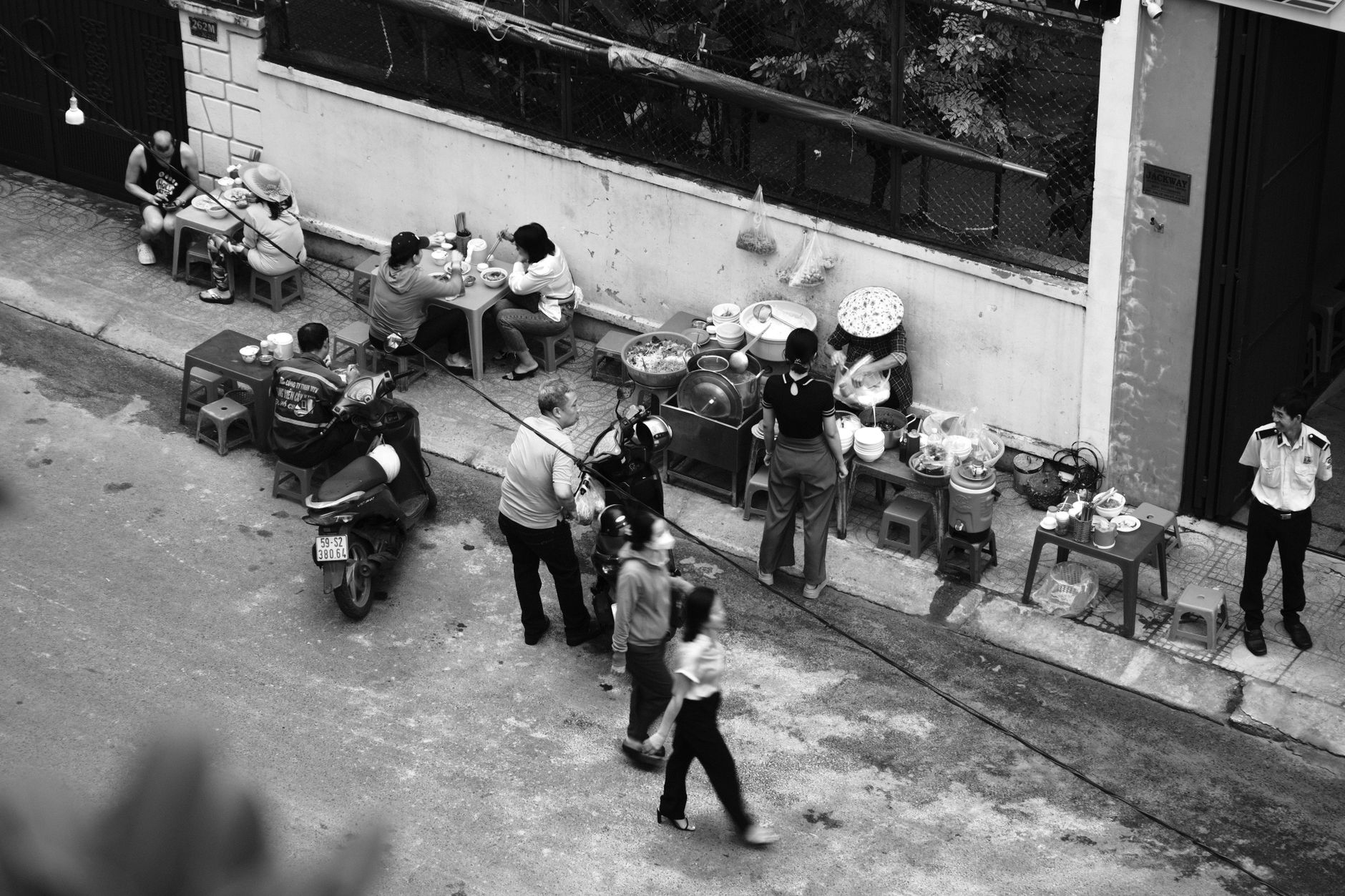
We meet early—usually 7 a.m. for breakfast, or 4 p.m. for dinner prep—in a lane or corner near a market. The first 20 minutes, we walk slowly, pointing out which stalls open when, which vendors source from which farms, why certain dishes are sold only on weekends. We stop at stop one: usually something hot and savory—a noodle soup, a banh mi stand, a grilled meat vendor. You order, we explain, you eat standing up or on a tiny plastic stool. Talk flows. Then we walk again—maybe 200 meters, maybe through a market—and stop at something contrasting: a sweet snack, a drink, a fried thing, a fresh thing. By stop three or four, you've tasted the neighborhood's rhythm. By the end, you've tried 5–7 dishes, you know three vendors by name, and the group has usually become a small community. Total time: 3–4 hours. You're full, your mouth is numb from chili, your clothes smell like smoke, and you understand something about how people actually eat in this city.
How do we adapt for beginners, kids, and dietary needs?
We ask about allergies, heat tolerance, and what you don't eat when we message on WhatsApp before the date. A vegetarian or vegan guest gets a full route—every neighborhood has vendors who've cooked vegetable-only snacks for decades. Kids (we've hosted them from age 4 upward) get smaller portions, cooler dishes first, and we skip the spiciest stops or tone down the chili. Beginners worry they'll "do it wrong"—you can't. There's no etiquette to break. You eat as you see others eating. The guide interprets, translates menus, and tells you what's safe if you're cautious about raw ingredients or street hygiene. We've never had a stomach issue from the food we recommend—every vendor has been selling the same dishes to locals for years.
What's the difference between group and private tours?
Group tours (4–12 people) mean you share the guide's attention and the experience with travelers from different countries. Conversation flows easily, costs are lower per person. Private tours (your group, your pace, your questions) cost more per person but let you linger at one stall if you love it, skip a stop if you're full, or ask about a vendor's life story without rushing. We've run both. Private groups often ask for earlier mornings (to see market setup) or later afternoons (to watch the dinner rush begin). Groups move like a unit and sometimes discover surprises together—a vendor invites you to sit in their kitchen, for example—that feel more memorable because it's shared. Either way, the limit is around 12 people; beyond that, vendors struggle and the intimacy vanishes.

Why season and weather matter more than you'd think
A street food tour in May tastes different from September because vendors cook what's fresh. In May, certain fruits flood the market—you taste them in drinks and desserts. In September, greens and root vegetables are at their peak. We plan the route around what's in season, which means the same neighborhood tastes different depending when you visit. Rain stops nobody, but it changes the route. Covered stalls, indoor markets, and shops with deep awnings become the focus. We've done tours in heavy rain—you taste even more intensely because there's no crowd, and vendors give you more attention. The only real issue is typhoon season (late September through October), when some stalls close or move. We communicate that upfront and reschedule if needed.
Comparison: what makes a tour "luxury" vs. basic
| Aspect | Basic tour | Luxury tour (Cáo) |
|---|---|---|
| Group size | 15–25 people | 4–12 people |
| Duration | 2–2.5 hours | 3–4 hours |
| Stops | 5–6 stalls, quick photos | 4–6 stops, conversation, cooking demo |
| Guide relationship | Rotating commentary | Personal relationship, live locally |
| Dietary adaptation | Yes/no checkbox only | Detailed WhatsApp chat, full reroute |
| Walking pace | Fast, covering distance | Slow, lingering where you want |
| Access to kitchen | See from street only | Sometimes invited inside |
| Seasonal menu | Fixed itinerary year-round | Changes with harvest |
| Cost basis | Per-person large group | Per-group (split across your party) |
The core difference: a basic tour is sightseeing. A luxury tour is sitting in someone's kitchen, learning how they season something, and tasting it while they tell you why it works.
Specific neighborhoods and what they taste like
We run tours in three main cities. Experiences in Hanoi focus on the old quarter—narrow lanes, tiny stalls, vendors who've been there for decades, flavors that are spicy and sour and funky. Saigon street food is faster-paced, more modern stalls mixed with hawker alleys, southern flavors that are sweeter and more generous with coconut. Hoi An's food is lighter, more influenced by Chinese and French history, and the walking is slower because the town is smaller and the stalls are quieter. Each neighborhood has its own pace and logic.
If you want to go deeper into cooking itself—understanding the techniques, the spice combinations, the way a dish is built—our Vietnamese cooking classes go further than a tour can. You'll cook in a home kitchen, make stock from scratch, learn knife skills. A tour is about tasting and understanding the culture. A class is about doing the work yourself.
What to check before booking
Before you ask us about dates, know this:
- Heat tolerance: Tell us your honest spice level. We won't tone down the neighborhood's food, but we'll guide you toward the milder stops and explain which dishes are must-taste despite the chili.
- Pace and fitness: You'll walk 2–3 km total, mostly slowly, but some routes have uneven pavement or steep alleys. Comfortable shoes matter.
- Allergies: Shellfish, peanut, and sesame are common in Vietnamese food. Tell us in WhatsApp. We'll route around them or confirm with vendors beforehand.
- Language: We speak English. You don't need Vietnamese, but if you speak it, vendors often get even more chatty.
- Budget for vendors: You'll pay vendors directly for food. Bring cash in local currency; not all stalls take cards. Budget roughly the same as a meal, split across 3–4 stops.
- Timing: Early morning (6:30–9:30 a.m.) or late afternoon (4–7 p.m.) are best. Midday, many stalls close.
- Stomach sensitivity: If you're cautious about street food, trust that the busiest stalls are safest—they have high turnover and locals eat there daily. We won't send you anywhere we wouldn't eat ourselves.
If you're wondering whether to do a street food tour or something else, think about what you want: understanding a neighborhood's rhythm and tasting what's real, or learning to cook Vietnamese food yourself. Both exist. They're different experiences. Ask us—we'll help you choose.
FAQ
Do we need to speak Vietnamese?
No. Our guides speak English. Many vendors will mime, smile, and usher you into their kitchen even if you speak no Vietnamese. Hand gestures and pointing work fine. If you speak some Vietnamese, it delights vendors and gets you longer conversations.
Is the food safe to eat from street stalls?
Yes. We guide you to the busiest, most established stalls—the ones where locals eat daily. High turnover means fresh food. No ice, no complex cold chain, no long storage. We've run hundreds of tours with no food-related illness. Trust the crowd.
Can kids join a street food tour?
Yes. We've hosted kids from age 4 upward. Younger kids do shorter tours (2–2.5 hours instead of 3–4), with cooler or blander stops earlier, and we skip the spiciest places unless the family wants to try. Kids often love the interactive parts—watching someone make bánh mì, hearing vendor stories, exploring the market.
What happens if it rains?
We adapt the route to covered stalls, indoor markets, and shops with deep awnings. You'll often taste more intensely because crowds are smaller and vendors give you more attention. Bring a light rain jacket or umbrella. Heavy rain may shorten the tour by 30 minutes.
How much should we budget for food during the tour?
Vendors charge you directly. Budget roughly the same as a sit-down meal for your lunch or dinner. Because you're tasting from multiple stalls (not a full meal at one place), the total cost is often lower than eating at a single restaurant. Ask us for specifics when you message on WhatsApp.
Can we do a private tour if our group is only two people?
Yes. Private tours work for any size—two people, four people, 12 people. Cost is per group, so two people will have a higher per-person cost than six people, but you get full flexibility: your timing, your pace, your route, your questions.
Ask about dates
Tell us the city, your dates and what you would like to try. We reply on WhatsApp in English with options and availability.
FAQ
Do we need to speak Vietnamese?
No. Our guides speak English. Many vendors will mime, smile, and usher you into their kitchen even if you speak no Vietnamese. Hand gestures and pointing work fine. If you speak some Vietnamese, it delights vendors and gets you longer conversations.
Is the food safe to eat from street stalls?
Yes. We guide you to the busiest, most established stalls—the ones where locals eat daily. High turnover means fresh food. No ice, no complex cold chain, no long storage. We've run hundreds of tours with no food-related illness. Trust the crowd.
Can kids join a street food tour?
Yes. We've hosted kids from age 4 upward. Younger kids do shorter tours (2–2.5 hours instead of 3–4), with cooler or blander stops earlier, and we skip the spiciest places unless the family wants to try. Kids often love the interactive parts—watching someone make bánh mì, hearing vendor stories, exploring the market.
What happens if it rains?
We adapt the route to covered stalls, indoor markets, and shops with deep awnings. You'll often taste more intensely because crowds are smaller and vendors give you more attention. Bring a light rain jacket or umbrella. Heavy rain may shorten the tour by 30 minutes.
How much should we budget for food during the tour?
Vendors charge you directly. Budget roughly the same as a sit-down meal for your lunch or dinner. Because you're tasting from multiple stalls (not a full meal at one place), the total cost is often lower than eating at a single restaurant. Ask us for specifics when you message on WhatsApp.
Can we do a private tour if our group is only two people?
Yes. Private tours work for any size—two people, four people, 12 people. Cost is per group, so two people will have a higher per-person cost than six people, but you get full flexibility: your timing, your pace, your route, your questions.
More like this
Street food and market tours
Best Street Food Tour in Sapa: What to Expect, How to Choose
Street food tours in Sapa connect you with hill-town cooks and night markets. We'll walk you through what these sessions offer, who they're for, and how to avoid common missteps.
Street food and market tours
Best Street Food Tour in Hue: What to Choose, Who It's For
A street food tour in Hue isn't one thing—it's a choice between styles, neighborhoods, and paces. We break down what actually happens on each type, and how to know which fits your group.
Street food and market tours
Best Food Walking Tour in Vietnam: Hanoi Street Food Guide
A food walking tour in Vietnam immerses you in bustling markets and street lanes where vendors have cooked the same dishes for decades. We show you what to taste, how to order, and the stories behind each bite.