
Home › Blog › Street food and market tours
Street Food Tour in Ho Chi Minh City for Foreigners: What to Expect
By the Cáo Experiences team · 2026-11-06
A street food tour with Cáo Experiences is a 3–4 hour guided walk through the old quarter and surrounding lanes where we stop at 8–10 small, family-run food stalls and street vendors. You eat as you go: bánh mì, phở, bánh hoai, sweet soup, grilled skewers, and regional specialties—ordering directly and paying per dish at each stop. Our host narrates the history, ingredient sourcing, and cooking method for each food, answers questions, and adapts the route for your pace, dietary needs, or rainy weather. No restaurant reservations; no sit-down meal. We walk mostly on residential streets and through covered markets. Best for groups of 2–8, families with teenagers, couples, and solo travelers comfortable with heat, crowds, and eating street-side on plastic stools. Ask us for dates and a quote on WhatsApp. Ask about dates on WhatsApp
What dishes will we taste on a street food walk?
The food changes by season, vendor availability, and your group's appetite, but our route always includes one savoury rice dish (often phở or bánh mì), two types of bánh (cake: bánh cuốn or bánh hoai), one broth or soup, and 3–5 small bites—grilled spring rolls, Vietnamese sausage, sticky rice, or seasonal fruit. We never repeat the same itinerary twice, so regulars discover new stalls each time. Vegetarian, vegan, halal and gluten-free eaters tell us in advance; we adjust the walk and check with vendors on ingredients. Kids under 8 often find the heat and walking pace challenging, but we can shorten the route and focus on sweeter items. Seniors appreciate a slower pace and more time sitting; we build in rest stops and skip very steep or crowded sections.

How do we handle the heat and rain?
We start early (usually 6:30–7:00 AM) when the old quarter is coolest and least crowded. Bring a refillable water bottle and comfortable walking shoes; we provide shade under market umbrellas and stop inside covered food halls during the midday heat. If rain is heavy, we reschedule to a clearer morning within a week—cancellations are painless, and you keep your booking. Light drizzle is normal and part of the experience; our host carries a small umbrella and knows which vendors have sheltered eating areas. Dress in loose cotton clothes, a hat, and sunscreen. Never eat or walk in direct sun for more than 30 minutes without sitting down.
Who is a street food tour best for?
Street food tours suit adventurous eaters, culture-curious visitors, groups of friends or family wanting a shared activity, and anyone wanting to understand how a city really feeds itself—not just tourist tastes. Couples often book this as a date activity; families with kids aged 10+ enjoy the walking and novelty. Solo travelers join open groups (we'll pair you with others) and feel safe walking with a local host. Picky eaters should still join but should tell us in advance; we'll suggest alternative stalls and lighter items. People with mobility issues can arrange a private shorter version—just ask us about dates and we'll adapt. Vegetarians and vegans eat well here; Vietnam has many plant-based stall options, but we need to know your diet.
How much will we spend on food during the tour?
Food at each stall costs very little—15,000–our current quote per dish (roughly equivalent to our current quote–our current quote), and you pay the vendor directly in cash as we go. A full walk with 8–10 tastes typically adds up to spending equivalent to a single meal at a mid-range Western restaurant. The Cáo Experiences fee covers the host's time, route planning, and logistics; food costs are separate. Bring cash in small notes; many stalls don't take cards. Ask us for dates and a quote on WhatsApp to confirm the exact session cost and food budget. Budget comfort matters: some guests spend less by sharing dishes, others prefer to try everything.
What's the difference between a street food tour and a cooking class?
A Vietnamese cooking class teaches you to prepare 3–4 complete dishes from scratch in a kitchen setting, working with your hands on ingredients, learning knife skills and technique, and eating what you cook at the end. A street food tour keeps you moving, tasting many small dishes at their source, learning vendor stories and market logistics, but not cooking yourself. Both are hands-on and immersive. Choose cooking if you want to build a skill and take recipes home; choose street food if you want flavor discovery and neighborhood exploration. Many guests do both on separate days—they complement each other. Families with younger kids (5–9 years) often prefer cooking; teenagers and adults prefer the walking pace of a food tour.
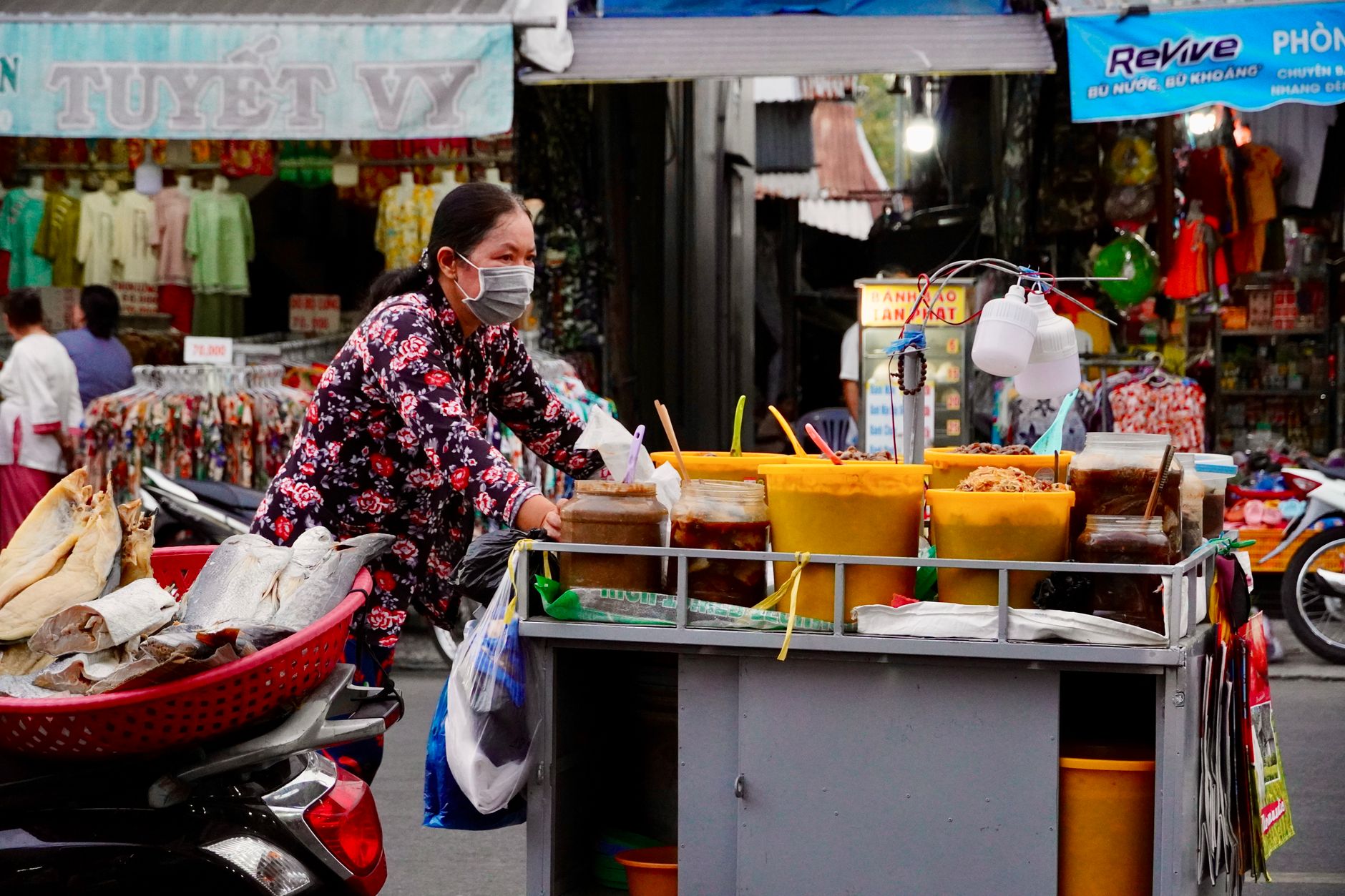
Comparison: Street Food Tour vs. Market Visit vs. Guided Food Experience
| Option | Who it's for | Duration | Pace | What you learn |
|---|---|---|---|---|
| Street food tour with Cáo | Walkers, explorers, groups | 3–4 hours | Walking + standing | Vendor stories, dishes, neighborhood |
| Self-guided market walk | Budget travelers, independent | 2–3 hours (your pace) | Your choice | Ingredients, prices, crowds |
| Private cooking + market combo | Families, teams, serious cooks | 5–6 hours | Kitchen + walking | Cooking skills + market sourcing |
| Farm and countryside experience | Nature lovers, families | 4–5 hours | Gentle walking | Farms, seasonal crops, rural food |
What to check before you book your street food tour
Physical demands: Expect 2–3 km of walking (mostly flat, some narrow lanes), 3–4 hours on foot, standing at stalls, and eating multiple small portions. If walking tires you or heat bothers you, book a private shorter version.
Dietary restrictions: Tell us if you're vegetarian, vegan, halal, kosher, allergic, or avoiding specific ingredients. We can plan a route and alert vendors, but the scope narrows—let us help.
Group size preference: Open groups (mixed strangers) are cheaper and fun for solo travelers; private groups suit families or teams wanting privacy and custom timing.
Weather backup: Heavy rain or hail sometimes forces a reschedule—we'll offer new dates within a week with no fuss.
Payment and tipping: Bring cash (VND). Vendors don't expect tips, but rounding up is kind. The Cáo fee is separate from food costs.
Timing and stamina: Morning tours (6:30–9:30 AM) suit those avoiding midday heat. If you're tired after 2 hours, tell the host; we can shorten or finish early.
Language: Our hosts speak English clearly and explain every dish and vendor. No previous knowledge of Vietnamese food is needed.
Original Angle: When to Choose a Street Food Tour vs. Other Saigon Experiences
Most visitors to Ho Chi Minh City face a choice: eat at restaurants, join a cooking class, or explore on their own. A street food tour fills the gap. It's cheaper than restaurants, faster than a class, and safer and more social than wandering alone. You taste more variety in one morning than you'd find in a week of solo eating. Our hosts know which stalls are clean, which are beloved by locals (not tourists), and what's in season. We navigate the language barrier, handle payment, and explain why this bánh hoai vendor uses specific flour or why this phở broth simmers overnight. That context—the why—is what you can't get from a menu or a guidebook. It's also why we cap groups at 8 people: larger tours feel like school trips. Smaller groups mean real conversation and the ability to linger at a favorite stall if the food is exceptional.
If you're short on time, prioritize the street food tour. If you want to cook your own meals later, book a Vietnamese cooking class instead—or do both on different days. If you're in a team or celebrating something, a group and corporate experience version works well. If you're traveling with young kids, check the family-friendly options we offer, including shorter food walks and cooking sessions scaled for under-10s.
See how a session runs
How our street food tours run: hour by hour
6:30 AM: Meet in a quiet lane off the old quarter (we send the exact spot on WhatsApp). Greet your host and any other guests. Use the restroom if needed—there's one nearby.
6:45–7:00 AM: Walk to the first stall (a family rice-noodle shop). The host introduces the vendor, explains what bánh cuốn is (rolled steamed rice cake), and shows you how to dip it in fish sauce. You eat standing or on a small stool. About 15 minutes.
7:15–7:30 AM: Walk to a phở vendor. Watch the host order (you can ask questions). Eat a bowl. The host talks about broth timing and meat cuts.
7:45–8:15 AM: Market stop. Walk through a covered food hall, taste grilled spring rolls and sticky rice from two separate vendors, buy fruit or juice.
9:00–9:30 AM: Final stall(s)—maybe bánh mì, maybe sweet soup depending on appetite and pace. The host asks how you're feeling and doesn't push if you're full.
9:30–10:00 AM: Walk back toward the meeting point. The host answers remaining questions about ingredients, recipes, or where to eat on your own later. Say goodbye. You're free for the rest of your day.
What to bring and wear
- Comfortable walking shoes (not flip-flops; lanes are uneven and crowded)
- A refillable water bottle (we refill it free at stalls)
- Small cash in local VND (no ATMs are convenient during the walk; withdraw beforehand)
- A hat and sunscreen (sun is intense even at dawn)
- Loose cotton shirt and lightweight pants (avoid white; vendor stalls splash)
- A small bag (no big backpacks; they bump into crowds and vendors)
- Hand sanitizer or wet wipes (optional but practical for street eating)
We don't provide gloves or aprons—you eat with your hands or chopsticks and utensils from the stalls, the way locals do. If cleanliness concerns you, we explain our vendor selection and can recommend hand-washing stops.

FAQ
Is street food safe for foreigners?
Yes, if you choose vendors carefully. Our hosts eat at these stalls regularly and know which are busy (fast turnover = fresh food) and clean. Avoid stalls with flies, raw meat sitting in sun, or water that looks stagnant. We stick to cooked and broth-based foods, not raw salads, on these tours. If you have a sensitive stomach, eat light and drink bottled water only.
Do we need to speak Vietnamese?
No. Our host speaks English fluently and orders for the group or teaches you the key phrases. Vendors are used to tourists. No language barrier.
Can we do a private tour with just our group?
Yes. Private tours cost more but let you set the pace, choose dietary focuses, and skip stalls. Tell us your preferences on WhatsApp.
What if someone in our group is vegetarian?
We have vegetarian routes with bánh mì (no meat), sticky rice, bánh hoai, spring rolls, and noodle soups. Vendors know how to make them. Vegan options are fewer but exist—let us know in advance.
How much walking is really involved?
About 2–3 km total, mostly flat, in short bursts between stalls. If mobility is an issue, we can arrange a shorter private version or focus on stalls in one market cluster.
What time do tours start, and can we do an afternoon tour?
We run morning tours (6:30 or 7:00 AM start) because food vendors are freshest then and crowds are lighter. Afternoon tours are rare and less fun—the best stalls sell out by noon. Early rising is part of the authentic experience.
Do we need to book in advance?
Yes. Ask us for dates and a quote on WhatsApp at least 3 days ahead so we can confirm vendor availability and brief you on what to bring.
What happens if someone in the group feels sick?
We walk near clinics and pharmacies. The host carries basic first aid. If heat or food bothers you, we sit in shade and rest. Serious illness is rare; most guests feel great. === Ask about dates on WhatsApp
Ask about dates
Tell us the city, your dates and what you would like to try. We reply on WhatsApp in English with options and availability.
FAQ
Is street food safe for foreigners?
Yes, if you choose vendors carefully. Our hosts eat at these stalls regularly and know which are busy (fast turnover = fresh food) and clean. Avoid stalls with flies, raw meat sitting in sun, or water that looks stagnant. We stick to cooked and broth-based foods, not raw salads, on these tours. If you have a sensitive stomach, eat light and drink bottled water only.
Do we need to speak Vietnamese?
No. Our host speaks English fluently and orders for the group or teaches you the key phrases. Vendors are used to tourists. No language barrier.
Can we do a private tour with just our group?
Yes. Private tours cost more but let you set the pace, choose dietary focuses, and skip stalls. Tell us your preferences on WhatsApp.
What if someone in our group is vegetarian?
We have vegetarian routes with bánh mì (no meat), sticky rice, bánh hoai, spring rolls, and noodle soups. Vendors know how to make them. Vegan options are fewer but exist—let us know in advance.
How much walking is really involved?
About 2–3 km total, mostly flat, in short bursts between stalls. If mobility is an issue, we can arrange a shorter private version or focus on stalls in one market cluster.
What time do tours start, and can we do an afternoon tour?
We run morning tours (6:30 or 7:00 AM start) because food vendors are freshest then and crowds are lighter. Afternoon tours are rare and less fun—the best stalls sell out by noon. Early rising is part of the authentic experience.
Do we need to book in advance?
Yes. Ask us for dates and a quote on WhatsApp at least 3 days ahead so we can confirm vendor availability and brief you on what to bring.
What happens if someone in the group feels sick?
We walk near clinics and pharmacies. The host carries basic first aid. If heat or food bothers you, we sit in shade and rest. Serious illness is rare; most guests feel great. === [💬 Ask about dates on WhatsApp](https://wa.me/84338762340)
More like this
Street food and market tours
Best Street Food Tour in Sapa: What to Expect, How to Choose
Street food tours in Sapa connect you with hill-town cooks and night markets. We'll walk you through what these sessions offer, who they're for, and how to avoid common missteps.
Street food and market tours
Best Street Food Tour in Hue: What to Choose, Who It's For
A street food tour in Hue isn't one thing—it's a choice between styles, neighborhoods, and paces. We break down what actually happens on each type, and how to know which fits your group.
Street food and market tours
Best Food Walking Tour in Vietnam: Hanoi Street Food Guide
A food walking tour in Vietnam immerses you in bustling markets and street lanes where vendors have cooked the same dishes for decades. We show you what to taste, how to order, and the stories behind each bite.