
Home › Blog › Street food and market tours
Street Food Tour in Vietnam for Couples: What to Expect
By the Cáo Experiences team · 2026-11-06
A street food tour for couples is a slow walk through a neighborhood's laneway stalls and family kitchens, usually running 2–3 hours at dusk or early evening. You'll taste 5–8 small plates—rice paper rolls, grilled meats, noodle soups, sticky desserts—stopping at 4–6 vendors, learning how each dish is made and why locals queue for it. At Cáo Experiences, we host private tours (just you and a host) or small groups of 4–6 people, walking at a pace that lets you chat, ask questions, and sit down to eat properly, not rush between stops. You'll wear comfortable walking shoes, bring cash in small notes, and expect to spend an hour on your feet and an hour eating and talking. Many couples worry they'll feel rushed or that spicy food will overwhelm them—we adapt every stop to your heat tolerance, dietary needs (vegetarian, allergy, religious) and pace. Rain doesn't cancel; we shift to covered markets and family kitchens instead. Costs vary by location and group size; ask us for dates and a quote on WhatsApp. Ask about dates on WhatsApp
What makes a street food tour different from eating alone?
A street food tour isn't just sampling dishes—it's learning why a vendor's crab paste tastes different from the stall down the lane, or why a grandmother still hand-rolls 200 spring rolls every morning. When you eat alone, you taste food. With a host, you taste story, technique, and neighborhood identity. We stop at places that don't advertise to tourists: a rice-paper maker's kitchen tucked in a lane off the old quarter, a husband-and-wife grilling team who've worked the same corner for 20 years, a dessert stall run by a retired schoolteacher. You meet the people who cook your food, ask how they source their ingredients, and understand what "street food" actually means in Vietnam—it's not casual eating, it's a way of life, a social rhythm, a family business passed down. For couples, this transforms the evening: you're not consuming; you're witnessing, participating, belonging briefly to a community you'd never find alone. Our hosts speak English, know the vendors by name, and guide you toward dishes suited to your tastes and comfort, so you eat confidently and taste authentically.

How do we adapt the tour if one of you has dietary restrictions?
This is the most common worry, and the easiest to solve. Before the tour, we ask about vegetarian, vegan, pescatarian, halal, kosher, allergy, and religious needs—list them all. We then scout the route with those restrictions in mind and brief vendors in advance: "This pair needs fish sauce avoided" or "No shellfish, please." In practice, Vietnam's street food vendors are used to adapting: a beef-noodle stall will gladly make yours vegetarian; a grilled-meat vendor will prepare tofu or mushroom instead; a seafood shop will substitute eggs or vegetables. We've never had a tour where one person went hungry. If your restriction is severe (severe nut allergy, for instance), we'll tell you honestly which stops may not be safe and suggest alternatives. Some tours focus entirely on vegetarian or pescatarian streets—ask us about options for your dietary mix. The key: tell us early, and we'll design a route where both of you eat well and neither feels like they're settling.
Which cities offer the best street food tours for couples?
Street food culture varies sharply by region, so location shapes what you'll eat and how vendors operate. Hanoi's old quarter stalls cluster densely—you'll eat pho at dawn, banh mi at lunch, egg coffee at 3 p.m., and grilled snails at dusk, all within a 500-meter walk, prices low, crowds high, energy chaotic. Saigon's neighborhoods spread wider: you'll ride between districts, stopping at specialized stalls (one lane famous for crab rice paper, another for southern sticky rice), larger servings, more diverse cooking styles, higher prices. Hoi An's ancient town has a different feel—most stalls cater to tourists now, but we know family kitchens a lane or two away, quieter, more time to sit and talk. Da Nang has fewer dedicated food streets but excellent seafood tours along the river and fish markets at dawn. For couples, Hanoi and Saigon offer the most variety and story per evening; Hoi An suits slower, quieter exploration; Da Nang works well if you want seafood focused and fewer tourists. Our hosts in each city know the real routes—ask us which suits your style.
What should couples actually wear and bring?
Wear comfortable walking shoes (not flip-flops—you'll walk 2–3 km across uneven laneway pavements), lightweight breathable clothes (cotton or linen, long sleeves help against sun and mosquitoes if touring at dusk), and a light scarf or cardigan (air-conditioned stalls feel cold after hot streets). Bring a small backpack or crossbody bag with a water bottle (refill at any shop), cash in small notes (most stalls don't take cards), hand sanitizer or wet wipes (laneway conditions vary), and sunscreen if daytime. Don't bring expensive jewelry or cameras that draw attention; a phone is enough. Many couples ask if they should book restaurants in advance—no. Part of the tour's joy is discovering a vendor and deciding to sit down; a host handles logistics and table space. Bring an open mind about portions: Vietnamese street portions are small—you'll taste 5–8 dishes over 2–3 hours, eating lightly often. Couples who've worried "Will we be hungry?" always say no; the eating rhythm suits shared conversation. Wear shoes you can slip off if sitting on low plastic stools (common).
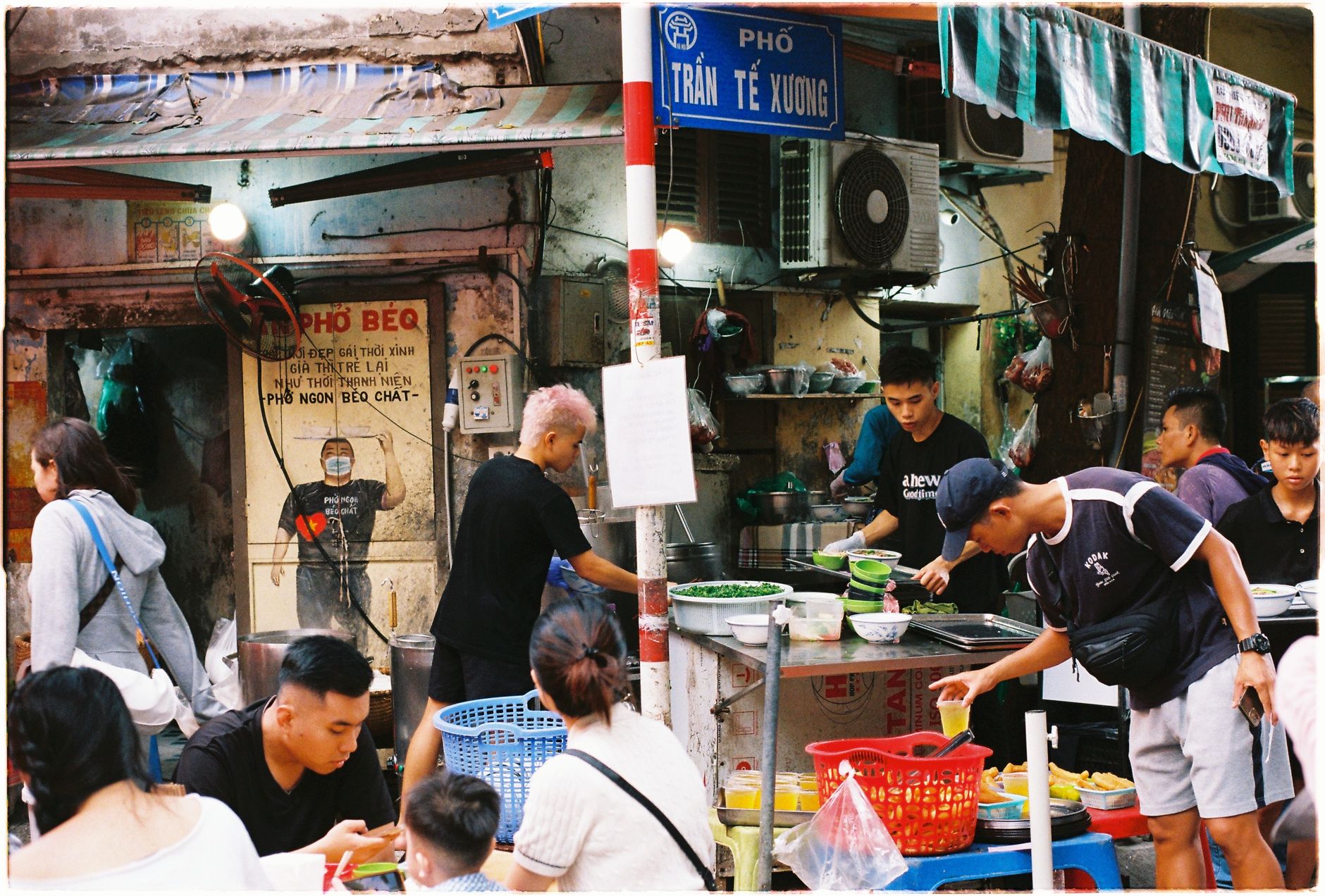
How do street food tours fit into a couples' trip to Vietnam?
A street food tour in Vietnam works as a first-evening activity (orientation, energy, local introduction), a mid-trip highlight (you understand neighborhoods better now), or a last-night goodbye. Most couples book it for their first or second evening: you're not jet-lagged, you're curious, and the neighborhood energy is gentler than daytime markets. A 2–3 hour tour leaves your morning and afternoon free for other experiences—you could take a cooking class the next day and cook what you've eaten, or visit a flower market and join a workshop, or ride through countryside villages on horseback. Some couples combine a street food tour with a coffee workshop (many coffee stalls appear on food tours; a workshop teaches brewing techniques). Others spend a long weekend hitting multiple cities: street food tour in Hanoi, a farm day in Da Lat, Hoi An ancient town, Da Nang coastal walk. A street food tour is short enough to layer with other plans but immersive enough to feel like a full experience. It's often the evening people talk about most afterward.
What to check before you book
- Fitness level: Tours involve 2–3 km of walking on uneven streets and standing at stalls. You don't need to be athletic, but comfortable feet and legs help.
- Heat tolerance: Vietnam's evening streets are warm; dusk walks are cooler than midday, but you'll still sweat. Dress for it; stay hydrated.
- Dietary honesty: Tell us everything—allergies, preferences, religious rules. We can't help if you withhold information.
- Group size: Private tours (just you two) cost more but let you move at your pace and ask deeper questions. Small groups (4–6 people) are livelier and cheaper; ask us for current dates and a quote.
- Language: Our hosts speak English fluently; vendors speak Vietnamese. We translate and explain; you won't feel lost.
- Camera comfort: Photography is fine; vendors generally don't mind photos of stalls. Ask before photographing people. Don't make food go cold while shooting.
- Heavy rain, illness, or personal emergency—ask us about rescheduling options when you book.
Comparison table: Street food tours by city and style
| City | Walk Style | Crowd Level | Specialties | Pacing | Best For |
|---|---|---|---|---|---|
| Hanoi | Dense laneway clusters | High, very local | Pho, coffee, snails, banh mi | Fast, intense | First-time couples wanting immersion |
| Saigon | Wider neighborhood spread | Medium to high | Crab rice paper, seafood, southern rice dishes | Moderate, exploratory | Couples who like variety and sitting time |
| Hoi An | Quiet ancient-town edges | Lower, mixed tourists & locals | Central Vietnamese specialties, seafood | Slow, conversational | Couples wanting intimacy and fewer crowds |
| Da Nang | River and market focused | Lower | Seafood, grilled fish, fresh herbs | Flexible | Seafood lovers, dawn-lover couples |

FAQ
Do we have to like spicy food to enjoy a street food tour?
Not at all. We know vendors who specialize in mild dishes and can request low or no chili on everything. Vietnam's spice isn't mandatory—herbs, texture, and broth flavor matter more. Tell us your heat level upfront; we'll design the route around it.
What if we're vegetarian and our partner isn't?
We design routes that work for both: your partner eats meat at one stall, you eat a hearty vegetable dish next door. We stop together, taste different things, and share conversation. Most tours can accommodate one vegetarian easily; we've done many.
How much cash should we bring?
Bring enough small notes to eat and tip (no fixed amount per person; depends on city and stall count). Each dish costs little—a few dollars total for a whole tour. Ask us for a budget estimate when you request dates.
Can we book a private tour, just the two of us?
Yes. Private tours are available; they cost more than shared groups but give you full attention from your host and complete pace control. Ask us for dates and a quote on WhatsApp.
What happens if it rains?
Light rain doesn't stop the tour—we shift to covered markets and indoor family kitchens. Heavy rain (monsoon conditions)—we reschedule. Ask us about rain policy when booking.
Will vendors pressure us to buy extra food or overcharge tourists?
Reputable vendors don't. Our hosts are known to the vendors; you're not a random tourist. Prices are posted or shown; we handle ordering so there's no confusion. If something feels wrong, tell your host immediately.
How long will we actually be eating vs. walking?
Roughly 1 hour walking, 1–2 hours sitting and eating (depending on 2–3 hour total). Pacing varies: some stops are 5 minutes (taste and move), others are 15–20 (sit, chat, relax). Your host reads the group and adjusts.
Can we do a street food tour in the morning or afternoon, not evening?
Most street food culture peaks at dusk and night, when vendors set up and locals eat. Daytime tours focus on breakfast and lunch stalls—fewer vendors, different energy. Ask us; we can suggest daytime alternatives or run an early evening tour instead.
Ask about dates
Tell us the city, your dates and what you would like to try. We reply on WhatsApp in English with options and availability.
FAQ
Do we have to like spicy food to enjoy a street food tour?
Not at all. We know vendors who specialize in mild dishes and can request low or no chili on everything. Vietnam's spice isn't mandatory—herbs, texture, and broth flavor matter more. Tell us your heat level upfront; we'll design the route around it.
What if we're vegetarian and our partner isn't?
We design routes that work for both: your partner eats meat at one stall, you eat a hearty vegetable dish next door. We stop together, taste different things, and share conversation. Most tours can accommodate one vegetarian easily; we've done many.
How much cash should we bring?
Bring enough small notes to eat and tip (no fixed amount per person; depends on city and stall count). Each dish costs little—a few dollars total for a whole tour. Ask us for a budget estimate when you request dates.
Can we book a private tour, just the two of us?
Yes. Private tours are available; they cost more than shared groups but give you full attention from your host and complete pace control. Ask us for dates and a quote on WhatsApp.
What happens if it rains?
Light rain doesn't stop the tour—we shift to covered markets and indoor family kitchens. Heavy rain (monsoon conditions)—we reschedule. Ask us about rain policy when booking.
Will vendors pressure us to buy extra food or overcharge tourists?
Reputable vendors don't. Our hosts are known to the vendors; you're not a random tourist. Prices are posted or shown; we handle ordering so there's no confusion. If something feels wrong, tell your host immediately.
How long will we actually be eating vs. walking?
Roughly 1 hour walking, 1–2 hours sitting and eating (depending on 2–3 hour total). Pacing varies: some stops are 5 minutes (taste and move), others are 15–20 (sit, chat, relax). Your host reads the group and adjusts.
Can we do a street food tour in the morning or afternoon, not evening?
Most street food culture peaks at dusk and night, when vendors set up and locals eat. Daytime tours focus on breakfast and lunch stalls—fewer vendors, different energy. Ask us; we can suggest daytime alternatives or run an early evening tour instead.
More like this
Street food and market tours
Best Street Food Tour in Sapa: What to Expect, How to Choose
Street food tours in Sapa connect you with hill-town cooks and night markets. We'll walk you through what these sessions offer, who they're for, and how to avoid common missteps.
Street food and market tours
Best Street Food Tour in Hue: What to Choose, Who It's For
A street food tour in Hue isn't one thing—it's a choice between styles, neighborhoods, and paces. We break down what actually happens on each type, and how to know which fits your group.
Street food and market tours
Best Food Walking Tour in Vietnam: Hanoi Street Food Guide
A food walking tour in Vietnam immerses you in bustling markets and street lanes where vendors have cooked the same dishes for decades. We show you what to taste, how to order, and the stories behind each bite.