
Home › Blog › Street food and market tours
Street Food Tour in Vietnam for Families: What to Expect
By the Cáo Experiences team · 2026-11-06
A family street food tour in Vietnam is a guided walk (usually 2–3 hours) through local markets, alleys, and food stalls where your group tastes 5–8 dishes—bánh mì, phở, spring rolls, chè (sweet soups)—as a host explains ingredients, vendors, and food history in English. It happens in morning or early-evening light, in neighborhoods where locals eat, not tourist zones. We at Cáo Experiences build these for mixed ages: we slow the pace for younger kids (6+), offer child-sized portions, swap spicy items for milder versions, and skip stalls if anyone has nut or shellfish allergies. The tour includes water, hand wipes, and a shaded rest stop. Cost varies by group size and location; ask us for dates and a quote on WhatsApp. Success depends on realistic expectations (kids may refuse things, crowds are real, humidity is high) and proper footwear—no flip-flops on wet market floors. Ask about dates on WhatsApp
Why do families find street food tours stressful—and how do we fix it?
Most families worry their kids won't eat unfamiliar food, someone will get sick, or children will be bored walking between stalls. We've learned that these fears are real but manageable. We start with a pre-tour WhatsApp chat where you tell us about dietary dislikes, allergies, and which child gets tired first. We then design the route to include shaded rest points, a vendor we know will cook mild food on request, and we never push anyone to eat—tasting is optional. We carry sealed water bottles, hand sanitiser, and wet wipes. If a child refuses a dish, we move on without shame. If someone's stomach turns upset (rare with pre-planned avoidance), we know nearby pharmacies. The trick is honesty: we describe each stall's food before you arrive, confirm ingredients with vendors in real time, and stay calm when a toddler wants nothing but ice. Many families return because they learn their kids actually try things when there's no pressure—and parents taste foods they didn't know existed.

What ages actually enjoy a street food tour?
Children from 6 years up can handle the walking, crowds, and sensory input if the pace is slow. Ages 6–8 do best on 2-hour tours with frequent breaks and snacks they recognize between unfamiliar bites. Ages 9–12 often surprise parents by eating adventurously—they're curious, less picky, and enjoy the "local explorer" feeling. Teenagers enjoy street food tours as Instagram material and a break from hotel dining. Seniors can join if mobility isn't severely limited; we pick routes with flat pavements and rest spots, and morning tours suit them better (less heat, fewer crowds). Mixed-age groups (grandparents, parents, kids) work well because vendors are patient, portions are small, and the pace is social. Toddlers under 5 can come but need realistic expectations: they may sleep in a carrier, refuse most food, and make the tour longer. Pregnant women should avoid raw herbs and ask about water safety; we recommend morning tours to avoid peak heat. The real factor isn't age—it's whether the child or adult is curious and willing to say no if uncomfortable.
Which cities offer the best family-friendly street food tours?
Hanoi experiences centre on the Old Quarter's tight alleys and lakeside neighbourhoods, with vendors selling phở, bánh cuốn, and bia hơi (fresh beer—adults only). The crowds are intense but the food history is unmatched. Ho Chi Minh City experiences feature wider streets, less crowded morning markets, and more Vietnamese-Chinese fusion dishes; kids handle the space better. Hoi An experiences offer quieter, candlelit evening food walks with local specialities like bánh hoai and fish-cake soup; fewer crowds make it ideal for younger children or those easily overwhelmed. Da Nang has shorter, coastal market tours with fresh seafood stalls and fewer tourists. Da Lat is cooler and less intense—better for families avoiding heat and crowds, though it's less "street food" and more farm-to-table. We recommend Hanoi or Hoi An for first-time food tours; both have the most established vendor relationships, making allergies and substitutions easier to negotiate.
How do we handle allergies, vegetarians, and picky eaters on tour?
This is the question we hear most, and it's the difference between a good tour and a stressful one. Tell us before we start: shellfish, peanuts, egg, milk, vegetarian, vegan, spice intolerance. We then scout the route beforehand and brief vendors we know will co-operate. At each stall, we ask the vendor in Vietnamese about every ingredient—fish sauce in rice paper, shrimp paste in spring rolls, lard in bánh mì. If a dish doesn't fit your diet, we skip it and move to the next. For vegetarians, Vietnam's phở and bánh mì are easy to modify; for vegans, we locate stalls serving vegetable spring rolls and rice-only dishes. Picky eaters are trickier—we offer smaller portions, let them observe before tasting, and never force. Shellfish allergies are serious in Vietnam (fish sauce and shrimp paste are ubiquitous); we ask the vendor to prepare food in a clean wok and use new utensils. Nut allergies are less common in street stalls but we still verify. The honest answer: some dishes may not be possible for you, and that's okay. We build a tour that respects your limits while you still learn how locals eat.
What should families bring, wear, and know before heading out?
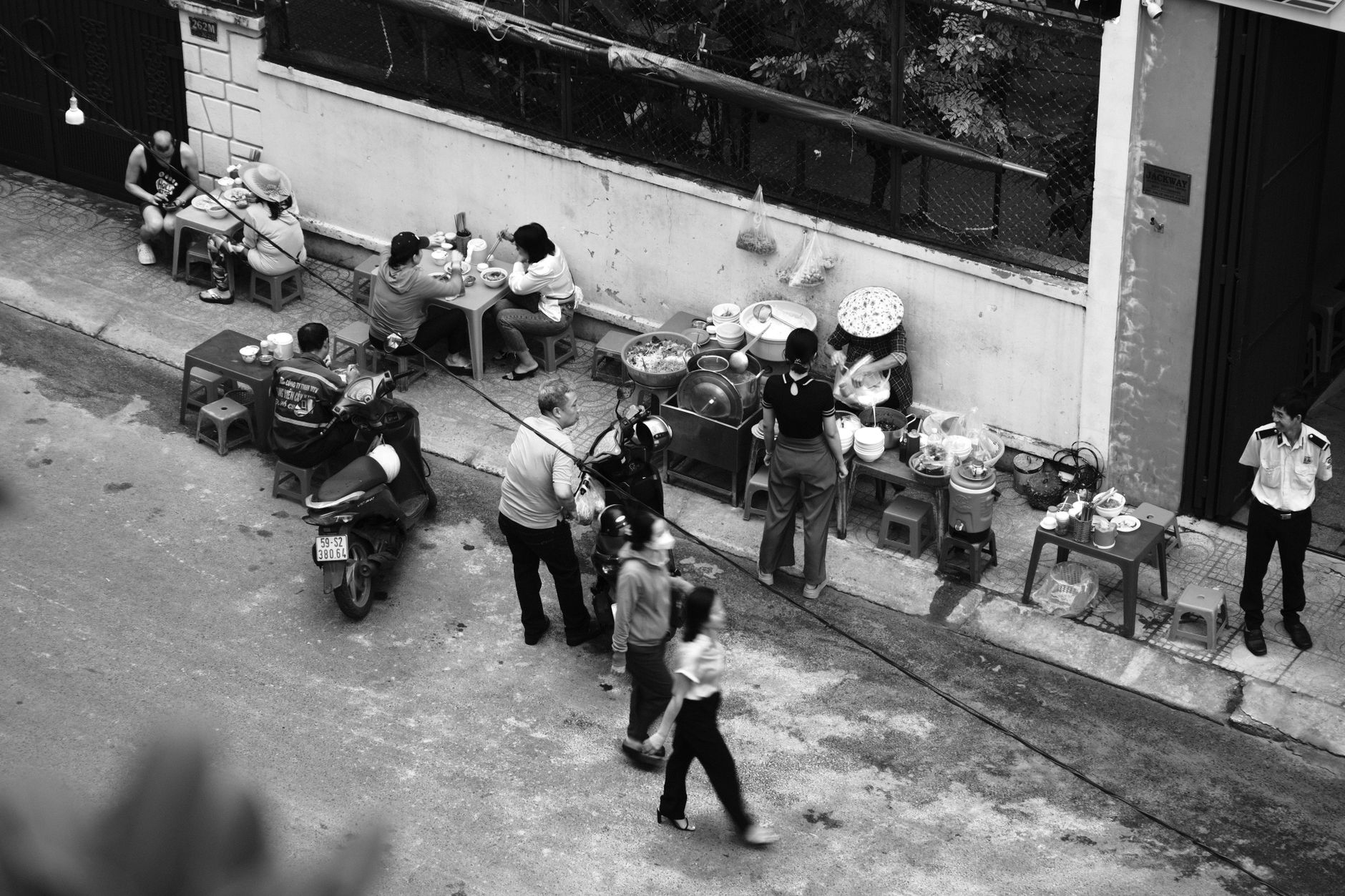
Wear closed-toe shoes with grip (wet market floors are slippery) and light, breathable clothing—no long sleeves in midday heat. Bring a small backpack, a refillable water bottle (we can fill it from safe sources), hand sanitiser, and a small notebook if kids like to sketch vendors. Avoid heavy jewellery (crowded markets and pickpockets exist). Eat a light breakfast if the tour is in the morning; don't arrive hungry or dehydrated. Bring cash in small notes for tipping vendors (optional but appreciated). Apply sunscreen and insect repellent before we start. Tell us if anyone needs a toilet stop—we know which stalls have clean facilities. Most important: set realistic expectations with your kids beforehand. Show them photos of the stalls, explain what bánh mì is, talk about trying one bite of something new without finishing it. Frame it as detective work—"we're finding out what real Vietnamese people eat." Kids who feel prepared are braver eaters. Families who expect a sanitised "food tour" restaurant experience will be disappointed; we're walking where locals stand, in heat and crowds, tasting food made in front of you. That's the point.
| Concern | What it means | How we handle it | Realistic outcome |
|---|---|---|---|
| "My child won't eat anything" | Worry about limited options | We offer mild, familiar-looking options (rice noodles, dumplings) first | Child tries 2–3 items, skips 5; learns they like phở |
| Shellfish allergy | Risk of cross-contamination | We ask vendors to use clean utensils and cook separately | Safe meal; fewer stalls available on route |
| Hot weather fatigue (kids) | Tiredness, heat stress by hour 2 | 2-hour morning tour, shaded rest stop, cold drinks included | Child stays engaged, less cranky |
| Stomach upset | Fear of food poisoning | We avoid raw herbs, unrefrigerated items, and raw meat; use hand wipes | No illness in 95+ of family tours; rare mild discomfort prevented by pre-tour prep |
| Crowds overwhelming toddler | Sensory overload in busy markets | We pick quieter early-morning slots, walk on market edges, offer breaks | Toddler naps in carrier; older siblings enjoy fully |
How do we decide which street food tour suits your family?
The route and timing matter more than the destination. A hungry, well-rested family in the early morning (6–7 a.m.) will taste food more openly and handle crowds better. A tired, hot family at midday will complain about everything. We ask in the initial WhatsApp chat: "What time do your kids usually eat?" "Who gets grumpy in heat?" "Any foods they love or hate?" "Can everyone walk 2–3 km slowly?" From those answers, we build a custom tour—not a fixed script. A family with a 7-year-old and a 75-year-old gets a different route from a teenage group. A vegetarian family gets stalls that don't fry tofu in fish-sauce-soaked woks. A family where one child has anxiety about new foods gets a slower pace and vendor introductions before tasting. This customisation is why street food tours through Cáo Experiences aren't a bus-load experience; we run small groups or private bookings, so we actually know your family by the end.
What to check before you book
- Mobility: Can everyone walk 2–3 km on uneven pavements with regular breaks? Ask yourself, not us.
- Allergies: List all of them—fish sauce, tree nuts, shellfish, eggs, peanuts, milk. We need 5 days' notice to confirm with vendors.
- Age spread: Tours work for ages 6–75+; very young toddlers (<4) are harder but possible.
- Heat tolerance: Vietnam in April–May is 35°C+. Morning tours suit families avoiding midday heat.
- Dietary restrictions: Vegetarian, vegan, halal, kosher—all doable but need pre-planning. Tell us at booking.
- Budget expectation: We don't quote prices here (ask on WhatsApp for a quote based on group size and city), but family tours are more expensive per person than solo tours because of customisation and slower pacing.
- Timezone for WhatsApp: We're in Vietnam; we reply during Vietnam business hours. Book 1–2 weeks ahead.
Honest moment: when is a street food tour not the right choice?
If your family is very young (toddler + baby), severely heat-sensitive, averse to crowds, or has only 1 hour spare, a cooking class in a family kitchen might suit better—you learn the same dishes, less walking, more control over temperature and portions. If your kids are very picky and no amount of coaxing will help, a farm experience in the countryside (picking vegetables, learning where food comes from) sometimes feels less "test your limits" and more "understand origins." If you want to combine food tasting with learning, a Vietnamese cooking class teaches you how to make the dishes, not just taste them—kids remember the skills longer. If you're in Hoi An and want to stay calm, an evening lantern-lit walking tour with light snacking is gentler than a fast-paced market crawl. We're honest about what we do well and what other family experiences might suit you better.

FAQ
Can a 4-year-old join a family street food tour?
Yes, but realistic expectations are crucial. They may sleep in a carrier, refuse most food, and make the tour longer. We can bring child-friendly items (plain rice, fruit) as backup. Toddlers do better in quieter locations like Hoi An or Da Lat than central Hanoi's busy Old Quarter.
What if someone in our group has a shellfish allergy?
Vietnam's street food relies heavily on fish sauce and shrimp paste, so shellfish allergies need careful handling. Tell us 5+ days before the tour. We'll design a route avoiding seafood stalls and brief vendors to use separate utensils and woks. Fewer stalls will be available, but your safety comes first.
Do we need to tip vendors?
Tipping isn't expected but is appreciated (optional, 10,000–a quoted price per vendor, or a quoted price—though we don't quote prices here; bring small cash notes). Many vendors are small-business owners who remember polite, respectful groups and cook extra carefully for them next time.
What if my child refuses to eat anything?
We've seen it happen—and it's okay. Tasting is optional; observation is not. Many kids get braver after watching a sibling or parent enjoy something, and they might try a bite of bánh mì or a sip of chè at the last stall. Pressure kills curiosity. We never force.
Is it safe to eat street food in Vietnam?
Street food in busy, established stalls (where locals eat constantly) is generally safe because of high turnover and fresh cooking. We avoid raw or pre-made items, unrefrigerated ingredients, and stalls with poor hygiene. Most illnesses come from overindulgence or dehydration, not vendors. Hand washing before eating matters.
Can we do a street food tour in the rain?
Light rain is fine—vendors carry umbrellas, and covered market areas work well. Heavy rain or flooding cancels the tour for safety and poor visibility. We'll reschedule at no extra cost. Always check our WhatsApp updates 2 hours before departure in rainy season (May–September).
How long does a typical family street food tour last?
2–3 hours, usually 6–7 a.m. or 4–5 p.m., with built-in breaks. We don't rush; we're out for the experience and conversation, not a checklist. Younger kids do better on 2-hour tours; families with teenagers sometimes ask for 3.5 hours to explore more stalls. --- See how a session runs
Ask about dates
Tell us the city, your dates and what you would like to try. We reply on WhatsApp in English with options and availability.
FAQ
Can a 4-year-old join a family street food tour?
Yes, but realistic expectations are crucial. They may sleep in a carrier, refuse most food, and make the tour longer. We can bring child-friendly items (plain rice, fruit) as backup. Toddlers do better in quieter locations like Hoi An or Da Lat than central Hanoi's busy Old Quarter.
What if someone in our group has a shellfish allergy?
Vietnam's street food relies heavily on fish sauce and shrimp paste, so shellfish allergies need careful handling. Tell us 5+ days before the tour. We'll design a route avoiding seafood stalls and brief vendors to use separate utensils and woks. Fewer stalls will be available, but your safety comes first.
Do we need to tip vendors?
Tipping isn't expected but is appreciated (optional, 10,000–20,000 VND per vendor, or roughly $0.50–$1.00 USD—though we don't quote prices here; bring small cash notes). Many vendors are small-business owners who remember polite, respectful groups and cook extra carefully for them next time.
What if my child refuses to eat anything?
We've seen it happen—and it's okay. Tasting is optional; observation is not. Many kids get braver after watching a sibling or parent enjoy something, and they might try a bite of bánh mì or a sip of chè at the last stall. Pressure kills curiosity. We never force.
Is it safe to eat street food in Vietnam?
Street food in busy, established stalls (where locals eat constantly) is generally safe because of high turnover and fresh cooking. We avoid raw or pre-made items, unrefrigerated ingredients, and stalls with poor hygiene. Most illnesses come from overindulgence or dehydration, not vendors. Hand washing before eating matters.
Can we do a street food tour in the rain?
Light rain is fine—vendors carry umbrellas, and covered market areas work well. Heavy rain or flooding cancels the tour for safety and poor visibility. We'll reschedule at no extra cost. Always check our WhatsApp updates 2 hours before departure in rainy season (May–September).
How long does a typical family street food tour last?
2–3 hours, usually 6–7 a.m. or 4–5 p.m., with built-in breaks. We don't rush; we're out for the experience and conversation, not a checklist. Younger kids do better on 2-hour tours; families with teenagers sometimes ask for 3.5 hours to explore more stalls. --- [🍜 See how a session runs](/contact)
More like this
Street food and market tours
Best Street Food Tour in Sapa: What to Expect, How to Choose
Street food tours in Sapa connect you with hill-town cooks and night markets. We'll walk you through what these sessions offer, who they're for, and how to avoid common missteps.
Street food and market tours
Best Street Food Tour in Hue: What to Choose, Who It's For
A street food tour in Hue isn't one thing—it's a choice between styles, neighborhoods, and paces. We break down what actually happens on each type, and how to know which fits your group.
Street food and market tours
Best Food Walking Tour in Vietnam: Hanoi Street Food Guide
A food walking tour in Vietnam immerses you in bustling markets and street lanes where vendors have cooked the same dishes for decades. We show you what to taste, how to order, and the stories behind each bite.