
Home › Blog › Street food and market tours
Street Food Tour in Vietnam for Solo Travelers: A Real Guide
By the Cáo Experiences team · 2026-11-06
A street food tour in Vietnam for solo travelers is a 3–4 hour walking experience through neighborhood markets, hawker lanes, and night stalls where you taste fresh pho, banh mi, spring rolls, and regional specialties while learning the story behind each dish. Most tours happen in the morning (5–7 a.m. for breakfast culture) or late afternoon into evening (4–8 p.m.) when vendors are busiest and food is hot. You'll walk 2–3 km total, stop at 6–10 food stalls, and eat continuously—bring cash in small notes, wear comfortable shoes, and go hungry. Cáo Experiences runs these as small groups (4–8 people) or private tours with English-speaking hosts who know the vendors by name and can navigate allergies, dietary restrictions, and the informal ordering system. Budget is modest because street food costs pennies per dish; the real cost is the guide's knowledge and connections. Avoid weekends if you prefer quieter lanes, skip very early morning if you're not a dawn person, and don't go on an empty stomach the night before—you'll miss the full experience.
Why do solo travelers actually prefer street food tours?
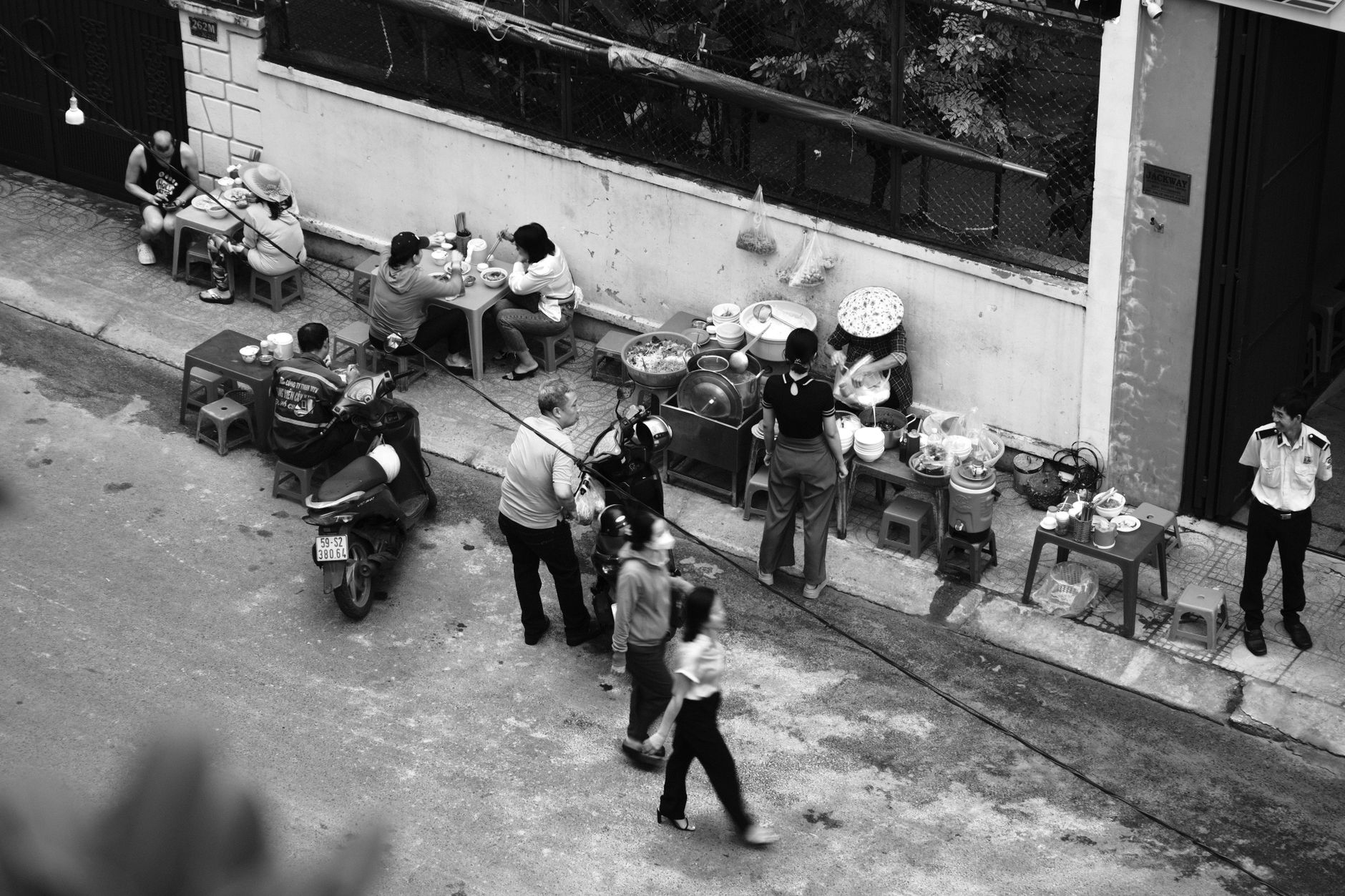
Street food removes the loneliness paradox: you're alone but surrounded by vendors, other diners, and the daily rhythm of a neighborhood. You don't need to sit down for two hours at a restaurant table wondering if you belong. Instead, you stand at a stall with a bowl of noodle soup, eat in 15 minutes, move on. Other solo travelers and locals cluster naturally at the same spots—conversation happens without effort. A street food and market tour teaches you how to order alone afterward: how to point, nod, pay, and eat like a regular, not a tourist. You leave with confidence and favorite vendors you'll return to for the rest of your trip.
What's the difference between a morning and evening street food tour?
Morning tours (dawn to mid-morning) focus on breakfast staples: pho beef broth that's been simmering since 3 a.m., fresh banh mi at the bakery counter, sticky rice with mung bean, crunchy fried dough, egg coffee, and congee with century egg. You see vendors setting up and the quiet before the rush. Evening tours (late afternoon into dark) center on late snacks and dinner: grilled seafood, bun cha with charred pork, banh hoai, egg rolls, stir-fried greens, and street-side rice paper wraps. Evening is louder, busier, more chaotic—vendors shouting, motorbikes threading through lanes, plastic stools crowded. Choose morning if you're a dawn person who values a slower pace and fewer crowds; choose evening if you love energy and night-market atmosphere. Both include 6–10 tastings and take 3–4 hours.
How do you stay safe and comfortable on a solo street food tour?
Bring a small crossbody bag (pickpockets avoid moving targets, but don't tempt them). Wear slip-on shoes—you'll squat, stand, walk on uneven cobbles. Carry cash in small denominations; vendors don't make change for large notes. Stay hydrated: bring a refillable water bottle or buy bottled water at stalls. If you have food allergies or a strict diet (vegetarian, no shellfish, no dairy, halal, kosher), tell your host before the tour starts—they'll translate your needs at each stall and skip incompatible vendors. Don't eat from stalls with visible health red flags: flies, raw meat on a cutting board in the sun, water that's been sitting. Our hosts know which stalls have been operating safely for decades. Stomach upset is rare if you eat where locals eat—it's usually tap water or ice that causes trouble, so we guide you away from both. Wear sunscreen and a hat: you're walking in the open, often under a Vietnam sun that's stronger than you expect.
| Concern | How to handle it | Reality check |
|---|---|---|
| Allergies | Tell host 24 hours ahead | Stall owners adapt; translation is built in |
| Vegetarian diet | Flag on booking | Plenty of vegetable stalls; no pressure to eat meat |
| Very early start | Ask for 7 a.m. instead of 5 a.m. | You'll miss the best breakfast rush, but tours adjust |
| Crowds/queuing | Evening tour is busier | Morning is calmer; both are worth trying |
| Stomach sensitivity | Stick to hot foods only | Most street food is freshly cooked; ice and tap water are the real risk |
| Solo jitters | Groups of 4–8 ease anxiety | Private tours also available if you prefer one-on-one |

What do you actually eat, and why is it different from a restaurant?
Street stalls make one or two dishes—one vendor does pho, another does banh mi, a third does spring rolls. Each has perfected that single thing over 10+ years. In a restaurant, one kitchen makes 30 dishes; you taste competence spread thin. At a stall, you taste obsession. You'll eat pho where the broth has been simmering continuously for a decade, added to daily, never drained. You'll eat banh mi where the pâté is made fresh each morning and the bread is from a bakery two blocks away. Spring rolls are fried to order—they crack when you bite them. Grilled meats are charred over charcoal, not a flat-top. A host takes you to vendors they know, people who will give you a proper portion and aren't jacking up prices for tourists. You taste their pride. Restaurants serve travelers; stalls feed neighbors. That's the difference.
How do solo travelers book and prepare, and what should they check first?
Contact us on WhatsApp with your dates, your city (Hanoi, Saigon, Hoi An, Da Nang, or Da Lat), any dietary restrictions, and whether you prefer morning or evening. We'll reply with available dates and a quote. Meet your host 15 minutes early at a central landmark—never at a stall, because stalls are crowded and easy to miss. Bring cash, phone (for photos and navigation if you get lost later), and comfortable shoes. Don't eat breakfast or dinner beforehand—you need room for 6–10 tastings. Wear clothes you don't mind splashing: sauce happens. If you're solo and nervous, ask to join a small group; if you want privacy, book a private tour with just your host. We adapt for families with kids too—smaller portions, milder spice—and for seniors who prefer shorter walks or earlier start times. A Vietnamese cooking class pairs well with a tour: taste street food one day, cook it yourself the next day.
Honest question: how do you know if a stall is clean? Watch the other diners: if locals are queuing and eating there every day, the food is safe. If no one else is there at meal time, that's a sign. Stalls with high turnover (fast-moving food) are safer than stalls with food sitting under heat lamps. A host who knows the vendor personally removes the guessing game entirely.
Pages from our team you may need
FAQ
Is street food in Vietnam actually safe for Western stomachs?
Yes—more than 90% of digestive trouble comes from tap water and ice, not from street food itself. Vendors handle food that's cooked to order or kept hot. Eat where locals eat, avoid tap water, and you're fine. Many long-term travelers eat street food daily without issue.
Can I do a street food tour if I'm vegetarian or vegan?
Absolutely. Vietnam has a strong vegetarian tradition—Buddhist temples, home cooks, and dedicated stalls. Tell your host beforehand; they'll route you through veggie vendors and skip meat stalls. You'll eat plant-based banh mi, spring rolls, noodle soups, and grilled vegetables.
What's the actual cost of street food per stall?
Each dish costs between 20,000 and a quoted price (a quoted price equivalent), depending on the city and what you're eating. Ask us for a quote on the full tour including the guide.
How long is a typical street food tour, and how much walking?
3–4 hours, 2–3 km of walking. You stop frequently to eat and rest. If you have mobility concerns, tell us and we can shorten the route or pick stalls closer together.
Do I need to speak Vietnamese?
No. Your host speaks English and translates at every stall. You'll learn a few useful phrases (hello, thank you, delicious) but it's optional. Vendors are patient with foreigners.
Can I book a private street food tour, or only group tours?
Both. Group tours run on set dates and are more social; private tours are flexible dates and more personalized. Ask us about both options on WhatsApp.
Ask about dates
Tell us the city, your dates and what you would like to try. We reply on WhatsApp in English with options and availability.
FAQ
Is street food in Vietnam actually safe for Western stomachs?
Yes—more than 90% of digestive trouble comes from tap water and ice, not from street food itself. Vendors handle food that's cooked to order or kept hot. Eat where locals eat, avoid tap water, and you're fine. Many long-term travelers eat street food daily without issue.
Can I do a street food tour if I'm vegetarian or vegan?
Absolutely. Vietnam has a strong vegetarian tradition—Buddhist temples, home cooks, and dedicated stalls. Tell your host beforehand; they'll route you through veggie vendors and skip meat stalls. You'll eat plant-based banh mi, spring rolls, noodle soups, and grilled vegetables.
What's the actual cost of street food per stall?
Each dish costs between 20,000 and 60,000 VND (roughly $1–3 USD equivalent), depending on the city and what you're eating. Ask us for a quote on the full tour including the guide.
How long is a typical street food tour, and how much walking?
3–4 hours, 2–3 km of walking. You stop frequently to eat and rest. If you have mobility concerns, tell us and we can shorten the route or pick stalls closer together.
Do I need to speak Vietnamese?
No. Your host speaks English and translates at every stall. You'll learn a few useful phrases (hello, thank you, delicious) but it's optional. Vendors are patient with foreigners.
Can I book a private street food tour, or only group tours?
Both. Group tours run on set dates and are more social; private tours are flexible dates and more personalized. Ask us about both options on WhatsApp.
More like this
Street food and market tours
Best Street Food Tour in Sapa: What to Expect, How to Choose
Street food tours in Sapa connect you with hill-town cooks and night markets. We'll walk you through what these sessions offer, who they're for, and how to avoid common missteps.
Street food and market tours
Best Street Food Tour in Hue: What to Choose, Who It's For
A street food tour in Hue isn't one thing—it's a choice between styles, neighborhoods, and paces. We break down what actually happens on each type, and how to know which fits your group.
Street food and market tours
Best Food Walking Tour in Vietnam: Hanoi Street Food Guide
A food walking tour in Vietnam immerses you in bustling markets and street lanes where vendors have cooked the same dishes for decades. We show you what to taste, how to order, and the stories behind each bite.