
Home › Blog › Street food and market tours
Street Food Tour Vietnam vs Bali: Where to Go & What to Eat
By the Cáo Experiences team · 2026-11-06
Vietnam's street food leans toward layered, acidic, herbaceous flavors—pho, bánh mì, grilled meats with fish sauce—served in cramped laneways and night markets where vendors have worked the same cart for decades. Bali's offerings are sweeter, coconut-heavy, and milder: satay, nasi goreng, gado-gado, often sold in beachside warungs or tourist zones. Vietnam tours run 2–4 hours through Old Quarter or Ben Thanh market, costing less and offering sharper cultural immersion; Bali tours are gentler, more relaxed, better for heat-sensitive travelers. Both are safe if you choose busy stalls. Cáo Experiences runs Vietnamese street food and market tours in Hanoi and Saigon where we walk you through real neighborhood eating habits—not just sampling, but learning why each dish exists and how vendors prep it. Neither destination is objectively "better"; it depends on whether you crave bold, sour, spicy intensity or warm, sweet, coconut comfort. Ask about dates on WhatsApp
What flavors define each food culture?
Vietnam's street food is built on contrast: bitter herbs, salty fish sauce, sour lime, spicy chilies, and umami broth all on one plate. You taste the cook's hand in every bowl. Bali's cuisine softens everything with coconut milk, palm sugar, and gentler spices—turmeric, galangal, garlic—creating a rounded, comforting warmth. A Vietnamese bánh mì hits you with pickled daikon and carrot crunch against salty pâté. A Balinese satay glides across your tongue as one smooth peanut-coconut sauce. Neither is superior; they train your palate differently. If you love sharp, multi-layered tastes and want to feel slightly off-balance in the best way, Vietnam wins. If you prefer harmony and don't mind repeating flavors across dishes, Bali suits you better.

How do tour logistics differ between the two?
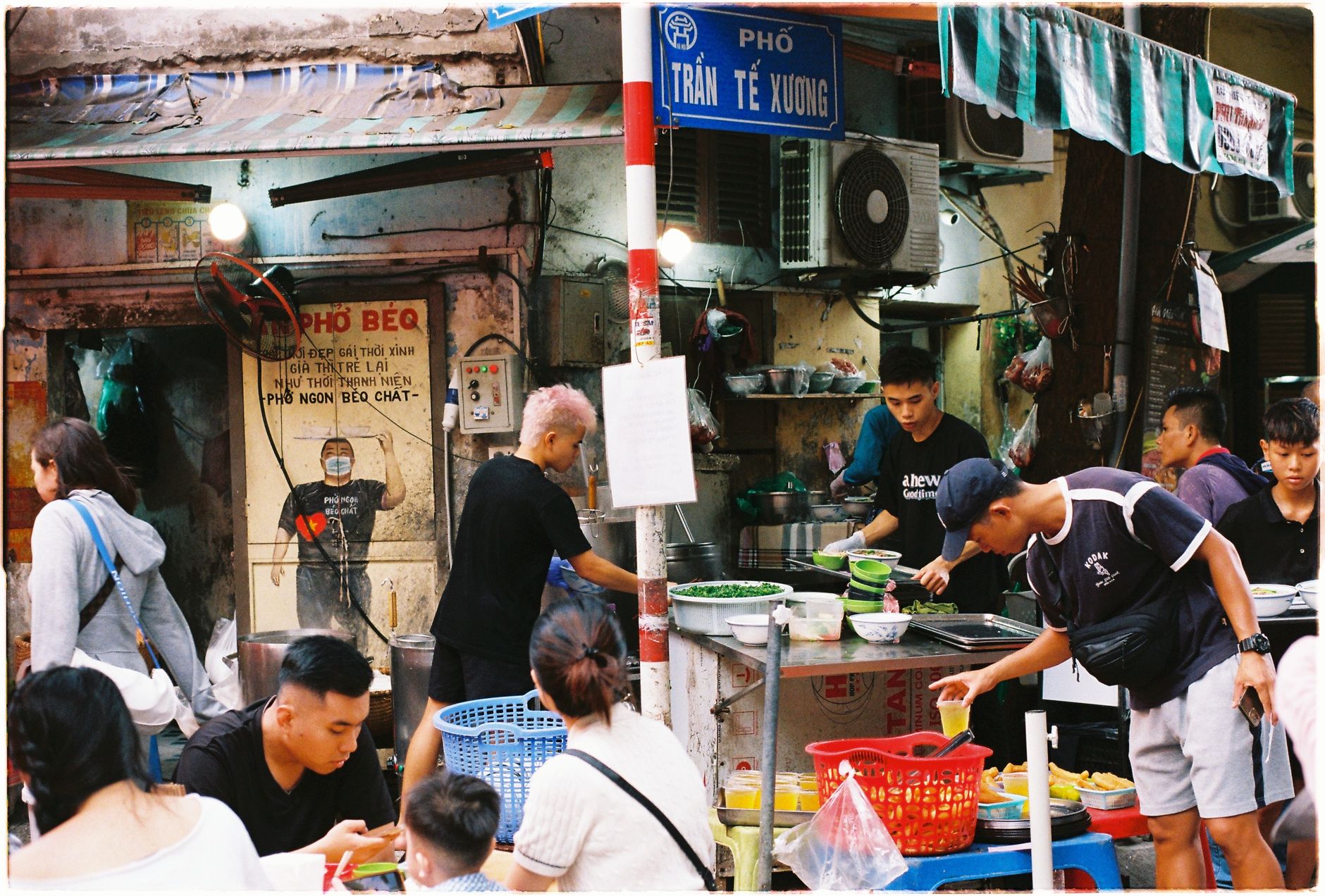
Vietnam street food tours navigate dense, narrow laneways—you'll squeeze past motorbikes, duck under laundry lines, and eat standing at a plastic stool in a crowd of locals. A typical Vietnamese street food and market tour in Hanoi covers 4–6 stalls in 2.5 hours, starting around 5 p.m. when vendors set up. You arrive when the locals do, not after the peak. Bali tours tend to be more leisurely: fewer stalls, more breathing room, easier access for travelers with mobility concerns. Vietnam's pace is faster, noisier, more thrilling. Bali is slower, sunnier, more Instagram-friendly. If you have kids or elderly relatives, Bali's relaxed rhythm suits them. If you want anthropology-level immersion, Vietnam's chaos is the point.
Which destination is safer for eating street food?
Both are safe if you follow one rule: eat where locals eat, and eat where the queue is longest. In Vietnam, the busiest bánh mì stall in the laneway has the fastest turnover, so ingredients are fresh. Bali's busy satay warung in a working neighborhood follows the same logic. The risk isn't the food—it's assumptions. Don't eat from a half-empty stall that's been sitting under the sun. Don't choose a vendor because they smile at tourists; choose them because they're feeding families at lunch. Vietnam's street food culture is older and more codified; vendors often work the same spot for 10+ years. Bali's is newer and more tourist-dependent, so cleanliness varies. Both countries have excellent healthcare. Trust your nose and eyes over guidebooks.
What does a typical tour experience look like?
On a Vietnamese street food and market tour with us, you'll meet your host in a quiet corner—we avoid meeting in tourist zones—and walk into a neighborhood you wouldn't find alone. We stop at a family kitchen in a lane off the old quarter, taste fresh spring rolls rolled by hand, then move to a pho stall where the broth has simmered since dawn. You'll hold chopsticks the way locals do, ask the vendor direct questions (we translate), and learn why a dish costs what it does. The tour includes 6–8 tastings, water, and unrushed time to absorb each flavor. We adapt for vegetarians, allergies, and heat-averse eaters; we've coached first-time chopstick users and families with young kids. Bali tours operate similarly but with more emphasis on sitting, sipping coconut water between bites, and photos. Our approach in Vietnam prioritizes understanding over collecting experiences.
Which is better value: cost, crowds, and authenticity?
| Factor | Vietnam | Bali |
|---|---|---|
| Stall cost per dish | 50,000–our current quote (~our current quote–our current quote equivalent) | 30,000–60,000 IDR (~our current quote–our current quote equivalent) |
| Tourist density | High in Hanoi/Saigon, low in laneways | High everywhere; hard to avoid |
| Vendor setup | Multi-generational, permanent | Seasonal, transient, more commercial |
| Flavor intensity | Very high; challenging for some | Moderate; easier entry point |
| Hygiene variability | Consistent (long-established stalls) | Higher range (newer businesses) |
| Language barrier | Moderate–high (we translate) | Low (many English speakers) |
| Best time to eat | 5–9 p.m. (locals eating) | 10 a.m.–2 p.m. (lunch rush) |
Vietnam is better value if you want depth, history, and bold flavor at a lower per-dish cost. Bali is better if you prefer ease, comfort, and a gentler introduction to Southeast Asian street food. Authenticity is a trap word: Vietnam's stalls are "authentic" because they predate tourism; Bali's are "authentic" because they feed locals daily, just with more tourists watching. Both are real. Both are worth your time.
What to check before you book a street food tour
Confirm the host is local, not a tour bus company. Look for tours led by someone who lives in the neighborhood, not a generic company phone number. Our hosts in Hanoi and Saigon eat at these stalls themselves; they'll skip one if the vendor is sick or absent that day.
Ask if you walk or use transport. Some Bali tours use scooters between stops; Vietnam laneways require walking. If you have knee pain or arthritis, this matters.
Check whether the tour includes water and rest stops. Bali heat is relentless; Vietnam's 5 p.m. start means moderate warmth, but you'll still sweat. A good tour builds in sitting time.
Verify allergy protocols. If you have nut, shellfish, or gluten concerns, the host must know before the day. We confirm diets 48 hours ahead.
Ask what happens in rain. Vietnam's tour season runs dry (October–March). We reschedule; some don't.
Why add a cooking class to your street food tour?
After tasting on the street, learning to cook what you ate deepens the memory. A Vietnamese cooking class lets you handle the ingredients, chop herbs, and understand proportions. You'll learn why fish sauce is added at the end, not the start. You'll taste the difference between a pinch and a teaspoon of chili. In Vietnam, many cooking classes include a market visit first—you choose ingredients, then cook them. This sequence (eat, shop, cook) mirrors how home cooks actually work. Bali cooking classes exist too, but Vietnam's teaching tradition is stronger because home cooking remains the cultural norm, not a hobby.
What if you're not sure which destination fits you?
Ask yourself three questions:
- Do I like bold, challenging flavors or gentle, sweet ones? Vietnam = bold. Bali = gentle.
- Do I prefer immersion or relaxation? Vietnam = immersion (fast, crowded, intense). Bali = relaxation (slow, spaced, warm).
- How much walking can I handle comfortably? Vietnam tours involve 1.5–2 km on foot through laneways. Bali tours can be shorter or motorized.
If you choose Vietnam and want to go deeper, pair your street food tour with a Vietnamese cooking class or a farm and countryside experience in the Red River Delta to see where herbs and vegetables originate. If you choose Bali and want context, take a tea experience or art class to understand local craft traditions. Either way, eat where locals eat, and your money stays in the community.

FAQ
Is Vietnamese street food actually spicier than Balinese?
Not always hotter, but more layered. Vietnamese uses fresh chilies for heat and sourness together; Bali uses longer, gentler chili pastes. A Vietnamese dish might hit you harder initially; a Balinese one builds warmth slowly.
Can I do a street food tour if I'm vegetarian?
Yes. Vietnam's vegetarian street food is abundant—fresh spring rolls, vegetable soups, herb-heavy salads. Bali's gado-gado and vegetable satay are iconic. Both cultures have long vegetarian traditions. Tell your host 48 hours ahead so they plan the stalls.
Which destination has better food safety: Vietnam or Bali?
Both are safe if you eat where locals eat. Vietnam's stalls are often 20+ years old; consistency is higher. Bali's faster-turnover stalls are also safe, but newer vendors vary more. Neither country's street food causes illness if you choose busy, clean-looking stalls. Your gut bacteria adjust in 2–3 days regardless.
What's the best time of year to visit each destination for street food?
Vietnam: October–March (dry, cool, vendors energized). May–September is hot and rainy; tours still run but the pace slows. Bali: Year-round, but June–September is drier and less humid, so walking tours are more comfortable. Rainy season (November–March) is warmer but dishes taste richer.
Will a street food tour teach me to cook, or just taste things?
A street food and market tour is about eating and understanding. If you want to cook, book a Vietnamese cooking class separately. Many travelers do both: taste on day one, cook on day two. This builds real skill.
Ask about dates
Tell us the city, your dates and what you would like to try. We reply on WhatsApp in English with options and availability.
FAQ
Is Vietnamese street food actually spicier than Balinese?
Not always hotter, but more *layered*. Vietnamese uses fresh chilies for heat and sourness together; Bali uses longer, gentler chili pastes. A Vietnamese dish might hit you harder initially; a Balinese one builds warmth slowly.
Can I do a street food tour if I'm vegetarian?
Yes. Vietnam's vegetarian street food is abundant—fresh spring rolls, vegetable soups, herb-heavy salads. Bali's gado-gado and vegetable satay are iconic. Both cultures have long vegetarian traditions. Tell your host 48 hours ahead so they plan the stalls.
Which destination has better food safety: Vietnam or Bali?
Both are safe if you eat where locals eat. Vietnam's stalls are often 20+ years old; consistency is higher. Bali's faster-turnover stalls are also safe, but newer vendors vary more. Neither country's street food causes illness if you choose busy, clean-looking stalls. Your gut bacteria adjust in 2–3 days regardless.
What's the best time of year to visit each destination for street food?
Vietnam: October–March (dry, cool, vendors energized). May–September is hot and rainy; tours still run but the pace slows. Bali: Year-round, but June–September is drier and less humid, so walking tours are more comfortable. Rainy season (November–March) is warmer but dishes taste richer.
Will a street food tour teach me to cook, or just taste things?
A [street food and market tour](/street-food-tour) is about eating and understanding. If you want to cook, book a [Vietnamese cooking class](/cooking-class) separately. Many travelers do both: taste on day one, cook on day two. This builds real skill.
More like this
Street food and market tours
Best Street Food Tour in Sapa: What to Expect, How to Choose
Street food tours in Sapa connect you with hill-town cooks and night markets. We'll walk you through what these sessions offer, who they're for, and how to avoid common missteps.
Street food and market tours
Best Street Food Tour in Hue: What to Choose, Who It's For
A street food tour in Hue isn't one thing—it's a choice between styles, neighborhoods, and paces. We break down what actually happens on each type, and how to know which fits your group.
Street food and market tours
Best Food Walking Tour in Vietnam: Hanoi Street Food Guide
A food walking tour in Vietnam immerses you in bustling markets and street lanes where vendors have cooked the same dishes for decades. We show you what to taste, how to order, and the stories behind each bite.