
Home › Blog › Wellness and slow experiences
Yoga class in Ha Long Bay: what to expect and how to choose
By the Cáo Experiences team · 2026-11-06
Yoga classes in Ha Long Bay offered by Cáo Experiences run 60–90 minutes on a private or semi-private basis, held either on a peaceful waterfront platform, a family-run retreat house in a quieter cove, or aboard a traditional wooden boat at sunrise or sunset. Sessions are English-led and adapted for all levels—beginners start with breath work and foundational poses; intermediate and advanced guests move into longer holds, inversions, and flowing sequences. We scale intensity on the day based on your experience, injuries, or fatigue. No previous practice is needed. The setting itself (water, light, silence) becomes part of the practice; many guests find the natural stillness here deeper than studio classes elsewhere. Ask us for dates on WhatsApp to confirm availability, group size, and timing.
What does a typical Ha Long Bay yoga session look like hour by hour?
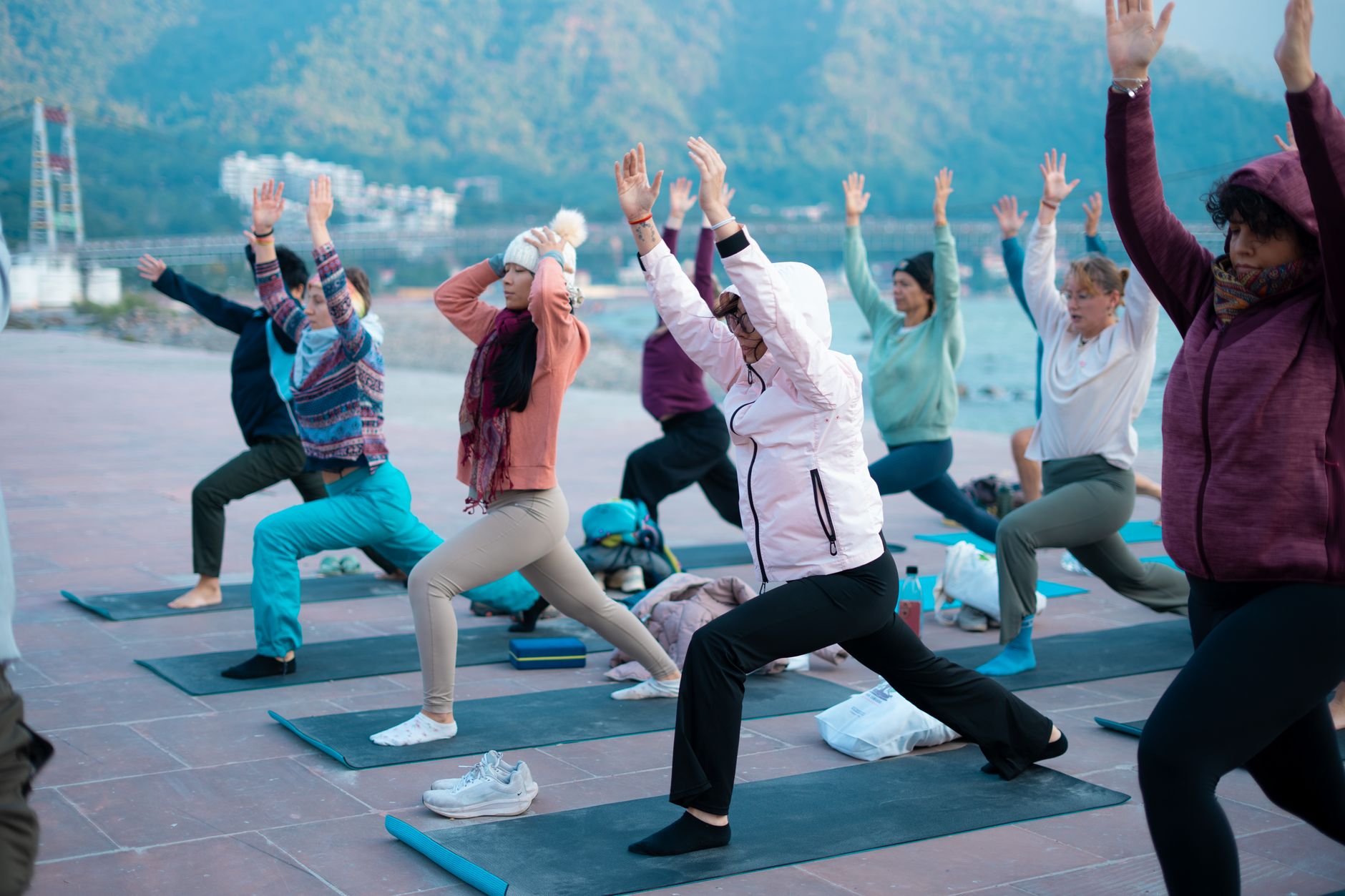
We usually start at 6:00 a.m. or 4:00 p.m. depending on the season and your preference. You arrive 10 minutes early to settle and meet the instructor. The first 10 minutes are grounding: we sit cross-legged on mats, breathe together, and let your mind slow down. The next 30–40 minutes are movement—we flow through sun salutations, standing poses, and deeper stretches, always with verbal cues and hands-on adjustments if you want them. The final 15–20 minutes are stillness: longer holds in restful poses, then a 5-minute guided savasana (final relaxation) while you lie on your back, often listening to the water lap against stone. We close with three "oms" together. The whole thing feels less like exercise and more like permission to be quiet.
Where exactly do we hold these sessions?
We run classes at two main types of location. The first is a peacefully sited retreat house in a fishing village on the eastern side of the bay—a simple wooden structure with big windows, a terrace, and views across the water to the karsts. It's reachable by a 45-minute minivan ride from Bai Chay (the main tourist hub) and feels genuinely removed. The second is aboard a traditional wooden long-tail or junk boat, moored in a quiet cove away from tour-boat traffic; you do yoga on the upper deck as the sun rises or sets. Both locations have clean facilities (toilets, a place to rinse off), drinking water, and shade. Neither location is famous or touristy—they're working spaces where local people fish, live, or work in tourism quietly. We choose the spot based on weather and your group's preference.
Who should book a yoga class here, and who might be disappointed?
Ideal guests: solo travelers seeking a reset after weeks of travel; couples wanting a shared mindful experience without talking much; anyone with 3–5 days in the bay who wants one day away from kayaking or cave tours; people recovering from stress or jet lag; beginners curious about yoga but intimidated by big studios; intermediate and advanced practitioners who find generic resort yoga sessions shallow. We also welcome seniors and guests with minor injuries (tell us in advance so we can offer modifications); families with teenagers (kids under 12 are better suited to our family-focused experiences elsewhere).
Who might not get much from it: people seeking a workout or calorie burn (this is restorative, not vigorous); guests on a rushed itinerary who can't commit 90 minutes; those who dislike silence or stillness; anyone with severe injuries or mobility issues (discuss with us first). If you're booking a yoga class mainly for Instagram, you'll probably feel it's too quiet and the setting too subtle.
How do we adapt classes for beginners, injuries, and different fitness levels?
On the sign-up form, you'll tell us your experience level, any injuries, and what you hope to get from the session. The instructor arrives 15 minutes early and will chat with you, ask questions, and often show you a modified version of a pose before the group starts. If you have a bad knee, tight hips, or shoulder trouble, we offer variations: instead of a full backbend, we might guide you into a gentler chest opener; instead of a headstand, we use a wall or skip it. If you're new to yoga, we use basic language and hold poses longer so you can feel what's correct. Advanced guests flow faster, hold deeper, and attempt arm balances or advanced breathing patterns. Everyone practices in the same session—there's no separation—but everyone has space to meet themselves where they are that day.
| Situation | How we adapt | What to tell us upfront |
|---|---|---|
| Beginner / no prior yoga | Slower pace, more verbal cues, longer holds | "First time" or "tried once" |
| Knee / hip / shoulder injury | Alternative poses, props (blocks, straps), half-expressions | Name the injury and any movements that hurt |
| Back pain or tight hamstrings | Focus on gentle spinal mobility and floor work, avoid deep forward folds initially | How long you've had the pain; what makes it worse |
| Senior (65+) or low fitness | Lower-intensity flows, seated and standing options, chair support | Any dizziness, balance issues, or surgeries |
| Advanced / regular practice | Longer holds, arm balances, pranayama (breathing) sequences, inversions | Your usual style (vinyasa, yin, hatha, etc.) |
| Pregnancy (any trimester) | Avoid deep twists, belly-down poses; focus on breath and pelvic stability | Trimester; any complications |

What's the real difference between sunrise and sunset yoga, and which should you choose?
Sunrise sessions (6:00–7:30 a.m.) feel cooler, quieter, and often more energizing. The light is soft and golden. The bay is still—fewer boats move at that hour. You finish early and have the whole day ahead. The trade-off: you wake up very early (4:30 a.m. pickup from your hotel), and some guests are too groggy to focus. We've had people fall asleep in savasana—which is fine, but they miss the closing ritual.
Sunset sessions (4:00–5:30 p.m.) let you sleep in and enjoy breakfast leisurely. The karsts turn orange and pink as you practice. The bay gets busier (fishing boats, some tour traffic), but it's still calm enough. You finish tired and ready for dinner. The downside: the light fades fast, especially in winter, so we sometimes finish in dimness (we bring a solar lantern).
Our honest take: sunrise feels more "yoga retreat"—meditative, clean, removed from time. Sunset feels more like being part of the bay's rhythm. Neither is better; it depends on your energy rhythm. If you're jet-lagged or love mornings, sunrise wins. If you sleep poorly without sleep-in days, sunset works.
What should you check before booking, and what often goes wrong?
Before you commit:
- Your fitness level: be honest. If you haven't moved in months, even a gentle class will challenge you. That's good—just know it.
- Your expectation: this is not a vigorous gym session. It's a practice in slowing down. If that doesn't appeal, book a different activity.
- Weather and season: late May through September, the bay sees heat and occasional rain. We still run classes (movement builds heat; rain is cooling), but you should be okay with sweat and wet mat. Winter (Nov–Feb) is ideal—cool, clear, calm.
- Time and logistics: the boat or retreat house is 30–45 minutes from central Ha Long. Plan to leave your hotel by 5:15 a.m. for sunrise or 3:15 p.m. for sunset, depending on traffic and where you're staying.
- Bring a towel and water: we provide mats and sometimes props, but not always a towel. Bring your own. Drink water before, during (take breaks), and after.
What goes wrong and how to avoid it:
- You oversleep and miss pickup. Set two alarms. We text reminders, but you're ultimately responsible.
- You eat a big breakfast, then do yoga. Eat light at least 2 hours before. Avoid coffee if your stomach is sensitive.
- You forget to tell us about injuries, then feel pain halfway through. Tell us everything—old yoga injuries, tight spots, surgeries, chronic conditions. We adapt.
- You expect the class to feel like a fancy resort yoga session. Our locations are simple, authentic, working spaces. If you need air-conditioning, piped music, and spa vibes, this isn't for you.
- Rain surprises you. We run in light to moderate rain (mats stay dry under a roof or boat canopy). Bring a light rain jacket for the walk to the space if needed.
How does Ha Long Bay yoga fit into a bigger wellness trip?
If you're in Ha Long 3+ days, you might combine yoga with other wellness and slow experiences—a morning yoga session, then a quiet afternoon tea or coffee ritual, or a walk through a local fishing village. Some guests book yoga one day and a Vietnamese cooking class another, learning to prepare light, nourishing meals with local herbs. Others add a tea experience to deepen the mindfulness theme. These activities often discounts if booked as a package; contact us with your interests.
If you're based in another Vietnamese city and want yoga, we also run sessions in Hanoi, Da Lat, and Hoi An—though Ha Long's setting is uniquely conducive to deep practice because of the natural stillness around you.
What to check before you book
- Tell us your yoga experience level and any injuries upfront. We adapt every session—but we need to know.
- Confirm the session date and time (sunrise or sunset, and which location) via WhatsApp. Availability changes with weather and season.
- Verify pickup location and time from your hotel. We'll send you a WhatsApp message the night before with details.
- Ask about group size. Private sessions are more personalized; small-group sessions (2–4 people) are more affordable and still intimate.
- Bring your own yoga mat if you have a strong preference. We provide mats, but some guests prefer their own.
- Know the weather for your date. Ha Long's humidity is real; come prepared to sweat and feel the air on your skin.

FAQ
Do I need previous yoga experience to join?
No. We run beginner-friendly classes every week. Tell us it's your first time, and the instructor will guide you through every pose with clear language and will offer modifications so nothing hurts.
What do I wear, and what should I bring?
Comfortable, breathable clothes you can move in (leggings, shorts, t-shirt, tank top). Avoid cotton if possible—it holds sweat. Bring a towel, a water bottle (we refill it), sunscreen, and a light layer for early morning air. Shoes are left at the entrance; you practice barefoot.
Can I do yoga if I'm pregnant, or have an injury, or am over 70?
Yes, but tell us beforehand. We modify poses for pregnancy (no deep twists, no belly-down work), injuries (we show you alternatives), and age (we use props and gentler flows). Pregnant guests and seniors appreciate our patient, detailed approach.
Is the class indoors, outdoors, or on the water?
It depends on the location and your choice. Waterfront retreat house classes are covered (a roof, open sides) and overlook the bay. Boat classes are on deck in open air. You're always near water; none are in a closed studio.
What if it rains?
Light rain is fine—our locations have shelter. Heavy rain might move the session indoors or reschedule it (rare). If weather is dangerous, we'll contact you the morning of to confirm or reschedule.
How much does it cost?
Ask us for dates and a quote on WhatsApp. Pricing depends on group size (private vs. small-group), location, and season. We'll send you a transparent quote once you tell us your preferences.
What's the best time of year to book yoga in Ha Long?
November to February is ideal—cool, clear, calm water. May to September is hot and humid but still beautiful and less crowded. Avoid typhoon season (late August to October). The bay is lovely year-round, but your comfort matters most.
Ask about dates
Tell us the city, your dates and what you would like to try. We reply on WhatsApp in English with options and availability.
FAQ
Do I need previous yoga experience to join?
No. We run beginner-friendly classes every week. Tell us it's your first time, and the instructor will guide you through every pose with clear language and will offer modifications so nothing hurts.
What do I wear, and what should I bring?
Comfortable, breathable clothes you can move in (leggings, shorts, t-shirt, tank top). Avoid cotton if possible—it holds sweat. Bring a towel, a water bottle (we refill it), sunscreen, and a light layer for early morning air. Shoes are left at the entrance; you practice barefoot.
Can I do yoga if I'm pregnant, or have an injury, or am over 70?
Yes, but tell us beforehand. We modify poses for pregnancy (no deep twists, no belly-down work), injuries (we show you alternatives), and age (we use props and gentler flows). Pregnant guests and seniors appreciate our patient, detailed approach.
Is the class indoors, outdoors, or on the water?
It depends on the location and your choice. Waterfront retreat house classes are covered (a roof, open sides) and overlook the bay. Boat classes are on deck in open air. You're always near water; none are in a closed studio.
What if it rains?
Light rain is fine—our locations have shelter. Heavy rain might move the session indoors or reschedule it (rare). If weather is dangerous, we'll contact you the morning of to confirm or reschedule.
How much does it cost?
Ask us for dates and a quote on WhatsApp. Pricing depends on group size (private vs. small-group), location, and season. We'll send you a transparent quote once you tell us your preferences.
What's the best time of year to book yoga in Ha Long?
November to February is ideal—cool, clear, calm water. May to September is hot and humid but still beautiful and less crowded. Avoid typhoon season (late August to October). The bay is lovely year-round, but your comfort matters most.
More like this
Wellness and slow experiences
Yoga Classes in Phu Quoc: Where to Practice & What to Expect
Phu Quoc's yoga scene ranges from boutique beachfront studios to wellness retreats and home-based classes. We'll help you find the right fit for your practice level and schedule.
Wellness and slow experiences
Yoga Class in Vietnam: Choose Your Style & Studio Type
Yoga in Vietnam ranges from quiet temple-based morning classes to dynamic studio sessions in Hanoi, Saigon, and beachside towns. We'll walk you through how to choose.
Wellness and slow experiences
Yoga Class in Saigon: Finding Your Right Fit
Saigon has grown a sprawling yoga scene—from high-paced vinyasa studios to slow restorative spaces. We break down what each setup offers, who it suits, and what to check before your first class.